100 dong 1980
Market Prices
12 salesAbout This Note
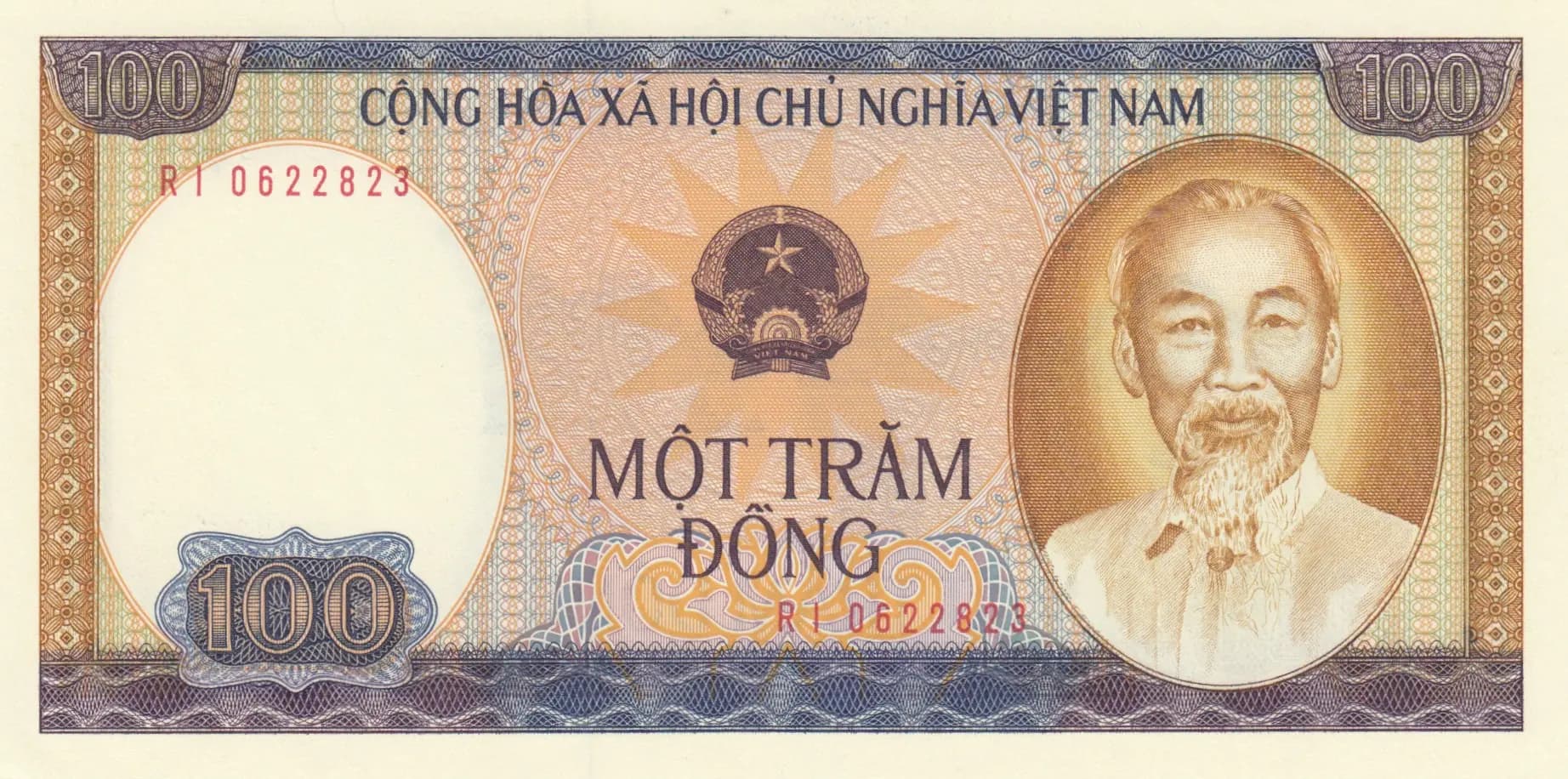
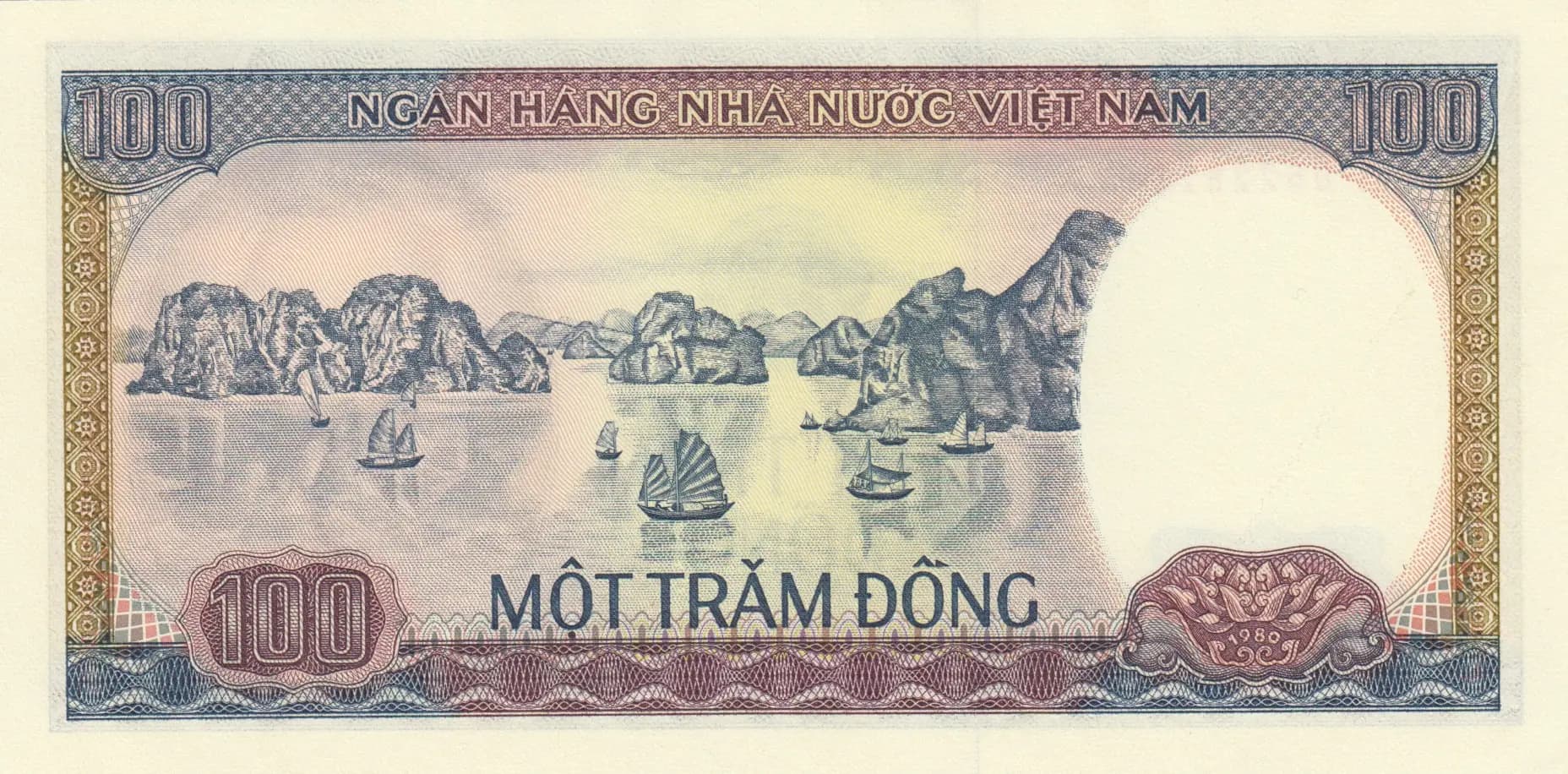
This is an uncirculated 1980 Vietnamese 100 đồng note (Pick P-88a) issued by the State Bank of Vietnam, displaying exceptional preservation with no visible wear, creases, or foxing. The front features a dignified portrait of Ho Chi Minh with his characteristic long white beard rendered in sepia tones, while the reverse showcases a dramatic scenic landscape of Halong Bay's iconic karst limestone formations with traditional junks, exemplifying Vietnam's natural heritage during the early socialist period. The note exhibits fine engraved detail work throughout with multicolored printing in browns, blues, purples, and golds.
Common. This is a regular-issue banknote from a major denomination in steady circulation throughout the 1980s. Market data shows consistent availability with UNC specimens selling for approximately $8-10 on the secondary market, indicating abundant surviving examples. The note's widespread issuance by the State Bank of Vietnam for routine transactions means it was produced in large quantities.
Issued in 1980, just five years after the reunification of Vietnam under communist rule, this banknote represents the early monetary period of the Socialist Republic of Vietnam. The prominent portrayal of Ho Chi Minh on the obverse honors the founding figure of communist Vietnam, while the reverse's depiction of Halong Bay and traditional sailing vessels symbolizes Vietnamese national pride in both historical culture and natural beauty during a period of post-war reconstruction.
The obverse features Ho Chi Minh, the revered leader of the Vietnamese communist revolution, depicted in profile facing right with his iconic long white beard, rendered in golden-brown sepia tones. The Vietnamese national emblem (a gold star centered on the coat of arms) is positioned at the top center. The reverse depicts Halong Bay with distinctive karst limestone formations (Fai Tsi Long Archipelago) rising dramatically from the water, with traditional Vietnamese junks in characteristic sail configuration navigating the bay. The entire design employs ornate engraved decorative borders and fine line-work patterns creating depth and artistic sophistication. The note's color palette transitions from warm browns and tans on the obverse to cooler blues, grays, and creams on the reverse.
Front side: 'CỘNG HÒA XÃ HỘI CHỦ NGHĨA VIỆT NAM' (Socialist Republic of Vietnam); 'MỘT TRĂM ĐỒNG' (One Hundred Dong); denomination numerals '100' in top corners; serial number 'R1 0622823'. Back side: 'NGÂN HÀNG NHÀ NƯỚC VIỆT NAM' (State Bank of Vietnam); 'MỘT TRĂM ĐỒNG' (One Hundred Dong); denomination numerals '100' in top corners; date '1980'.
Intaglio engraving (line engraving), evidenced by the fine detailed line patterns, intricate shading work, and the characteristic depth visible in both the portrait and landscape elements. The multicolor printing with distinct color separation (browns, blues, purples, golds) indicates a multi-plate intaglio process. The State Bank of Vietnam note of this era was typically produced by the Vietnam National Printing House (now Vietnam Security Printing Company).
This example shows the standard 1980 issue with single-letter serial number prefix ('R1' in this specimen). Known varieties for P-88a include serial number variations with large or small digits. The serial number observed here (R1 0622823) represents the standard format. No overprints or date variations are evident, indicating this is a standard printing from the initial 1980 release, though the note continued to be printed into 1981 with identical design and issue designation.