10 bolivares 1973
Market Prices
About This Note
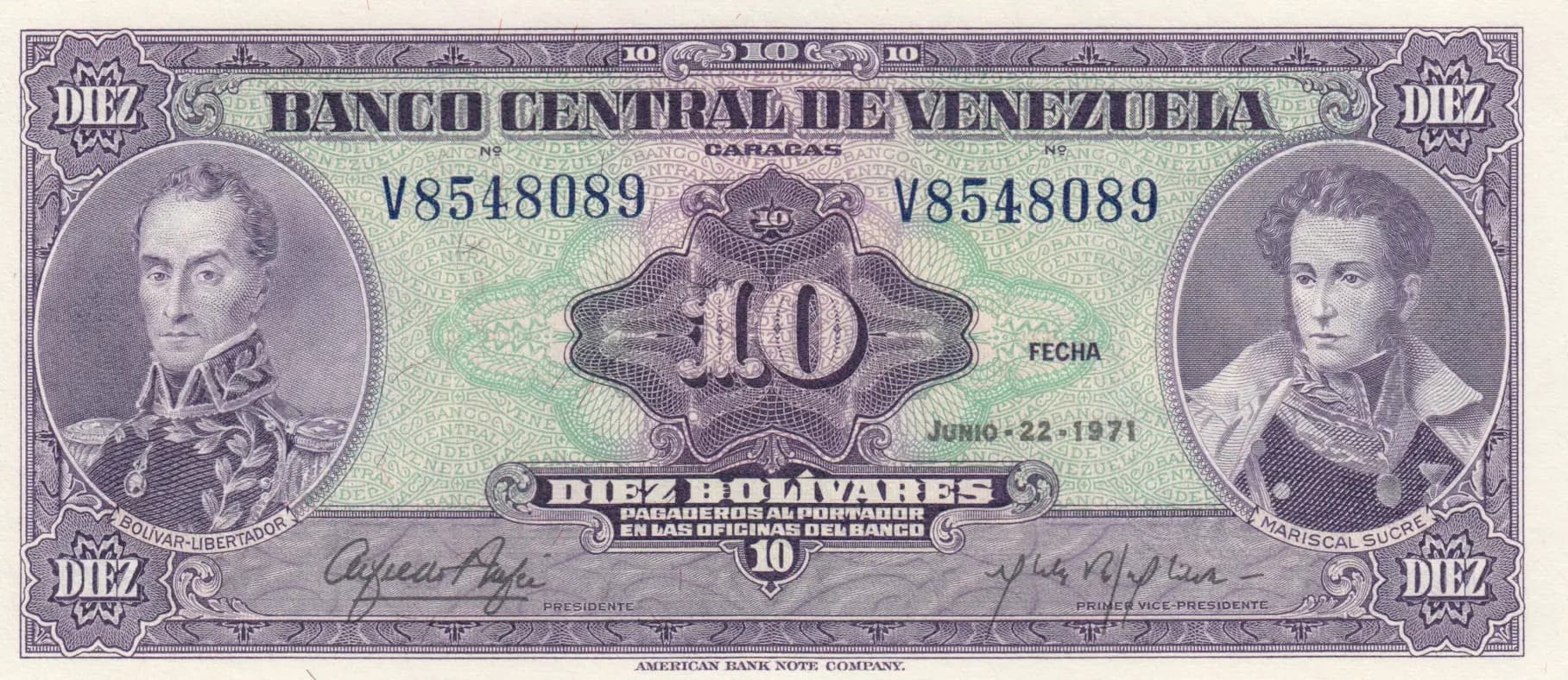
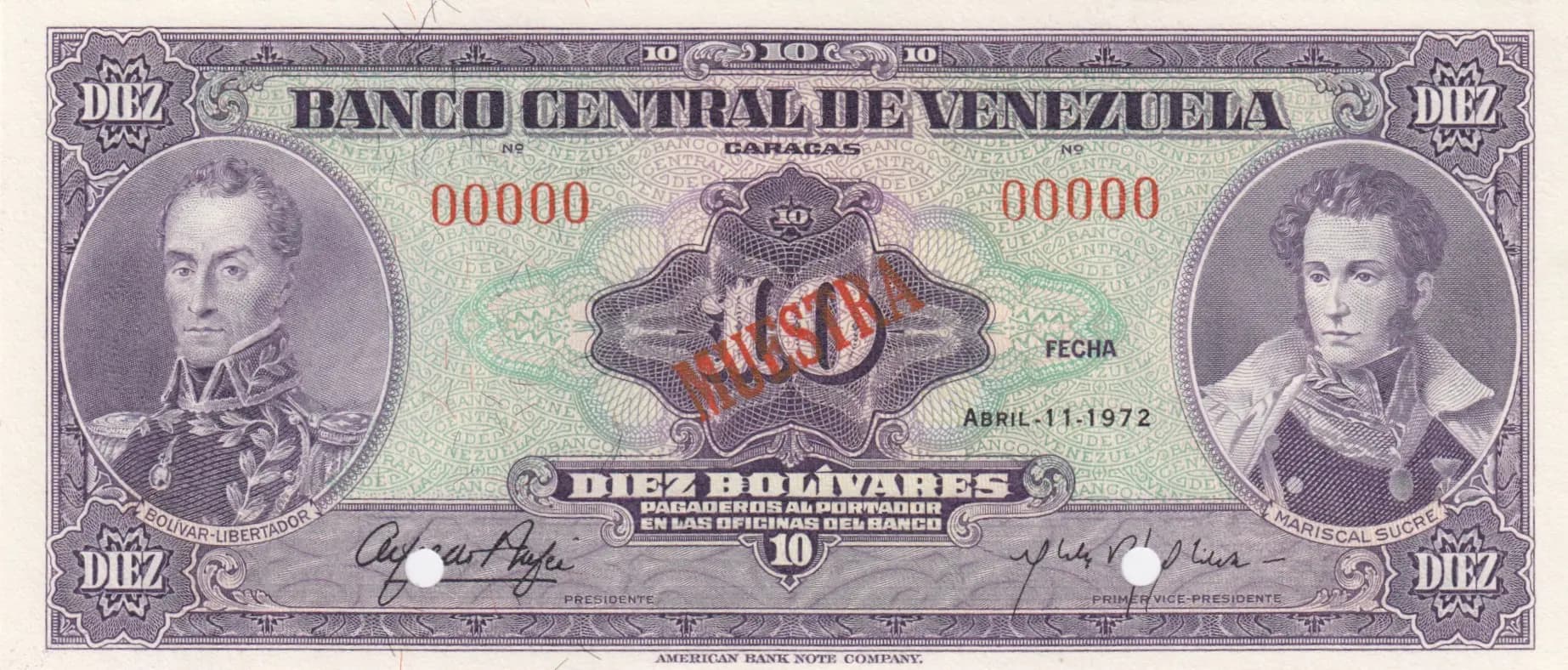
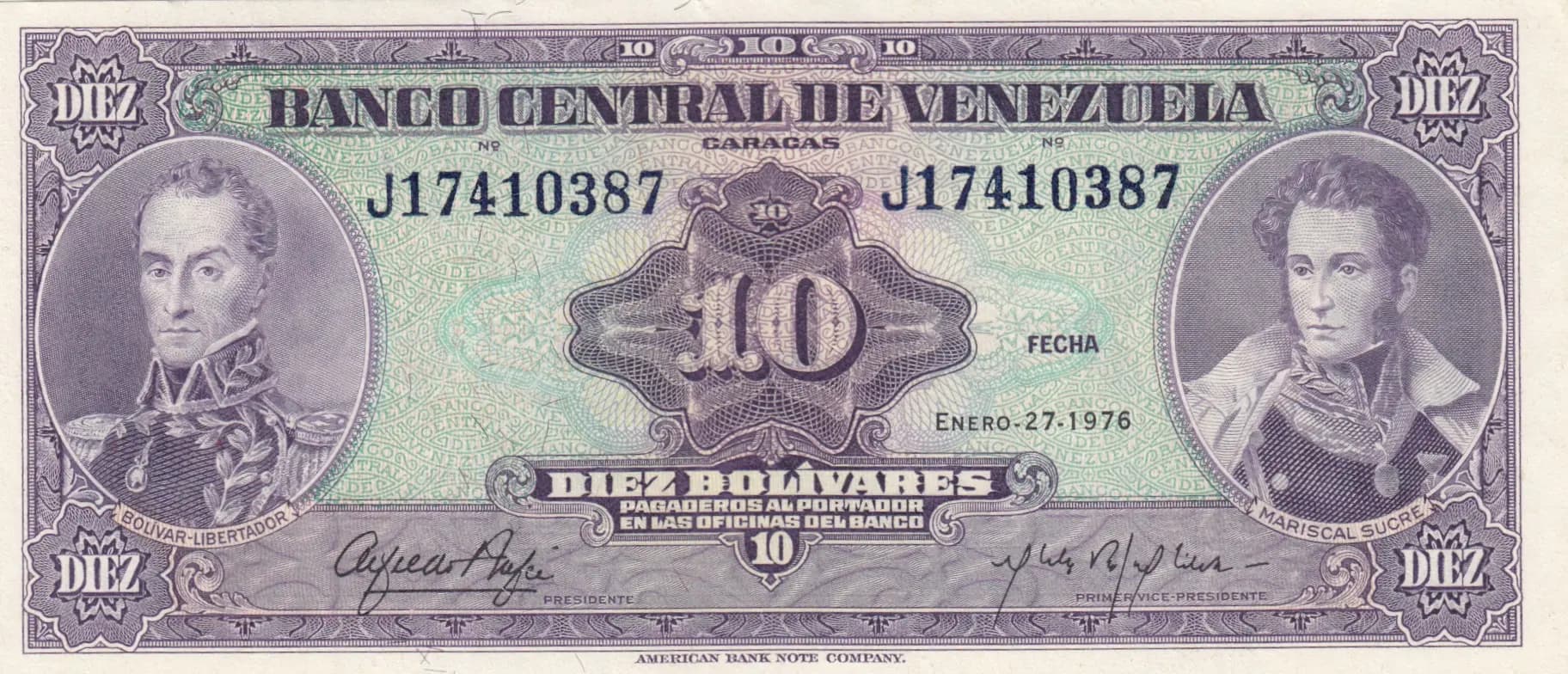
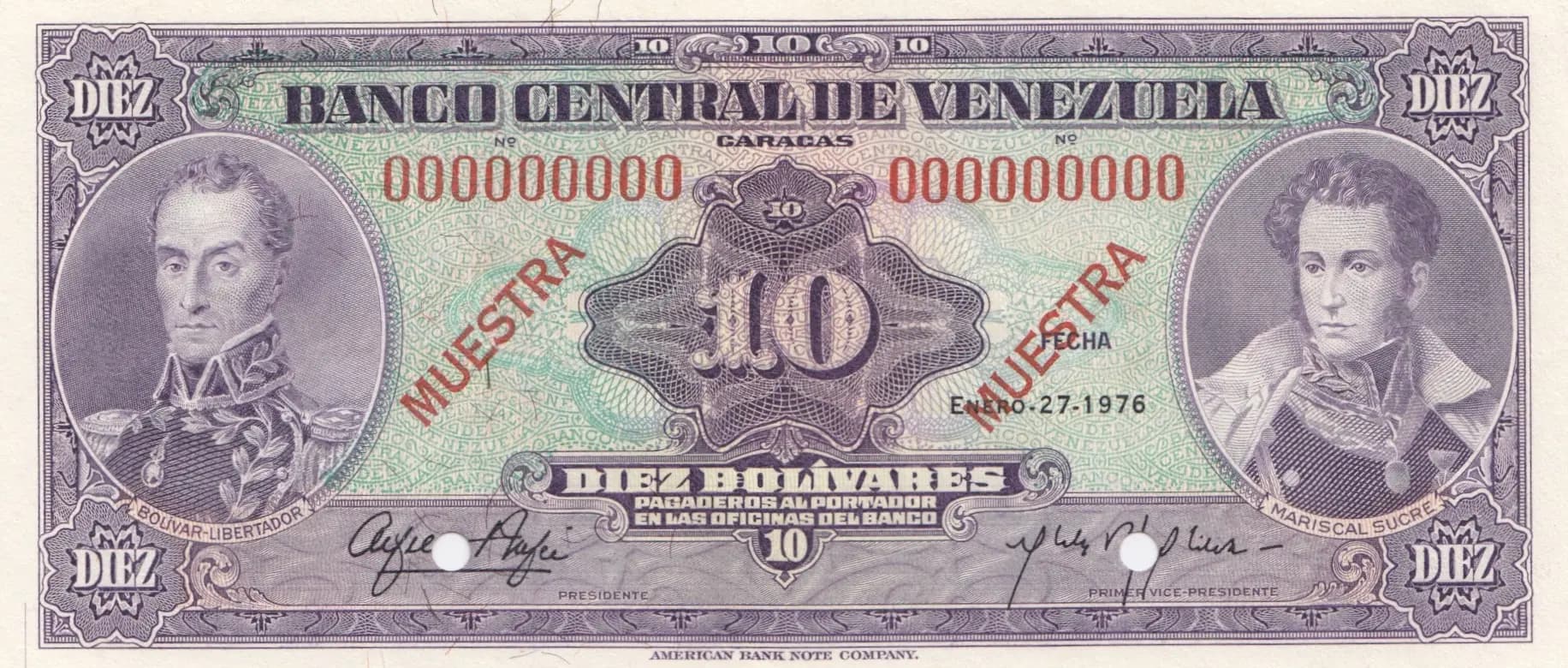
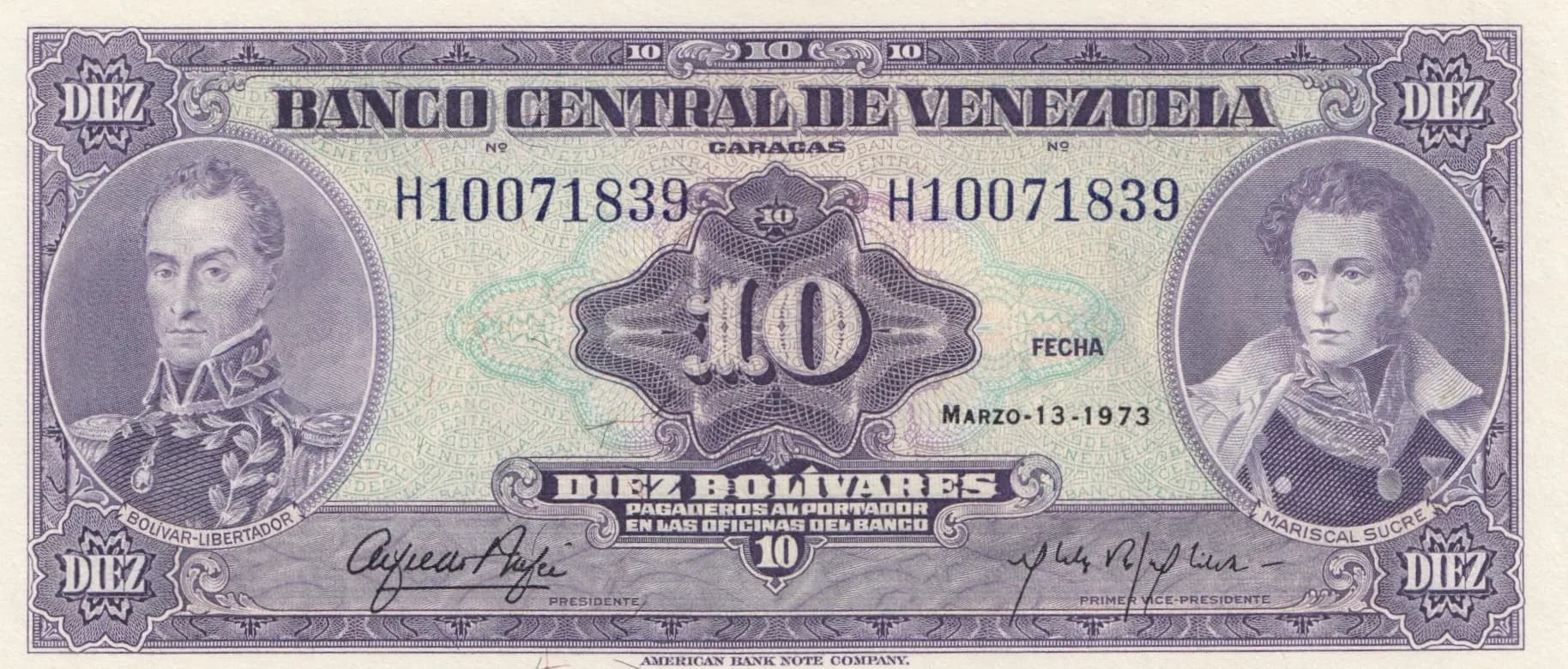
This is a pristine, uncirculated example of the 1973 Venezuelan 10 Bolívares (Pick P-51c), featuring exceptional intaglio engraving with purple and lavender tones. The note displays dual portrait medallions of Simón Bolívar and Antonio José de Sucre flanking a central ornamental shield, with crisp printing, clean margins, and no visible wear—making it an excellent specimen for collectors of South American currency or those interested in Venezuelan historical coinage.
Common. This is a regular-issue banknote from a major print run spanning 1971-1979, as indicated by the Pick catalog dating. Market data shows UNC examples trading consistently between $9–$104 USD on secondary markets, with multiple sales recorded at moderate prices ($14–$55 range), indicating steady availability. Serial number prefix H suggests multiple printing batches. The note was not recalled, and circulation was standard for Venezuelan currency of this denomination during this period.
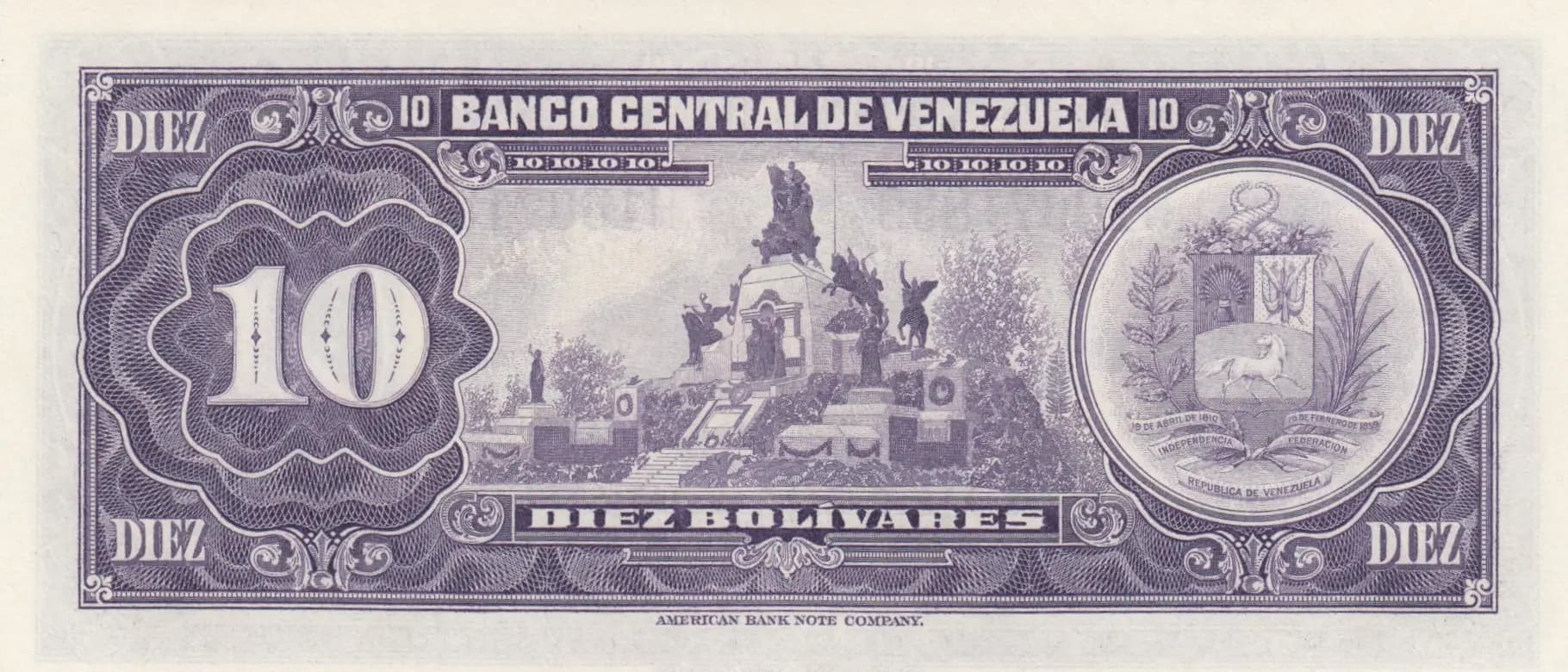
Issued by the Banco Central de Venezuela on March 13, 1973, this banknote commemorates two pivotal figures in Venezuelan independence: Simón Bolívar (El Libertador) and Mariscal Antonio José de Sucre. The reverse features the Monument to the Motherland (Monumento a la Patria) at the Carabobo Fields, a site sacred to Venezuelan independence, anchoring the note's nationalist iconography during a period of oil-driven economic growth in Venezuela.
The obverse features two prominent portrait medallions in military dress: Simón Bolívar on the left (labeled 'Bolivar-Libertador') wearing decorative collar and medals, and Mariscal Antonio José de Sucre on the right in formal military attire. Between them stands a large ornamental shield bearing the numeral '10'. The entire note is framed by intricate decorative borders and scrollwork with star-like corner ornaments. The reverse depicts the Monumento a la Patria (Monument to the Motherland) from the Carabobo Fields, shown as a large elevated monument with multiple figures and statuary surrounded by landscape elements and trees. The Venezuelan coat of arms appears in a circular emblem on the right side of the reverse, reinforcing national identity. The color scheme throughout is predominantly purple and lavender with gray and cream accents.
FRONT: 'Banco Central de Venezuela' (Central Bank of Venezuela), 'Caracas' (location), 'Diez Bolívares' (Ten Bolívares), 'Bolivar-Libertador' (Bolívar-Liberator), 'Mariscal Sucre' (Marshal Sucre), 'Fecha: Marzo-13-1973' (Date: March 13, 1973), 'Pagaderos al Portador en Oro o Divisas del Banco' (Payable to Bearer in Gold or Bank Currency), signature lines for 'Presidente' (President) and 'Primer Vice-Presidente' (First Vice President). Serial number: H10071839. BACK: 'Banco Central de Venezuela' (Central Bank of Venezuela), 'Diez' / 'Diez Bolívares' (Ten / Ten Bolívares), 'Independencia' (Independence), 'Federación' (Federation), 'República de Venezuela' (Republic of Venezuela), 'American Bank Note Company' (printer credit).
Intaglio (engraved) printing by the American Bank Note Company (ABNC), New York. The note demonstrates high-quality line engraving with intricate detail work, fine-line borders, and complex decorative elements characteristic of ABNC's premium security printing techniques of the era. The crisp, detailed execution visible in both portraits and the monument engraving confirms professional intaglio production.
This note is cataloged as Pick P-51c, representing a specific variety within the broader 10 Bolívares 1973 issue. The serial number prefix 'H' and the specific 7-digit serial format (H10071839) are consistent with documented production batches. Variant forms P-51f and P-51s1–s4 exist in PMG's population records, suggesting multiple dies or signature combinations were used during the production run. The date on this specific example is March 13, 1973, which aligns with the 1973 issue cataloging but falls within the broader 1971–1979 circulation period noted in external references.