50 shillings 1973
Market Prices
17 salesAbout This Note
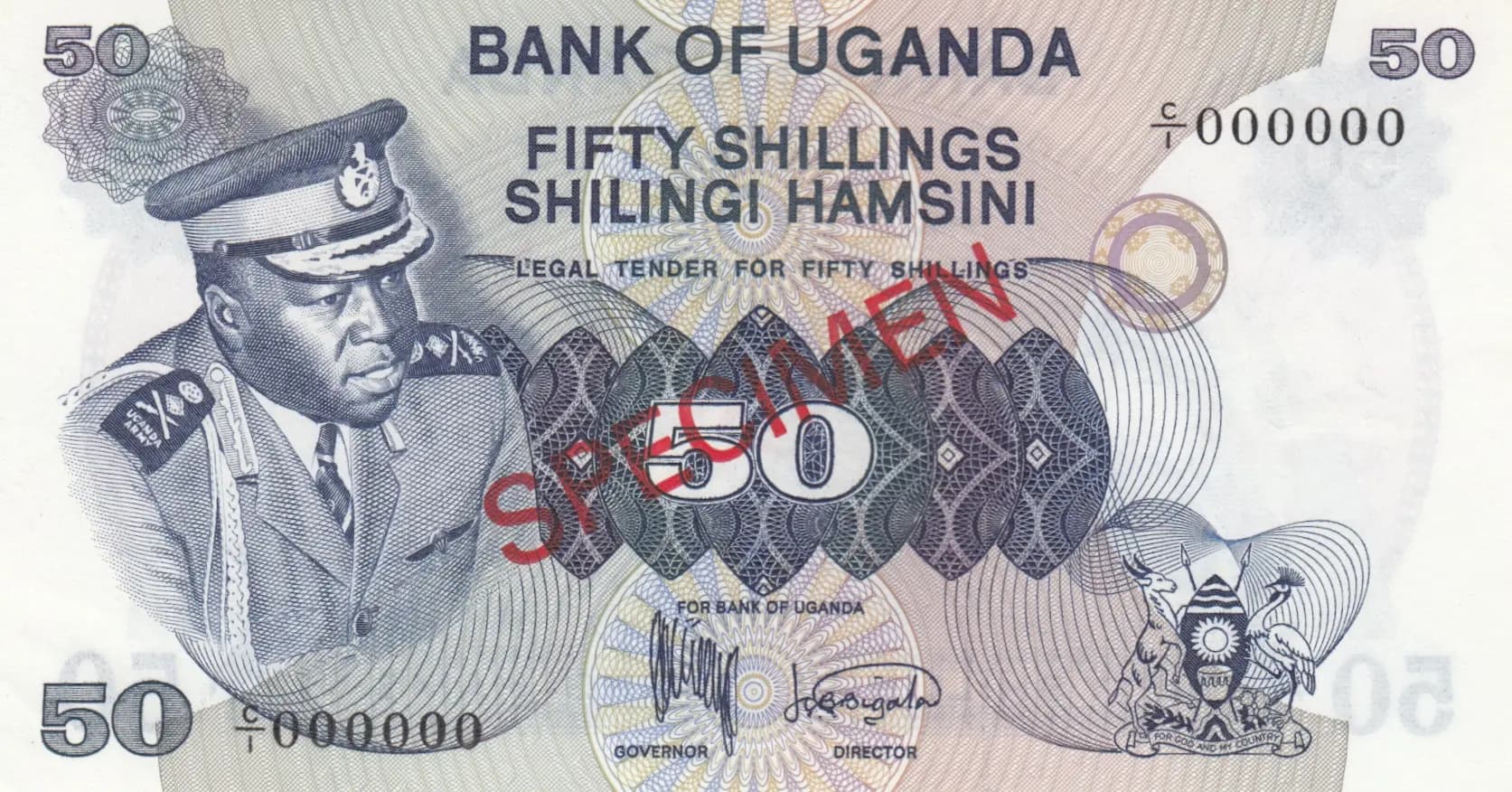
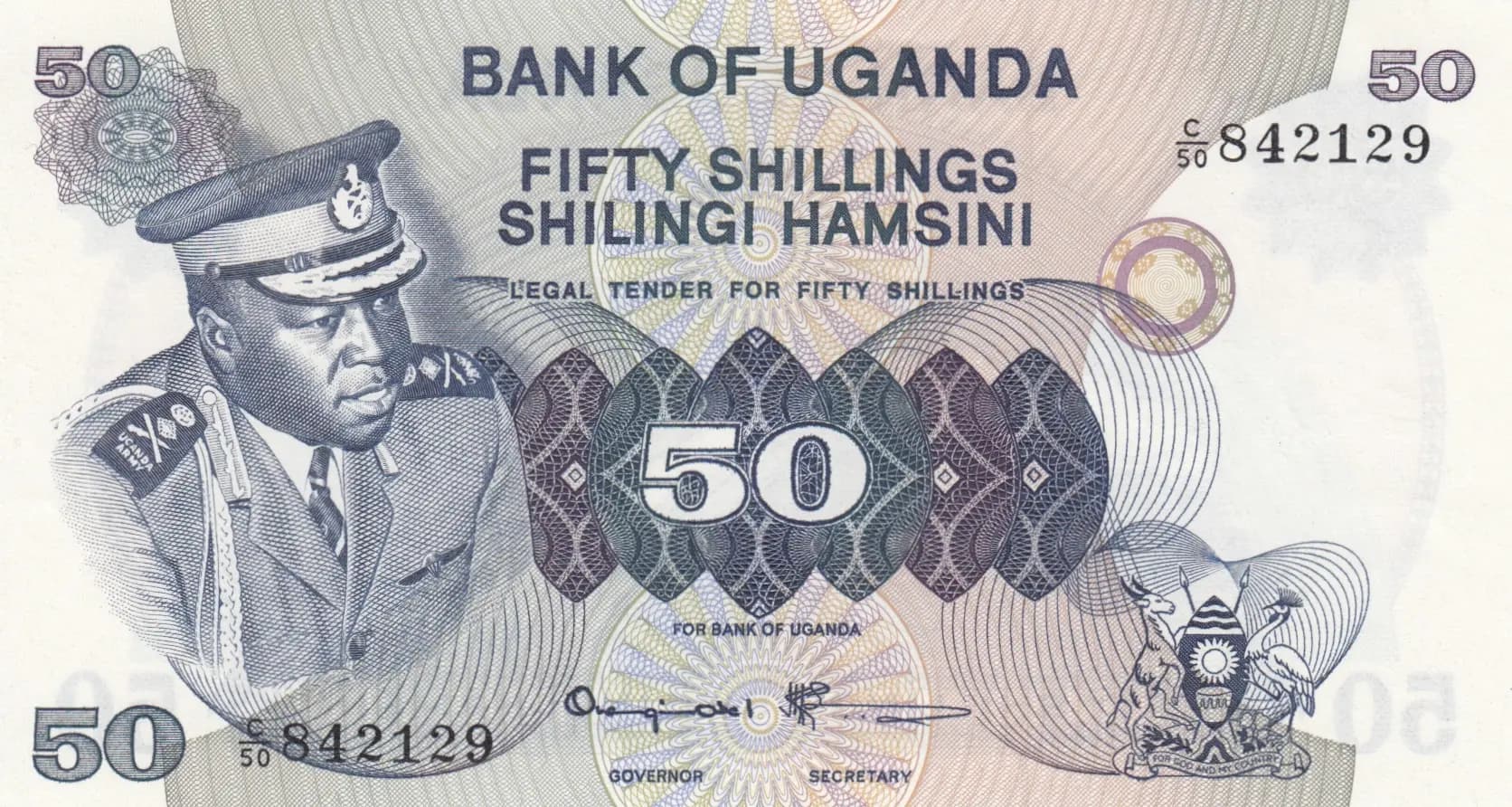
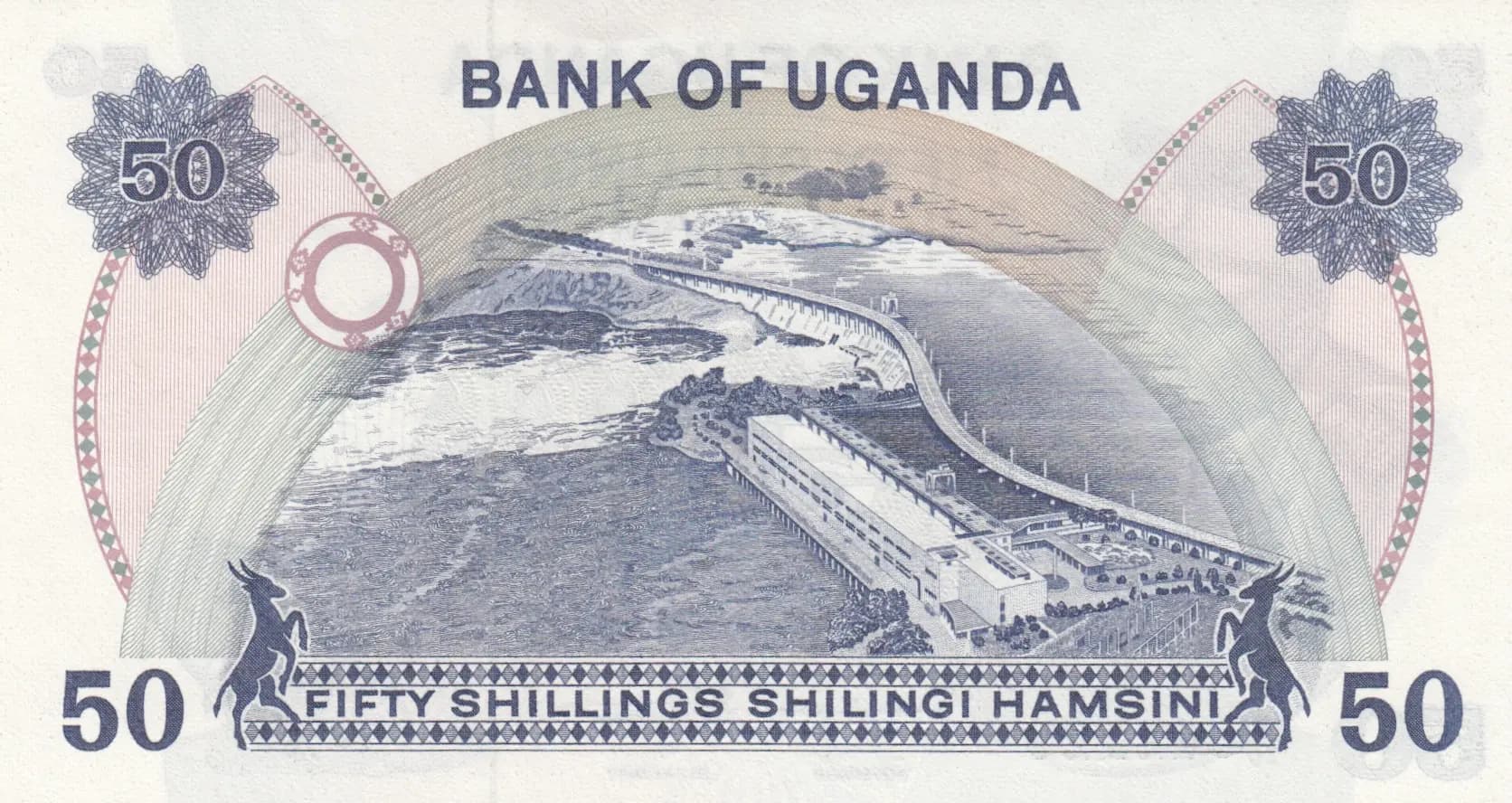
This is a 1973 Bank of Uganda 50 Shillings note in Uncirculated condition, featuring a striking portrait of President Idi Amin Dada in military uniform on the obverse and the Nalubaale hydroelectric dam on the reverse. The note exhibits crisp printing with excellent color definition in its characteristic beige and cream palette accented with blue and mauve tones, displaying no signs of wear, creasing, or handling—a hallmark of uncirculated specimens that typically command premium prices in the secondary market.
Common. eBay market data shows consistent sales activity with UNC specimens regularly selling in the $7–$17 range between 2014–2021, with typical realized prices around $10. The 2019 catalog value of $7 for UNC confirms this note's common status within the numismatic market. While P-8c represents one variant among multiple Pick catalog entries for this denomination and year, the availability of multiple specimens at modest prices indicates a standard print run with adequate circulation in the collector market.
This note was issued during the early years of Idi Amin's military regime (1971–1979), a tumultuous period in Uganda's post-independence history. The obverse's prominent portrait of Amin in full military regalia with peaked cap and decorative insignia reflects the authoritarian nature of the regime, while the reverse's depiction of the Nalubaale (Owen Falls) hydroelectric dam—one of East Africa's major infrastructure achievements—represented the state's earlier developmental aspirations before the political and economic crises that would characterize Amin's later years.
The obverse features a left-facing profile portrait of President Idi Amin Dada dressed in a formal military uniform with a peaked cap bearing presidential insignia and a decorated chest with military medals and insignia. The background employs an intricate light beige field with elaborate guilloche patterns and ornamental rosette designs positioned in the corners. The Uganda national coat of arms—featuring a shield with heraldic elements—appears in the lower right corner alongside circular decorative emblems. The denomination appears in large numerals ('50') in multiple positions. The reverse depicts the Nalubaale (Owen Falls) hydroelectric dam facility with architectural structures, water infrastructure, a river landscape, and hilly terrain, surrounded by decorative corner rosettes and geometric border patterns. Bilingual text in English and Swahili appears throughout both sides.
Front Side: 'BANK OF UGANDA' (English); 'FIFTY SHILLINGS' (English); 'SHILLINGI HAMSINI' (Swahili translation of Fifty Shillings); 'LEGAL TENDER FOR FIFTY SHILLINGS'; 'FOR BANK OF UGANDA'; 'GOVERNOR' and 'SECRETARY' (signature lines); Serial number 'C 50 842129' with prefix letter. Back Side: 'BANK OF UGANDA' (English); '50' (large numerals); 'FIFTY SHILLINGS SHILLINGI HAMSINI' (bilingual denomination statement).
The note employs intaglio (engraved) printing, evidenced by the fine line work visible in the portrait, landscape engraving of the dam, and intricate guilloche security patterns. The multi-color printing with layered background elements and the crisp definition of both portraits and architectural details are characteristic of high-quality security printing techniques typical of Bank of Uganda notes from this era. The printing was likely executed by a major security printer specializing in currency production, though specific printer attribution would require additional research into Bank of Uganda's contracted vendors during 1973.
This specimen is cataloged as Pick P-8c and features the crested crane watermark (Wmk: Crested Crane), consistent with the standard production variant. According to catalog data, the 1973 50 Shillings issue exists in at least four varieties (P-8a, P-8b, P-8c, and P-8s), with replacements notes identifiable by serial number prefixes (Z/1, Y/1, X/1, W/1). The serial number on this specimen (C 50 842129) does not match the documented replacement prefixes, confirming it as a regular issue note. No date printing appears on the note (consistent with 'ND—No Date' notation), and the bilingual English/Swahili inscriptions are standard for this issue.