5 shillings 1982
Market Prices
24 salesAbout This Note
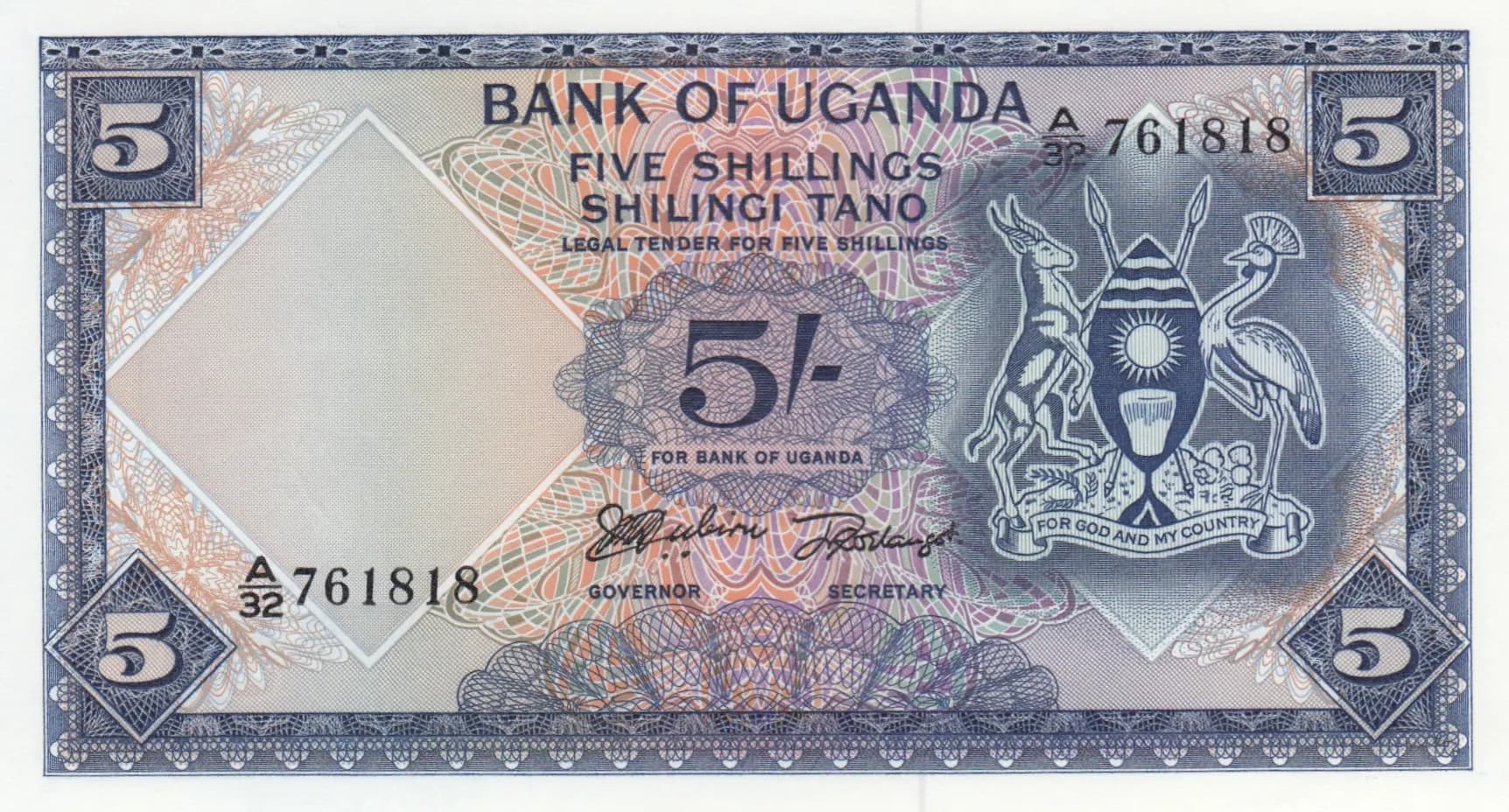
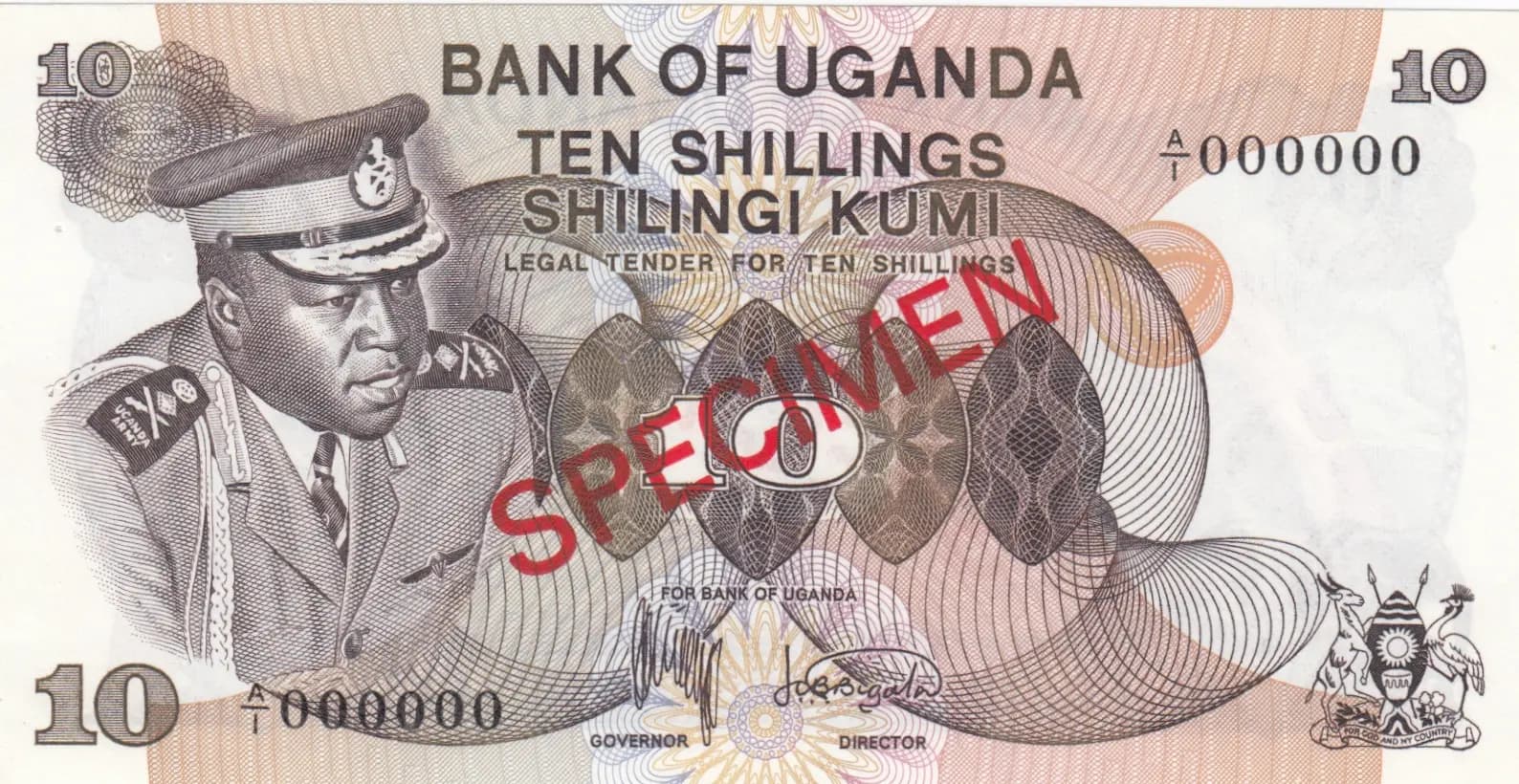
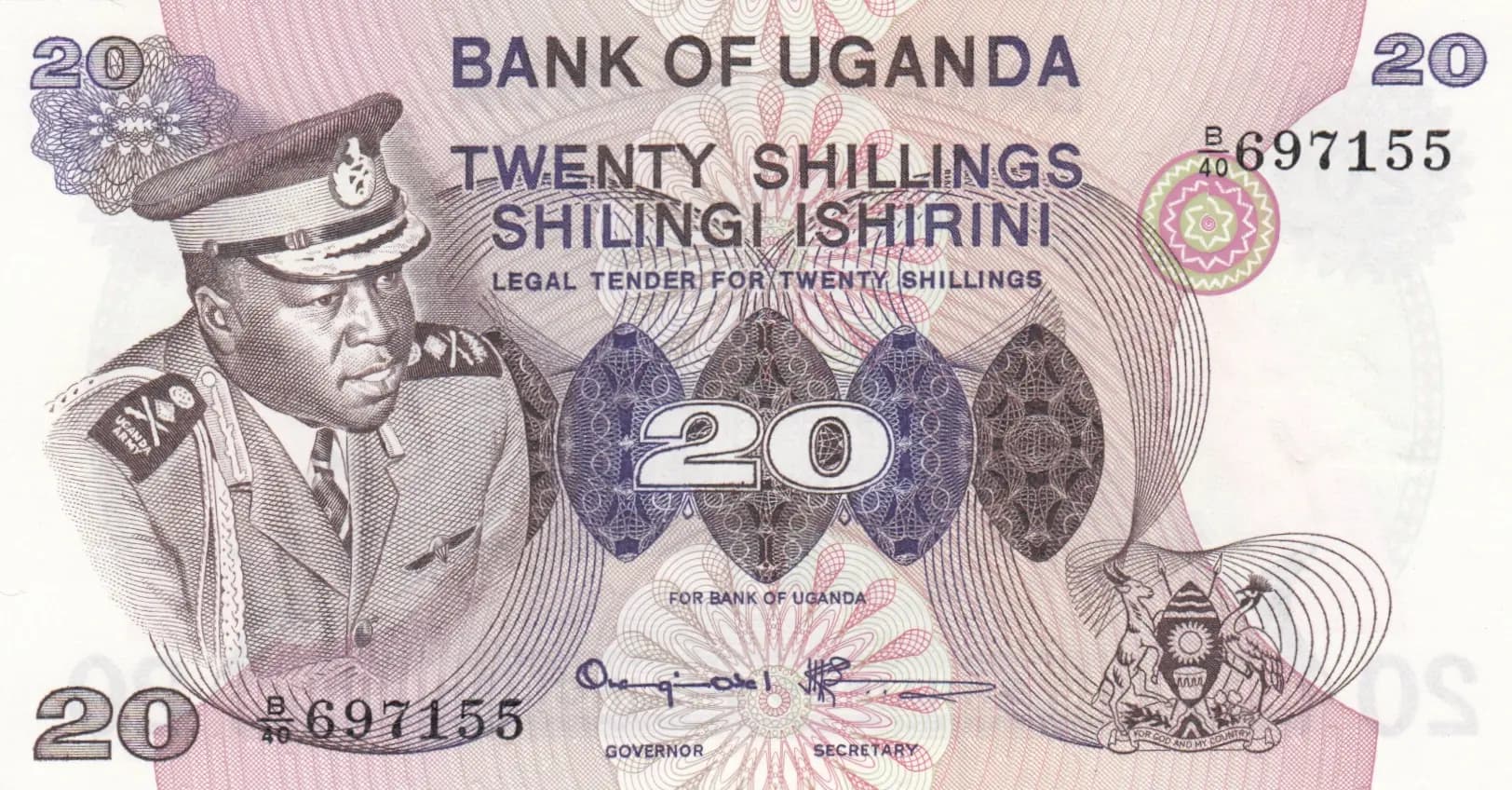
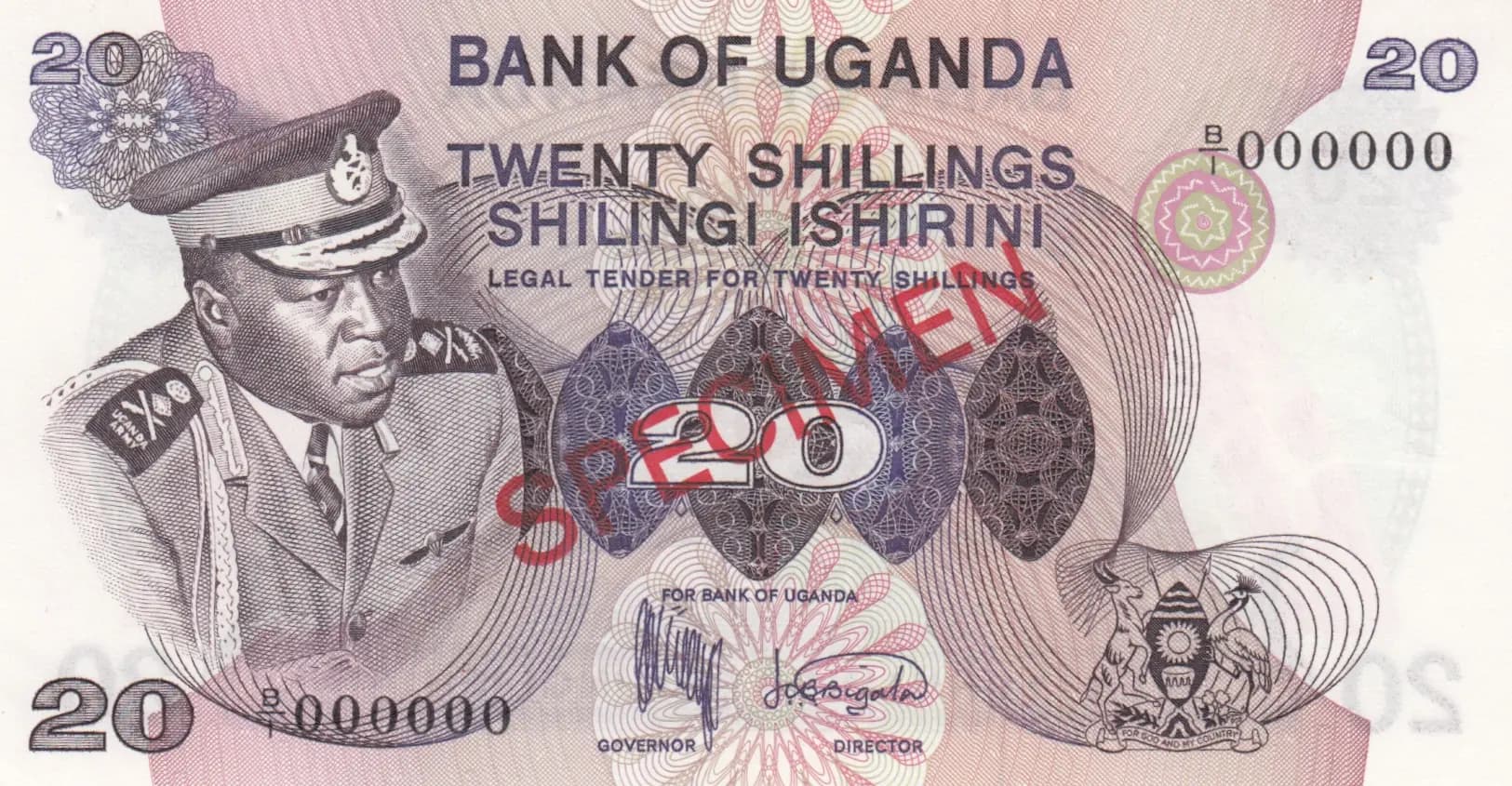
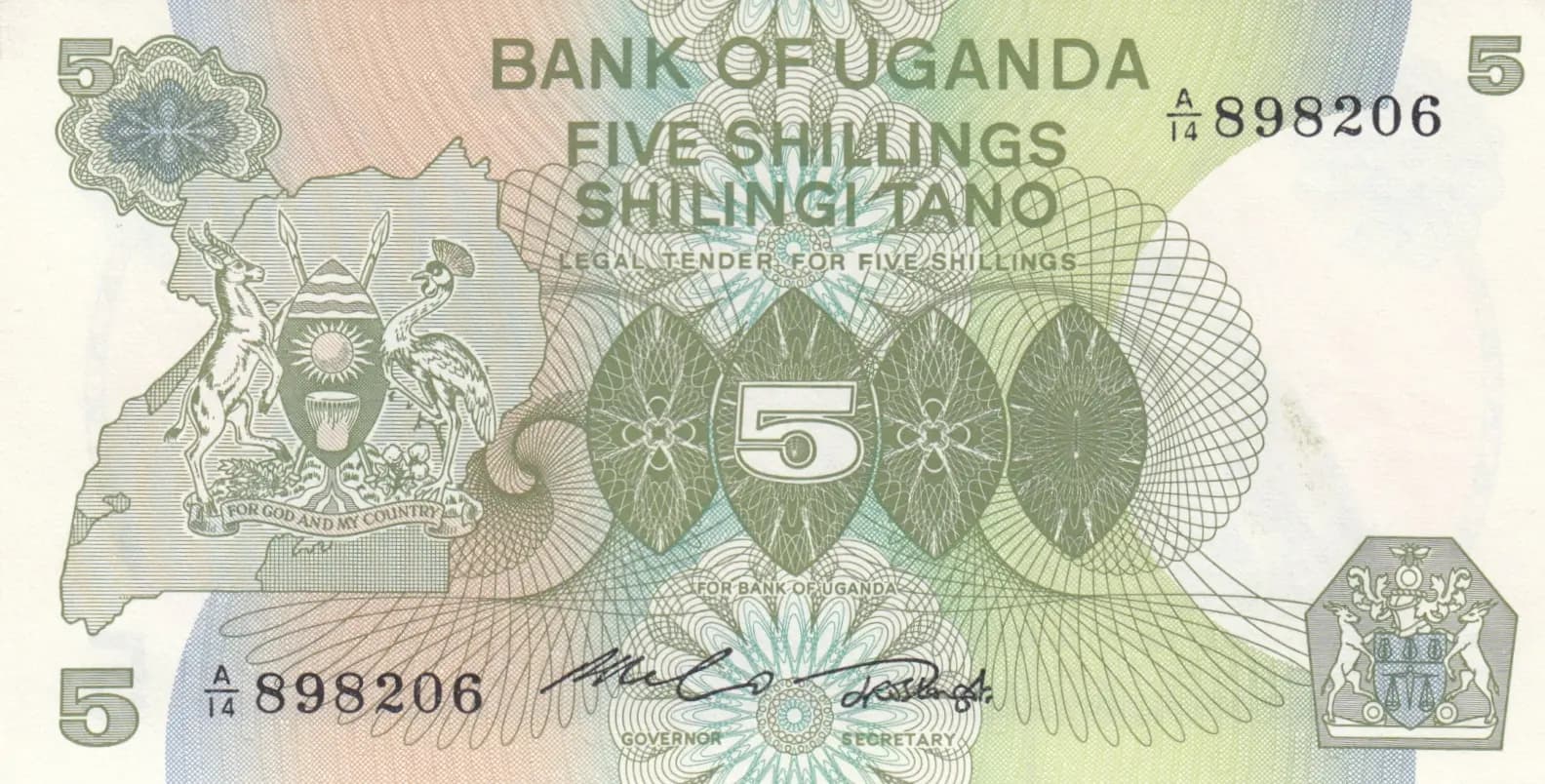
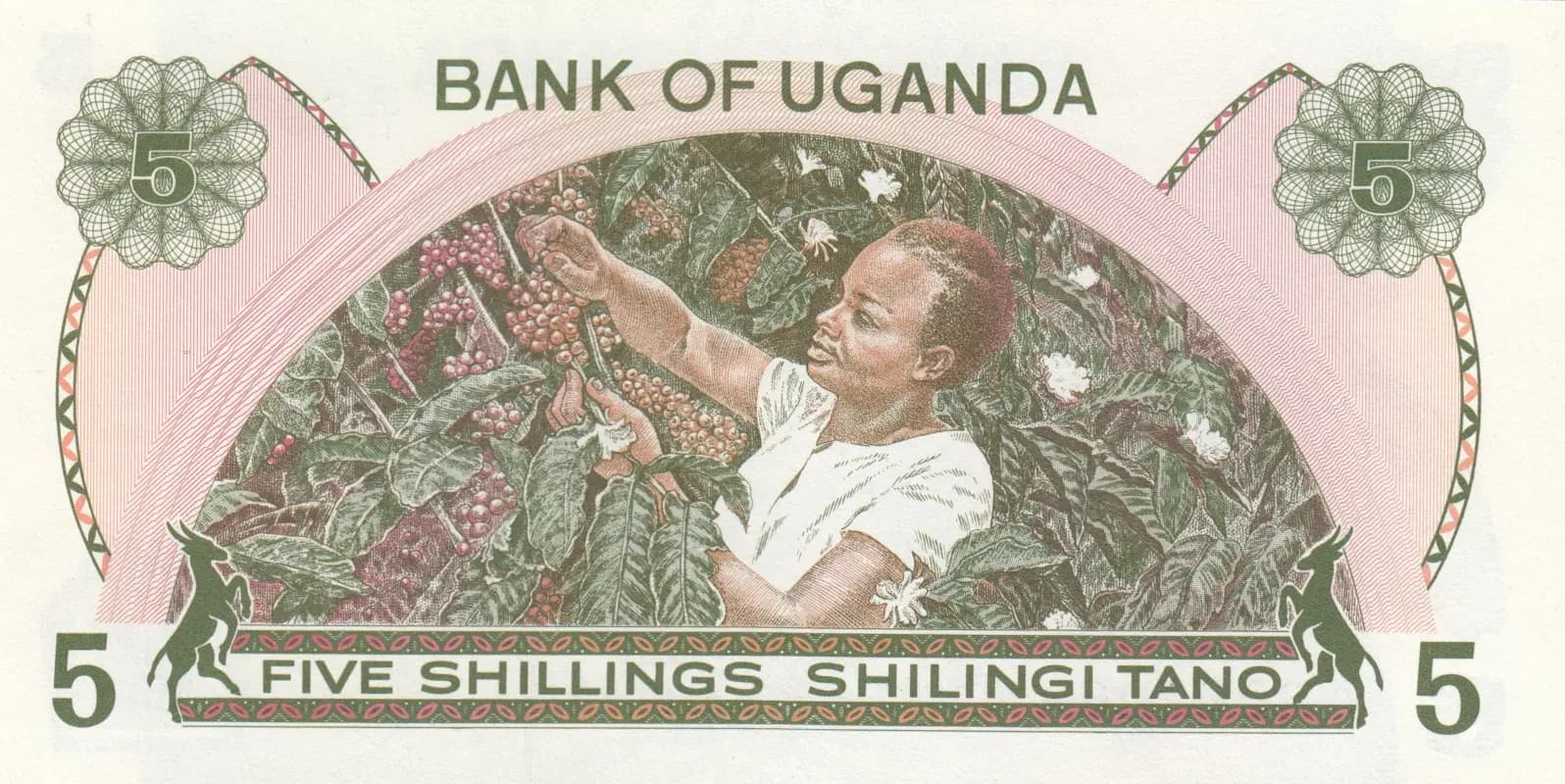
This is a splendid example of Uganda's 1982 5 Shillings note (Pick P-15) in uncirculated condition, displaying the characteristic olive-green and multicolor design with intricate geometric security patterns throughout. The obverse features Uganda's national coat of arms prominently on the left, while the reverse depicts a detailed engraved scene of a woman harvesting coffee beans—reflecting Uganda's historical importance as a coffee-producing nation. The note exhibits crisp printing, sharp detail resolution, and no signs of circulation, making it an excellent specimen for collectors of East African currency.
Common. This note is a regular issue from a major denomination and year with no documented printing restrictions or short run. eBay market data spanning 2012-2025 shows consistent sales of uncirculated examples in the $0.99-$5.50 range, with most transactions under $2.00, indicating abundant availability. The 2019 catalog valuation of $1.50 for UNC examples confirms its common status in the collector market. No replacement note series designation is evident on this example (replacement notes are identified by serial prefixes Z/1, Y/1, X/1, W/1), further supporting standard regular issue classification.
Issued in 1982 by the Bank of Uganda during a period of economic recovery following the tumultuous 1970s, this banknote celebrates Uganda's agricultural heritage through its coffee harvest imagery on the reverse. The national coat of arms and motto 'FOR GOD AND MY COUNTRY' on the obverse represent Uganda's sovereignty and national identity during the early post-Amin era. The design emphasizes both national pride and the country's economic foundation in agricultural exports, making the note a significant artifact of Uganda's monetary history in the early 1980s.
The obverse features Uganda's national coat of arms at left, consisting of a shield flanked by antelope (likely the Uganda kob) and bird supporters, topped with a sun motif, and inscribed with the national motto. A map outline of Uganda appears on the left side. Large decorative leaf-pattern medallions frame the denomination '5' in the center, with ornate geometric borders in green and pink tones creating security patterns. The reverse depicts a woman in white clothing harvesting red coffee berries from a flowering plant with prominent green leaves, rendered in detailed engraving style against a background of lush tropical vegetation. This agricultural scene reflects Uganda's economic reliance on coffee production as a major export commodity. Both sides feature the characteristic light cream/beige background with green and blue-tinted security features integrated throughout the design.
OBVERSE: 'BANK OF UGANDA' (issuing authority); 'FIVE SHILLINGS' (English denomination); 'SHILLINGI TANO' (Luganda/Swahili denomination); 'LEGAL TENDER FOR FIVE SHILLINGS' (legal status declaration); 'FOR GOD AND MY COUNTRY' (national motto from the coat of arms); 'GOVERNOR' and 'SECRETARY' (signature titles); Serial number example shown as 'A 14 898206'. REVERSE: 'BANK OF UGANDA'; 'FIVE SHILLINGS'; 'SHILLINGI TANO'; Decorative denomination markers '5' in medallions. The note employs both English and Luganda/Swahili inscriptions reflecting Uganda's multilingual official status.
Intaglio engraving (recess printing), evidenced by the crisp line work, fine geometric patterns, and detailed agricultural scene rendering visible in the visual analysis. The intricate decorative medallions, security line patterns, and portrait engraving demonstrate the high-quality security printing typical of Bank of Uganda notes from this period. The multicolor printing technique shows careful registration of green, pink, and blue security features over the cream base, characteristic of 1980s Commonwealth currency printing standards.
This example displays serial number prefix 'A 14' with the standard format for regular 1982 issue notes. The catalog notes that replacement notes exist with prefixes Z/1, Y/1, X/1, and W/1 (for both 5/ and 10/ denominations), which would constitute a variety distinct from regular circulation notes. The specimen examined appears to be from the primary regular issue, not a replacement note variety. PMG population data indicates one cataloged variant for Pick P-15, though specific distinguishing characteristics of that variant are not detailed in available records.