100 shillings 1979
Market Prices
6 salesAbout This Note
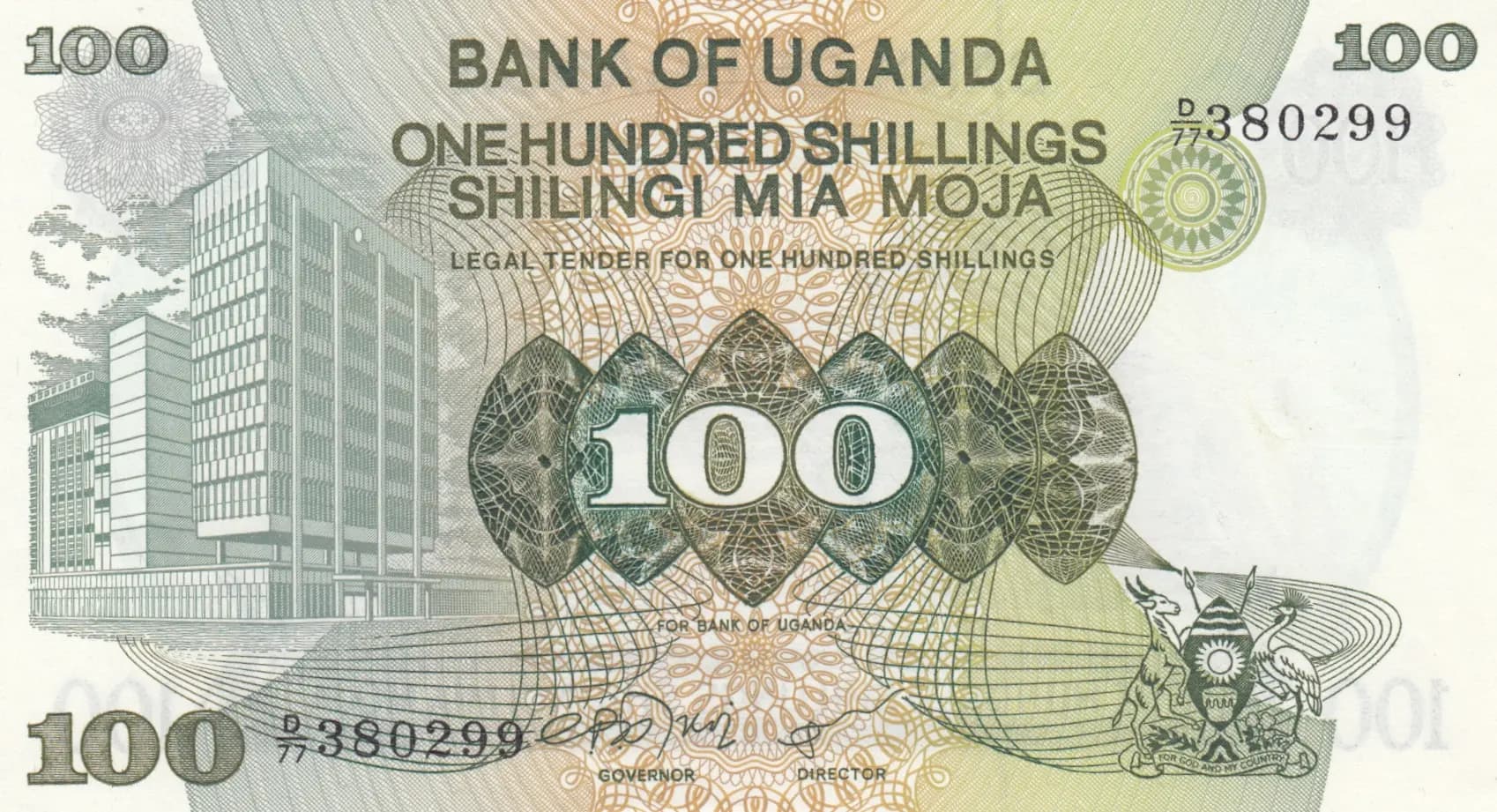
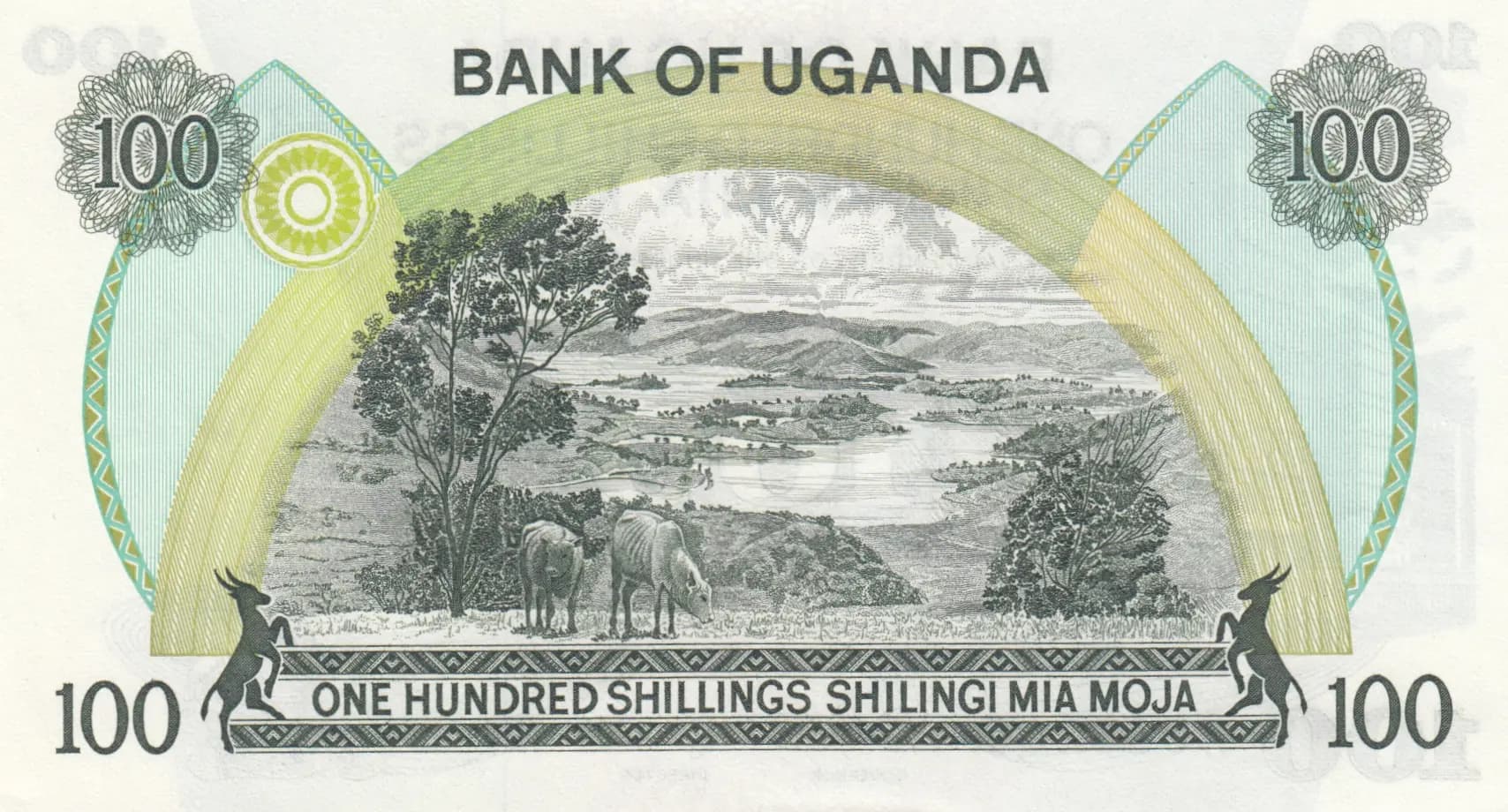
This is an uncirculated example of the Bank of Uganda's 1979 100 shillings note (Pick P-14a), displaying pristine condition with sharp, clear printing throughout both sides. The note features an impressive multi-color design combining the Bank of Uganda building on the obverse with an elegant East African landscape scene on the reverse, incorporating wildlife (elephants) and natural features characteristic of Uganda's geography. As a classic African banknote from the post-Amin era, this note represents an important period in Uganda's monetary history and remains a popular collector item, with market prices for UNC examples consistently ranging from $12-15 according to recent sales data.
Common. The 1979 100 shillings note remains widely available to collectors, with regular sales on the secondary market typically realizing $5-15 for UNC examples. eBay market data shows consistent transaction volume with multiple UNC sales documented between 2015-2020, indicating healthy supply. Print runs for this denomination during Uganda's post-1979 period were substantial, and no specific scarcity factors (short runs, recalls, or overprints) apply to Pick P-14a.
Issued in 1979, this banknote represents the early years of the Bank of Uganda's reestablishment following the political turmoil of the 1970s. The architectural focus on the Bank of Uganda building in Kampala symbolizes the institution's role in Uganda's economic recovery, while the reverse design celebrating Uganda's natural landscape—featuring elephants, acacia trees, and mountain scenery—reflects the nation's rich wildlife heritage and the importance of conservation to national identity during this period of rebuilding.
The obverse features the Bank of Uganda headquarters building in Kampala on the left side, depicted with detailed horizontal architectural lines and a regular window pattern, symbolizing institutional authority and monetary stability. The right side displays a large circular seal with concentric circular patterns, flanked by the Ugandan coat of arms at the bottom right showing the crested crane—Uganda's national bird and watermark symbol. Ornate rosette patterns frame the denomination numeral (100) in all corners, while elaborate geometric and floral line work creates an intricate security-printing background in shades of green, beige, tan, and cream. The reverse presents a scenic East African landscape with elephants in the foreground, a prominent spreading acacia tree, and a serene lake with mountains visible in the distance, framed by decorative arched elements and ornamental borders. Antelope figures appear as decorative elements at the base, reinforcing the wildlife theme. The entire design emphasizes Uganda's natural wealth and institutional legitimacy.
Front side: 'BANK OF UGANDA' (issuing institution), 'ONE HUNDRED SHILLINGS' (denomination in English), 'SHILINGI MIA MOJA' (denomination in Swahili), 'LEGAL TENDER FOR ONE HUNDRED SHILLINGS' (legal tender declaration), 'FOR BANK OF UGANDA' (authority statement), 'GOVERNOR' and 'DIRECTOR' (signature titles). Back side: 'BANK OF UGANDA' (issuing institution), 'ONE HUNDRED SHILLINGS SHILINGI MIA MOJA' (denomination in English and Swahili). Serial number observed: D380299.
Intaglio engraving (line engraving) with multicolor overprint, characteristic of high-security banknote production standards of the era. The intricate geometric patterns, fine line work, and detailed landscape engraving indicate professional security printing utilizing multiple color separations and careful registration. This production quality is typical of banknotes printed by established security printers for African central banks during the 1970s-1980s period.
This note is catalogued as Pick P-14a (regular issue). PMG records indicate variant P-14b exists with the same watermark (Crested Crane), and a specimen note variant P-14s is known. Serial number prefix does not appear to match replacement note prefixes (Z/1, Y/1, X/1, W/1 with their respective sub-prefixes) documented in reference materials, indicating this is a standard circulation issue. The serial number D380299 and signature titles (GOVERNOR and DIRECTOR) are consistent with the standard 1979 issuance.