1 dollar 1964
About This Note
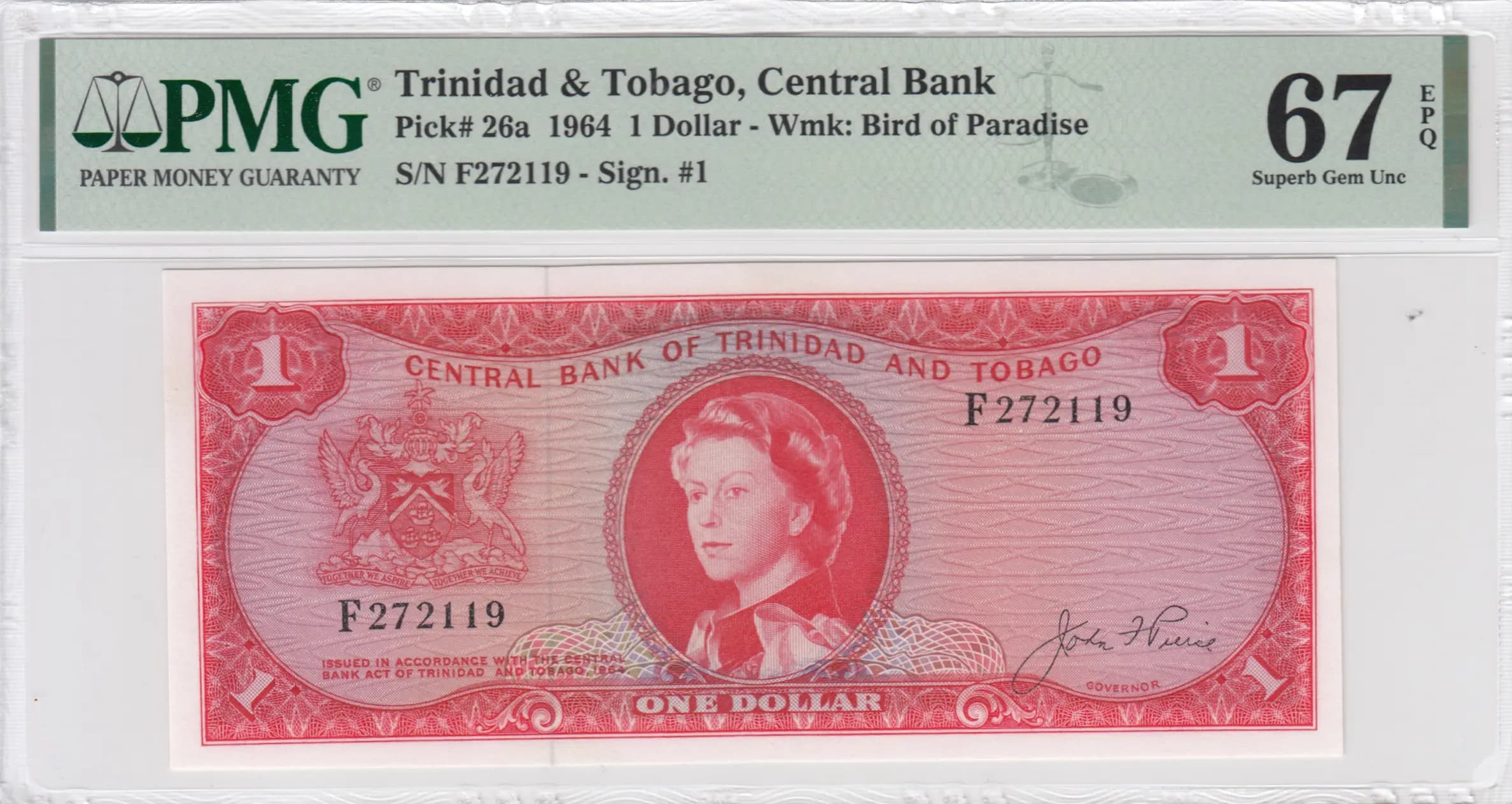
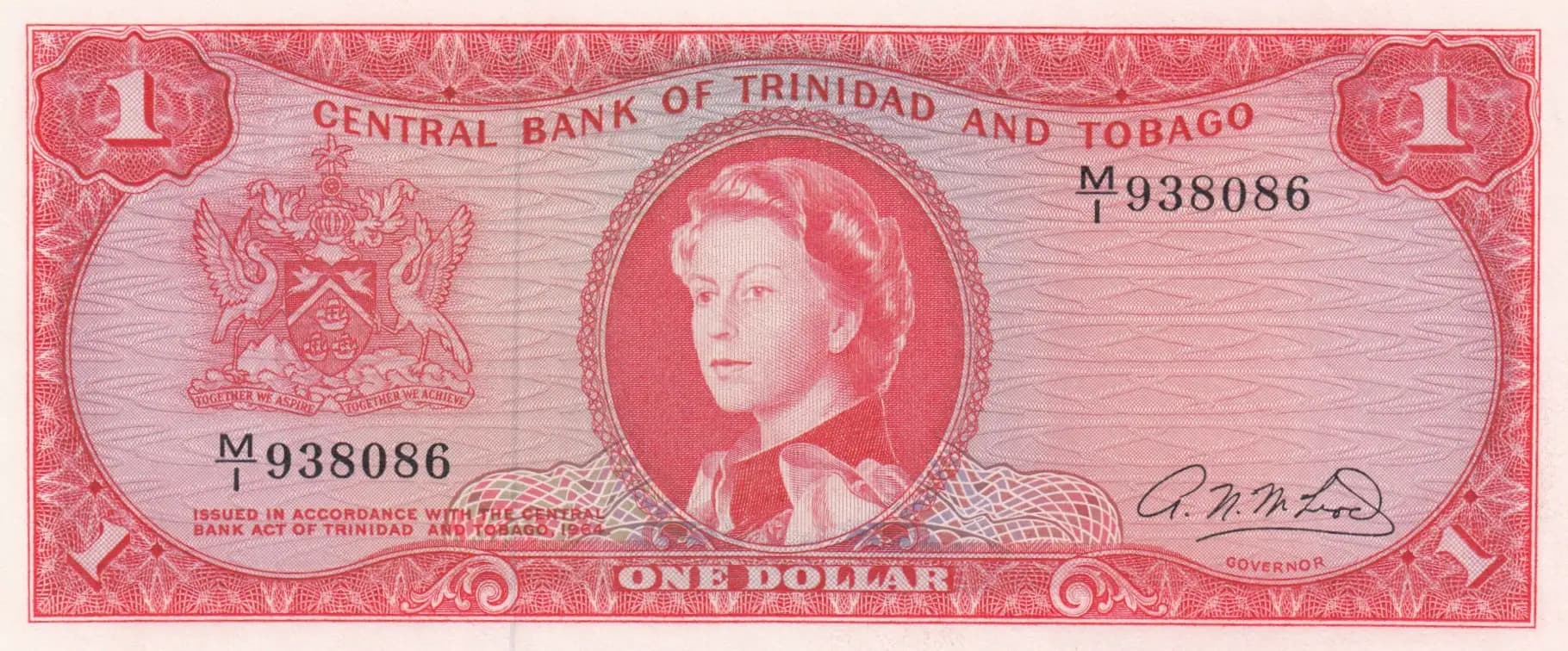
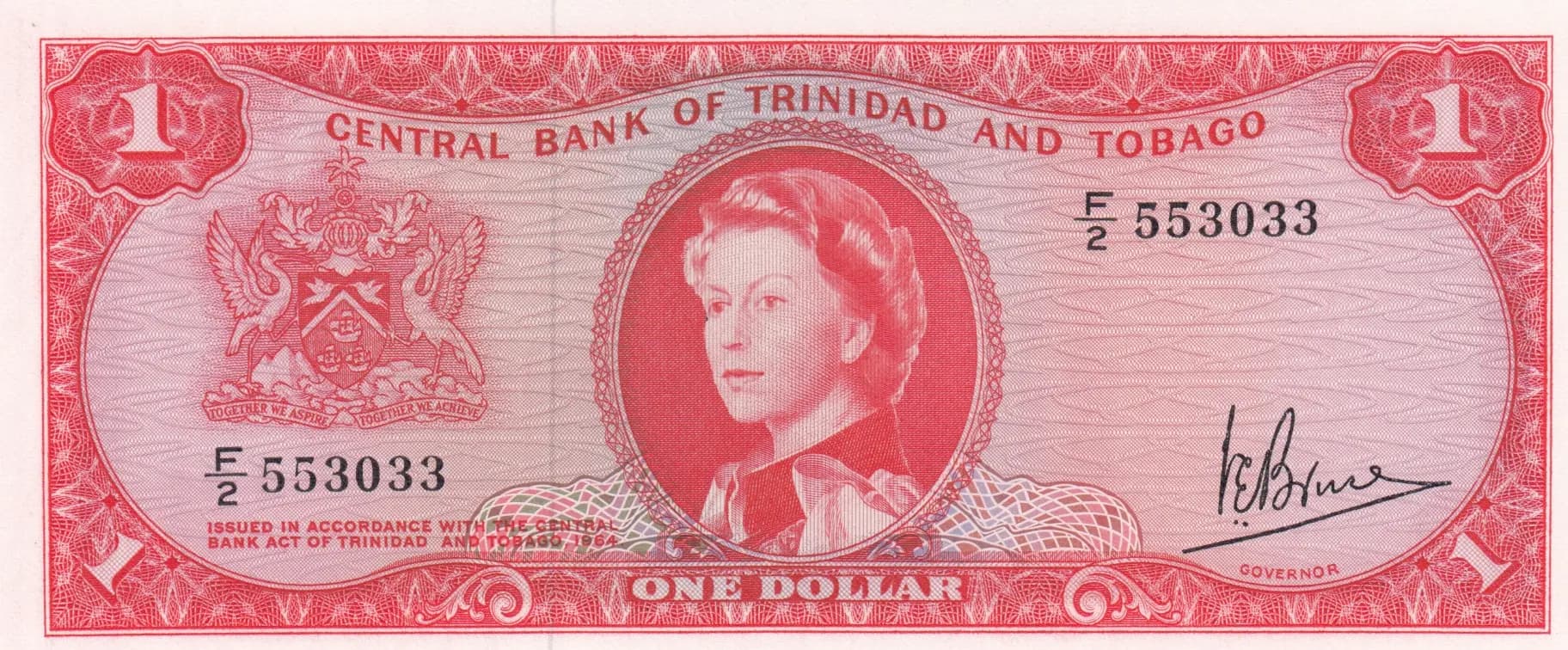
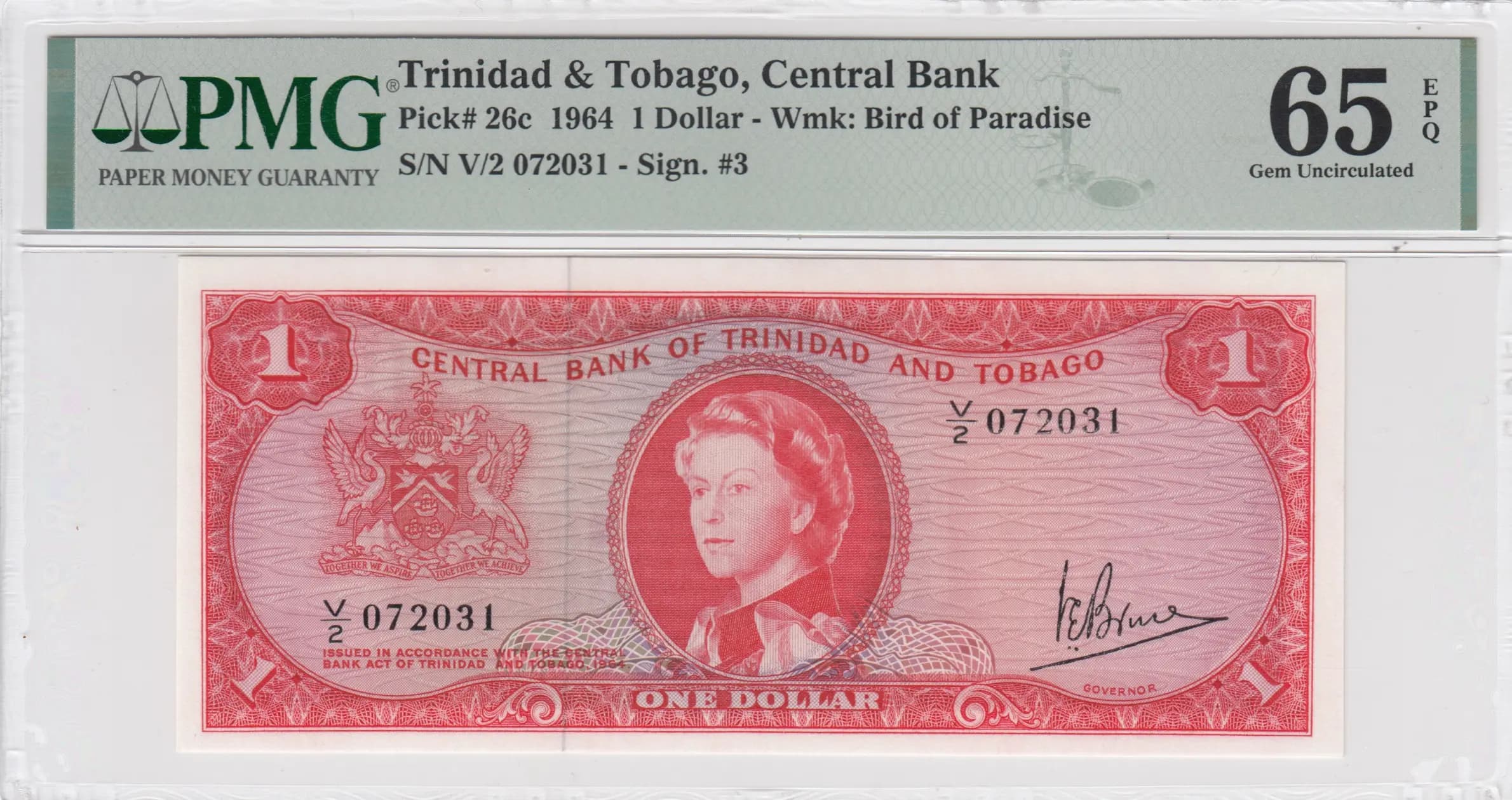
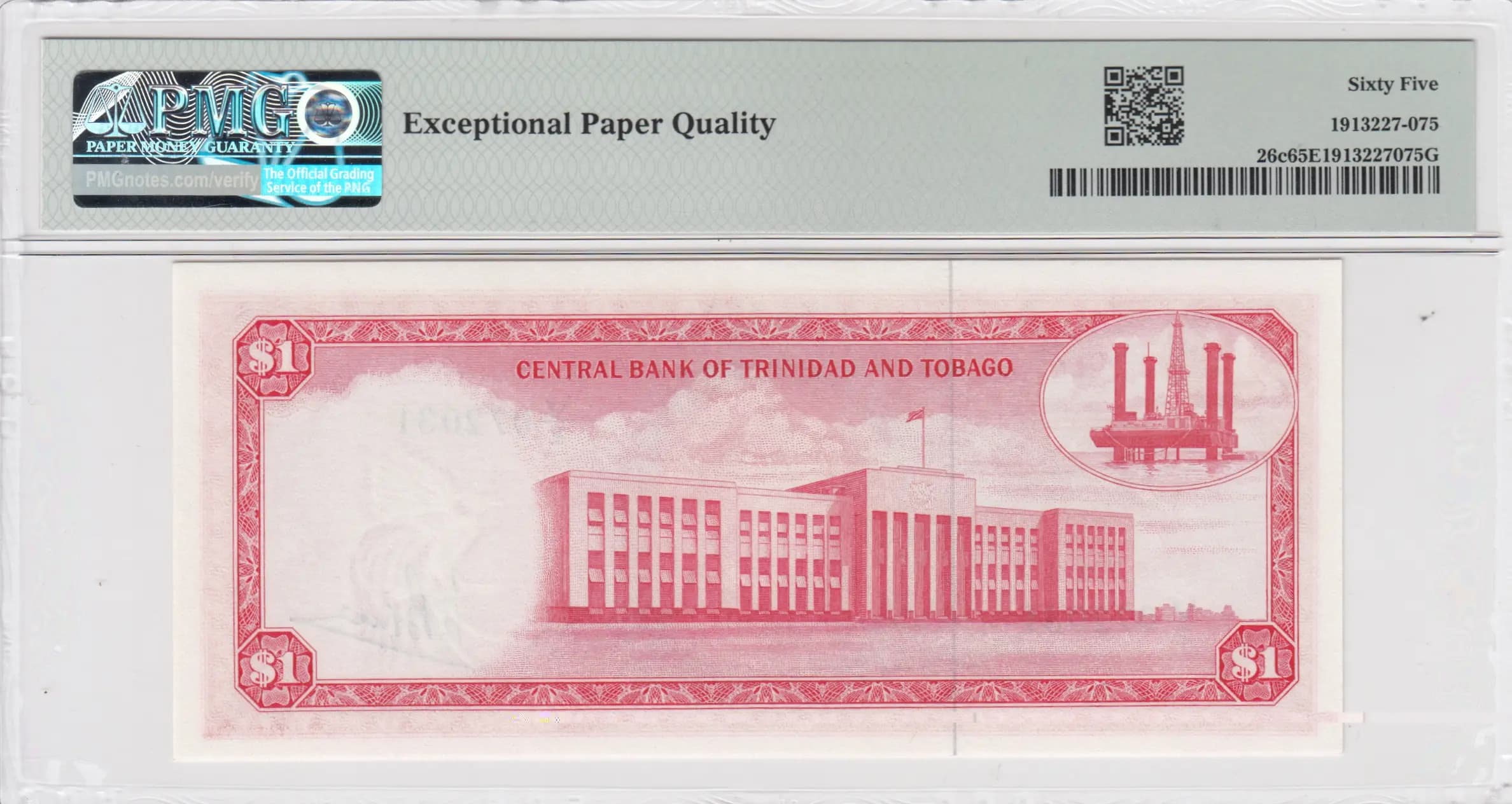
This is a pristine example of the Trinidad & Tobago 1 Dollar note from 1964 (Pick 26c), graded PMG 65 Gem Uncirculated with Exceptional Paper Quality. The note displays vibrant red/pink coloring with the portrait of Queen Elizabeth II centered on the obverse and features the Central Bank building and an oil derrick vignette on the reverse, reflecting Trinidad & Tobago's dual economic focus during the post-independence period. The sharp details, crisp paper quality, and absence of wear indicate this note has remained in uncirculated condition since its original issue.
Common. The 1 Dollar denomination of Trinidad & Tobago's 1964 issue was a standard circulating note produced in large quantities by the newly-established Central Bank. While the Pick 26c variety designation indicates one of three catalogued variants for this base denomination, all variants of this series appear in the marketplace regularly and without significant premium pricing. The PMG 65 grade, while representing an attractive uncirculated example, does not command exceptional rarity premiums for this particular issue. No evidence suggests limited print runs, early withdrawal, or collector scarcity for this note.
This 1 Dollar note was issued in 1964, coinciding with Trinidad & Tobago's independence from British colonial rule and the establishment of the Central Bank of Trinidad and Tobago under the Central Bank Act of 1964. The reverse design prominently features both the newly-established Central Bank building and an offshore oil platform, symbolizing the nation's modernization and its growing petroleum industry, which would become central to the country's economic development through the latter half of the 20th century. The retention of Queen Elizabeth II's portrait reflects Trinidad & Tobago's continued membership in the Commonwealth during this transitional period.
The obverse features a centered oval portrait of Queen Elizabeth II facing right in formal attire, reflecting Trinidad & Tobago's Commonwealth status at the time of independence. The left side displays the coat of arms of Trinidad and Tobago, featuring a lion and shield design, symbolizing national sovereignty. Ornate denomination markers displaying '1' appear in decorative squares in the upper left and right corners, rendered in intricate engraved patterns typical of high-security currency design. The reverse showcases the Central Bank of Trinidad and Tobago building as the primary design element—a modernist multi-story structure with regular window patterns occupying the lower two-thirds of the note. An inset oval vignette in the upper right depicts an oil derrick or offshore oil platform, representing the petroleum industry that was becoming increasingly important to the nation's economy. The entire note is bordered by fine ornamental geometric patterns and demonstrates masterful line work characteristic of professional currency engraving.
FRONT SIDE: 'CENTRAL BANK OF TRINIDAD AND TOBAGO' (issuing authority); 'ONE DOLLAR' (denomination in words); 'ISSUED IN ACCORDANCE WITH THE CENTRAL BANK ACT OF TRINIDAD AND TOBAGO 1964' (legal authorization statement); 'GOVERNOR' (title of signatory); Governor's signature (appears to read 'Leblanc' or similar); Serial number 'V/2 072031' (appears twice). BACK SIDE: 'CENTRAL BANK OF TRINIDAD AND TOBAGO' (issuing authority); '$1' (denomination symbol in decorative squares); 'PMG PAPER MONEY GUARANTY' (certification holder marking); 'Exceptional Paper Quality' (certification notation); 'Sixty Five' (grade notation); Certification number '1913227-075'; Detailed certification identifier '26c65E1913227075G'; 'PMGnotes.com/verify' (verification reference).
This note was produced using intaglio (engraved line) printing, evidenced by the sharp details, fine line work visible throughout the design, and the crisp registration of all elements. The intricate borders, detailed architectural rendering of the Central Bank building, and the delicate portraiture of Queen Elizabeth II are all hallmarks of intaglio engraving. The consistent quality of line patterns and the absence of dot-pattern printing suggest traditional steel plate engraving rather than later lithographic methods. The printer for this series is likely a British security printer given the Commonwealth context and the high-quality execution typical of such institutions, though specific printer attribution would require additional documentation.
This note is catalogued as Pick 26c and features the Bird of Paradise watermark, consistent with the PMG population data indicating three variants (P-26a, P-26b, and P-26c) all sharing this watermark. The specific variety distinction among these three catalogued variants typically relates to subtle differences in signatures, serial number prefixes, or minor design elements. The serial number prefix 'V/2' visible on this example may be significant for variety classification. The signature visible on this note (appearing to read 'Leblanc' or similar) represents the Governor's authorization and may distinguish this from other variants in the series. Further research into the specific characteristics distinguishing P-26a, P-26b, and P-26c would be required to fully document the variety distinctions.