20 baht 1942
Market Prices
4 salesAbout This Note
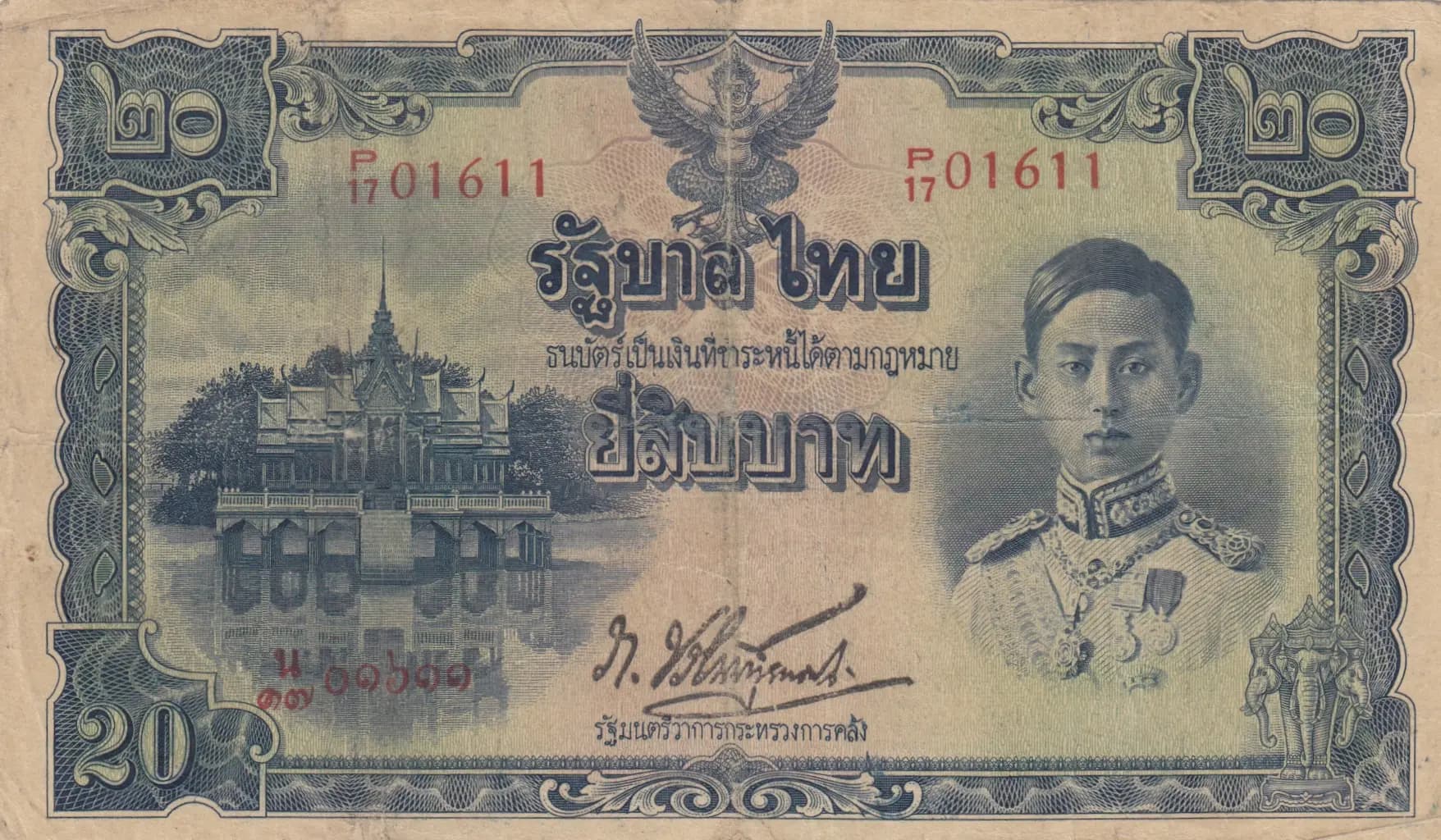
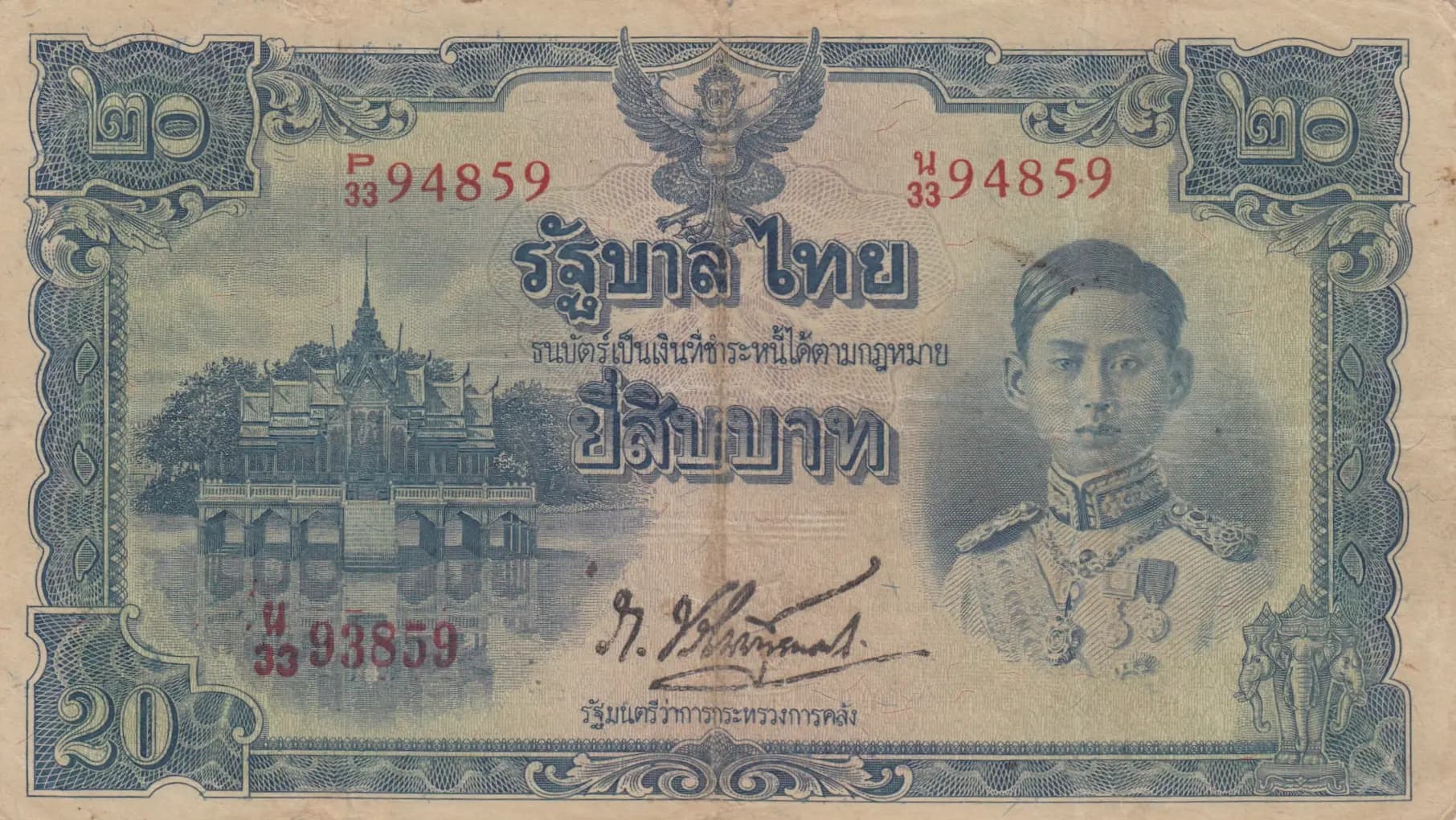
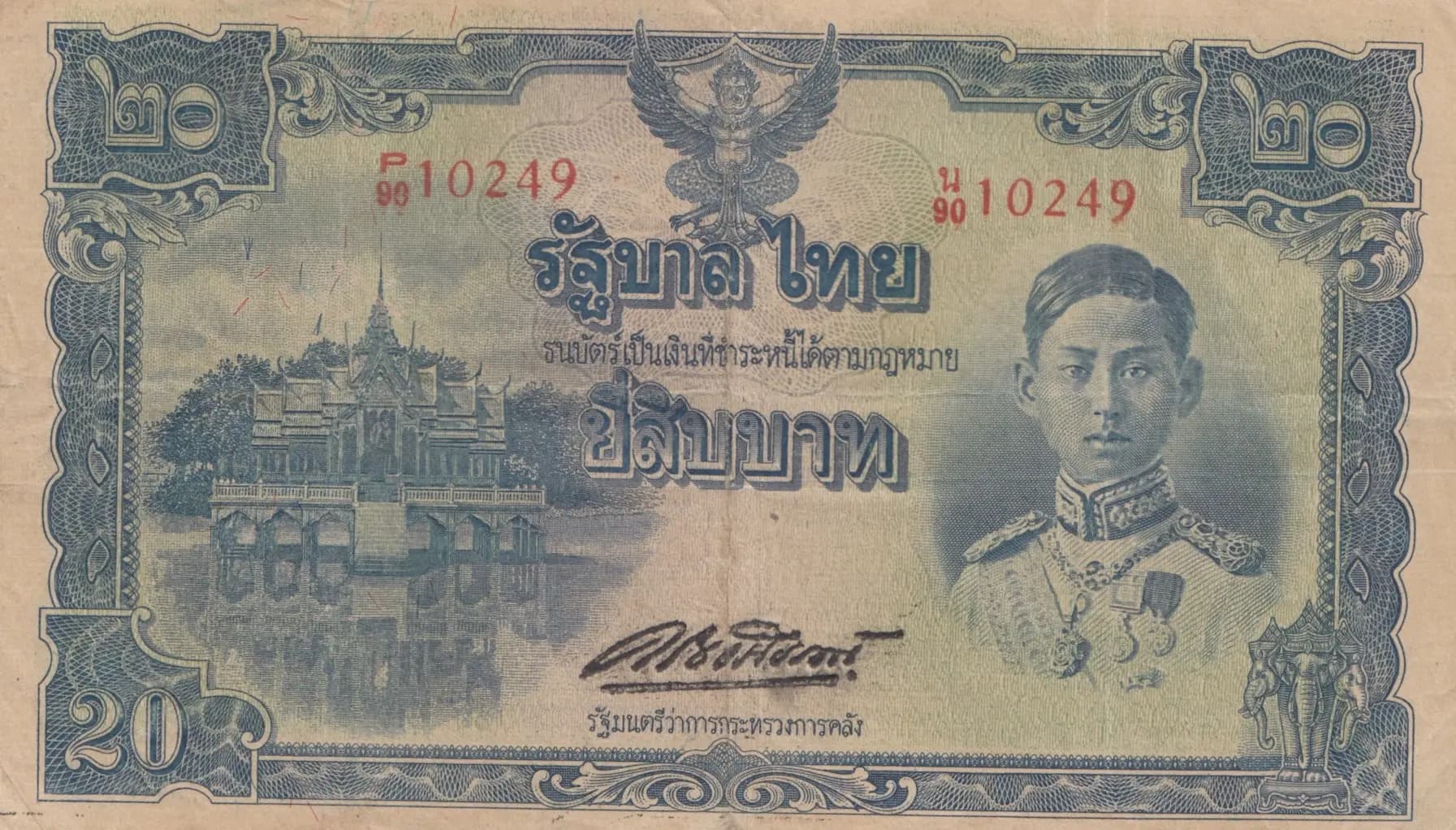
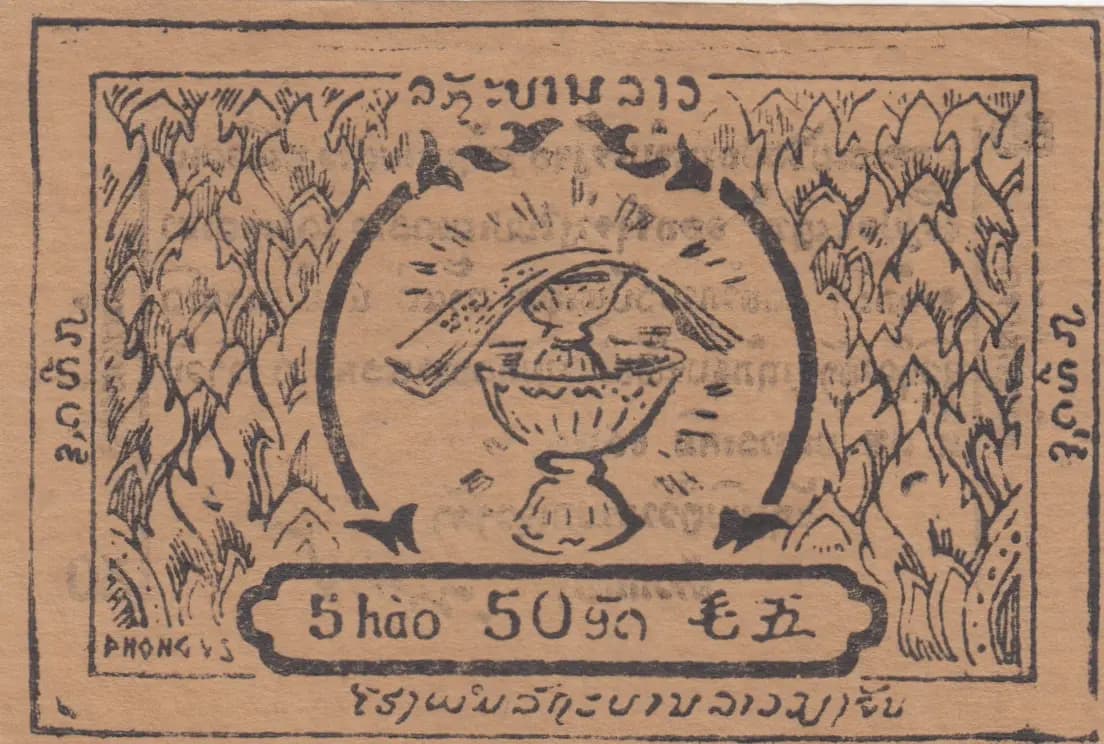
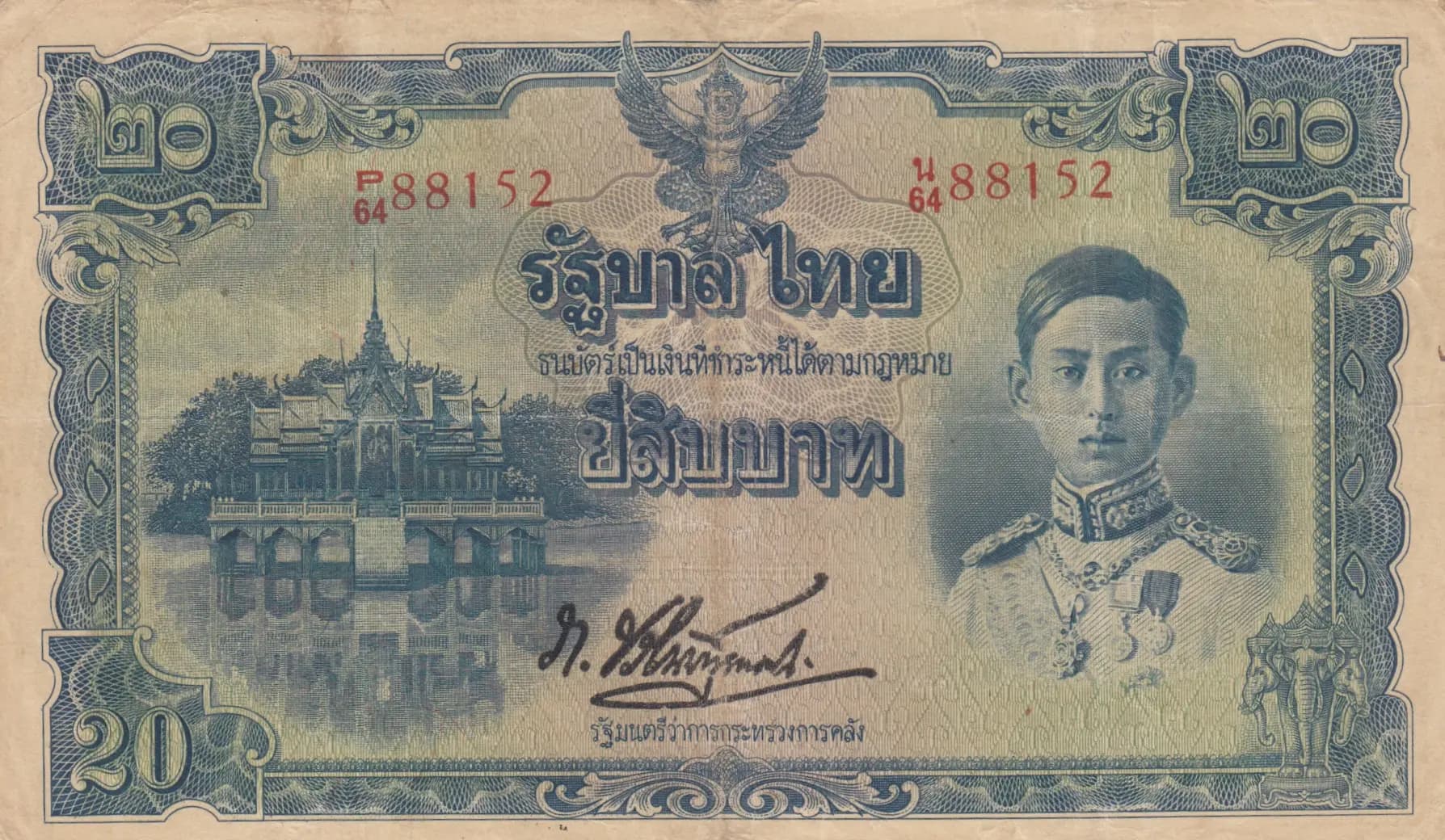
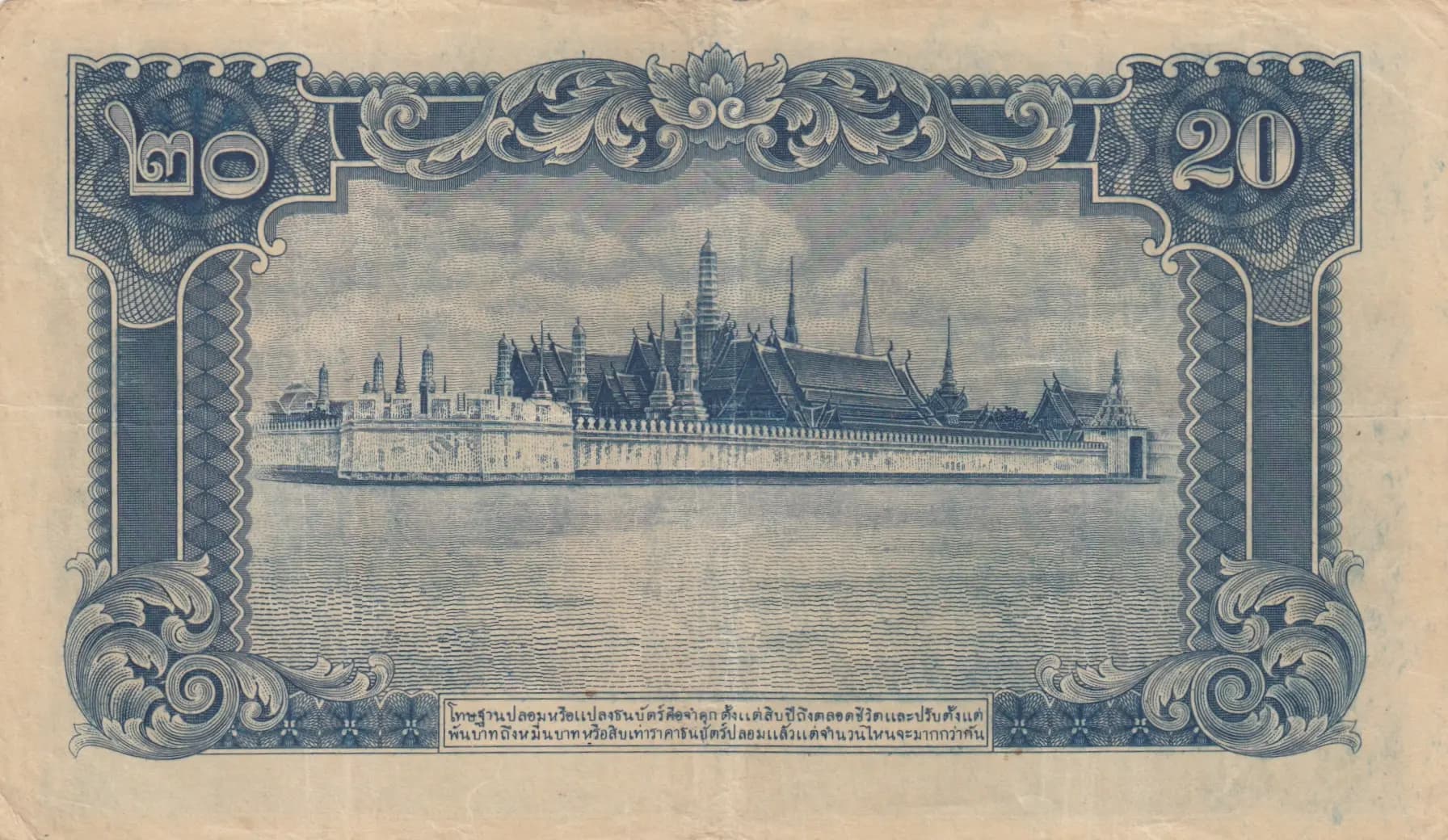
This Thai 20 Baht note from 1942 (Pick-49d) presents a well-preserved example of early Thai currency issued during the reign of King Rama VIII. The obverse features a formal portrait of the young king in military dress uniform alongside the Throne Hall, while the reverse showcases the Grand Palace Bangkok in a detailed waterfront scene. Despite showing moderate age-related wear including creasing, foxing, and edge wear consistent with circulation, the note retains excellent clarity in its fine engraved details and maintains strong color saturation in both blue and brown tones.
Common. The catalog value data from 2016 shows VF examples at $20, and eBay transaction history from 2013-2018 documents multiple sales in the $68-$150 range for fine condition examples, indicating steady collector demand but not scarcity. The note was a regular issue with standard production numbers for this denomination during 1942. No evidence of limited print runs, recall status, or other factors that would restrict availability.
Issued in 1942 during the reign of King Ananda Mahidol (Rama VIII), this banknote reflects Thailand's modernization efforts and the kingdom's monetary system under the Government of Thailand. The prominent depiction of both the royal portrait and the iconic Grand Palace complex on the reverse underscores the centrality of the monarchy and Bangkok's architectural heritage to Thai national identity during this period. The note's design and production by Mitsui Trading Company demonstrate Thailand's engagement with advanced international printing technology during the World War II era.
The obverse features a formal three-quarter profile portrait of King Rama VIII (Ananda Mahidol) dressed in full military regalia with decorations and insignia on the right side, paired with an architectural rendering of the Throne Hall (Chakra Maha Prasat or similar royal structure) on the left. A winged royal emblem (likely the Garuda or Thai royal insignia) is centered at the top. The reverse displays the Grand Palace complex of Bangkok viewed from across a waterway, rendered in meticulous detail with multiple ornate spires characteristic of Thai temple architecture, with water patterns suggesting the Chao Phraya River. Both sides feature elaborate decorative borders with ornamental scrollwork and guilloché patterning in the corners, typical of high-value Thai currency of this era.
Front Side: 'ธนบัญชี ไทย' (Thai Banknote); 'ยี่สิบบาท' (Twenty Baht); '20' (Denomination in Arabic numerals); 'ธนาคารแห่งประเทศไทย' (Bank of Thailand); Serial numbers '510249' and '901249' in red ink. Back Side: '20' (Denomination); Legal/administrative Thai text regarding currency exchange and redemption procedures (exact wording relates to withdrawal from circulation protocols).
Intaglio engraving (copperplate/steel plate process), executed by Mitsui Trading Company as noted in the catalog data. The visual analysis confirms characteristics typical of fine intaglio work: intricate line engraving throughout, detailed crosshatching, complex guilloché background patterns, and high-definition rendering of portraiture and architectural elements. Red serial numbers applied by additional printing process. The watermark features a constitutional symbol on a tray with pedestal, impressed during papermaking.
Pick-49d represents the primary variety for this issue, distinguished by its blue color on brown underprint and constitution watermark. The visual analysis shows red serial numbers with control letters (Western character in upper left, Thai character in upper right), consistent with cataloged specifications. The two serial number positions (one deleted as noted in source references) and the specific color scheme confirm this as the standard P-49d variety. No variant signatures or overprints are evident from the visual examination.