1 baht 1955
Market Prices
155 salesAbout This Note
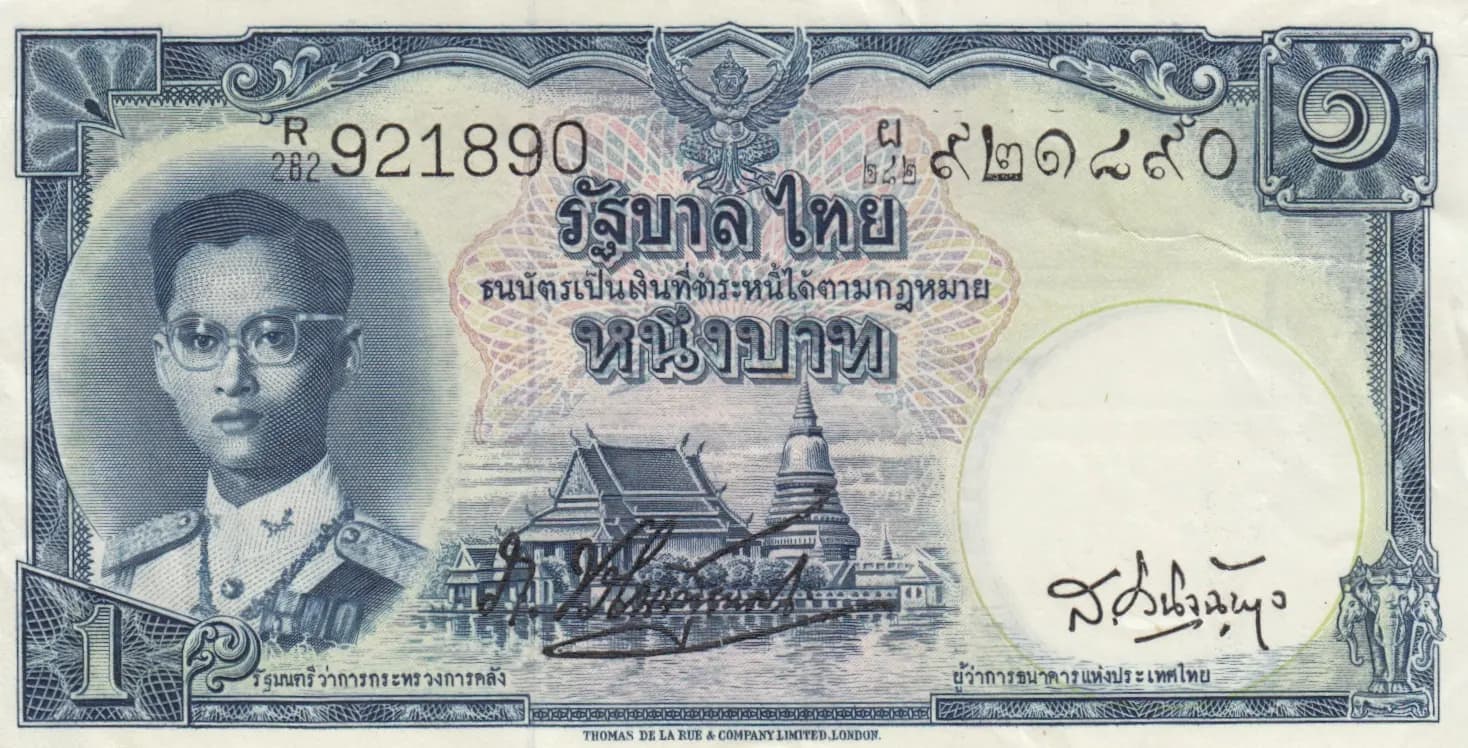
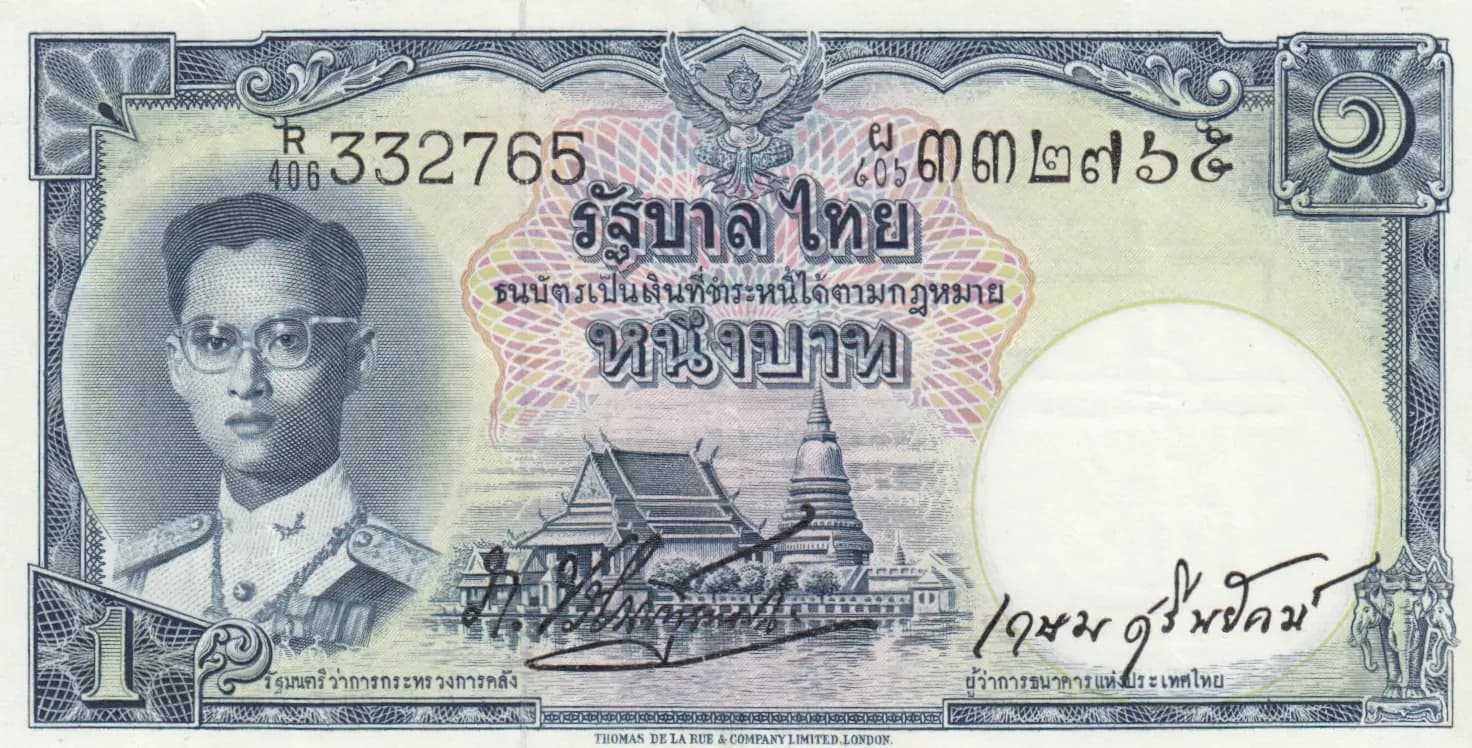
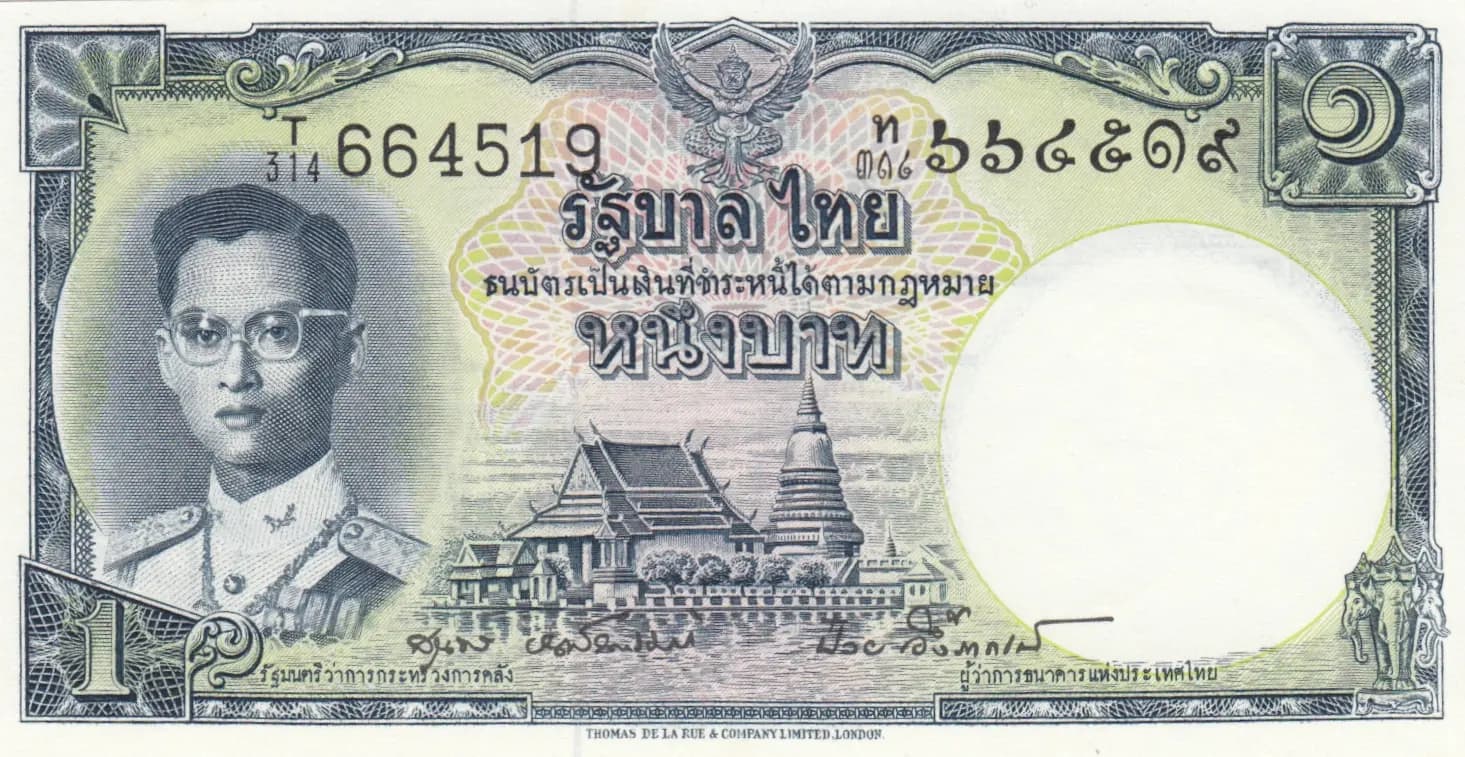
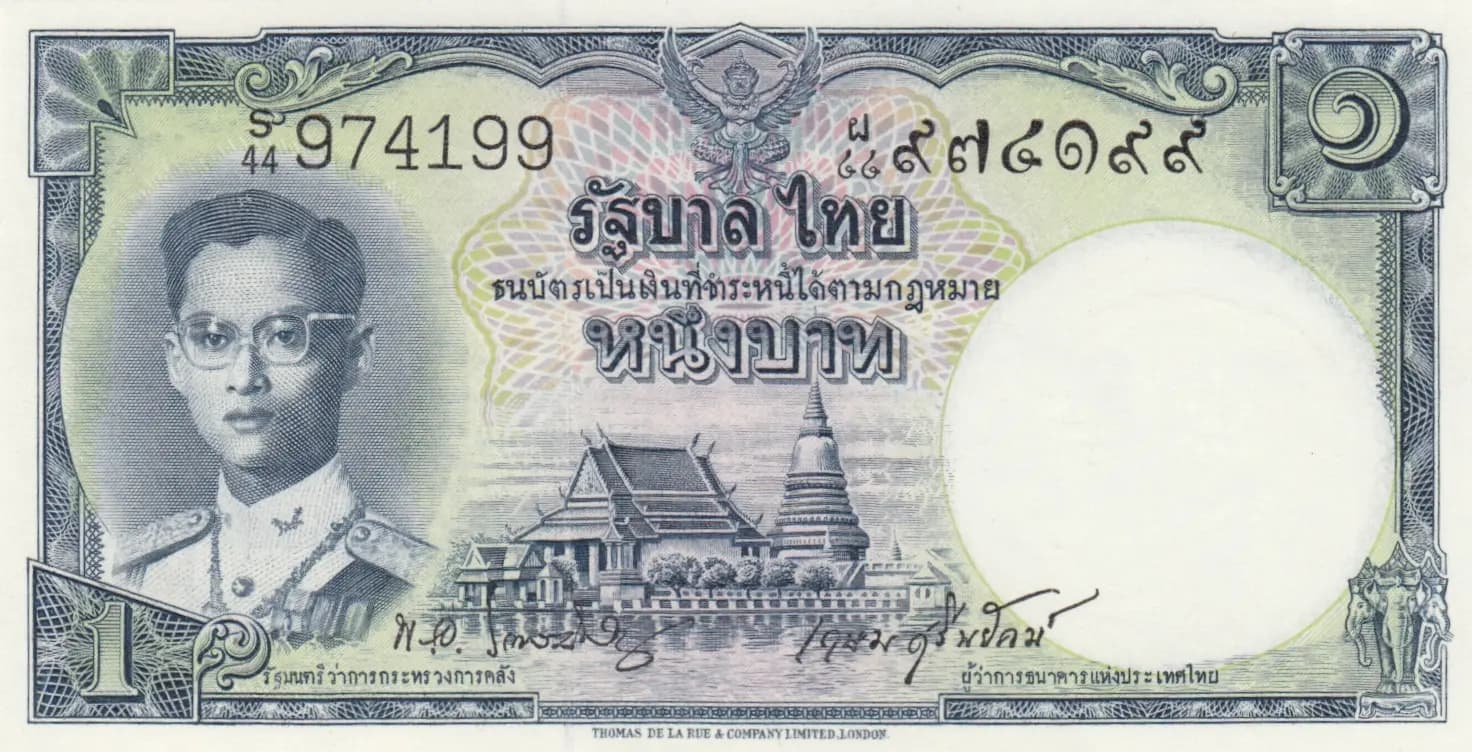
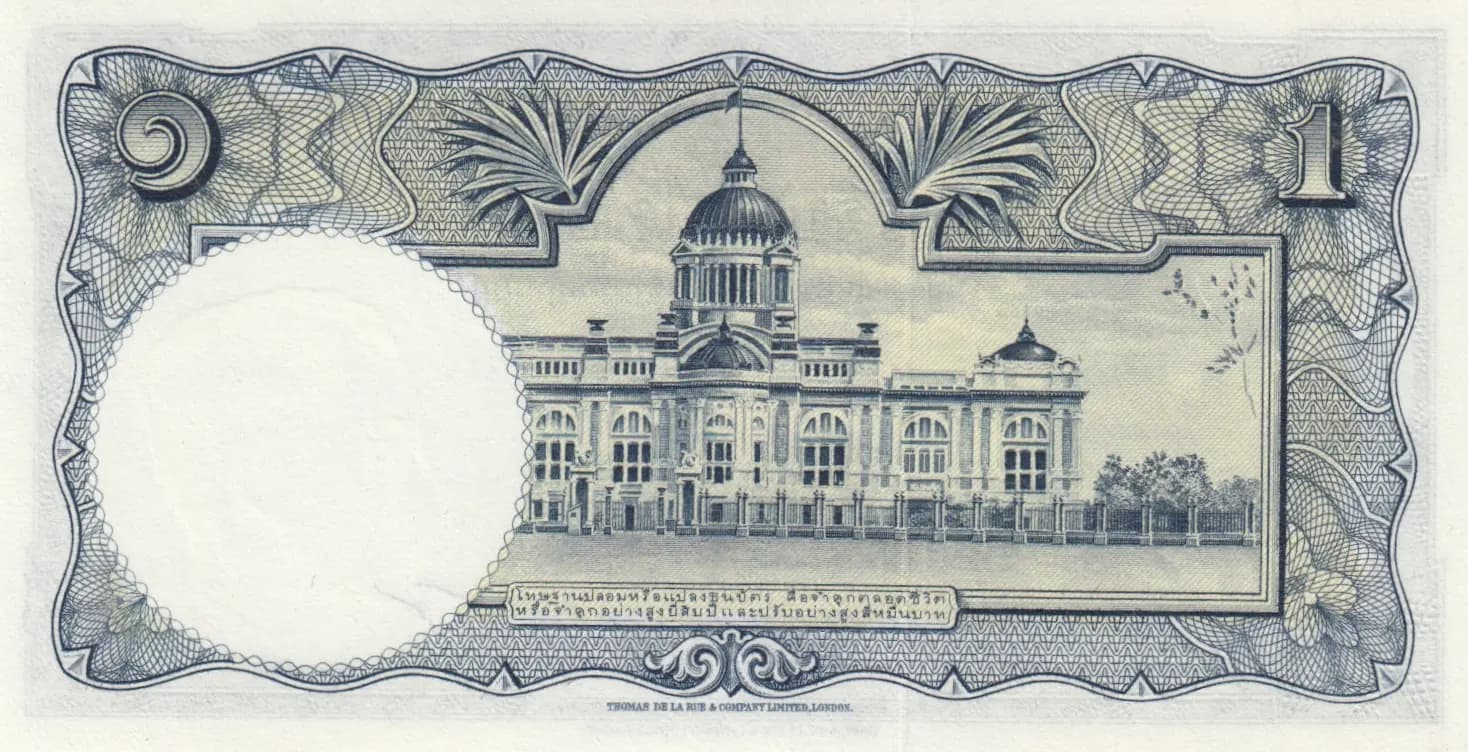
This Thailand 1 Baht note from 1955 (Pick P-74d) presents in Uncirculated condition with crisp, clean printing and no visible wear. The note features a formal portrait of King Rama IX in Field Marshal's uniform on the obverse, paired with an ornate temple vignette, while the reverse showcases a classical Western-style building with a prominent dome. The exceptional condition and Thomas de la Rue fine-line engraving make this an attractive example of early Thai currency design.
Common. The eBay sales data shows consistent trading activity from 2010 to 2025, with UNC and AUNC examples regularly selling in the $2–$15 range, and professionally graded specimens (PMG 64–67) typically achieving $10–$42. The high volume of sales across multiple condition grades and the catalog value of only $2.50 for UNC condition indicate a readily available note with no scarcity premium. This is a standard-issue circulation note from 1955 with a substantial print run.
Issued during the reign of King Bhumibol Adulyadej (Rama IX), this 1955 banknote commemorates the early modernization period of Thailand's currency system under government oversight. The dual imagery—juxtaposing the Thai sovereign (in military regalia) with both indigenous religious architecture (the temple/Phra Samut Chedi) and Western institutional design (the domed building)—reflects Thailand's careful balance between preserving traditional culture and embracing modern governance structures in the post-World War II era.
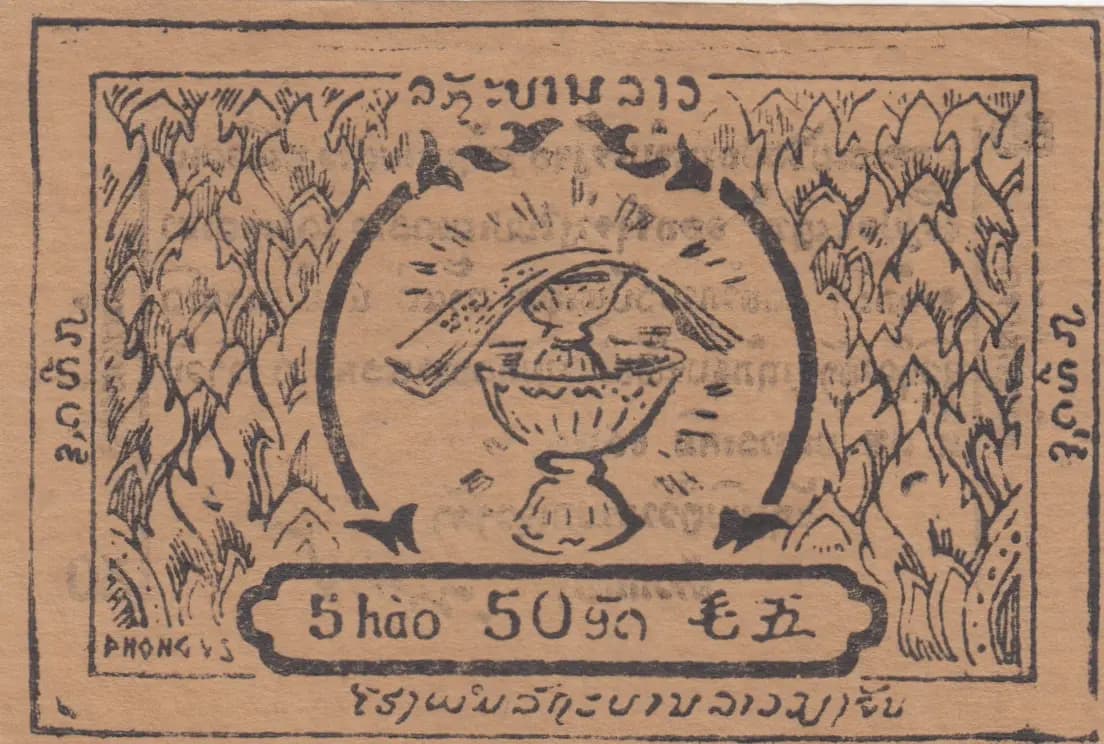
The obverse features a formal three-quarter facing portrait of King Bhumibol Adulyadej (Rama IX) wearing glasses and full Field Marshal's dress uniform with shoulder insignia and military decorations—a depiction emphasizing his role as supreme commander and modernizing monarch. Below the portrait sits an ornate oval cartouche containing the image of Phra Samut Chedi (Samut Prakan temple), a significant Thai Buddhist monument, rendered in fine engraved line work. The reverse displays a Western classical-style building (likely representing a Thai government or institutional structure) with a prominent central dome, symmetrical facade, arched windows, and formal architectural details. The composition throughout employs intricate geometric and floral border patterns, with Thai numerals in the corners and a watermark featuring the King's profile.
FRONT SIDE: 'ธนบัญชีไทย' (Bank of Thailand); 'หนึ่งบาท' (One Baht); 'ธนบัญชีแห่งประเทศไทย' (Bank of Thailand); Serial number: T 1664519; 'THOMAS DE LA RUE & COMPANY LIMITED, LONDON' (printer identification). BACK SIDE: 'THOMAS DE LA RUE & COMPANY LIMITED, LONDON' (printer identification); Thai text present but not clearly legible in the visual analysis at bottom of the architectural vignette.
The note was produced using intaglio (steel engraving) printing by Thomas de la Rue & Company Limited of London, as identified in the printer's imprint. The fine, precise line work visible throughout the design—particularly in the portrait rendering, architectural details, and ornamental borders—is characteristic of the high-security intaglio process employed by this world-renowned security printer. The crisp impressions and fine detail preservation in this UNC example reflect the quality of the original plates and printing execution.
This note is catalogued as Pick P-74d (TDLR printer variant). The PMG Population Report confirms three variants exist for the base 1 Baht note: P-74b, P-74d, and P-74s. The 'd' designation likely indicates a specific printer run or signature variety. The serial number format 'T 1664519' (single letter prefix followed by seven digits) is consistent with Thai notes of this era. Without access to detailed signature comparison or known printing varieties for P-74d, further variety identification would require reference to specialized Thai currency catalogs.