10 kronor 1948
Market Prices
13 salesAbout This Note
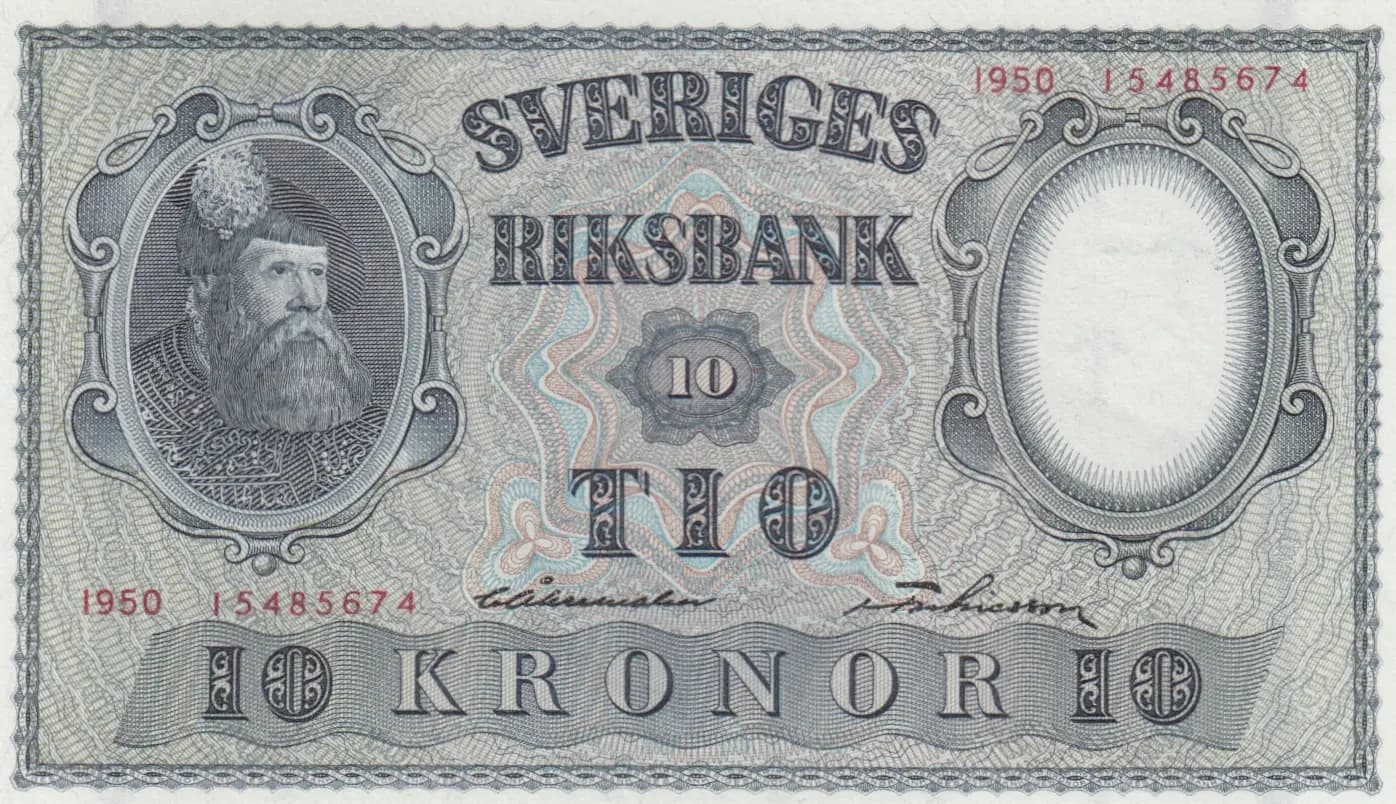
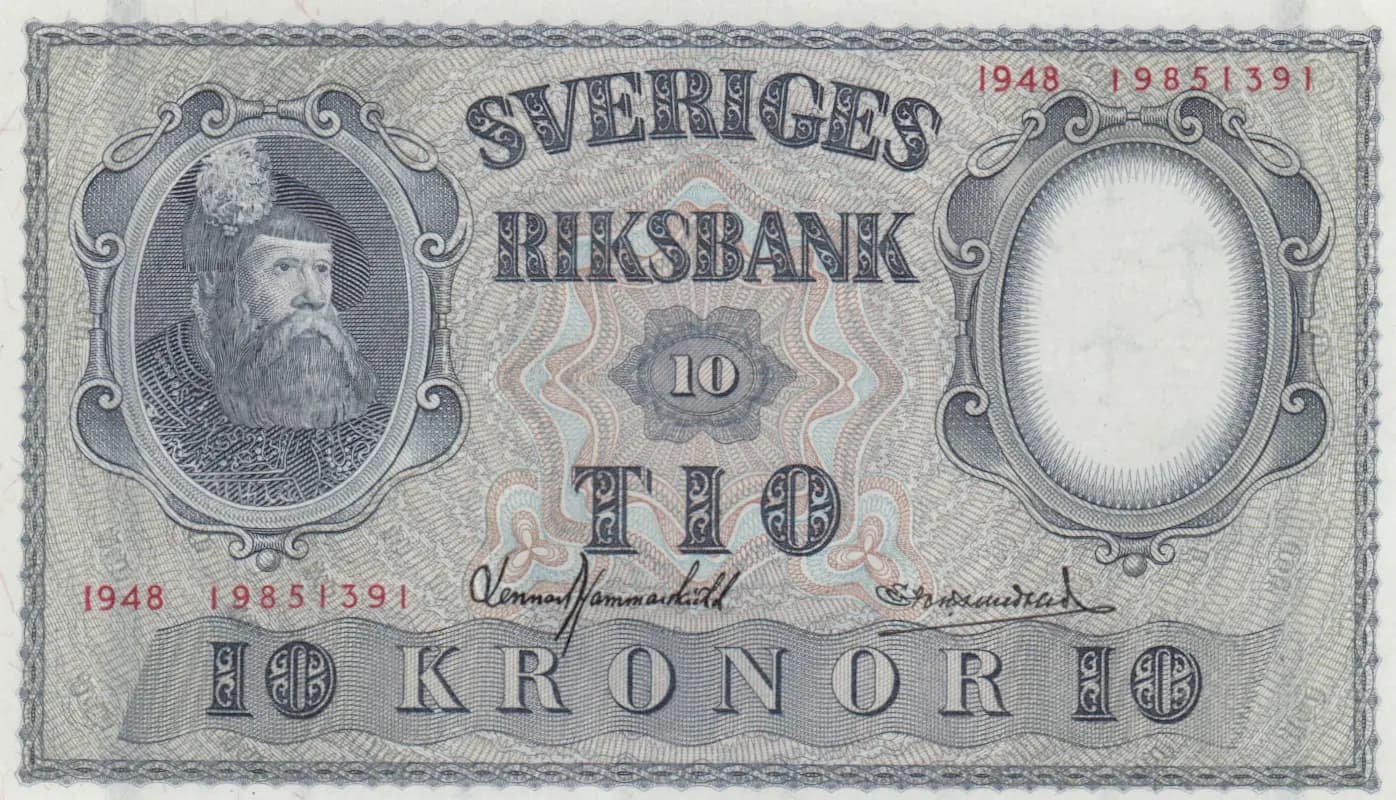
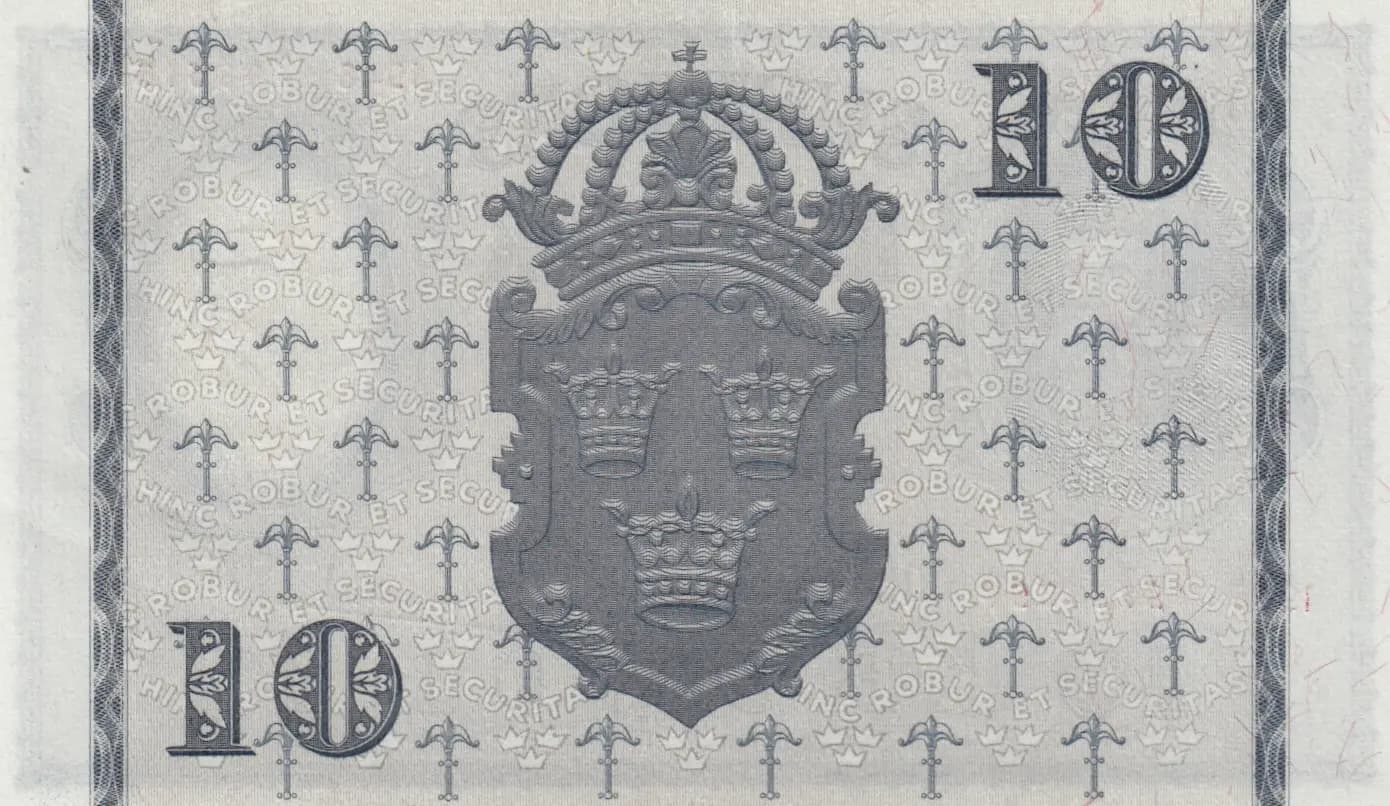
This 1948 Swedish 10 kronor note (Pick P-40i) is presented in uncirculated condition with crisp printing and pristine margins. The obverse features a finely engraved portrait of King Gustav Vasa in profile on the left, surrounded by ornate scrollwork and decorative frames, while the reverse displays the Swedish coat of arms with crowned lions and heraldic detail. The note showcases exceptional engraving quality with intricate line work and cross-hatching typical of 1940s Scandinavian currency design.
Common. The 1948 10 kronor note was part of a large production run spanning 1940-1952 (as noted in external references), with millions of specimens issued. eBay market data shows UNC examples selling for $6-8.50 in recent sales, and catalog values list UNC at $6 (2016), confirming widespread availability. PMG population reports indicate multiple recognized varieties (P-40d, P-40i, P-40l), further supporting high print volumes. This is a standard, easily obtainable note for Swedish currency collectors.
This note was issued during the reign of King Gustav VI Adolf, with the portrait of Gustav Vasa—the 16th-century founder of modern Sweden and the Vasa dynasty—serving as a symbol of national continuity and royal authority in the post-World War II period. The Swedish coat of arms featuring crowned lions and the Latin motto 'ROBUR SECUR' (Strong and Secure) on the reverse reinforced the stability and legitimacy of Sveriges Riksbank during Sweden's economic recovery in the late 1940s. The 1948 issue date places this note at the beginning of a production run that would continue through the early 1950s.
The obverse features King Gustav Vasa (1496-1560), founder of the Vasa dynasty and modernizer of Sweden, rendered in fine profile with characteristic long beard and draped historical clothing within an ornamental frame. The reverse displays the Swedish royal coat of arms—a crowned shield with heraldic lions arranged in quarters, topped by a royal crown—centered on a background of repeating cross patterns arranged in a geometric grid, symbolizing religious and national authority. The design employs sophisticated engraving with fine line work, cross-hatching, and ornamental scrollwork in all corners, characteristic of high-security currency design of the mid-20th century.
Front: 'SVERIGE RIKSBANK' (Sweden's Central Bank), 'TIO KRONOR' (Ten Kronor), '10 KRONOR 10' (denomination), date markings '1948', signatures of 'Vermod Hammarskjöld' and 'Sparre' (officials). Back: Denomination '10' in corners, 'ROBUR SECUR' (Latin: Strong and Secure) visible in watermark area. Serial numbers appear in red on the obverse as noted in catalog references.
Intaglio engraving (line engraving) on bank note paper, evident from the fine line work, cross-hatching patterns, and crisp impression visible in the uncirculated example. The intricate detail and precision suggest professional security printing by a major Scandinavian currency printer, likely Kungl. Tryckeriet or similar Swedish state printing facility responsible for Sveriges Riksbank currency production in this era.
This note is catalogued as Pick P-40i, representing one of at least three recognized varieties within the base P-40 designation (others include P-40d and P-40l per PMG records). Varieties likely relate to signature combinations (Vermod Hammarskjöld and Sparre are visible here), printing dates within the 1948 series, or serial number prefixes. The red date and serial number markings noted in catalog references are consistent with the 1948 issue. Without access to detailed variety literature distinguishing these P-40 varieties, further specification is not possible from visual analysis alone.