2 1/2 gulden 1978
Market Prices
11 salesAbout This Note
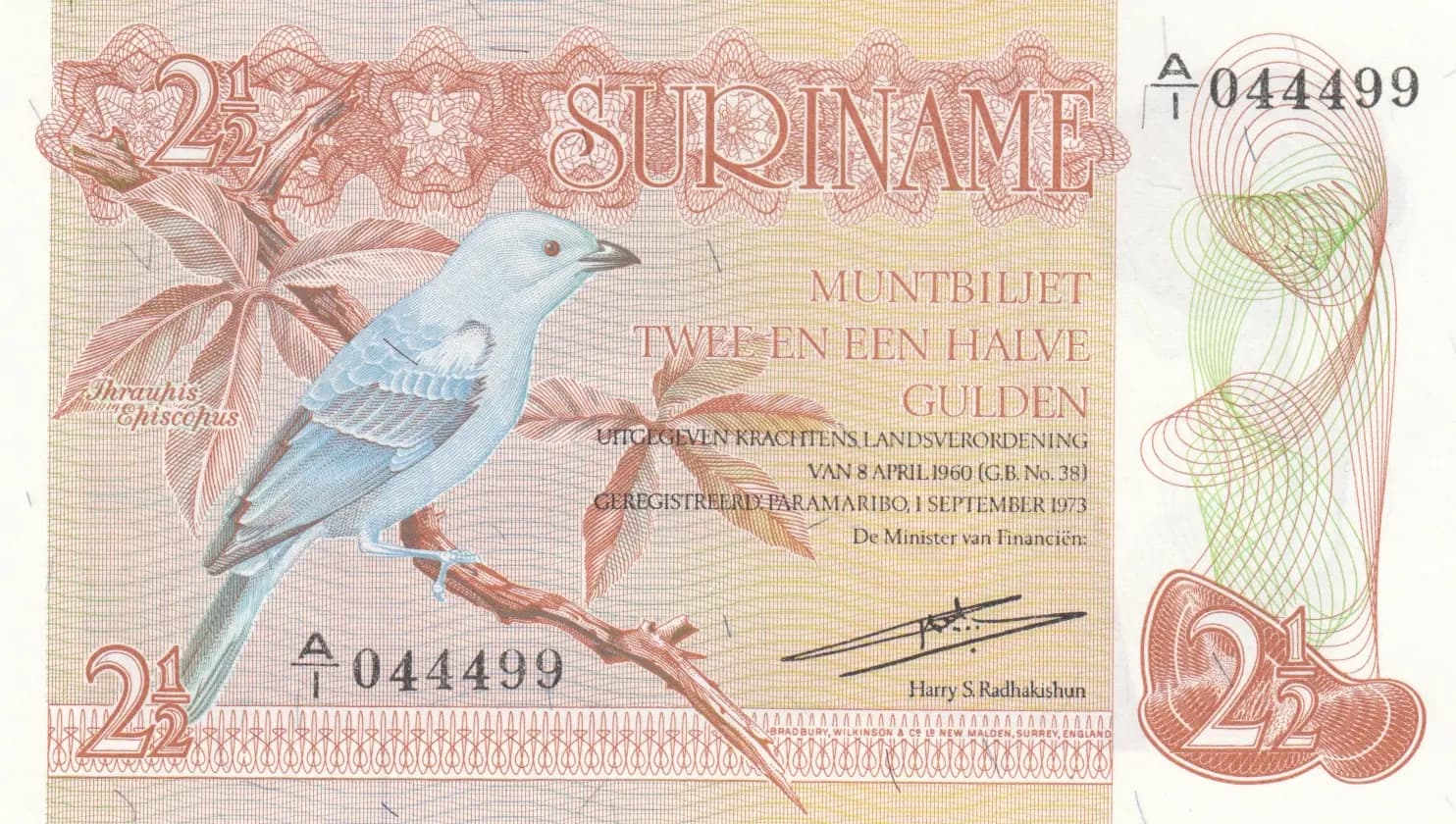
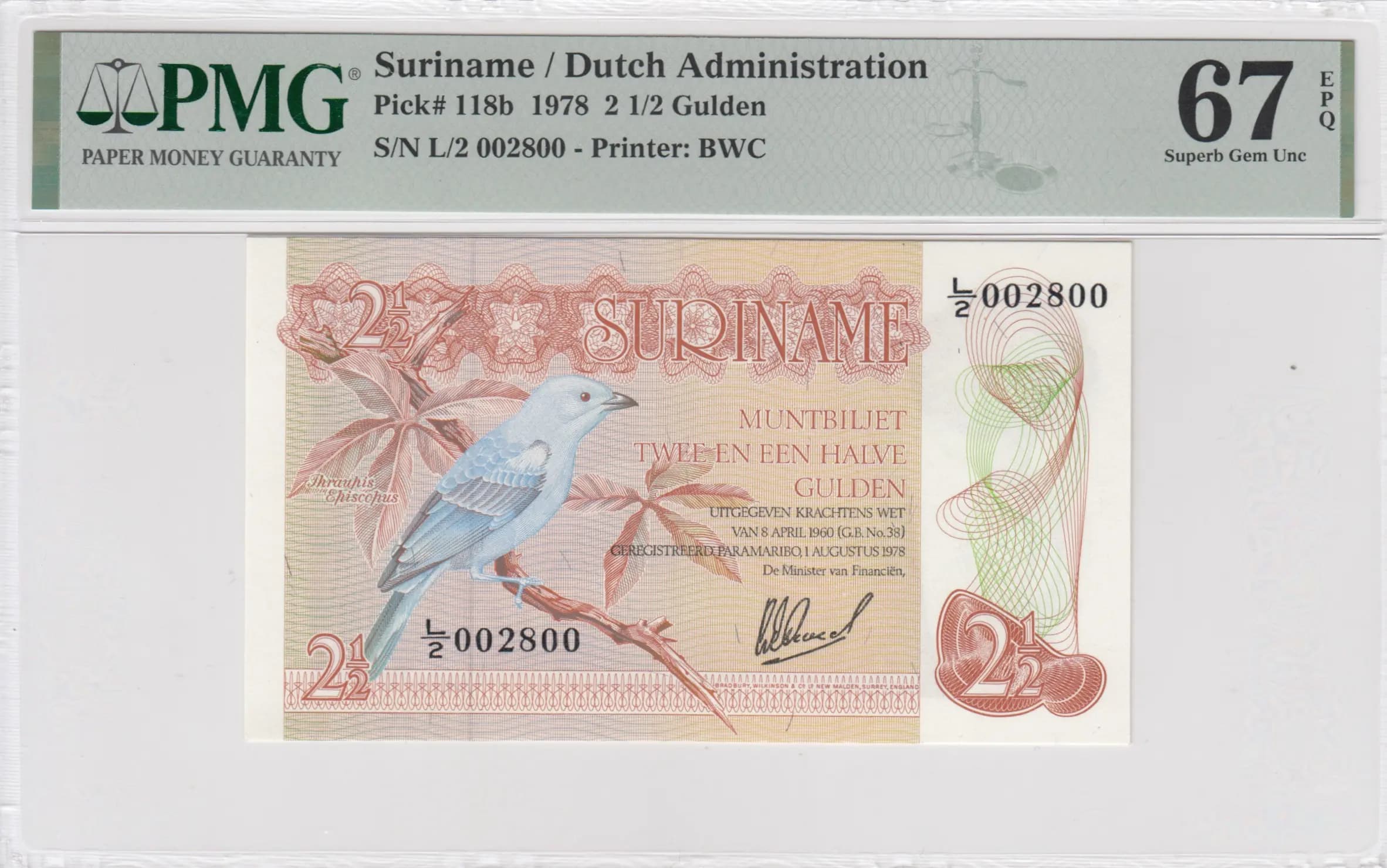
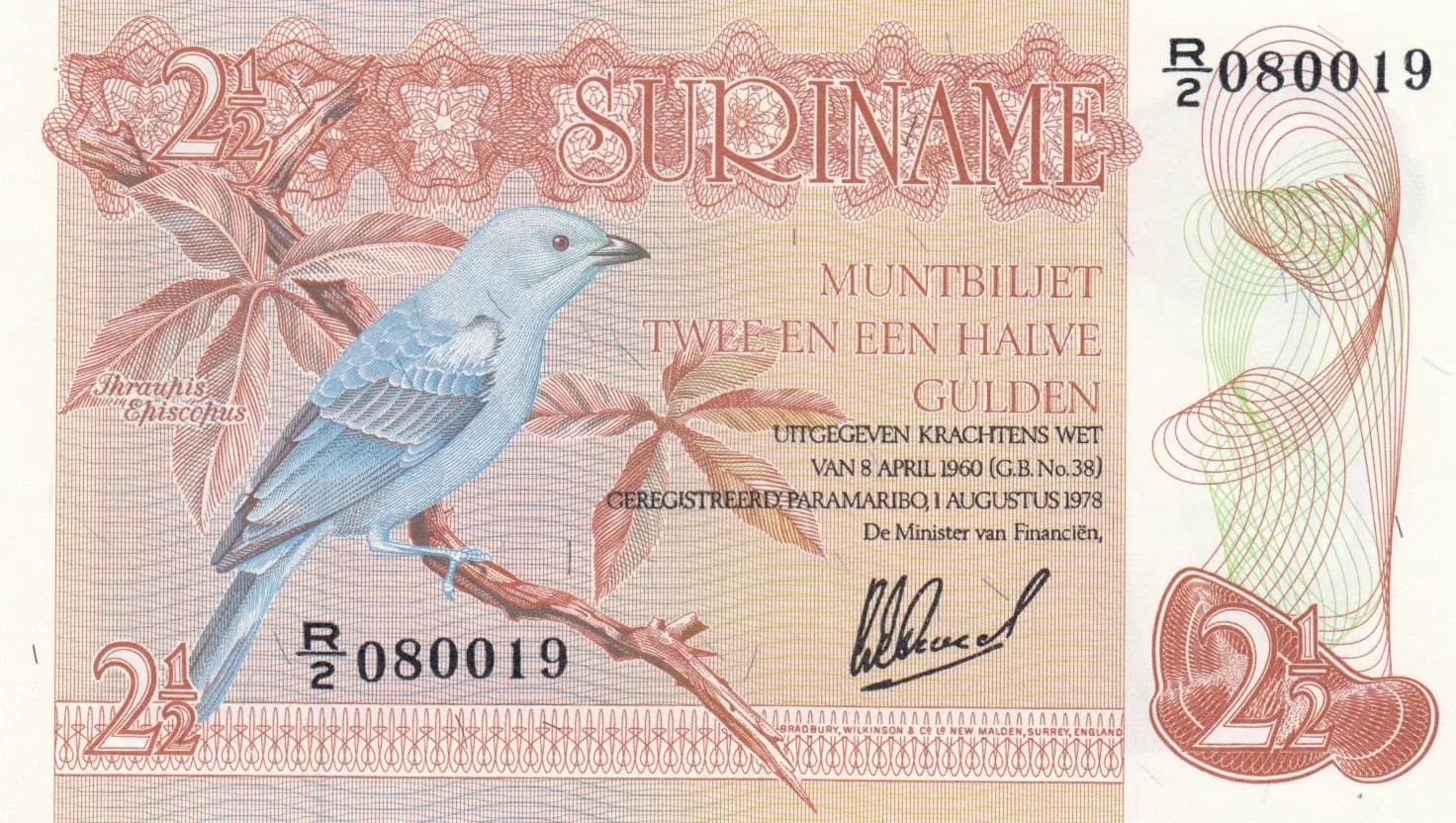
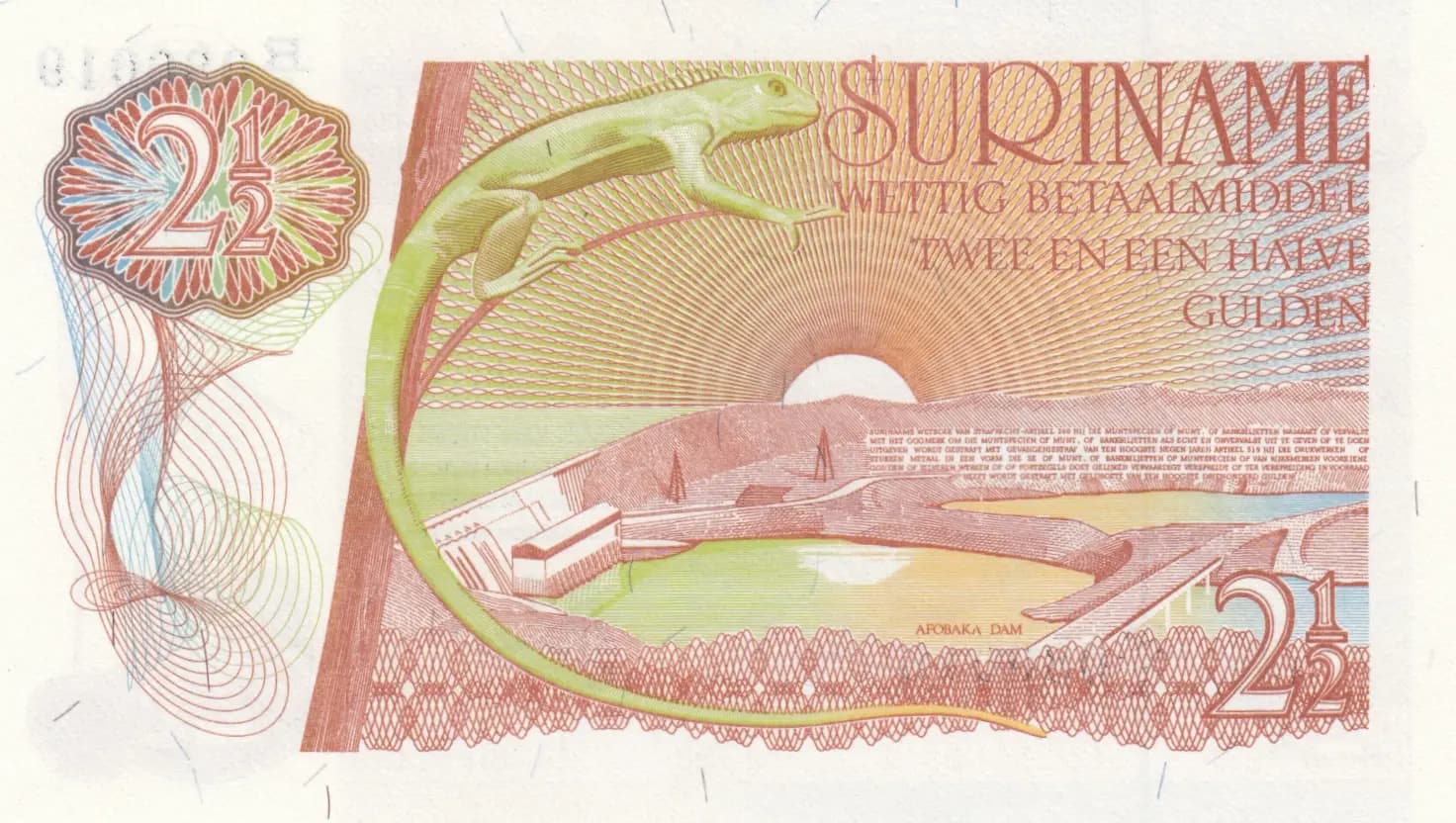
This is a Surinamese 2½ Gulden from 1978, presented in uncirculated condition with crisp, pristine surfaces showing no signs of wear or handling. The note features vibrant multicolored engraving with a distinctive Blue-gray Tanager on the obverse and the Afobaka Dam landscape with a green lizard on the reverse, exemplifying Suriname's natural heritage. The intricate ornamental frames, fine line work, and complex security patterns demonstrate the sophisticated intaglio engraving characteristic of this issue.
Common. This is a regular issue from 1978 with multiple known varieties (P-118a, P-118b, P-118s2 cataloged by PMG), indicating a substantial print run. eBay market data strongly supports common status: uncirculated examples have sold consistently between $2.24 and $5.50 over the 2015-2019 period, with the 2019 catalog value for UNC at $4.50. The note has modest collector demand, typical of post-colonial currency from smaller nations. Multiple sales across various grades and years confirm steady availability in the market.
Issued in 1978 under the authority of the Law of April 5, 1960, this banknote reflects Suriname's currency during a period following its independence from the Netherlands in 1975. The selection of fauna (Blue-gray Tanager, reptile) and the Afobaka Dam infrastructure project demonstrates the nation's focus on showcasing its natural biodiversity and development achievements. The Dutch language inscriptions and the governmental issuance by Muntbijlet (the central bank's predecessor entity) underscore the post-colonial transition period when Suriname was establishing its own monetary identity.
The obverse features a Blue-gray Tanager (Thraupis episcopus), a regionally significant bird species, perched on a branch with red-brown foliage rendered in the upper left quadrant. The reverse depicts the Afobaka Dam, a major hydroelectric infrastructure project on the Corantijn River in Suriname's interior, rendered as a landscape scene in the lower portion with accompanying water feature. A green chameleon or lizard is positioned on the right side of the reverse, symbolizing Suriname's tropical fauna. Both sides employ extensive ornamental framing with decorative geometric and floral patterns, shell or fan-like design elements in the corners, and radiating line patterns. The denomination 2½ appears in ornamental shields in multiple locations. The color palette combines red/brown, green, blue-gray, cream, and tan tones throughout.
FRONT SIDE: 'SURINAME' (Country name); '2½' (Denomination); 'MUNTBIJLET TWEE EN EEN HALVE GULDEN' (Banknote Two and One Half Guilders); 'UITGEGEVEN KRACHTENS WET VAN 5 APRIL 1960 (G.B. No.38)' (Issued by virtue of the Law of April 5, 1960 (G.B. No.38)); 'GEREGISTREERD PARAMARIBO 1 AUGUSTUS 1978' (Registered Paramaribo 1 August 1978); 'De Minister van Financiën' (The Minister of Finance); 'R/2080019' (Serial number). BACK SIDE: 'SURINAME' (Country name); '2½' (Denomination); 'WING BETAALMIDDEL TWEE EN EEN HALVE GULDEN' (Legal tender Two and One Half Guilders); 'AFOBAKA DAM' (Afobaka Dam - the depicted landmark).
Intaglio engraving (line engraving and cross-hatching). The visual analysis reveals the characteristic fine detail work, intricate line work, complex geometric patterns, and ornamental security elements that define traditional intaglio currency production. The printer for the P-118b variety is documented in PMG records; while the specific printer for this variant is not explicitly stated in the provided data, the P-118s2 variant shows BWC (Bradbury Wilkinson and Company) as the printer for some productions of this note type.
This note is identified as Pick 118b, one of three documented varieties. The visual serial number prefix 'R/2080019' and the registration date of 1 August 1978 are consistent with the 1978 issue. The note belongs to the P-118b variant classification; variant P-118a and P-118s2 (printed by BWC) represent alternative varieties of the same denomination and year. Serial number variations and potentially different signature authorities may distinguish individual notes, though the core design remained consistent across these cataloged variants.