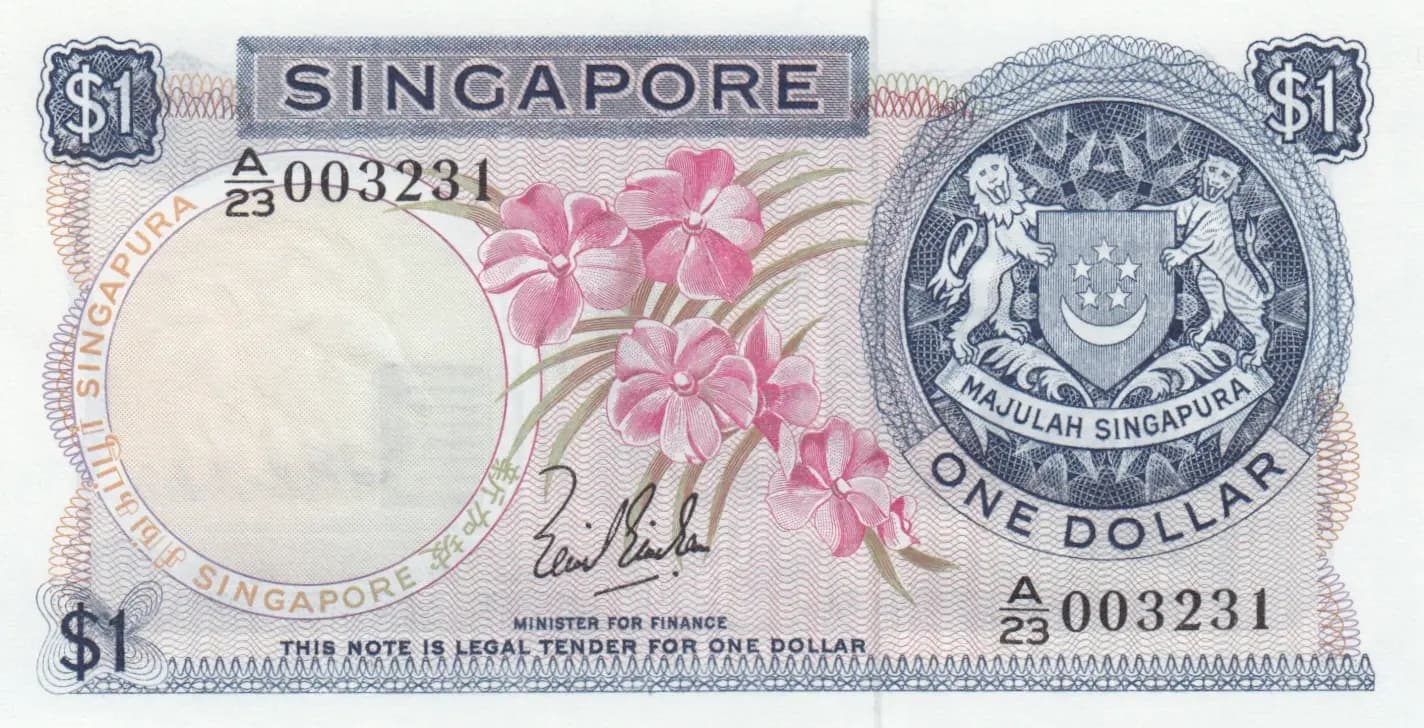
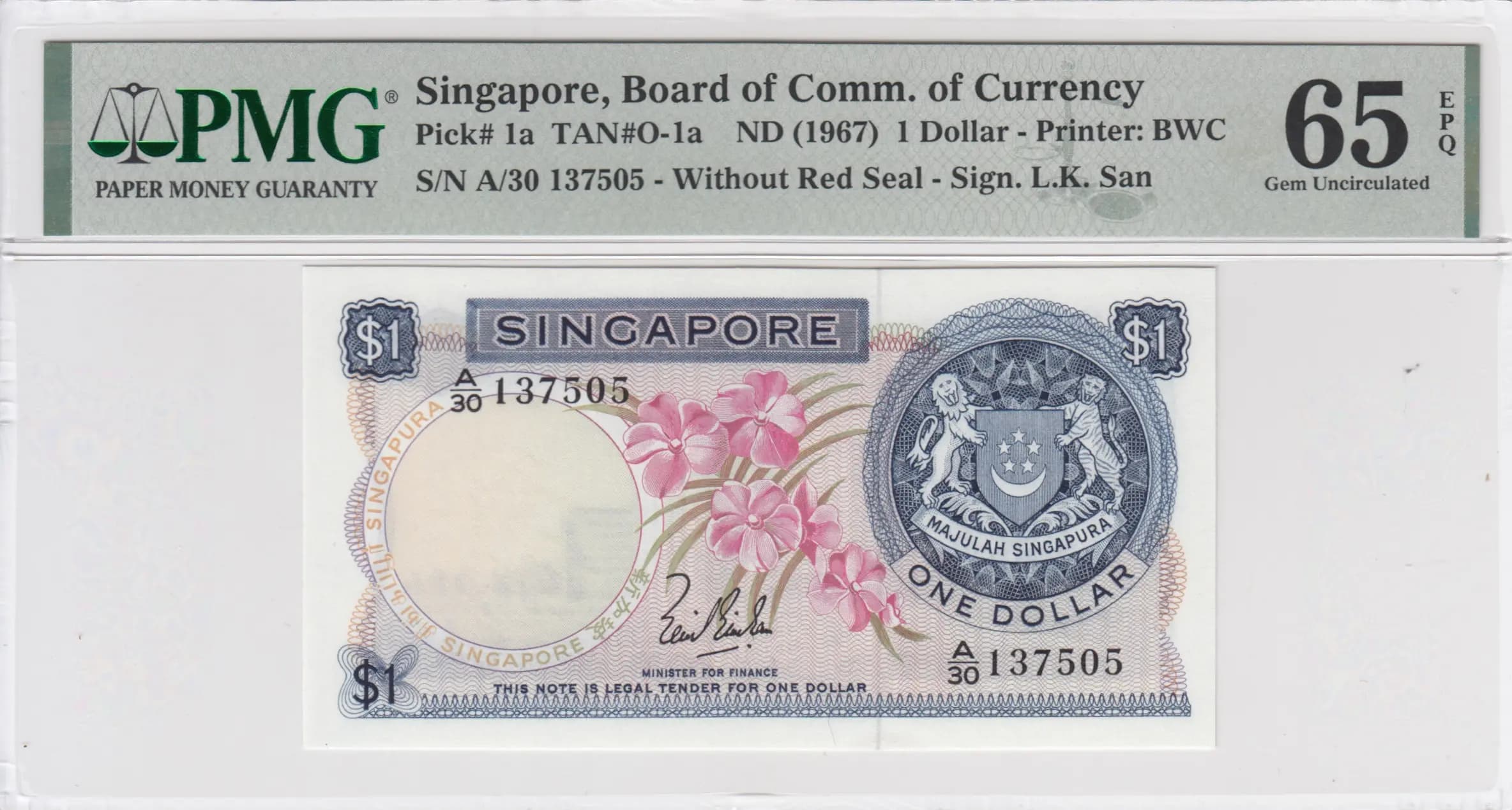
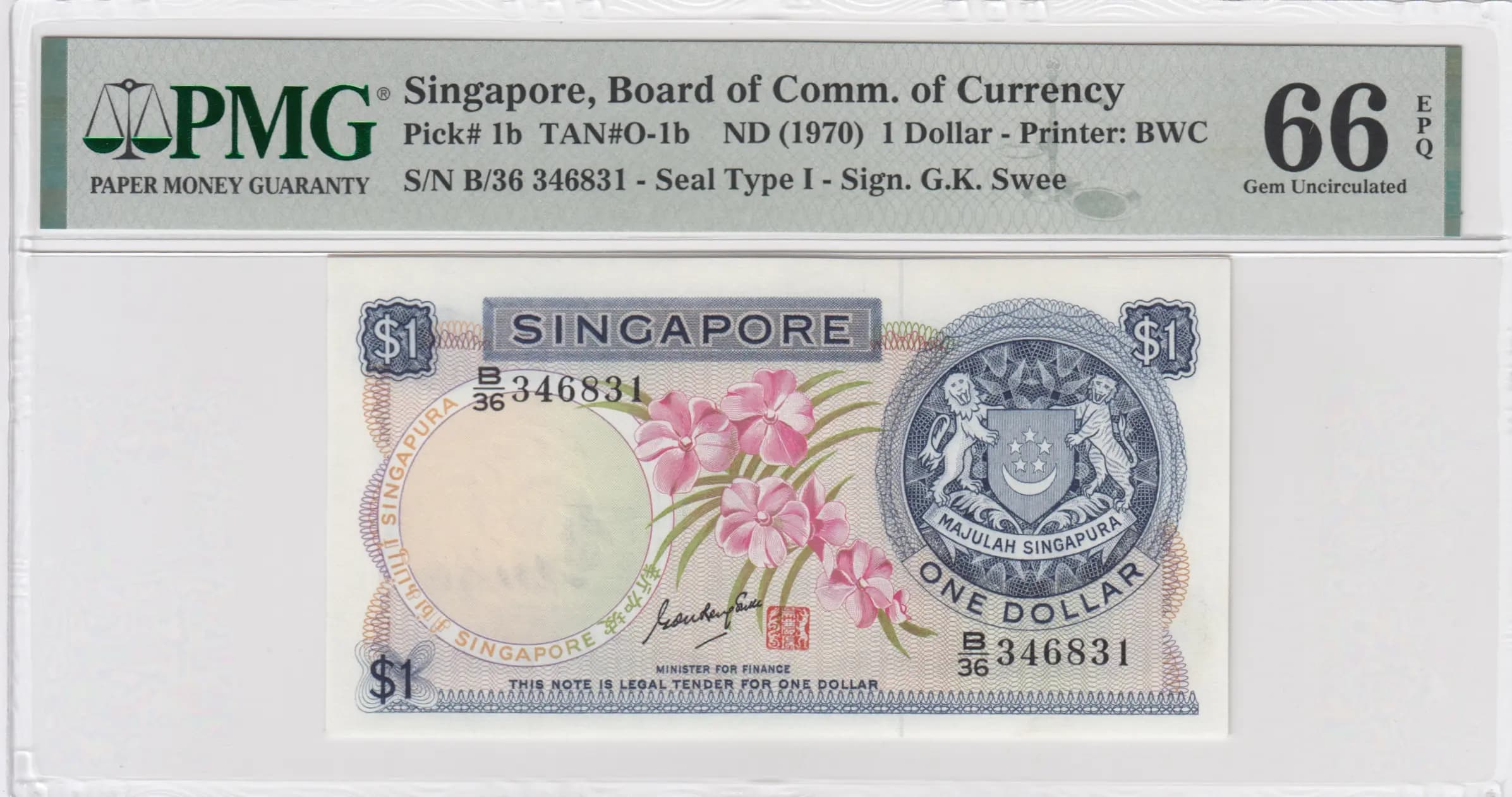
1 dollar 1976
Market Prices
136 salesAbout This Note
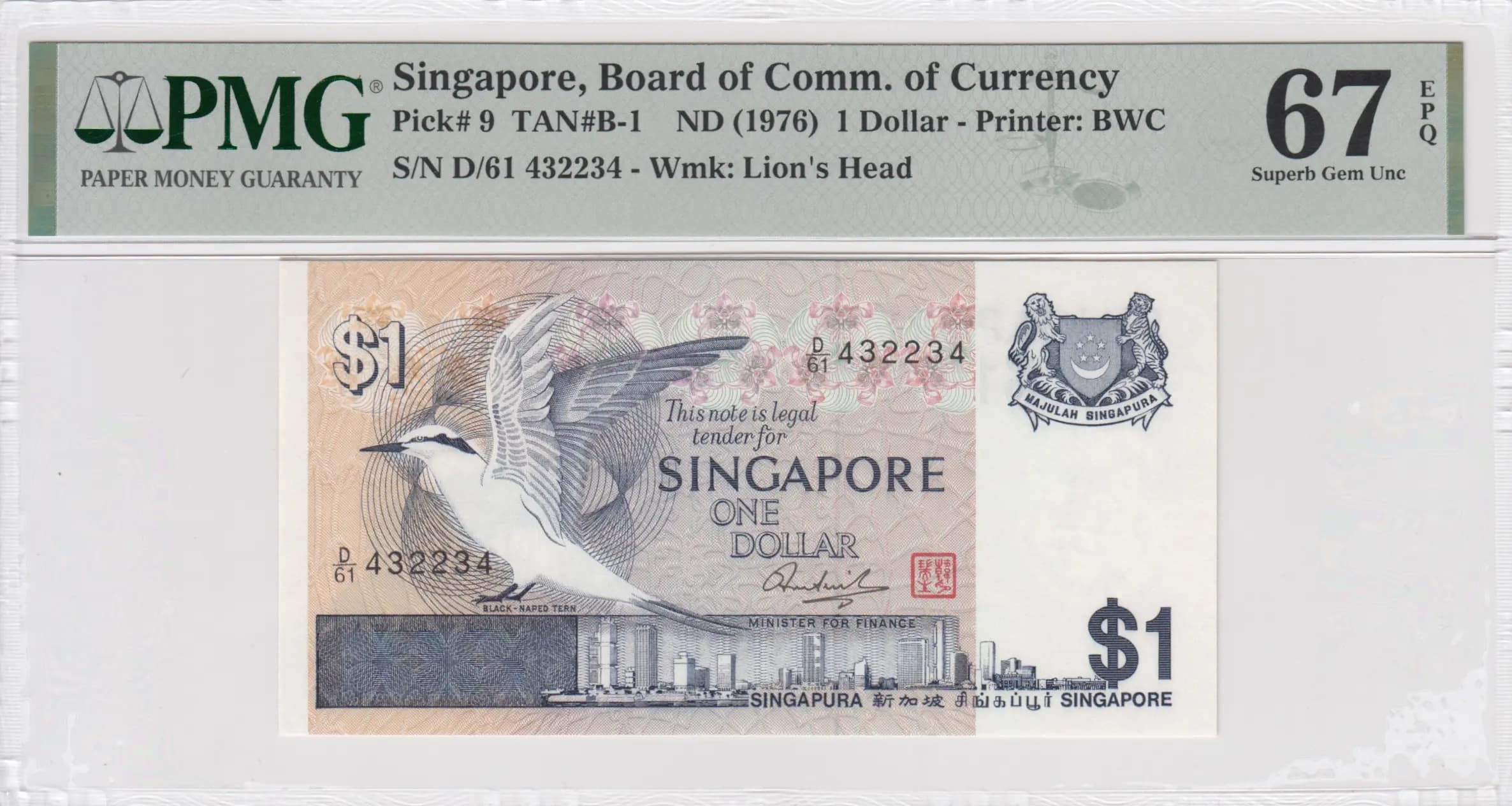
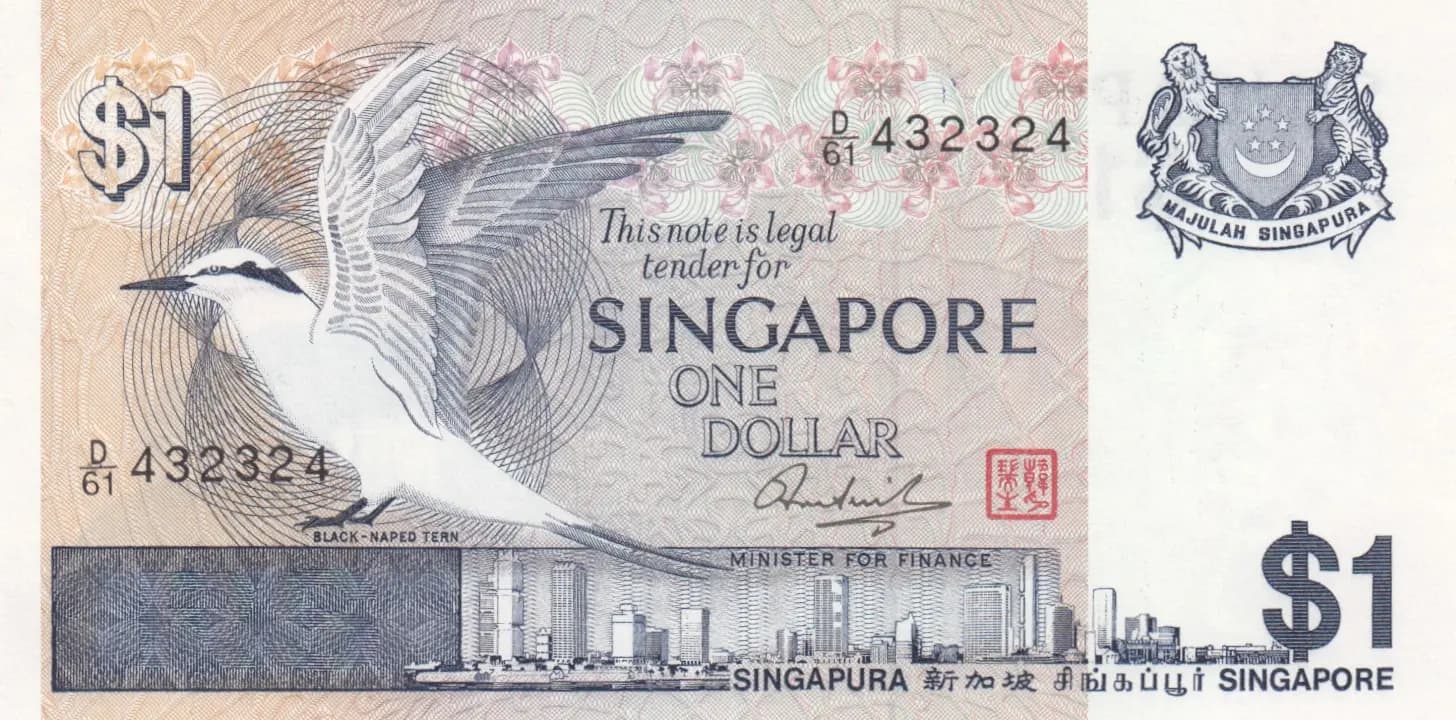
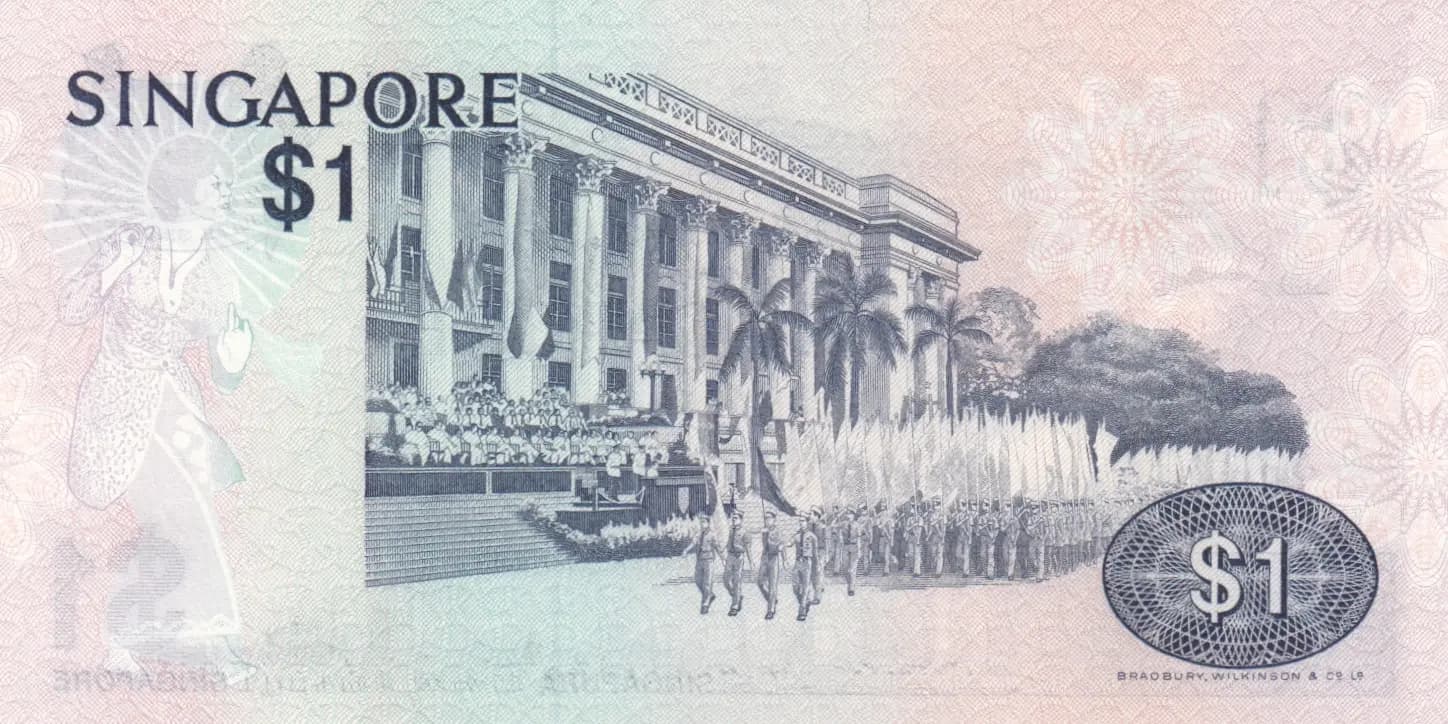
This Singapore 1 Dollar banknote from 1976 (Pick P-9) is presented in uncirculated condition with pristine surfaces showing no wear, creases, or damage. The note features a striking black-naped tern bird rendered in fine detail on the obverse, complemented by a vibrant multicolored design incorporating Singapore's modern skyline and the national coat of arms. The reverse depicts a National Day parade scene before a colonial-style government building, exemplifying Singapore's commemoration of independence and national pride during the early post-independence era.
Common. While this is the inaugural issue of Singapore's 1 Dollar denomination (1976), market data demonstrates consistent availability and modest valuations. eBay historical sales show UNC examples selling for $2–$15 with typical recent prices around $3–$6 for ungraded UNC notes, indicating steady supply. PMG-graded examples (primarily 63–67) command $7–$45 depending on grade, reflecting collector interest but widespread circulation. With no evidence of limited print runs or special scarcity, this Pick number maintains common status despite its historical significance as Singapore's first One Dollar issue.
Issued in 1976 by the Board of Commissioners of Currency Singapore, this banknote reflects the young nation's consolidation of identity following independence in 1965. The National Day parade depicted on the reverse symbolizes Singapore's celebration of national sovereignty and unity, while the indigenous black-naped tern on the obverse represents the nation's natural heritage. The formal governmental architecture shown reinforces Singapore's establishment of institutional stability and modern governance during its transformative development decade.
The obverse displays a meticulously engraved black-naped tern (Sterna sumatrana), Singapore's national bird, positioned in detailed profile on the left side against a cream and beige background with intricate pink floral security patterns. The Singapore coat of arms (Manuah Singapura) featuring two lions supporting a shield is prominently placed in the upper right corner. A cityscape representing Singapore's modern skyline is rendered at the bottom, emphasizing the nation's urban development. The reverse features a formal National Day parade in full ceremonial dress, with uniformed personnel in formation before a grand colonial-style government building with classical columns and palm trees, set against pale pink and green tinted backgrounds with complex geometric security patterns.
Front side: '$1' (One Dollar), 'This note is legal tender for Singapore', 'ONE DOLLAR', 'MANUAH SINGAPURA' (Malay: Singapore Flourish/Prosperity), 'BLACK-NAPED TERN', 'MINISTER FOR FINANCE', 'SINGAPURA' (Malay: Singapore), 'SINGAPORE' (English), Serial number 'D 61 4323324'. Back side: 'SINGAPORE', '$1' (One Dollar denomination indicators in two locations), 'BRADBURY, WILKINSON & CO LT' (printer identification, though vision notes 'BRAOBURY' likely a transcription error for Bradbury Wilkinson).
Intaglio engraving on banknote paper, produced by Bradbury Wilkinson & Co Ltd (BWC), New Malden, a renowned security printer. The note exhibits fine line engraving throughout with complex geometric background patterns characteristic of high-security currency production. Multiple security features are evident including detailed engraving work, intricate pattern designs, watermark provisions, and dual serial number placement—all hallmarks of professional currency-grade intaglio printing.
Specific variety identification would require comparison of signature authorities, serial number prefixes, and printing batch codes. The observed specimen shows serial number prefix 'D 61', suggesting a specific print run within the 1976 issue. The Minister for Finance signature visible on the note would correspond to the officeholder during 1976; confirmed identification would require verification of the specific signer. No overprints or unusual markings are apparent. Standard Pick P-9 cataloging applies to this regular issue variant without documented sub-varieties in major references.