50 rupees 1977
“signed”
Market Prices
8 salesAbout This Note
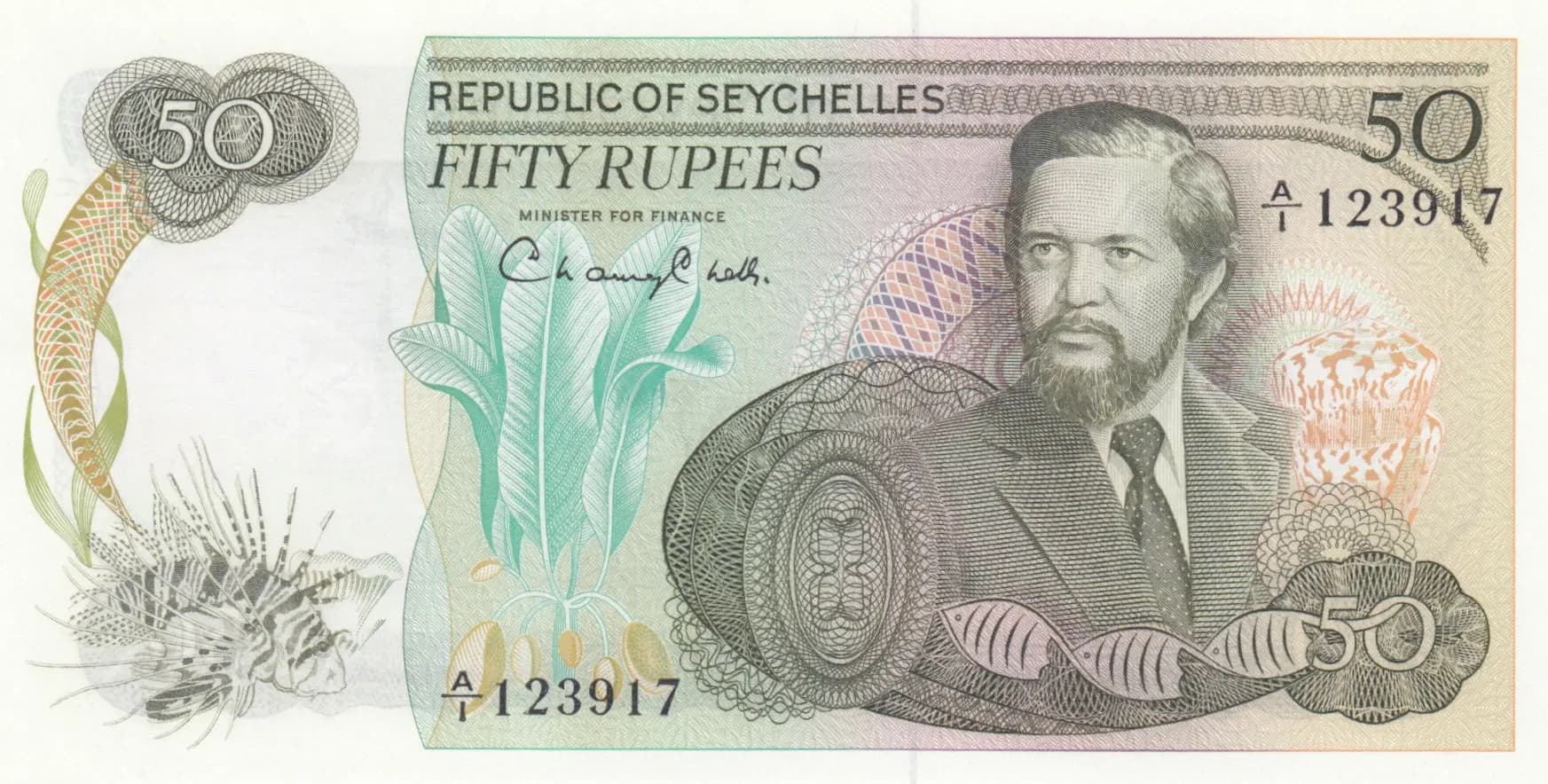
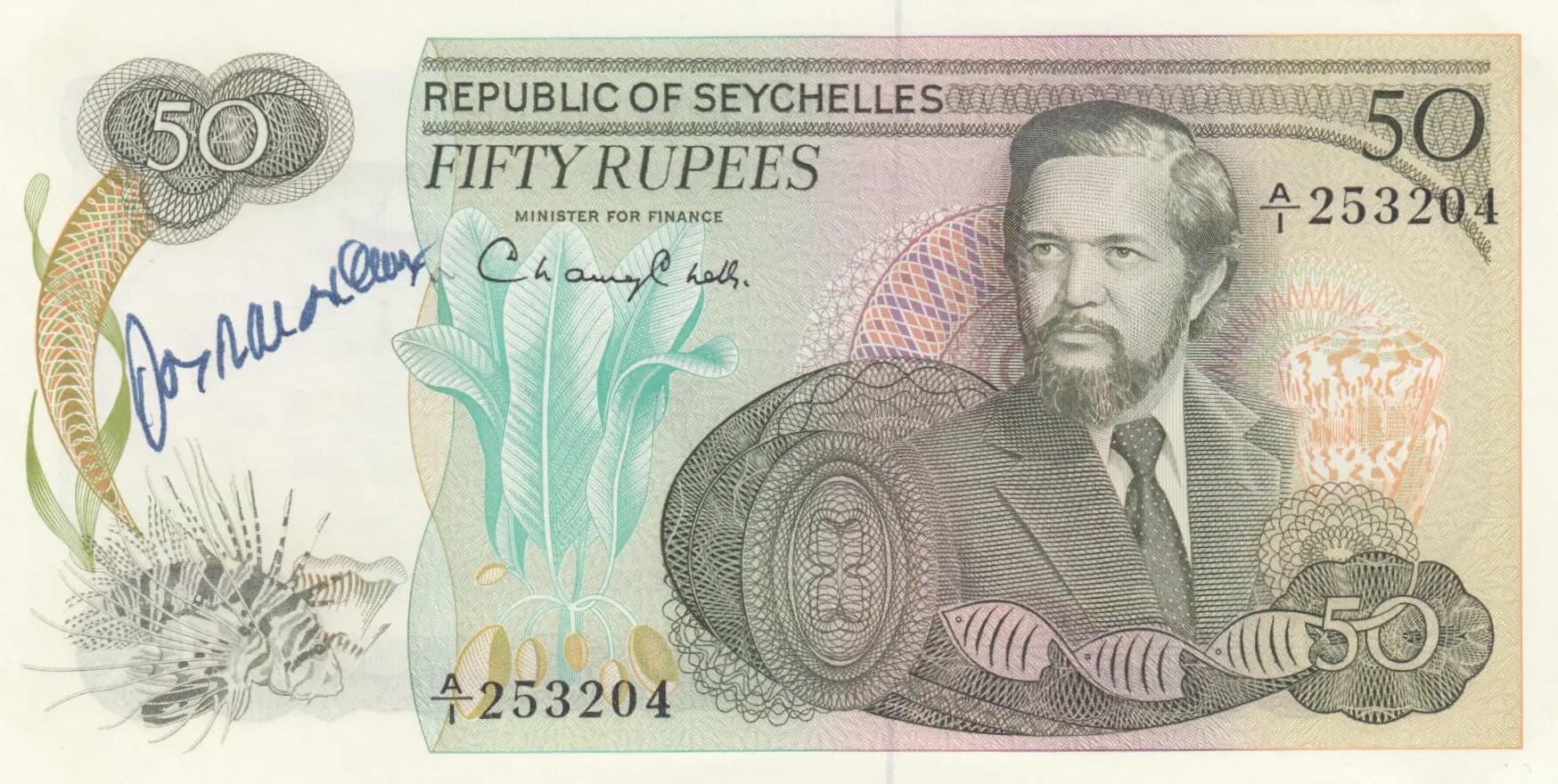
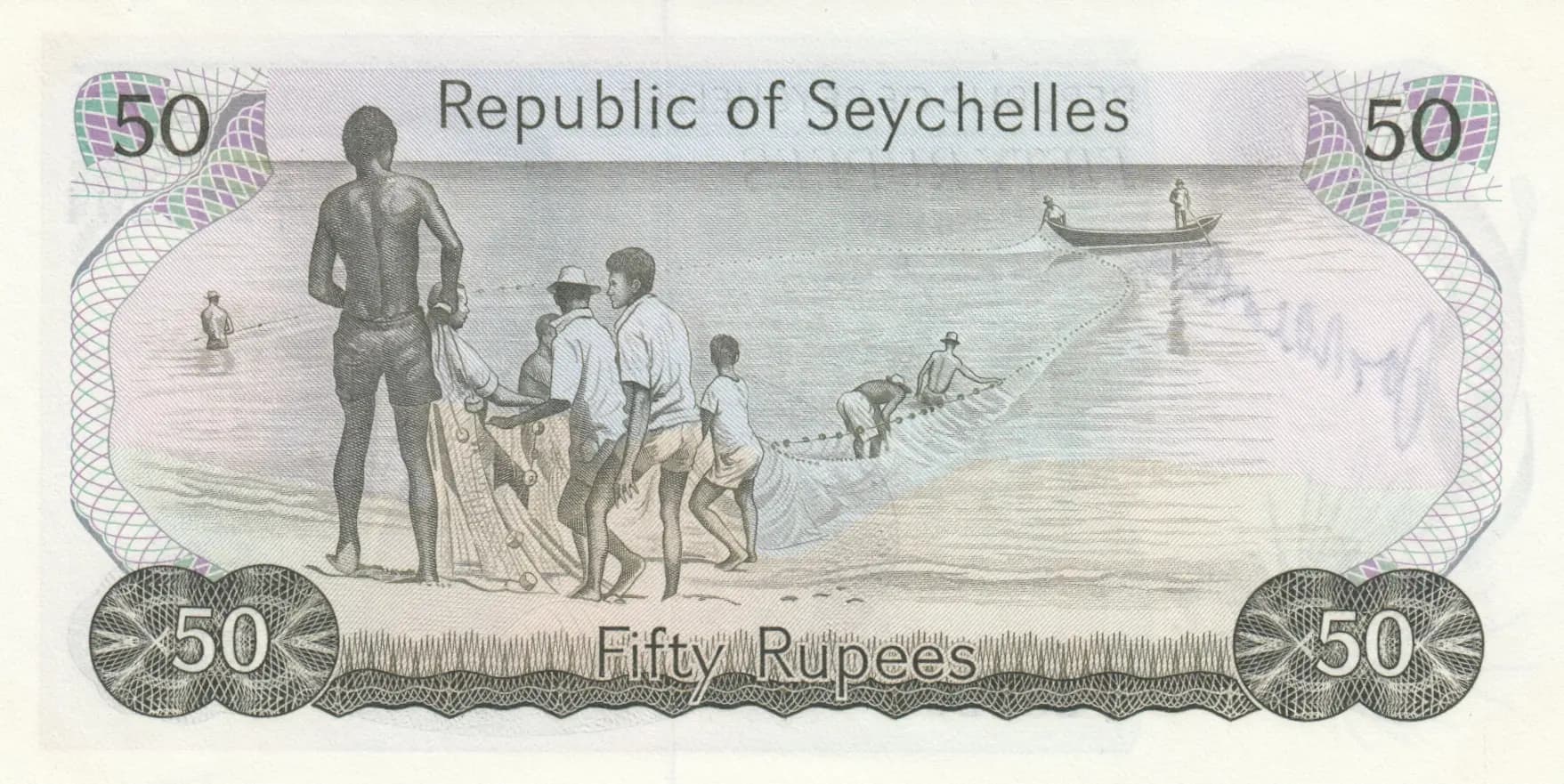
This is an uncirculated 1977 Seychelles 50 rupees note (Pick-21) displaying exceptional condition with crisp, clear printing throughout. The note features a distinctive portrait of a bearded gentleman in formal business attire on the obverse, complemented by an ornamental coelacanth fish vignette—a remarkable symbol reflecting Seychelles' unique marine biodiversity. The reverse depicts a vibrant maritime labor scene with multiple figures engaged in traditional fishing activities, underscoring the nation's seafaring heritage during the early post-independence period.
Common. The 1977 issue of Seychelles banknotes represents the standard first series of the newly independent republic, with no indication of limited print runs or recall. These notes were produced in quantities typical of a working circulation currency for a nation of approximately 60,000 people at that time. No premium rarity factors are evident based on the serial number prefix, signature variety, or other observable characteristics. Even in uncirculated condition, this note remains widely available to collectors.
This note was issued in 1977, just one year after Seychelles achieved independence from British colonial rule (June 1976), representing the young republic's early monetary sovereignty. The maritime scene on the reverse directly reflects Seychelles' economic foundation in fishing and maritime trade, while the coelacanth—a prehistoric fish species discovered near the islands—symbolizes the nation's unique natural heritage and scientific significance. The formal portrait likely represents a prominent political figure from this formative period of nation-building.
The obverse features a central-right portrait of a distinguished bearded man in formal business attire (dark suit with dotted tie), positioned as the primary focal point. To the left is an ornamental oval vignette containing a coelacanth fish (Latimeria chalumnae)—a deep-sea fish species of significant scientific and symbolic importance to Seychelles. Decorative floral and heraldic elements frame the composition, while the background is filled with intricate guilloche patterns in green, pink, and orange tones creating sophisticated anti-counterfeiting measures. The reverse depicts a detailed historical scene of maritime labor, showing approximately 5-6 figures engaged in traditional net fishing activities along a shoreline, with a traditional sailing vessel visible in the background waters. Decorative ovals containing the numeral '50' are positioned at all four corners of the reverse, with purple/violet coloring in the heraldic border elements.
FRONT SIDE: 'Republic of Seychelles' (top), 'Fifty Rupees' (denomination text), 'Minister for Finance' (signature line), serial number 'A 253204' (appears twice), denomination numeral '50'. BACK SIDE: 'Republic of Seychelles' (top), 'Fifty Rupees' (denomination text), '50' (in decorative corner ovals). The note is signed by what appears to be the Minister for Finance, with the signature visible on the front.
Intaglio (engraved) printing, evidenced by the fine-line detail, intricate guilloche patterning, and complex cross-hatching visible throughout both sides. The security printing demonstrates sophisticated anti-counterfeiting measures through elaborate background patterns, overlapping color gradations, and fine-line engraving work characteristic of high-security banknote production. The printer for Seychelles' early series notes was typically De La Rue (British American Banknote Company) or similar Commonwealth security printers, though specific attribution for this Pick-21 issue should be verified against De La Rue records.
Signed variety by Minister for Finance (signature visible on obverse). The serial number A 253204 indicates an early printing from the first block of notes issued. No overprints, date variations, or other known major varieties documented for Pick-21 in standard catalogs. Collectors should note that signature varieties may exist depending on which Minister for Finance authorized the note's release, though all standard 1977 issues bear ministerial signatures as part of the design.