5 rupees 1968 specimen
Market Prices
About This Note
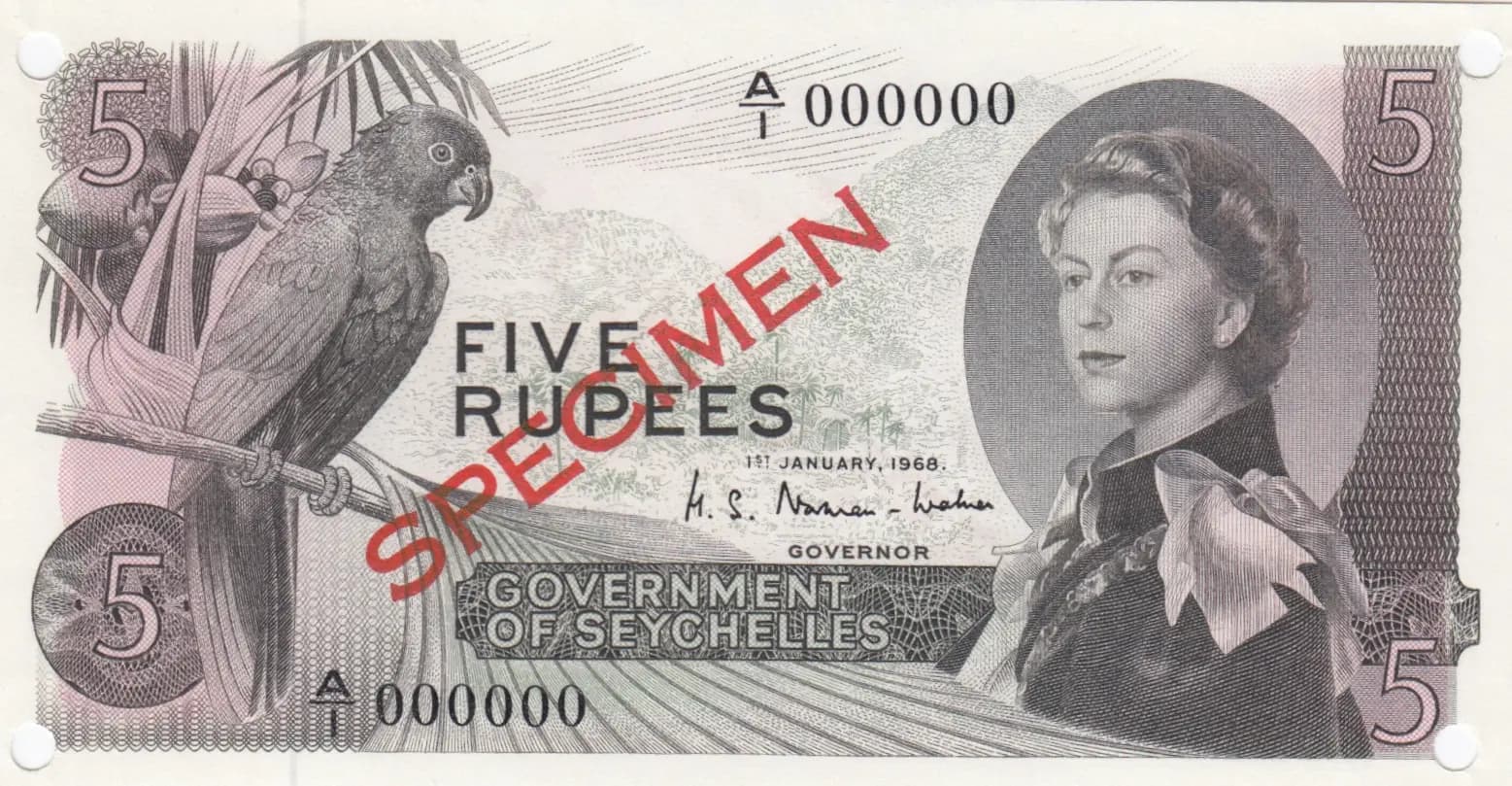
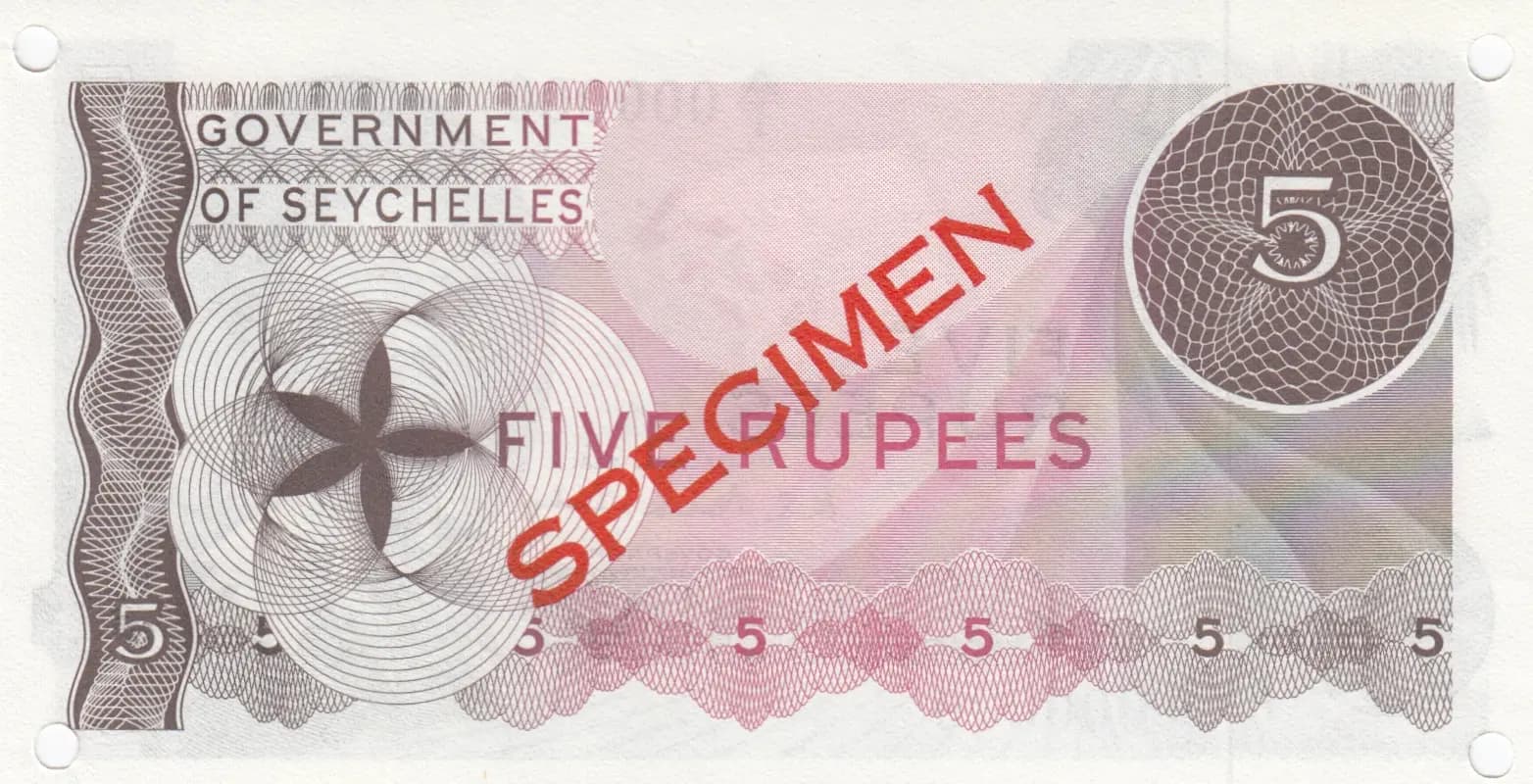
This is a spectacular uncirculated specimen note of the 1968 Seychelles 5 rupees (Pick P-14s), representing the first issue of currency for the newly independent nation. The note features a striking purple/mauve color scheme with intricate engraving throughout, including a detailed Seychelles black parrot on the obverse and an elegant geometric star/compass design on the reverse. As a specimen note with the characteristic red 'SPECIMEN' overprint and zero serial numbers, this example showcases pristine printing quality with no wear, making it a prized item for collectors of African currency and early Commonwealth issues.
Common. While this is a specimen note (which are generally less common than circulating examples), the eBay price data provided shows highly variable pricing ranging from $6.65 to $1,255, with the 2018 catalog value at $575 and most recent sales clustered in the $299-$650 range for UNC examples. The wide variance in listing prices and the presence of very low-priced examples ($6.65-$8.93) suggest significant supply and variable collector demand. Specimen notes from the first issue of Seychelles currency are moderately collected, but they are not particularly scarce. The 1968 Seychelles series was produced in reasonable quantities, and specimen notes were distributed to banks and institutions, making them available to collectors today.
The Government of Seychelles issued this 5 rupees note on January 1st, 1968, marking the currency of the newly independent Seychelles following their separation from Mauritius. The obverse prominently features Queen Elizabeth II in profile, reflecting Seychelles' continued membership in the Commonwealth at the time of independence. The reverse's maritime-themed design elements, including wave patterns and a compass star motif, symbolically represent the island nation's relationship with the Indian Ocean and its maritime heritage.
The obverse features a portrait of Queen Elizabeth II in right profile, positioned on the right side of the note in formal attire with styled hair, rendered in classical engraving style typical of Commonwealth currency of the period. The reverse's dominant design element is a large circular star or compass rose with radiating lines positioned center-left, symbolizing navigation and the nation's maritime orientation, accompanied by a smaller circular emblem containing the numeral 5 on the right. Wave patterns at the bottom of the reverse reinforce the nautical theme. The left side of the obverse displays a meticulously detailed Seychelles black parrot (macaw), one of the nation's iconic endemic species. The overall design employs fine-line guilloche patterns and decorative security borders throughout, creating visual complexity that was state-of-the-art for 1968 banknote security printing.
Front Side: 'GOVERNMENT OF SEYCHELLES' (top center), 'FIVE RUPEES' (denomination text), 'FIVE' and '5' (corner numerals), '1ST JANUARY, 1968' (issue date), 'GOVERNOR' (official title), 'H.S. Numen-walter' (Governor's signature), 'A/1 000000' and 'A 000000' (serial numbers - specimen zeros), 'SPECIMEN' (red diagonal overprint). Back Side: 'GOVERNMENT OF SEYCHELLES' (top left), 'FIVE RUPEES' (denomination), '5' (circular emblem numeral), 'SPECIMEN' (red diagonal overprint).
Intaglio engraving (letterpress), the standard security printing method for currency in 1968. The exceptional detail and precision visible in the parrot illustration, guilloche patterns, and portrait engraving are characteristic of high-quality intaglio work. The fine-line security features, including the radiating security lines and intricate border work, indicate professional security printer production. While the specific security printer is not definitively documented in the available catalogs, the quality and style are consistent with the British American Bank Note Company and De La Rue, who produced many early Commonwealth African currency issues.
This specimen is identified by the signature of H.S. Numen-walter, the Governor of Seychelles, and bears the characteristic specimen designation with zero serial numbers (A/1 000000 and A 000000). The 1968 Seychelles 5 rupees series is known for signature varieties based on different governors' tenures. Specimen notes typically feature specimen overprints in red and zero serial numbers as security measures to prevent circulation. This particular example, in uncirculated condition, represents the first signature variety of the 1968 series. No major varieties in design, color, or overprint placement are evident in this specimen.