100 rupees 1989 specimen
Market Prices
2 salesAbout This Note
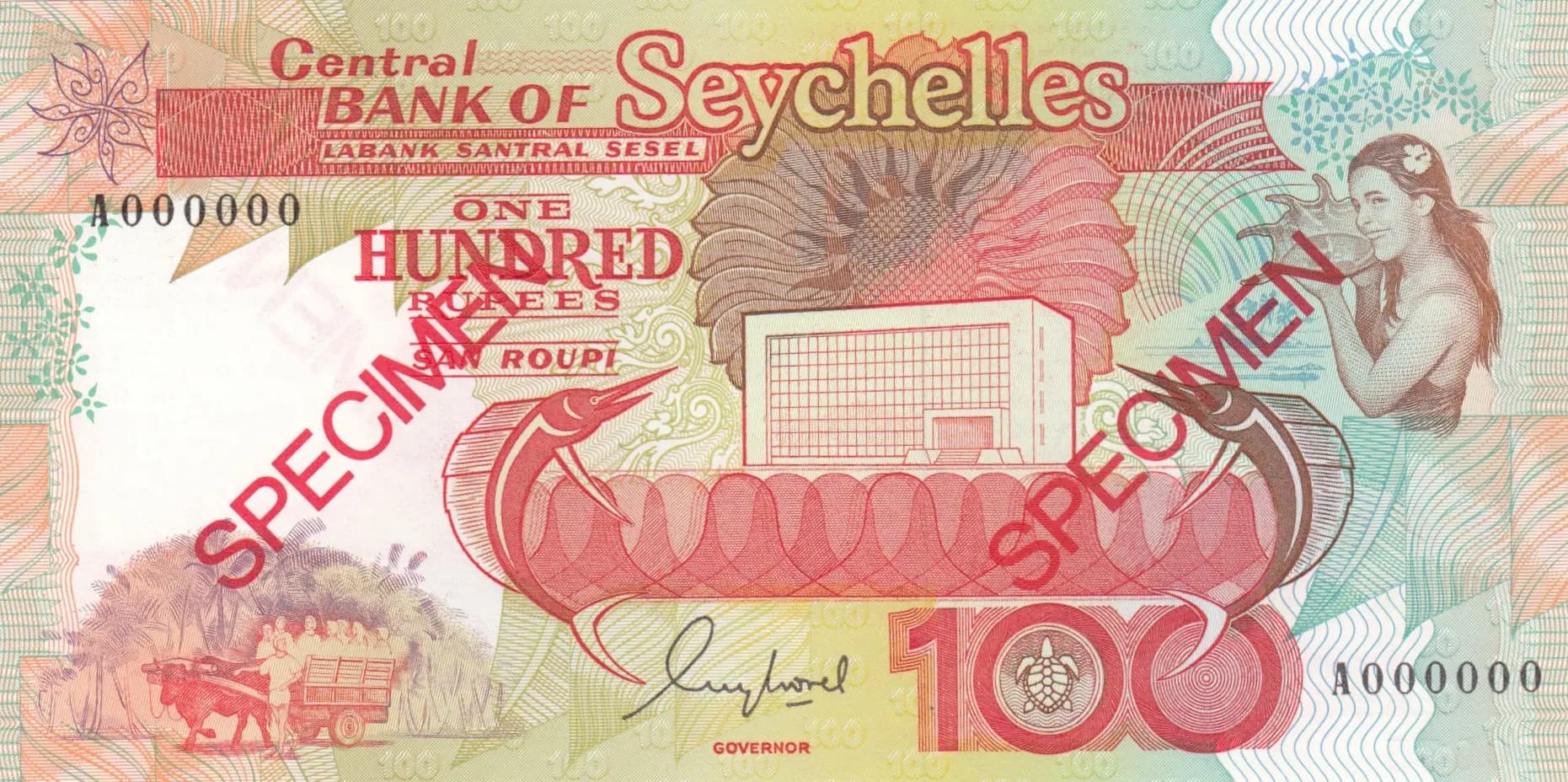
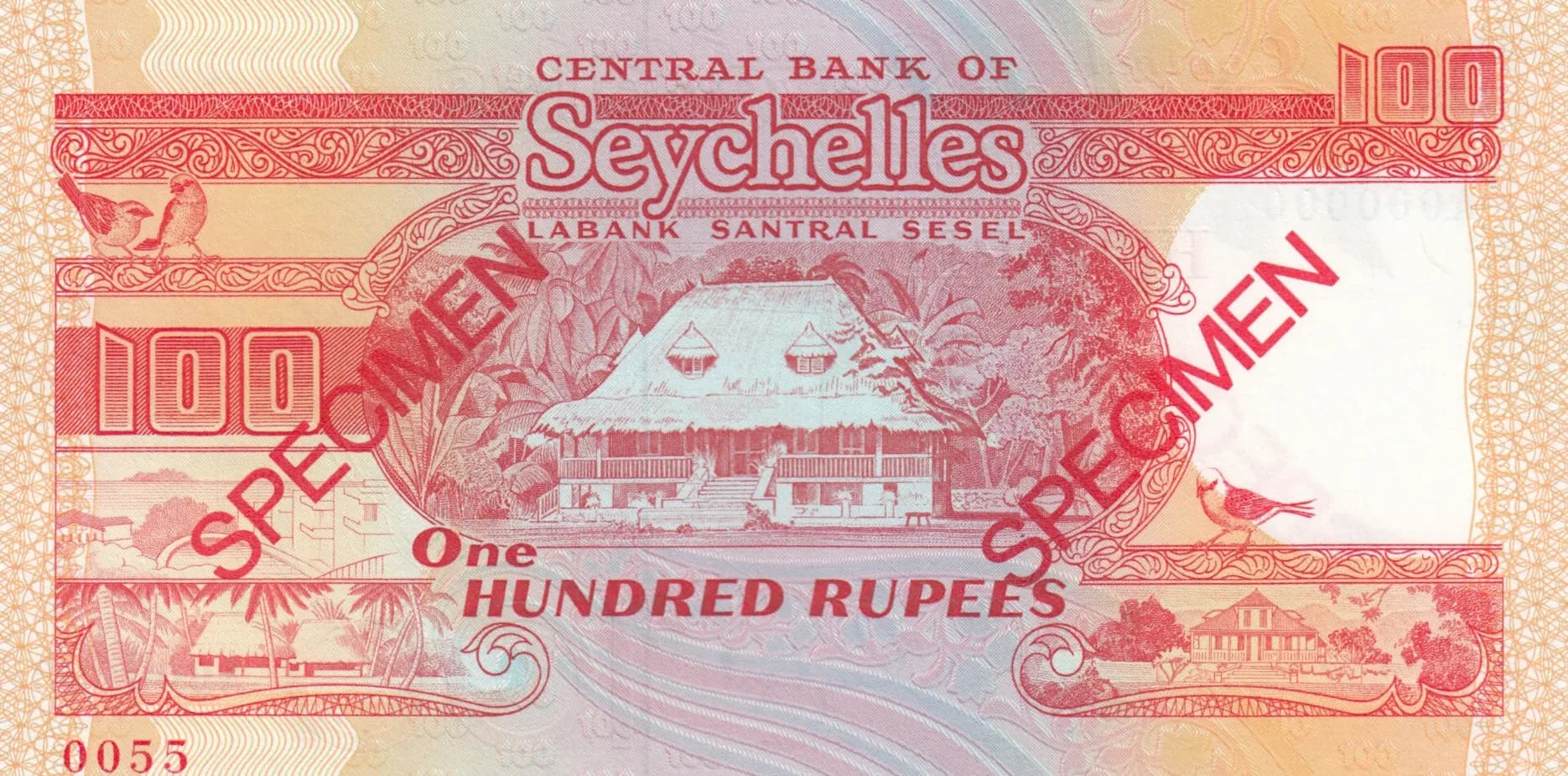
A pristine specimen note from the Central Bank of Seychelles' 1989 100 Rupees issue (Pick P-35s), displayed in uncirculated condition with clear 'SPECIMEN' overprints on both obverse and reverse. The note showcases exceptional multicolor engraving featuring red, yellow, green, and blue tones with intricate guilloché patterning throughout. As a specimen note with standard serial number A000000, this example represents the original design presentation before general circulation, making it desirable to banknote collectors interested in African currency and Central Bank specimen releases.
Common. While specimen notes command a premium over circulated standard issues, this Pick P-35s specimen remains relatively common in the secondary market. eBay historical data shows comparable PMG-graded examples (66-67) sold for $50-$71 in 2020-2022, indicating steady but modest collector demand typical of African currency specimens. Specimen notes from established central banks like Seychelles were often produced in moderate quantities for display, distribution to banks, and collector sales, making them available despite their non-circulating status.
Issued in 1989 by the Central Bank of Seychelles during a period of monetary modernization, this 100 Rupees note reflects the island nation's cultural and economic identity through carefully selected imagery. The obverse prominently features the Central Bank of Seychelles building in Victoria, symbolizing the nation's financial authority, while the reverse depicts a traditional Seychellois residential architecture with tropical vegetation, celebrating the nation's vernacular heritage and natural environment. The bilingual inscriptions in English and Seychellois Creole emphasize the post-colonial identity of Seychelles as an independent nation with distinct cultural and linguistic character.
The obverse features the Central Bank of Seychelles building positioned centrally with gridded/latticed architectural detailing, flanked by a female portrait in classical engraved style on the right side and ornamental scrollwork throughout. A turtle emblem in a circular frame appears in the lower right denomination area (100). Flying fish motifs and a man in an oxcart at lower left represent Seychelles' maritime and agricultural heritage, with a girl holding a shell at upper right emphasizing island life. The reverse displays a traditional pitched-roof Seychellois residential dwelling surrounded by tropical foliage including palm trees, with parrot/tropical bird motifs flanking the architecture. Both sides are dominated by fine-line engraving and elaborate decorative borders in red, cream, yellow, green, and blue.
FRONT SIDE: 'Central Bank of Seychelles' (English) / 'Labank Santral Sesel' (Seychellois Creole - Central Bank Seychelles) / 'One Hundred Rupees' (English) / 'Rouvi' (Seychellois Creole - Rupees) / 'Specimen' (overprint, appears twice) / 'Governor' (signature line). BACK SIDE: 'Central Bank of Seychelles' (English) / 'Labank Santral Sesel' (Seychellois Creole) / 'One Hundred Rupees' (English) / 'Specimen' (overprint, appears twice). Serial numbers A000000 appear on front and corresponding number on back.
Intaglio (engraved) printing with multicolor offset overprinting for the base design. The fine-line guilloché patterns, intricate background work, and high-definition portraiture characteristic of the obverse are achieved through traditional steel plate engraving. The printer for Seychelles currency during this period was typically Bradbury Wilkinson or De La Rue, standard producers of Commonwealth and African banknotes in 1989, evidenced by the sophisticated security printing techniques visible in the guilloché work and color separation.
This is identified as Pick P-35s, the 's' suffix indicating specimen status. Standard serial number A000000 confirms specimen issue. Both obverse and reverse bear clear 'SPECIMEN' overprints, typical of central bank specimen distributions. No signature variety is discernible from the visual analysis provided. The 1989 date confirms this belongs to the first series of this design issue by the Central Bank of Seychelles for the modern era.