100 rupees 1968 specimen
Market Prices
About This Note
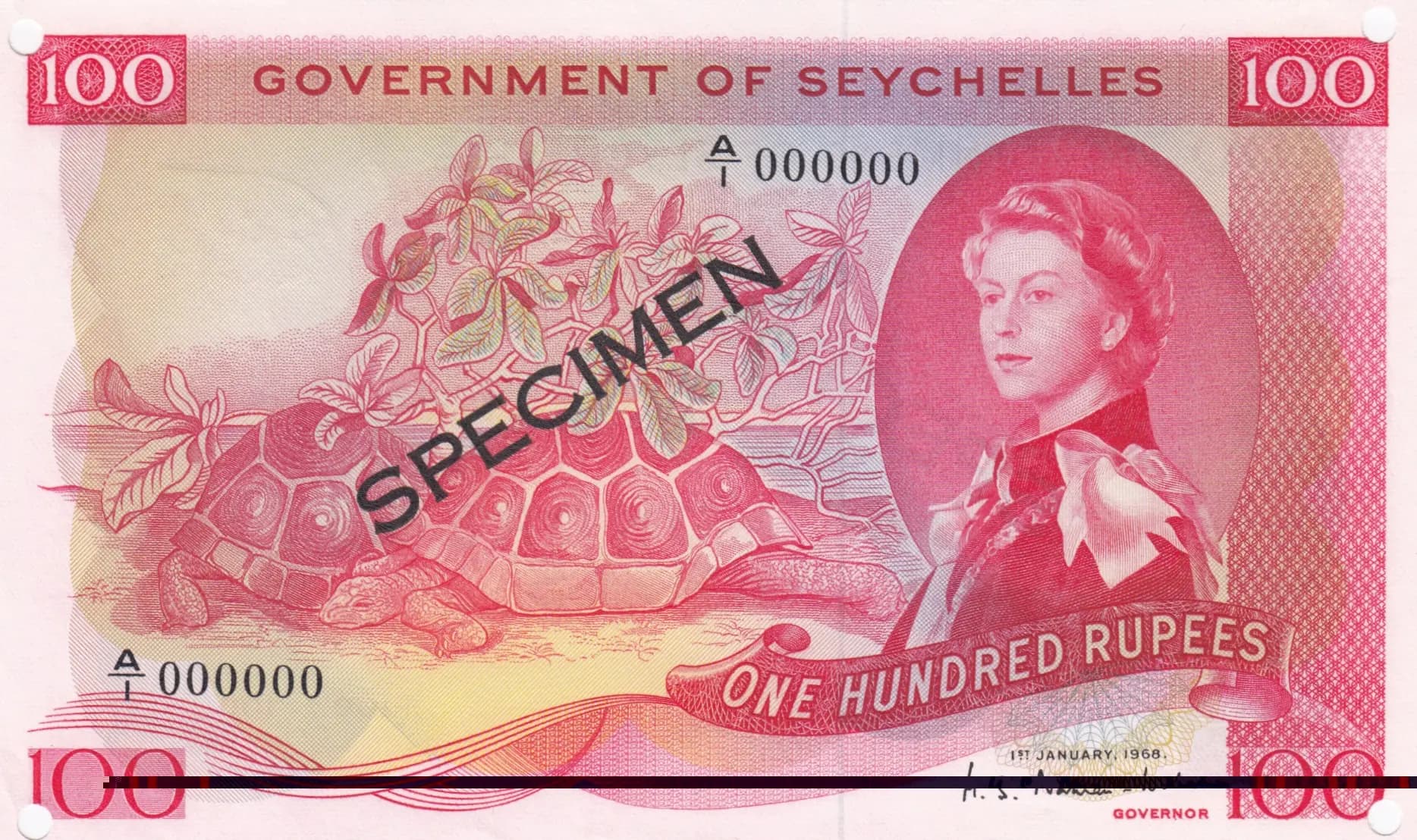
This is a 1968 specimen note of the Seychelles 100 Rupees (Pick P-18s), presented in uncirculated condition with the characteristic diagonal 'SPECIMEN' overprint. The note features Queen Elizabeth II in formal portrait on the obverse and a striking giant Seychelles tortoise on the reverse, rendered in vibrant pink and magenta tones with cream accents. As a specimen issue with the serial number A/1 000000, this represents an official presentation or archival piece rather than a circulating note, making it a significant item for collectors of Commonwealth currency and Seychellois numismatics.
Common. The eBay market data shows specimen notes in UNC condition trading at highly variable prices ($6.65 to $650.00 USD), with most listings clustered in the $30-$50 range, indicating regular availability. The wide price disparity reflects different seller knowledge and market conditions rather than true rarity. Early Commonwealth specimen notes from this period are produced in moderate quantities for official distribution and archival purposes, and Seychelles currency from 1968 is not considered scarce by serious collectors. The specimen designation actually increases availability since multiple examples were retained for official records.
Issued on January 1, 1968, this note marks the early monetary period of independent Seychelles following its separation from Mauritius administration. The imagery reflects both Commonwealth ties (Elizabeth II's portrait) and the nation's unique natural heritage, with the giant Seychelles tortoise prominently featured as a symbol of the islands' biodiversity and conservation importance. The mountainous landscape on the reverse echoes the dramatic geography of the Seychelles archipelago, emphasizing national identity during this formative post-independence period.
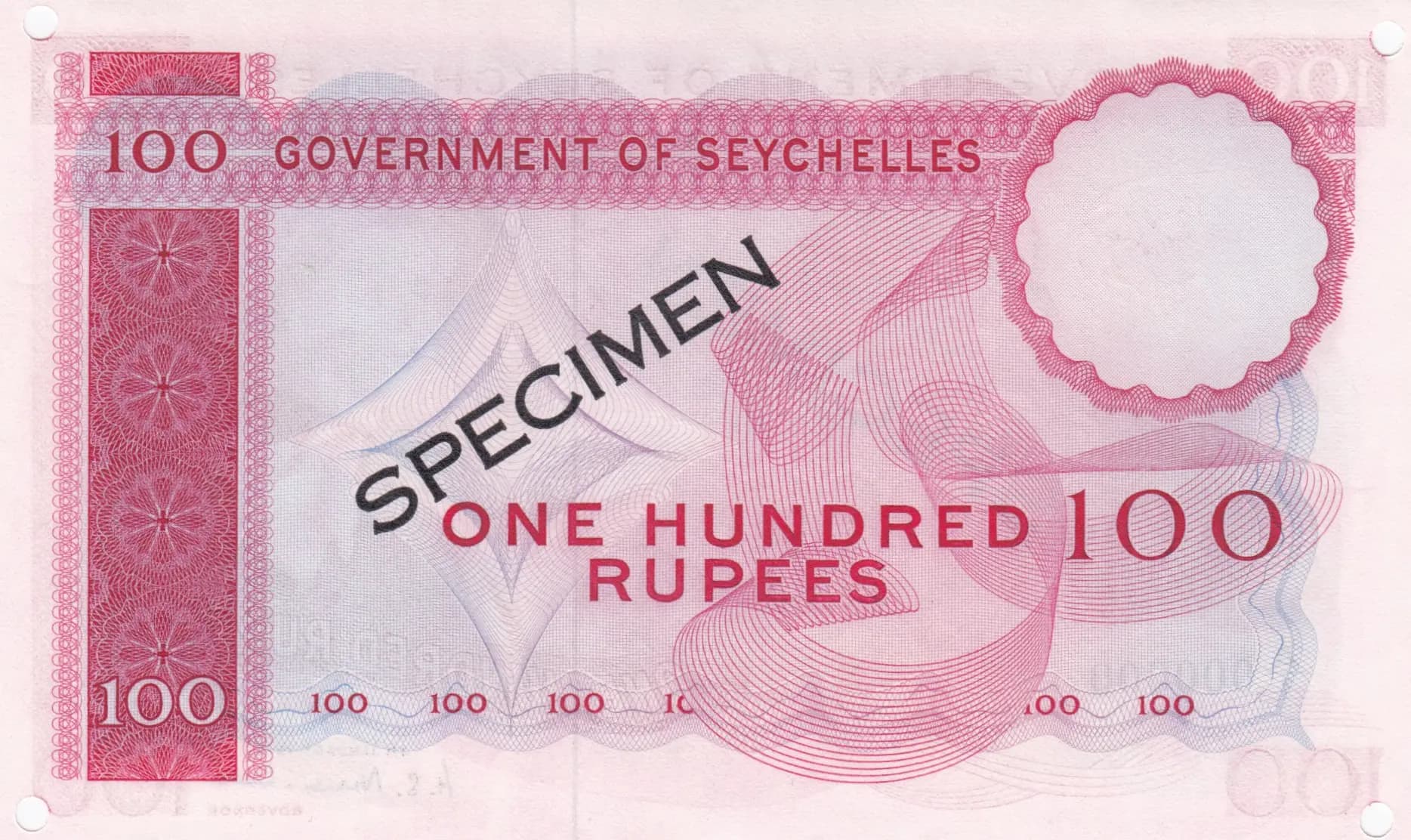
The obverse features a formal portrait of Queen Elizabeth II positioned in an oval frame on the right side, depicted in profile facing left and wearing formal attire with military insignia, reflecting her role as Head of State. Dominating the left side is a detailed illustration of a Seychelles giant tortoise (Aldabrachelys gigantea or similar endemic species) with meticulously rendered shell patterning and tropical vegetation including flowering plants above. The reverse presents a dramatic mountainous landscape with prominent peaks at center, representing the volcanic geography of the Seychelles islands, surrounded by ornamental guillochéwork patterns and geometric designs in decorative borders. A large empty cartouche on the reverse right side is typical of specimen notes used for official presentation. The color scheme of pink and magenta on cream and beige underprint is characteristic of this early Seychelles currency issue.
Front side: '100' (denomination numeral), 'GOVERNMENT OF SEYCHELLES' (issuing authority), 'ONE HUNDRED RUPEES' (denomination in words), 'SPECIMEN' (specimen designation), 'A/1 000000' (specimen serial number format), '1ST JANUARY, 1968' (issue date), 'GOVERNOR' (signature line designation). Back side: '100' (denomination numeral repeated throughout design for security), 'GOVERNMENT OF SEYCHELLES' (issuing authority), 'ONE HUNDRED RUPEES' (denomination in words), 'SPECIMEN' (specimen designation).
This note employs traditional intaglio (engraved) printing combined with lithographic multicolor underprinting, evident from the fine guillochéwork patterns, detailed line work in the landscape and portrait elements, and the layered color scheme visible in the examination. The specimen overprint and security features including complex geometric and floral patterns are consistent with De La Rue or similar Commonwealth-era security printer standards. The precision of the tortoise illustration and the intricate border designs indicate high-quality engraving techniques typical of official government currency production of the 1960s.
This is identified as a specimen note (P-18s designation) with the standard specimen serial number format A/1 000000 and diagonal 'SPECIMEN' overprint. The catalog data indicates this belongs to the 1968-1975 issue period with various signature varieties known to exist. The specific variety here appears to be the January 1, 1968 issue date variant. No signature varieties are clearly legible in the visual analysis provided, but collectors should note that circulating examples of this pick number are known with different Governor signatures as noted in the external catalog reference. Specimen notes typically have specimen serial numbers rather than regular sequential numbers and were not released into circulation.