100 rupees 1980
Market Prices
9 salesAbout This Note
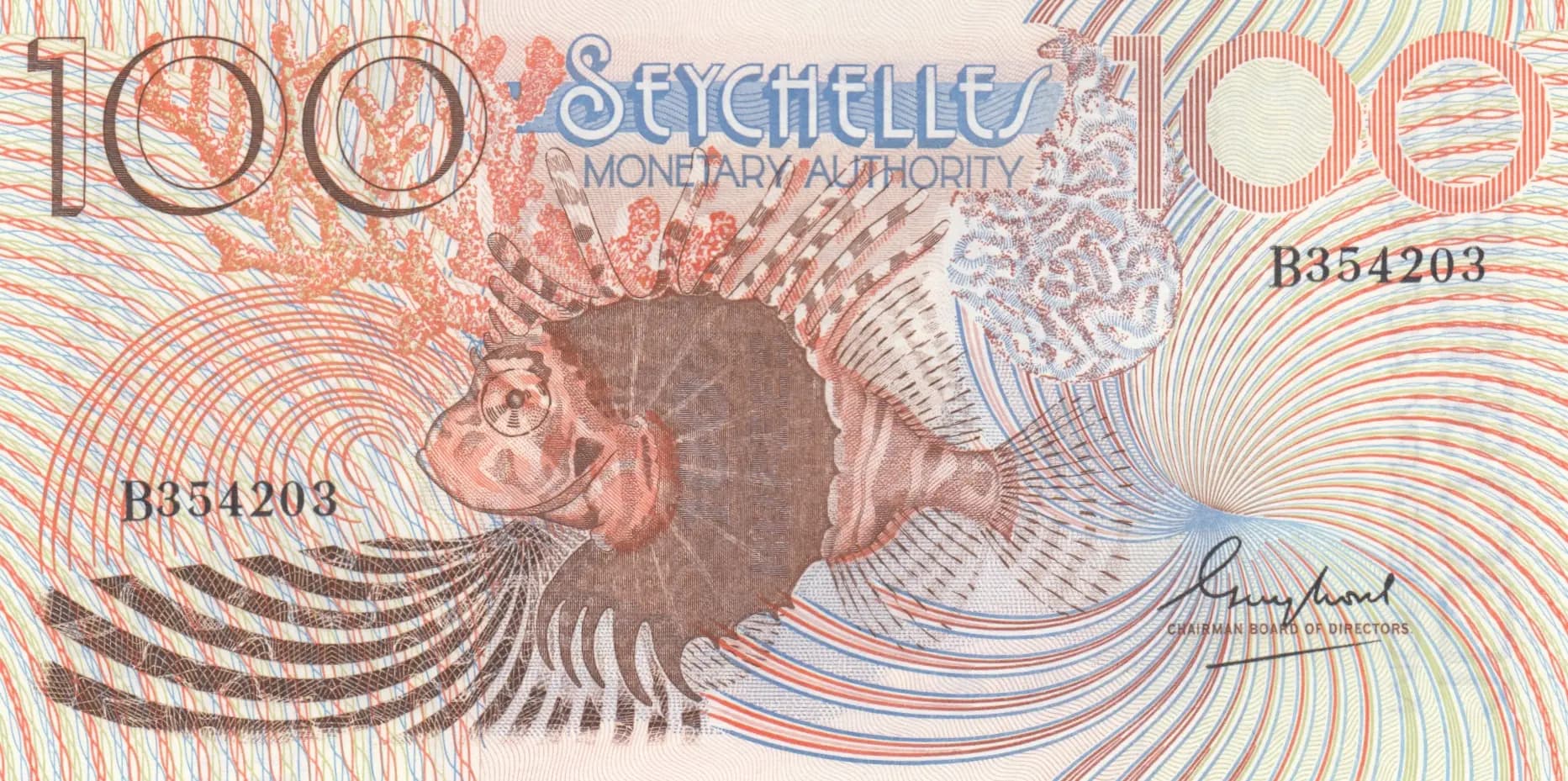
This is a crisp, uncirculated example of the 1980 Seychelles 100 Rupees (Pick P-27), featuring the characteristic brown coloring that distinguishes it from the earlier red-colored P-26 variant. The note displays exceptional print quality with intricate security line work in multicolor (red, orange, blue, green), ornate concentric circular patterns, and a prominent portrait in profile. The UNC condition, combined with the serial number B354203 and strong visual detail preservation, makes this an attractive specimen for collectors of African currency and mid-20th century Commonwealth issues.
Common. The eBay price history provided shows consistent sales in the $12–$201 range across multiple condition grades over a 12-year period, with UNC examples regularly trading at $68–$90, indicating steady collector demand but no scarcity premium. The catalog value of $90 for UNC condition (2019 reference) aligns with a common circulation issue from a modern, stable central bank. No evidence suggests limited print runs or withdrawal from circulation.
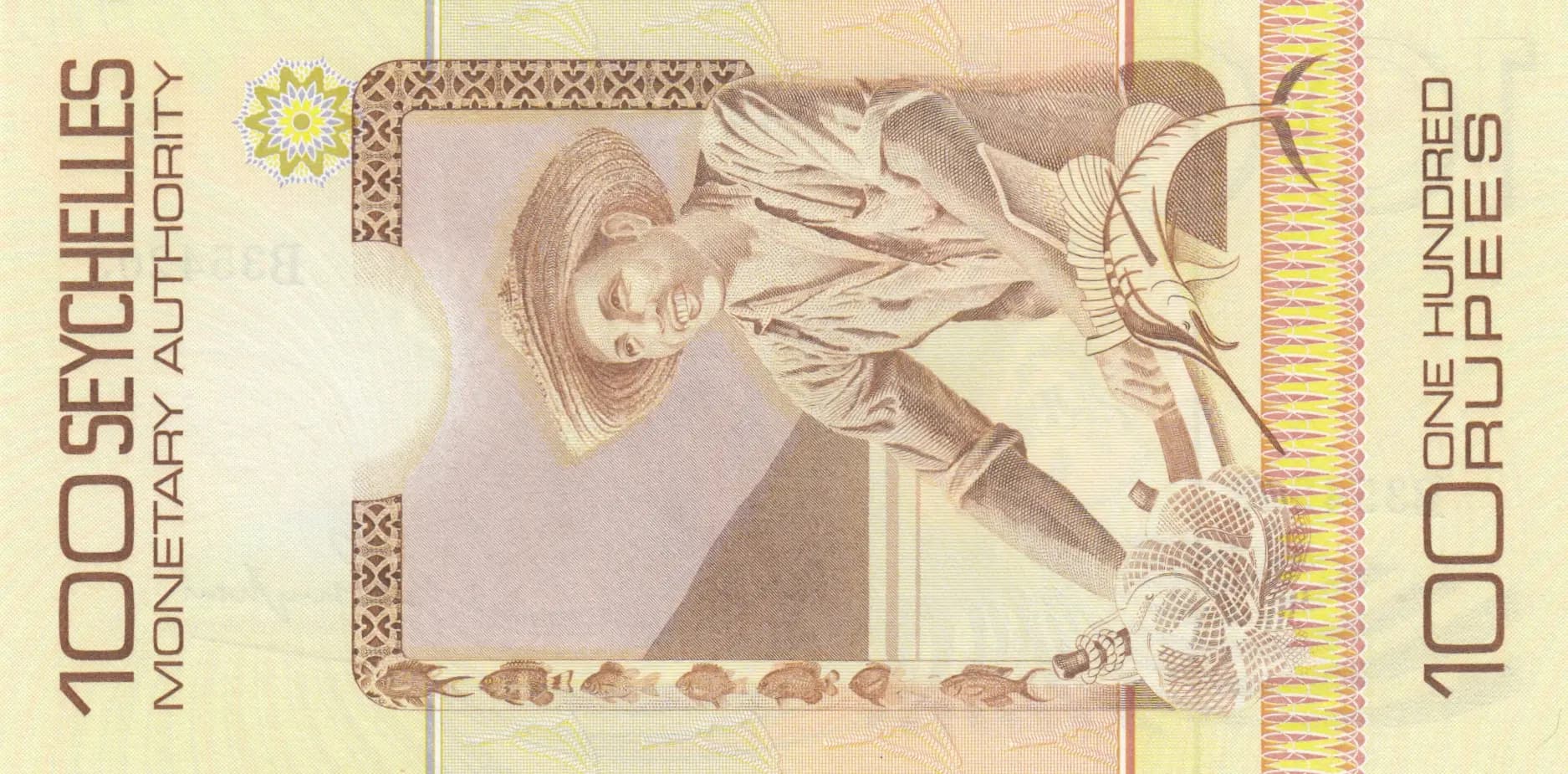
Issued by the Seychelles Monetary Authority in 1980, this note reflects the post-independence period of the island nation (independent since 1976) as it established its own central banking and currency control systems. The decorative sun symbol and traditional dress imagery on the reverse celebrate Seychellois cultural identity, while the fine security patterns represent late 1970s-early 1980s printing technology standards. The brown color scheme was an intentional design evolution from earlier issues, reflecting modernization efforts in the nation's monetary authority.
The obverse features a portrait of a dignified figure in profile facing right, rendered in brown/sepia tones against a cream background, surrounded by elaborate concentric circular and wave-form security line patterns in red, orange, blue, and green. The reverse depicts another figure in traditional Seychellois dress with ornate circular headdress, also in profile facing right, complemented by a prominent sun symbol with radiating geometric pattern in the upper left corner and decorative geometric border frames. The watermark, as referenced in catalog data, consists of a black parrot's head, symbolizing the nation's tropical wildlife heritage. Both sides employ fine-line anti-counterfeiting techniques typical of De La Rue and similar security printers of the era.
Front side: '100' (denomination in numerals), 'SEYCHELLES' (country name), 'MONETARY AUTHORITY' (issuing authority), 'B354203' (serial number, appears upper right and lower left). Back side: '100 SEYCHELLES' (denomination and country, displayed vertically on left margin), 'MONETARY AUTHORITY' (issuing authority), '100' (denomination in numerals on both left and right sides), 'ONE HUNDRED' (denomination spelled out), 'RUPEES' (currency unit name). All text in English.
Intaglio engraving combined with offset lithography for multicolor security patterns. The intricate concentric line work, wave-form patterns, and fine line security features throughout indicate professional-grade security printing characteristic of De La Rue or similar Commonwealth security printers active in 1980. The watermark (parrot's head) was incorporated during paper manufacture, and the multicolor overprint design shows the sophisticated registration typical of Central Bank note production of this period.
This specific example carries serial number B354203 with prefix 'B', indicating a standard production run from the 1980 issue. The brown color distinguishes this as the standard P-27 variant (not the red-colored P-26 predecessor). No notable signatures, overprints, or date variations are apparent in the visual analysis. The serial number prefix may indicate production batch, but without comprehensive serial number cataloging for this issue, further variety determination is not possible from the available data.