10 rupees 1968 specimen
Market Prices
About This Note
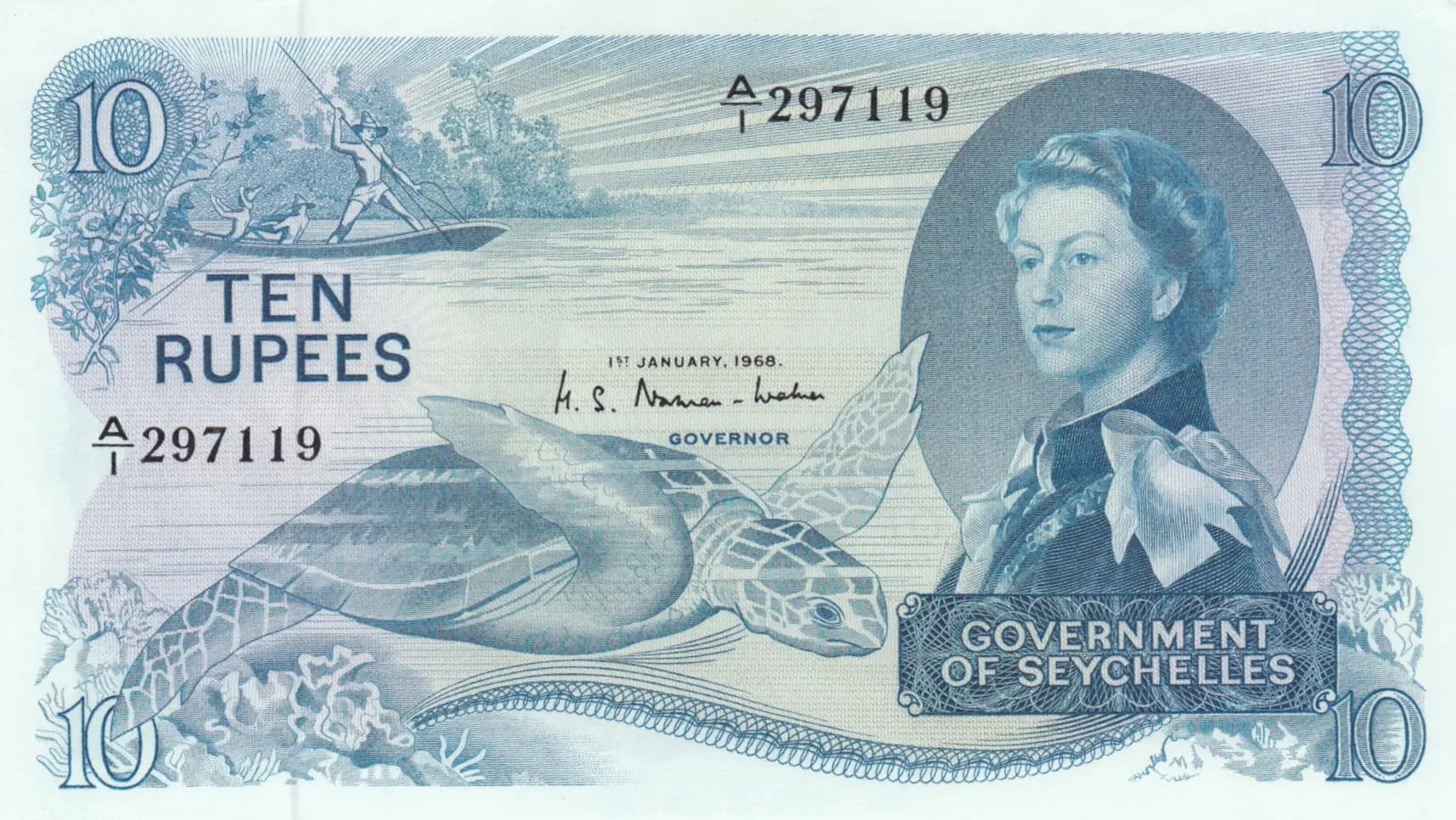
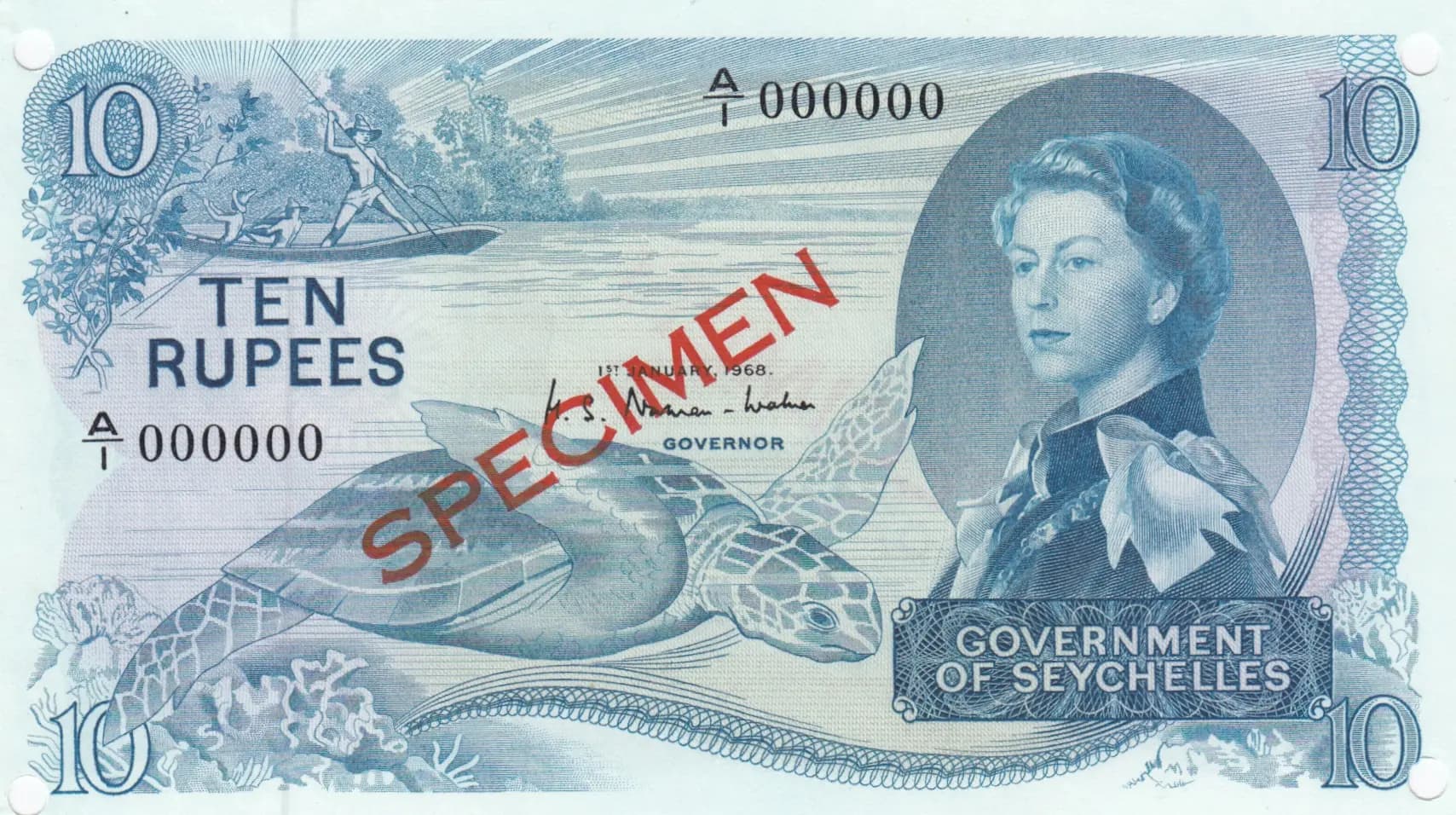
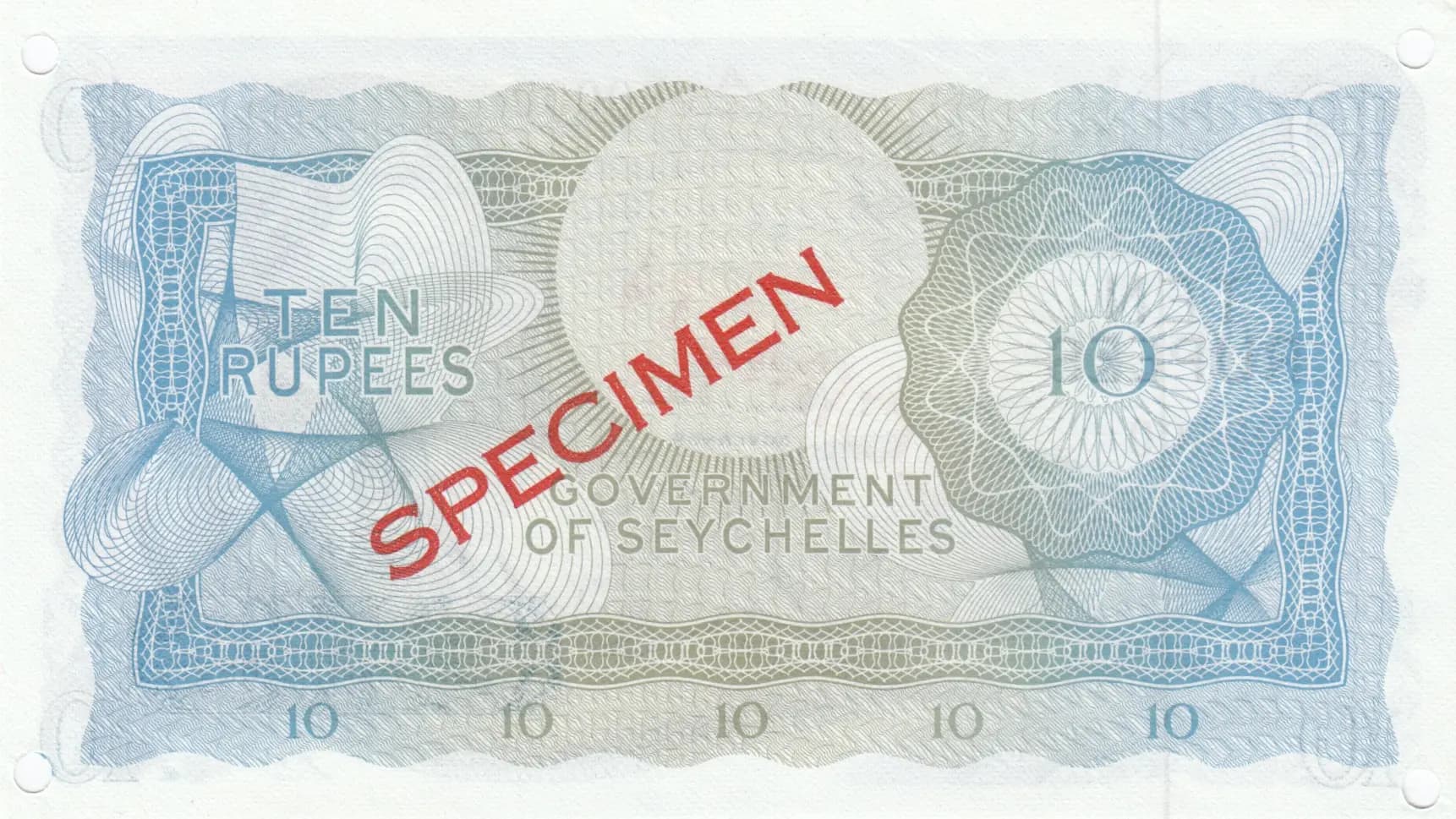
This is a 1968 Seychelles 10 Rupees specimen note (Pick P-15s) in pristine uncirculated condition, featuring the iconic "SCUM" design—a humorous reference to the letters visible beneath the sea tortoise on the reverse. The front displays a formal portrait on the right (Elizabeth II) in light blue on multicolor underprint, while the reverse showcases intricate geometric wave patterns and concentric designs in blue and olive tones. As a specimen note with red overprint and serial number A 000000, this example represents an important early issue from the newly independent Government of Seychelles.
Common. Despite being a specimen note from 1968, eBay market data shows these trade consistently in the $6–$10 USD range for UNC examples, with occasional outliers. The broad price range ($6.65–$450+) reflects condition variations and collector demand fluctuations rather than inherent scarcity. Specimen notes from early Seychelles currency issues were produced in sufficient quantities for distribution to banks and officials, making them readily available to collectors today.
Issued in 1968, this note marks Seychelles' transition to independence from British colonial rule, with Elizabeth II's portrait reflecting the nation's continued Commonwealth ties. The prominent sea tortoise on the reverse symbolizes the islands' renowned giant tortoise population and natural heritage, while the aquatic scene with a figure in a traditional canoe on the obverse celebrates the maritime culture central to Seychellois identity. The specimen overprint indicates this was produced for official presentation and bank distribution purposes during the currency's introduction.
The obverse features Her Majesty Queen Elizabeth II in formal profile on the right side, rendered in the classical banknote portrait style of the period. The left side displays a vignette of a traditional Seychellois outrigger canoe with a figure and tropical vegetation against water, symbolizing the islands' maritime heritage. A stylized sea tortoise illustration occupies the center-left, with the letters 'SCUM' discernible beneath its rear flipper—an unintentional detail that became the note's quirky collector nickname. The reverse showcases purely decorative engraving: repeating wave patterns and concentric circular designs in geometric arrangements, typical of security printing to prevent counterfeiting. The entire note employs a light blue/cyan base color with multicolor underprinting in pale greens, purples, and whites.
Front: 'GOVERNMENT OF SEYCHELLES' (issuing authority), 'TEN RUPEES' (denomination), 'GOVERNOR' (signature line), '1968' (date of issue), 'SPECIMEN' (specimen overprint in red), '10' (denomination numerals in corners). Back: 'GOVERNMENT OF SEYCHELLES' (issuing authority), 'TEN RUPEES' (denomination), 'SPECIMEN' (specimen overprint in red), '10' (denomination numerals repeated across bottom). All inscriptions are in English.
Intaglio engraving (line engraving), evidenced by the fine, precise linework visible throughout the design, intricate geometric border patterns, and the sharp definition of portraits and vignettes. The specimen was produced by security printers specializing in government currency production; based on the design quality and the 1968 date, this was likely printed by De La Rue or a similar Commonwealth-era security printer contracted by the Government of Seychelles.
This is a specimen variety (P-15s), identifiable by the red 'SPECIMEN' overprint and serial number A 000000. The 1968 date and 'GOVERNMENT OF SEYCHELLES' issuer designation confirm the first series. Signature varieties exist on this pick number, though the specific signatory is not clearly legible in the provided images. The specimen overprint style and format are consistent with 1968 Commonwealth currency practice. No other notable varieties (date changes, color variations, or printer marks) are evident from the visual analysis.