10 rupees 1979
Market Prices
21 salesAbout This Note
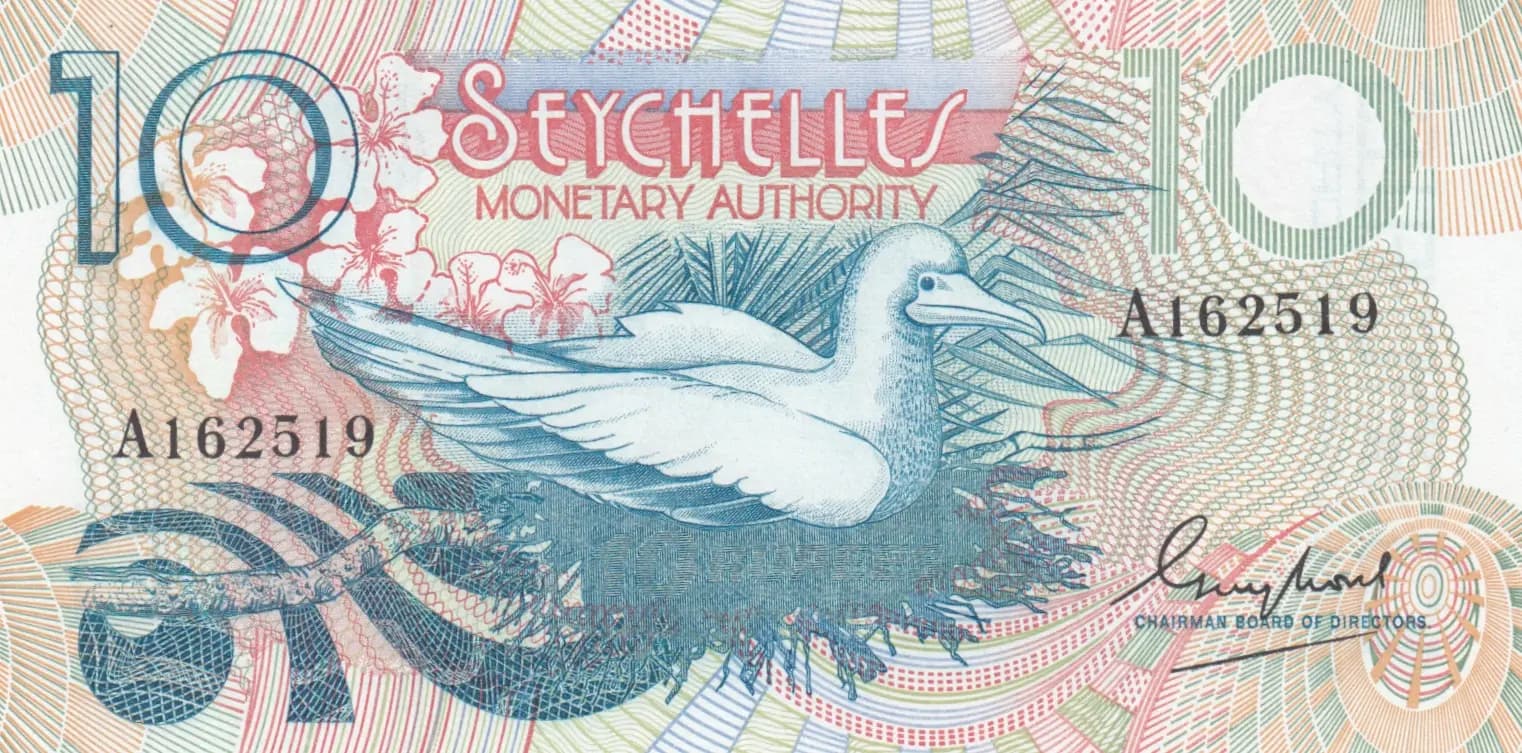
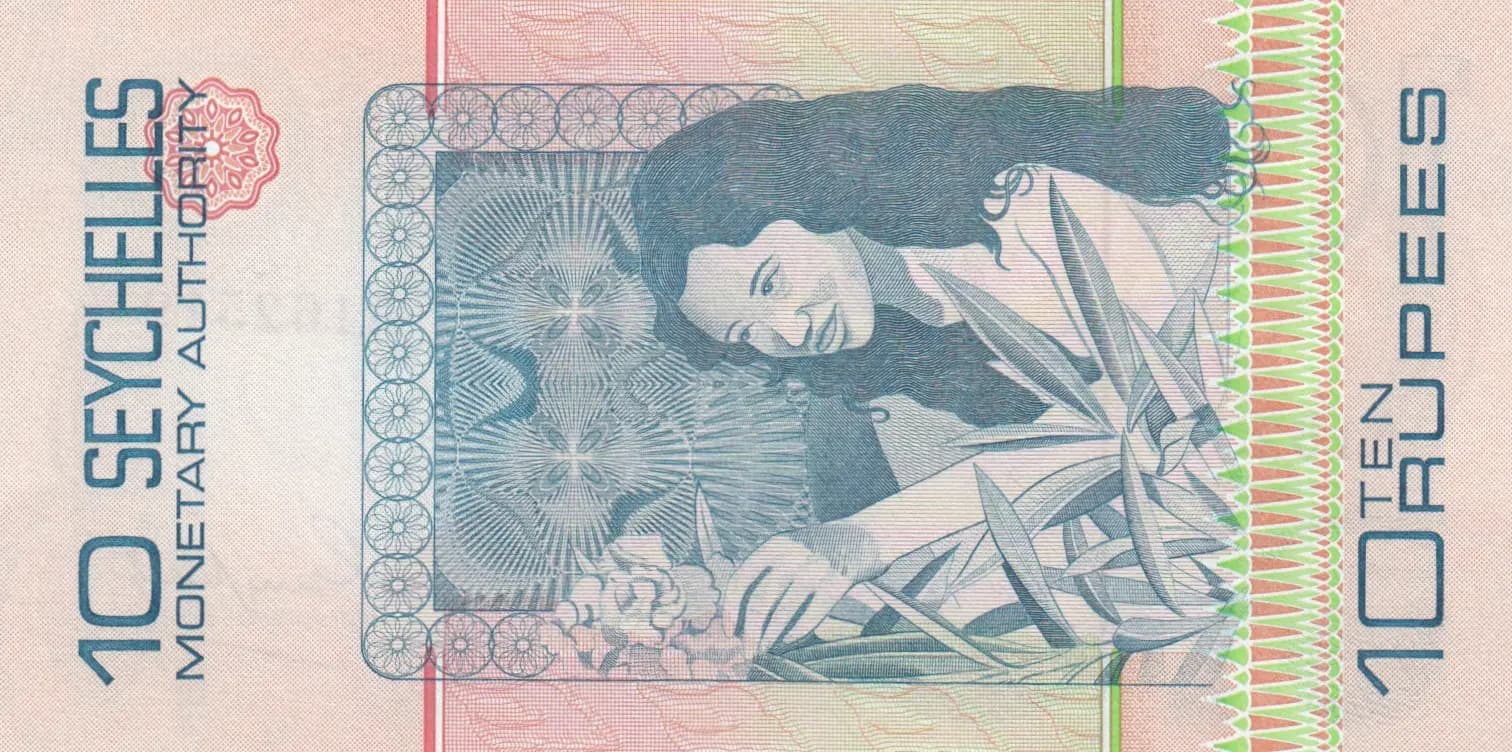
This is a well-preserved 1979 Seychelles Monetary Authority 10 rupees note (Pick 23) in uncirculated condition, featuring vibrant multicolor printing with a red-footed booby prominently displayed on the obverse and a young woman picking flowers on the reverse in vertical format. The note exhibits crisp, sharp printing with no visible wear, creases, or damage, making it an attractive example of this early Seychellois currency issue. The intricate decorative patterns and detailed engraving work exemplify the security printing standards of the period.
Common. This is a regular-issue banknote from the Seychelles Monetary Authority's standard circulation series. The eBay market data shows consistent sales activity spanning from 2014 to 2026, with UNC examples selling between $5 and $34, averaging around $12-17 in recent years. The relatively modest prices and frequent sales indicate healthy collector demand but no scarcity. The note was produced in quantities sufficient to support regular circulation, and examples remain readily available in the secondary market.
This note was issued during the early years of the Seychelles Monetary Authority's operation following the nation's independence, with the reverse featuring a girl with flowering plants reflecting the island nation's rich botanical heritage and natural resources. The choice of a red-footed booby—an iconic seabird of the Seychelles archipelago—on the obverse underscores the importance of the islands' unique wildlife to national identity. The note's design elements celebrate both the natural environment and the people of Seychelles during a formative period in the young nation's economic development.
The obverse features a detailed engraved depiction of a red-footed booby (Sula sula), a seabird endemic to the Seychelles, rendered in white against a background of elaborate decorative patterns in red, green, blue, and orange. The bird is shown in profile facing right with wings partially extended, centered within ornamental circular design elements. The reverse displays a portrait of a young woman with dark hair shown in left-facing profile, accompanied by flowering plants, with the composition arranged in vertical format. Both sides incorporate fine line-work patterns and geometric borders, with ornamental circles forming a vertical decorative line on the reverse's left edge. A security thread in green is visible on the reverse's right edge, and a circular watermark space (containing a black parrot's head) is positioned on the obverse's upper right.
{"front":{"upper_left":"10 (denomination in Arabic numerals)","issuer":"SEYCHELLES MONETARY AUTHORITY","signature_area":"CHAIRMAN BOARD OF DIRECTORS","serial_numbers":"A162519 (appears twice on the note)"},"back":{"denomination_and_country":"10 SEYCHELLES","issuer":"MONETARY AUTHORITY","additional_text":"10 PEES (abbreviated denomination marking)"},"summary":"All inscriptions are in English. The note identifies the issuer as the Seychelles Monetary Authority and the denomination as 10 rupees, with standard signature and serial number placements typical of currency from this period."}
Intaglio engraving combined with multicolor lithography, evidenced by the crisp, detailed rendering of the bird and portrait, the intricate line-work patterns throughout, and the precise color registration visible in the decorative backgrounds. The fine detail work and the multiple color layers (red, blue, green, orange, and accent colors) indicate the use of separate plates for each color application. The security features—including the watermark, security thread, and detailed engraving—reflect the production standards of a specialized security printer, consistent with currency printing practices of the late 1970s.
This example carries the serial number A162519. The 1979 issue of Pick 23 is known to exist with varying serial number prefixes; the 'A' prefix observed here is typical for early print runs. No overprints or significant varieties are evident in this specimen. The note represents the standard variety of the 1979 issue with no reported error notes or commemorative overprints affecting this Pick number.