1 rupee 1943
Market Prices
2 salesAbout This Note
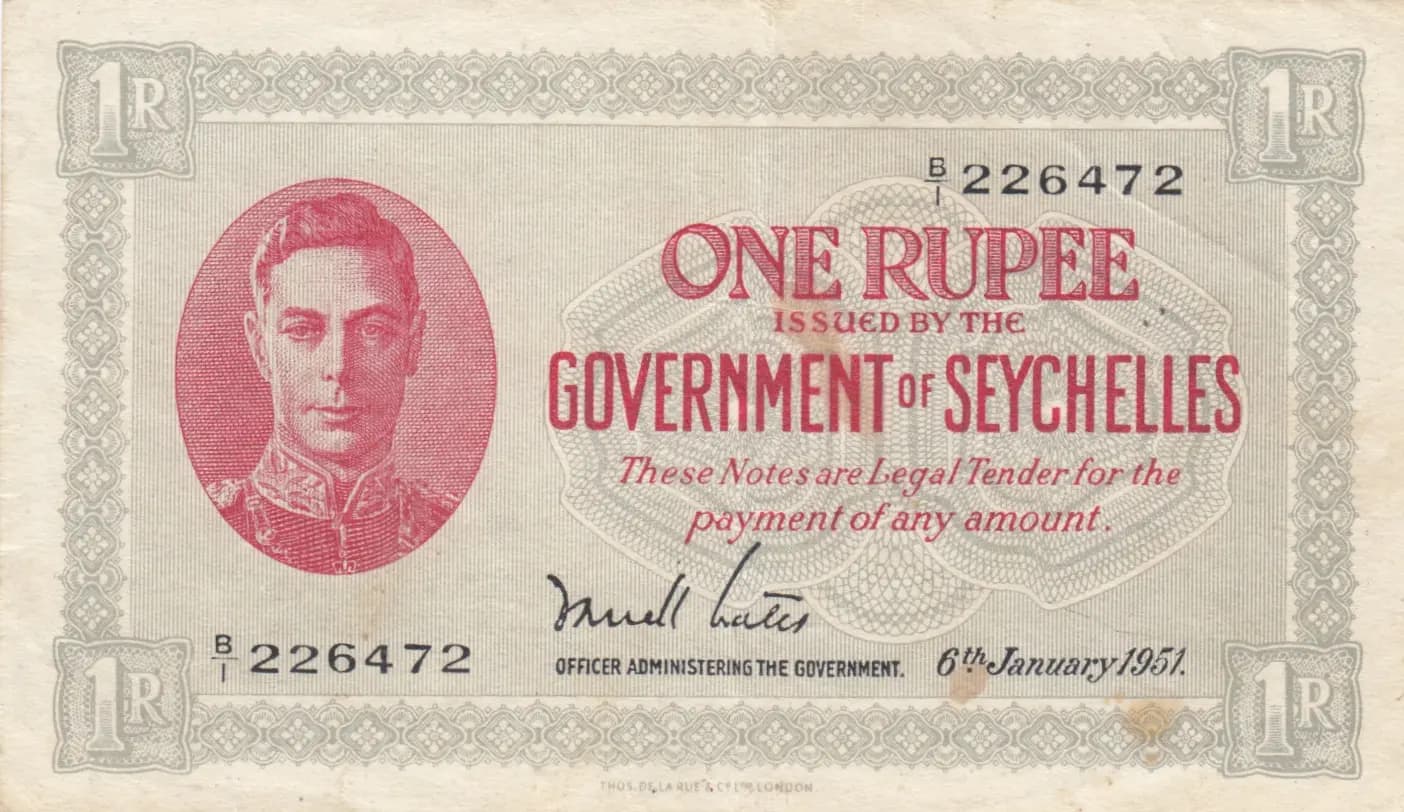
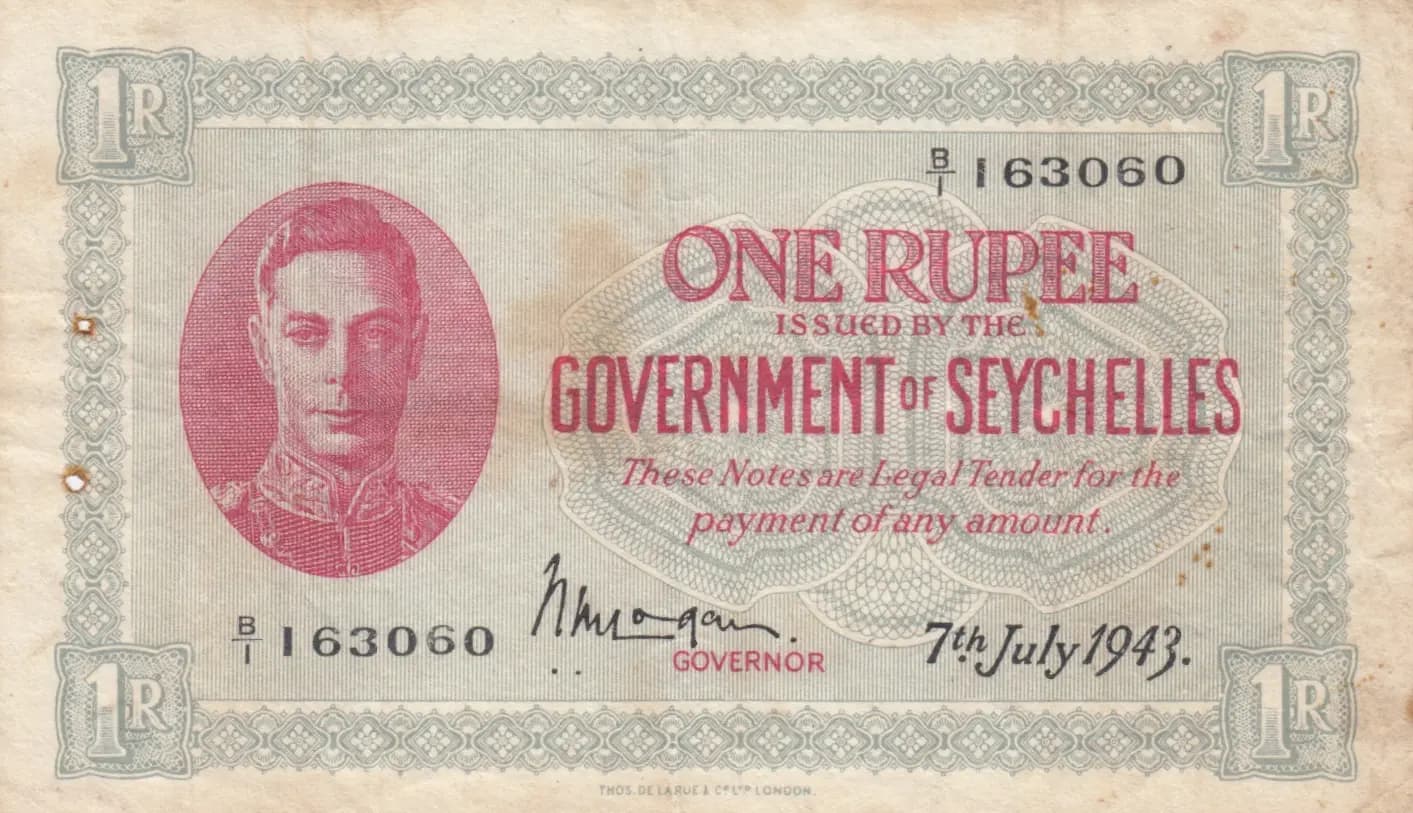
This is a 1943 Seychelles 1 Rupee note (Pick P-7a) issued by the Government of Seychelles and printed by Thomas de la Rue & Company in London. The note features a striking portrait of King George VI in formal military dress within a red/pink oval frame on the left side, set against an ornate geometric decorative border. In Fair condition with visible aging, foxing, and storage stains, this uniface note represents an early Commonwealth currency issue from the wartime period.
Common. Despite the note's age and colonial origin, the eBay pricing data shows Fair condition examples selling for approximately $113.50, which is consistent with common banknotes from this series. The catalog range (VG $50 to UNC $1500) reflects normal market differentiation by condition rather than exceptional scarcity. The 1943-1951 date range indicates a multi-year issue period, suggesting adequate print runs. Fair condition examples represent the mid-range of the rarity spectrum and appear regularly in the numismatic market.
This note was issued on 7 July 1943 during World War II, when Seychelles remained under British control as a colonial territory. The prominent portrait of King George VI emphasizes the formal connection to the British Crown and Commonwealth during a pivotal moment in imperial history. The Government of Seychelles currency issue reflects the colonial administration's monetary authority during the wartime period, when currency stability was crucial for maintaining economic order in remote island territories.
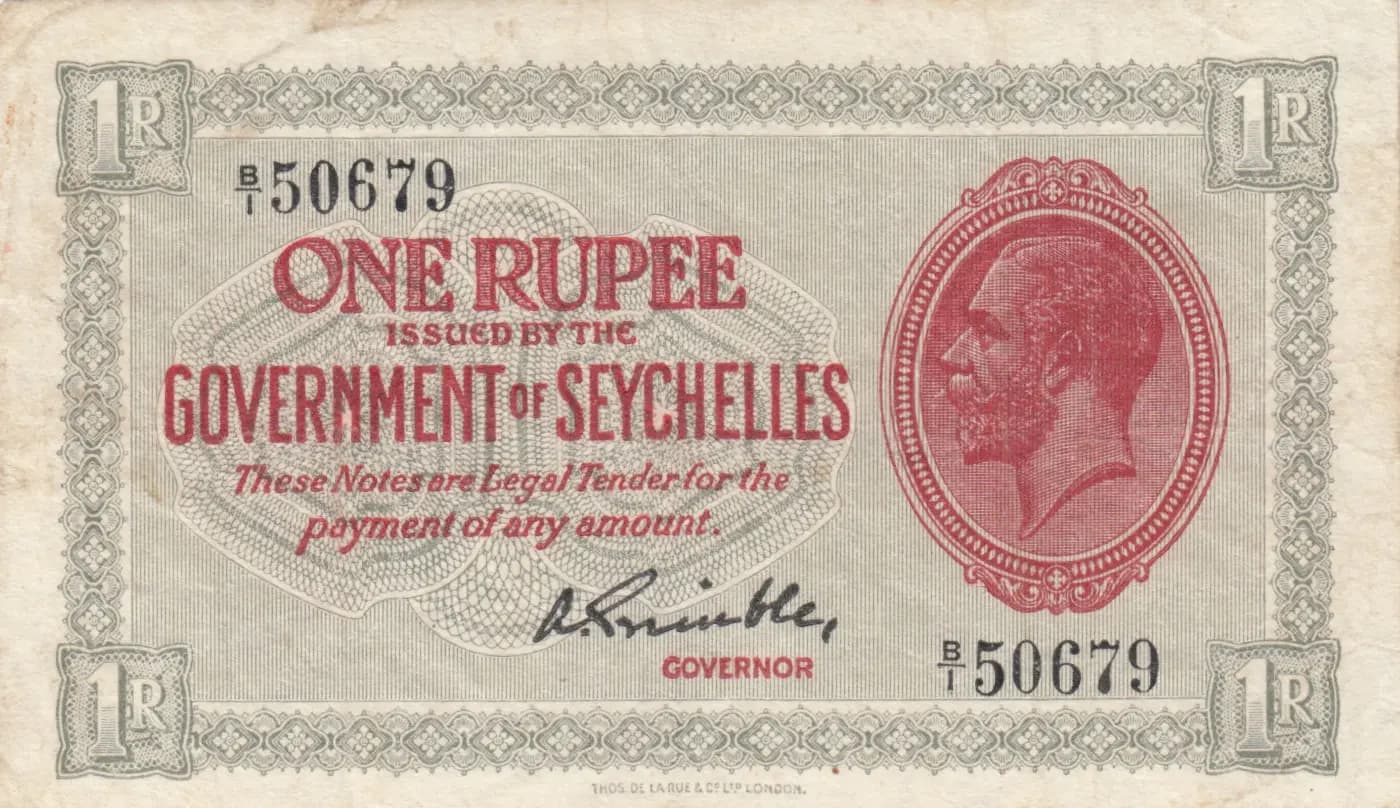
The obverse features a formally composed portrait of King George VI rendered in red and gray tones, positioned in profile within an elaborate red/pink oval frame on the left side of the note. The right side contains text within a scalloped oval frame indicating the issuing authority and legal tender status. The entire design is enclosed within an ornate geometric border pattern featuring decorative corner elements with '1R' denomination markers in all four corners. The note is uniface—with only the portrait side bearing significant printing—reflecting the economical design practices of the period. The intricate linework and fine engraving throughout creates visual security through design complexity rather than advanced technological features.
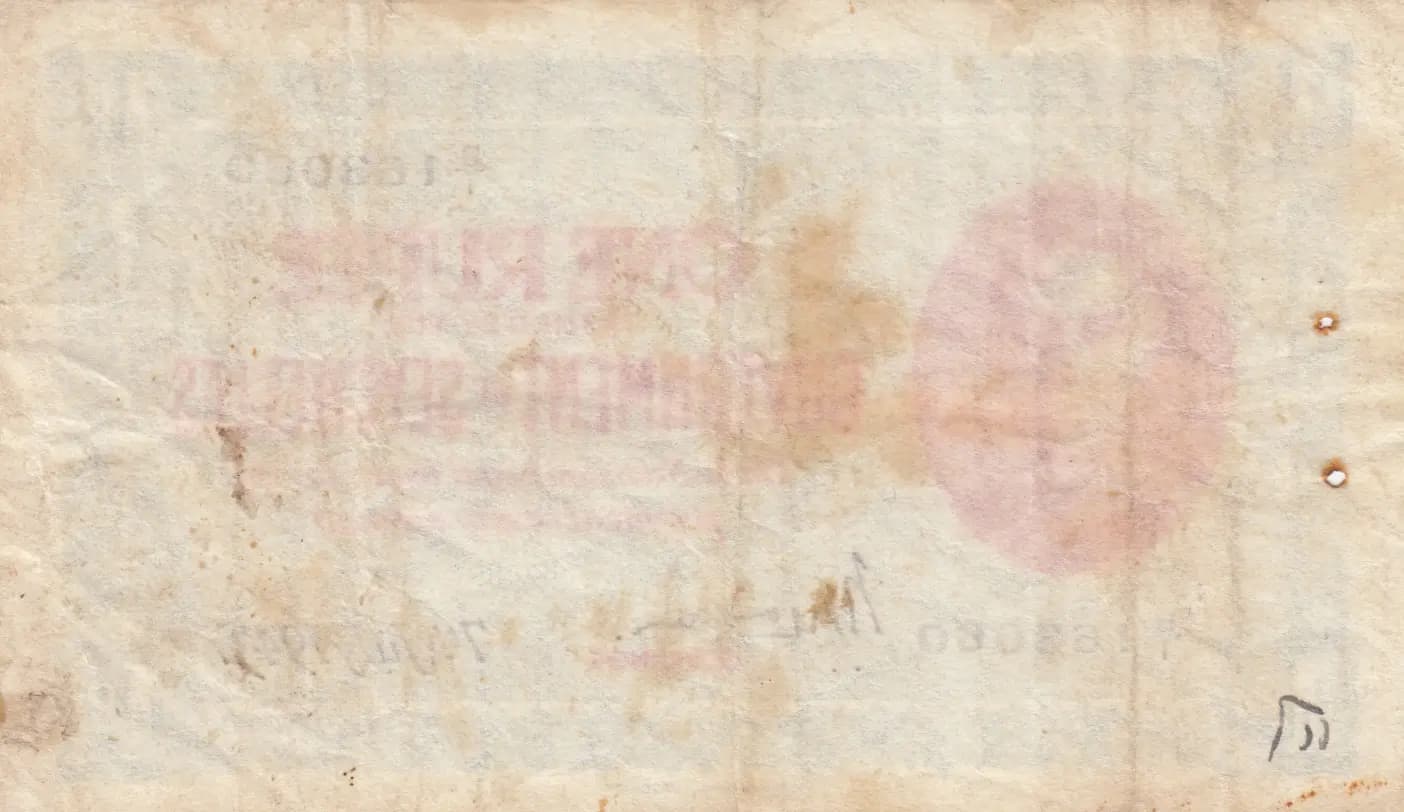
Front side: '1R' and 'ONE RUPEE' (denomination); 'ISSUED BY THE GOVERNMENT OF SEYCHELLES' (issuing authority); 'These Notes are Legal Tender for the payment of any amount' (legal tender declaration); 'B | 163060' (serial number, shown twice); 'Morgan' and 'GOVERNOR' (signature and title of the Governor); '7th July 1943' (issue date); 'THOS. DE LA RUE & Co° LONDON' (printer identification). Back side: Minimal printing with only faint impressions, primarily blank uniface design.
Intaglio engraving (line engraving), executed by Thomas de la Rue & Company, London. The note exhibits characteristic features of fine line engraving including detailed portrait work, intricate geometric border patterns, and precise denomination markers. Thomas de la Rue was the premier security printer of the British Empire during this era, and their craftsmanship is evident in the complex decorative elements and high-quality portraiture visible despite the note's aged condition.
This note is cataloged as Pick P-7a, indicating it is the first major variety of the 1943 Seychelles 1 Rupee issue. The visual analysis notes that this type, like P-6, shows 'various date and signature varieties,' suggesting multiple signature variants exist within the P-7a classification. The observed example features the 'Morgan' signature (identified as the Governor's signature) and the specific date of 7 July 1943. The serial number prefix 'B' with number '163060' represents individual production documentation. Collectors should note that signature varieties and date variations within the P-7a designation may affect relative desirability and premium pricing, though all appear to be within the same common rarity classification.