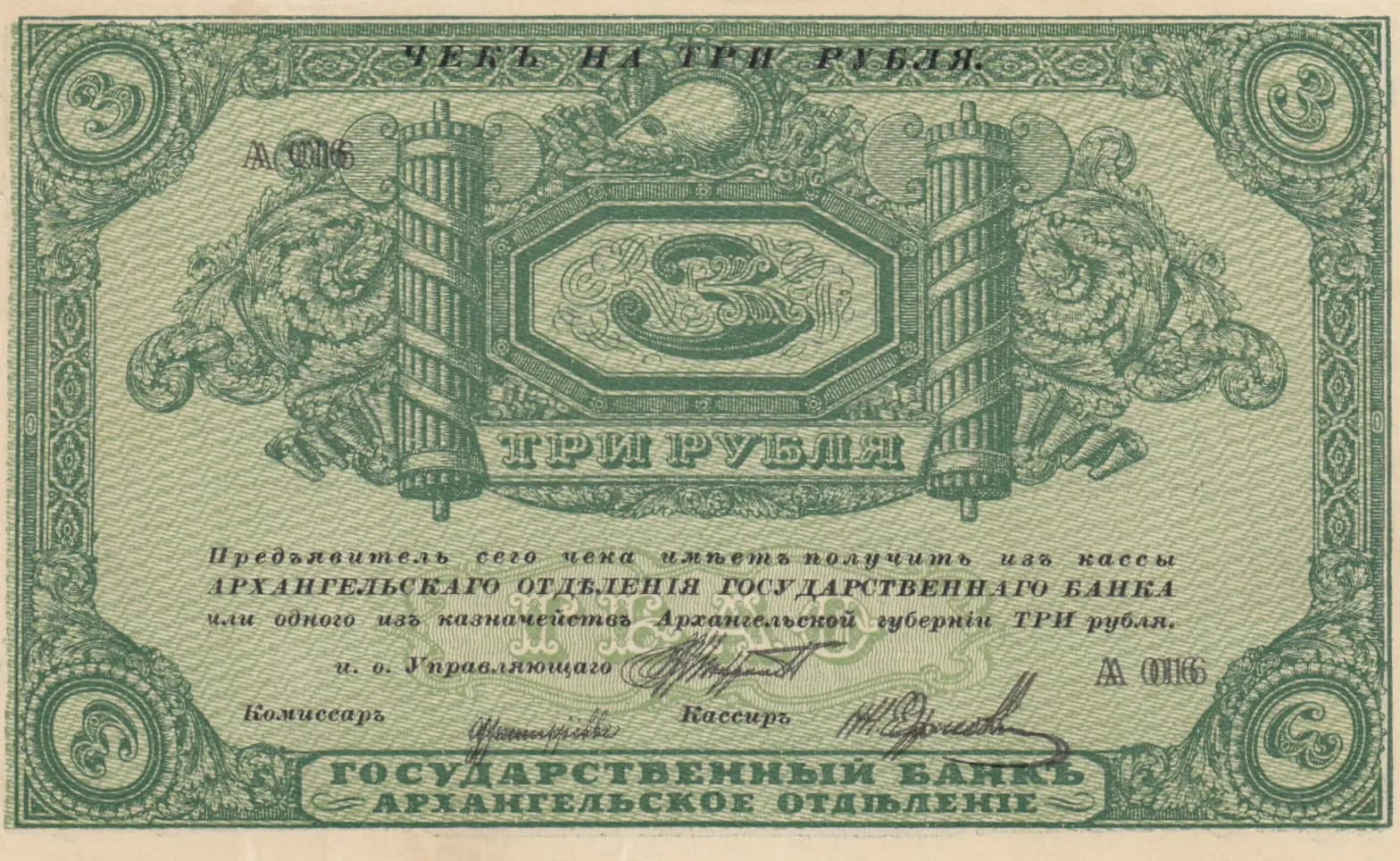
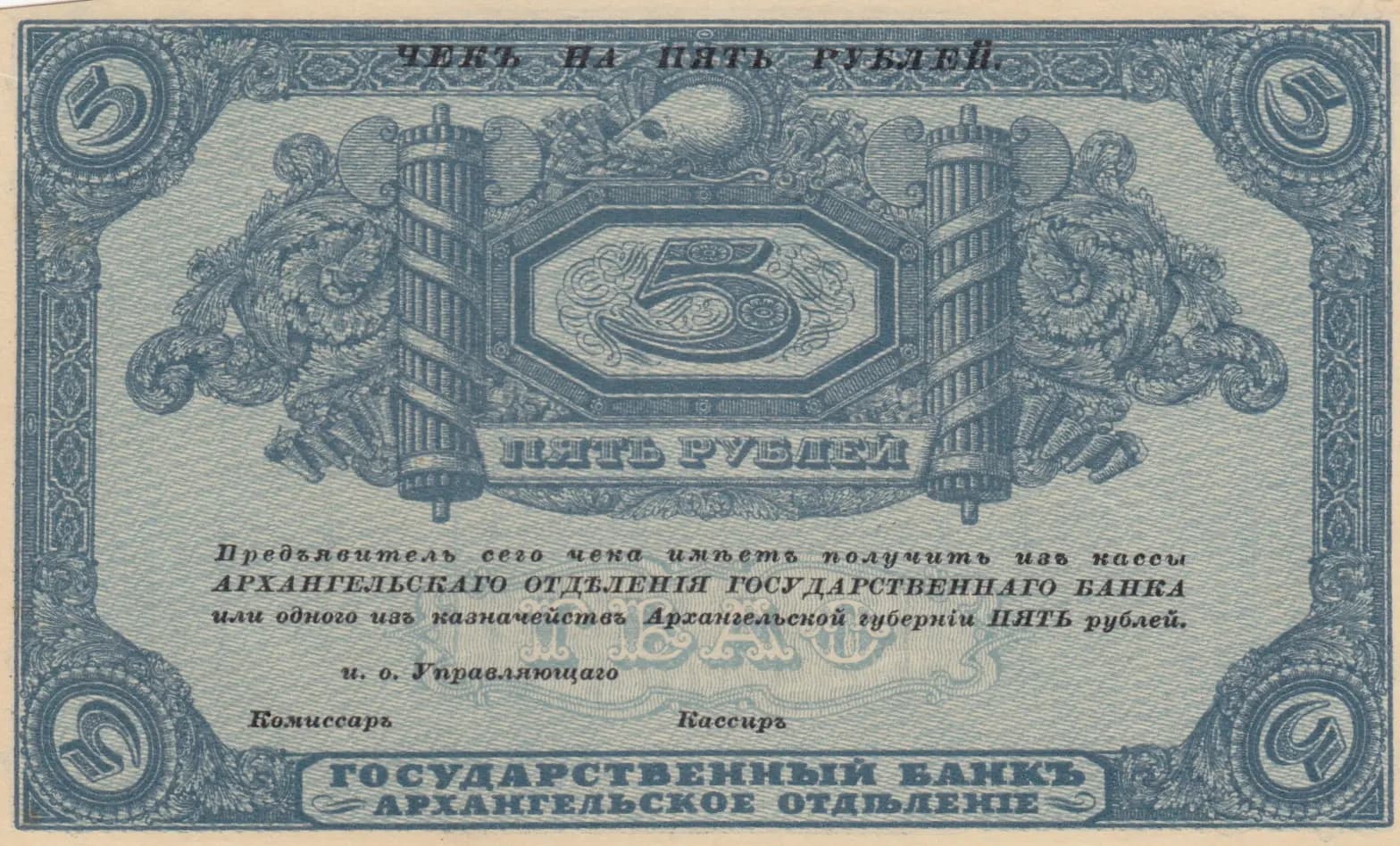
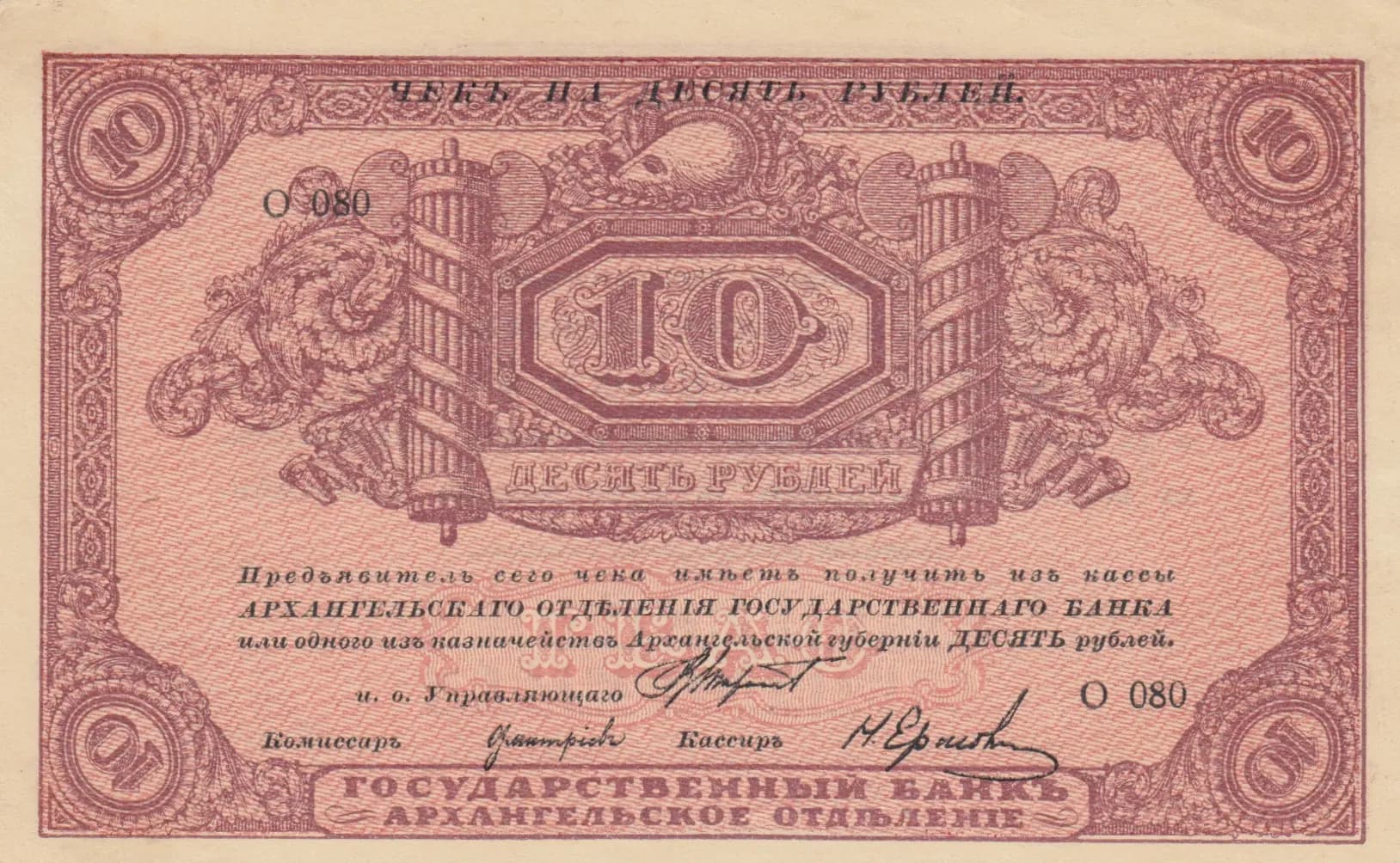
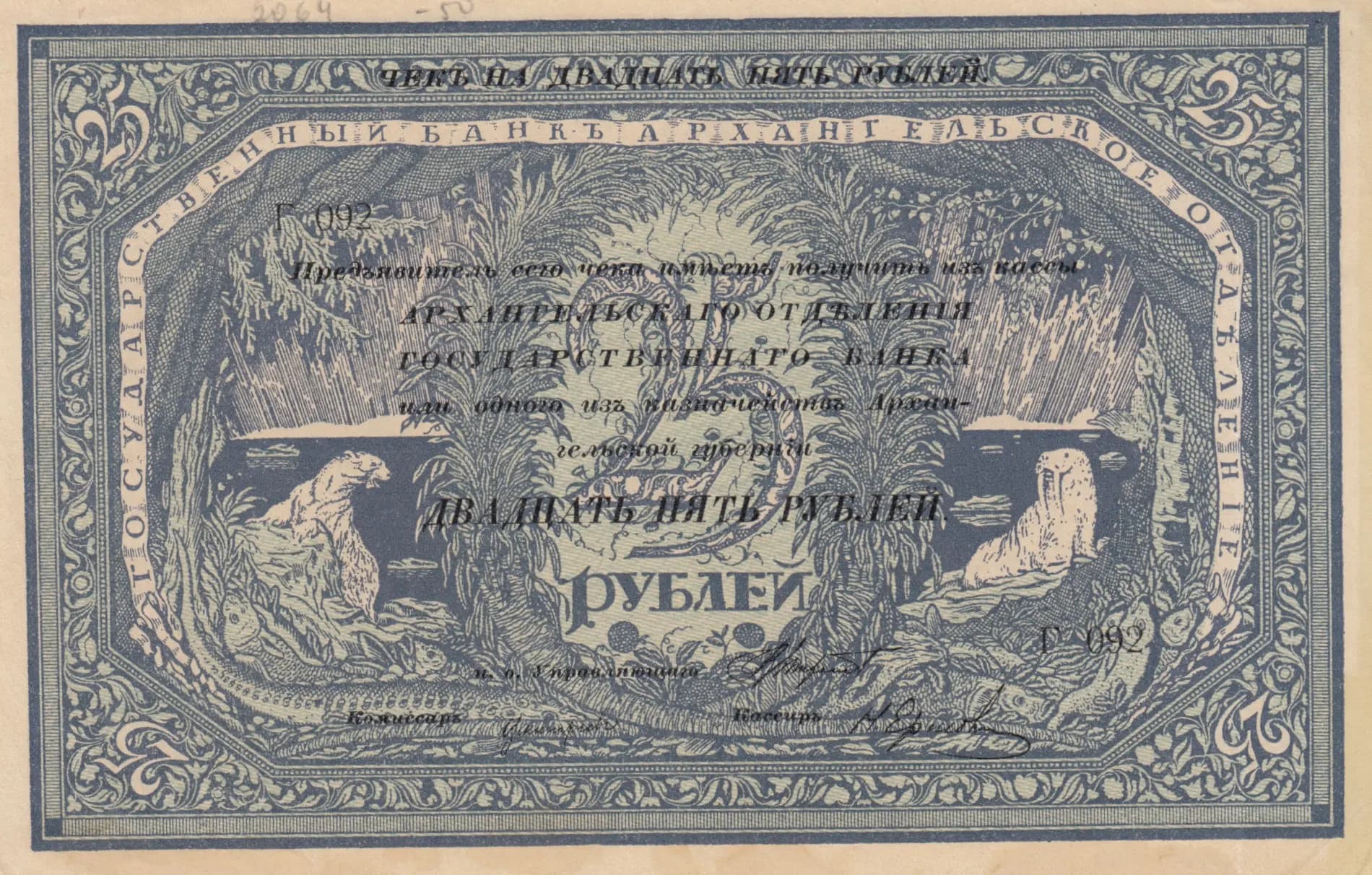
50 kopeek 1919
About This Note
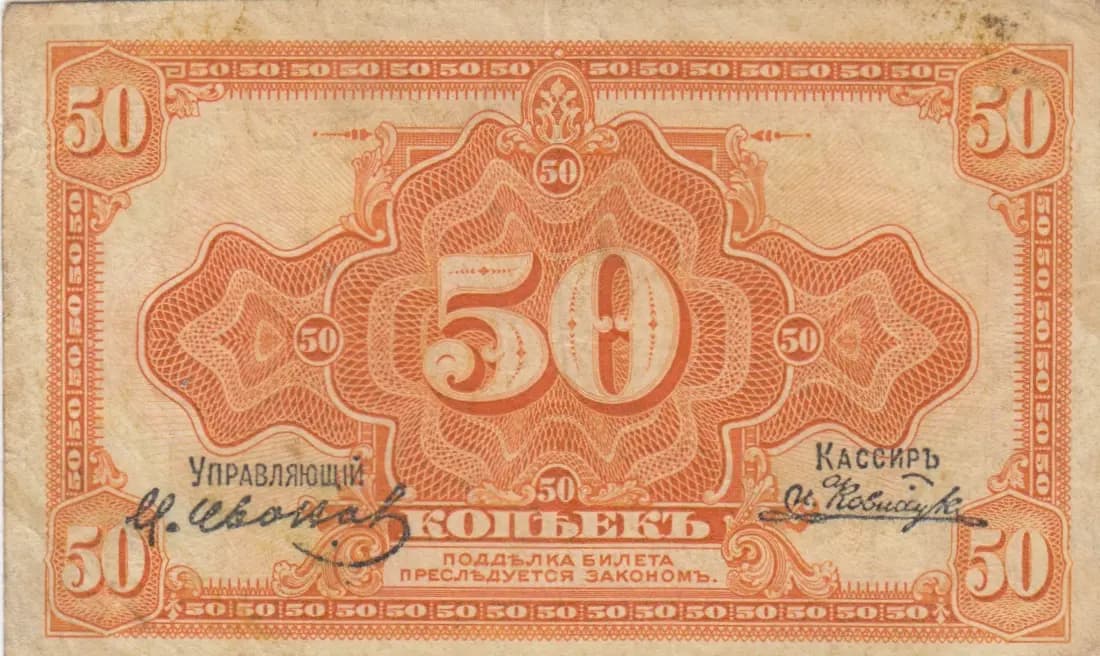
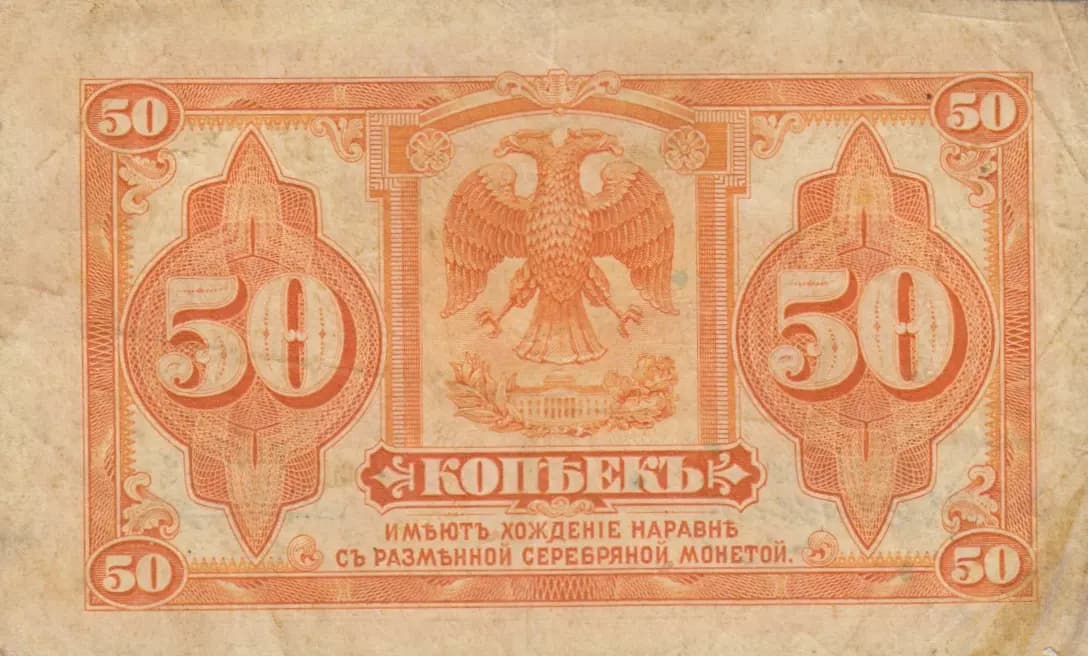
This 50 kopeck banknote from 1919 issued by the Far East Provisional Government features striking orange-red engraving with a prominent double-headed eagle and ornate denomination frames. The note displays significant aging with foxing and discoloration throughout, consistent with its VF grade and over 100 years of age. The presence of handwritten signatures crossing the obverse and the fine geometric ornamentation make this a distinctive example of Russian Civil War-era emergency currency.
Common. The Far East Provisional Government's 50 kopeck notes from 1919 were issued in substantial quantities to facilitate commerce in the Russian Far East during the Civil War period. While the issuing authority was short-lived and territorial, the print runs for this denomination were adequate to meet regional demand, resulting in relatively common survival rates. Notes from this series appear regularly in collections and dealer inventories.
Issued during the Russian Civil War by the Far East Provisional Government, this note represents the fragmented political and monetary situation of 1919 when various regional authorities issued their own currency. The double-headed eagle, Russia's traditional heraldic symbol prominently displayed on both sides, asserts legitimacy and continuity with Imperial Russia despite the revolutionary upheaval. The text stating the notes 'have circulation equal with silver coin' reflects the desperate attempt to maintain monetary confidence during this period of economic chaos and territorial division.
The obverse features a centrally-positioned large numeral '50' enclosed within an elaborate shield-like ornamental frame, surmounted by Russia's double-headed imperial eagle rendered in fine detail. Corner denominations in all four corners reinforce the value. The reverse displays a symmetrical composition with the double-headed eagle as the dominant central heraldic element, flanked by two large '50' numerals set within ornamental circular cartouches. Below the eagle is a decorative botanical wreath or laurel design. Both sides employ intricate geometric patterns, fine line engraving, and flourishes characteristic of high-security Imperial Russian currency design. The cream/beige paper background contrasts with the orange-red engraving work throughout.
FRONT: '50' (denomination in all four corners); 'КОПЕЙСК' (Kopeck); 'ПОДДЕРЖКА БИЛЕТА ПРЕДУСМОТРЕНА ЗАКОНОМ' (Ticket support provided by law); 'Управляющий' (Managing Director/Administrator); 'Кассир' (Cashier); [Handwritten illegible signatures]. BACK: '50' (denomination in ornamental circular frames); 'КОПЕЙСК' (Kopeck); 'ИМЕЮТ ХОЖДЕНИЕ НАРАВНЕ С РАЗМЫННОЙ СЕРЕБРЯНОЙ МОНЕТОЙ' (Have circulation equal with silver coin [of equivalent value]).
Intaglio (engraved) printing on paper, utilizing fine line engraving for the detailed patterns, portraits, and denomination frames. This was the standard security printing method employed by Russian Imperial and successor-state currency authorities. The repetitive geometric patterns and fine linework are characteristic of engraved banknote production designed to resist counterfeiting.
Varieties for this Pick number (P-S1244) may be distinguished by the specific handwritten signatures of the Managing Director and Cashier, which appear to differ from note to note. No date appears on the obverse, which is standard for this series. The specific signature combination on this example would constitute the primary identifying variety, though without clear legibility of the signatures from the images, the exact officials cannot be definitively identified. Serial numbers, if present, are not clearly visible in the provided images.