3 rublja 1918
About This Note
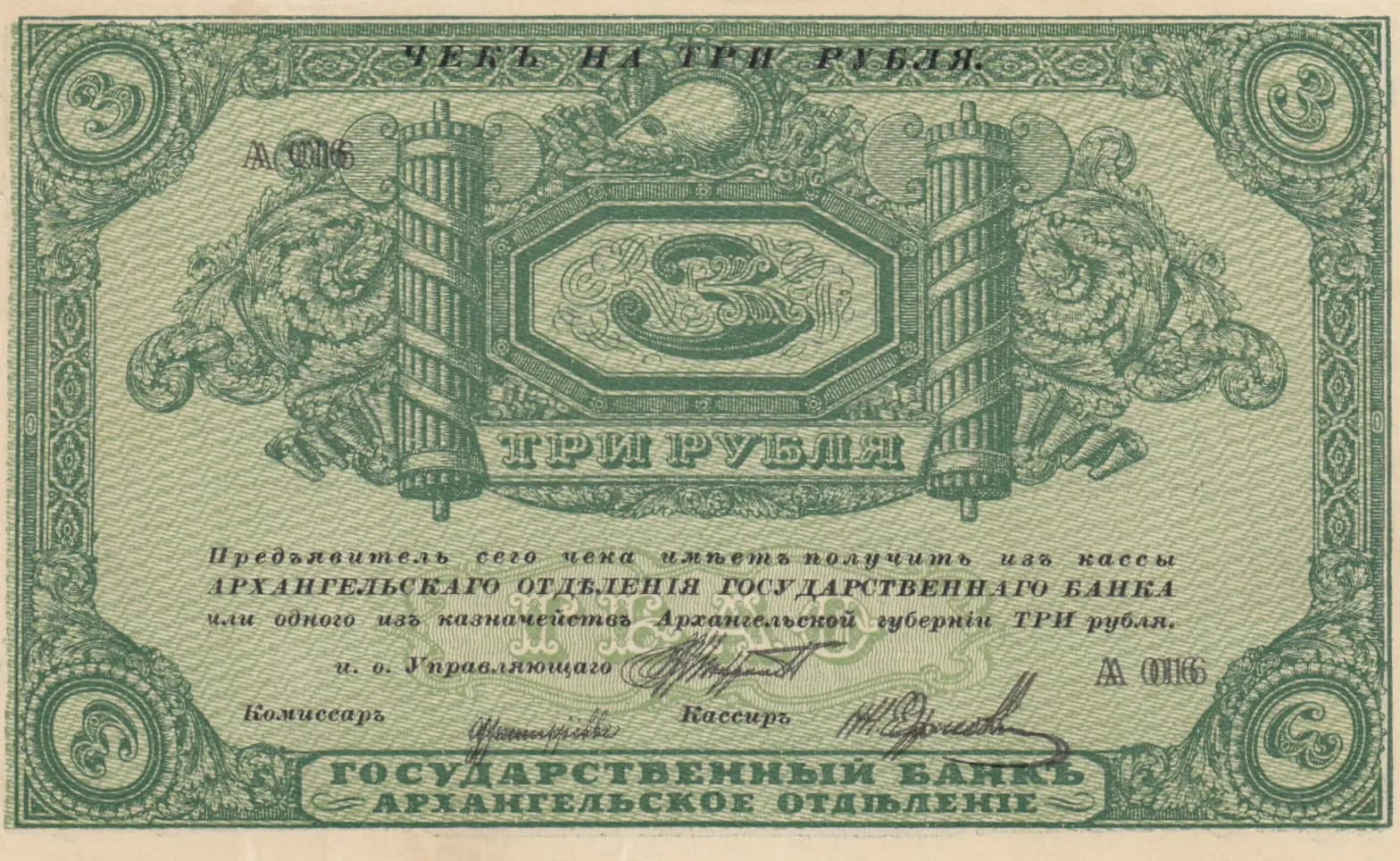
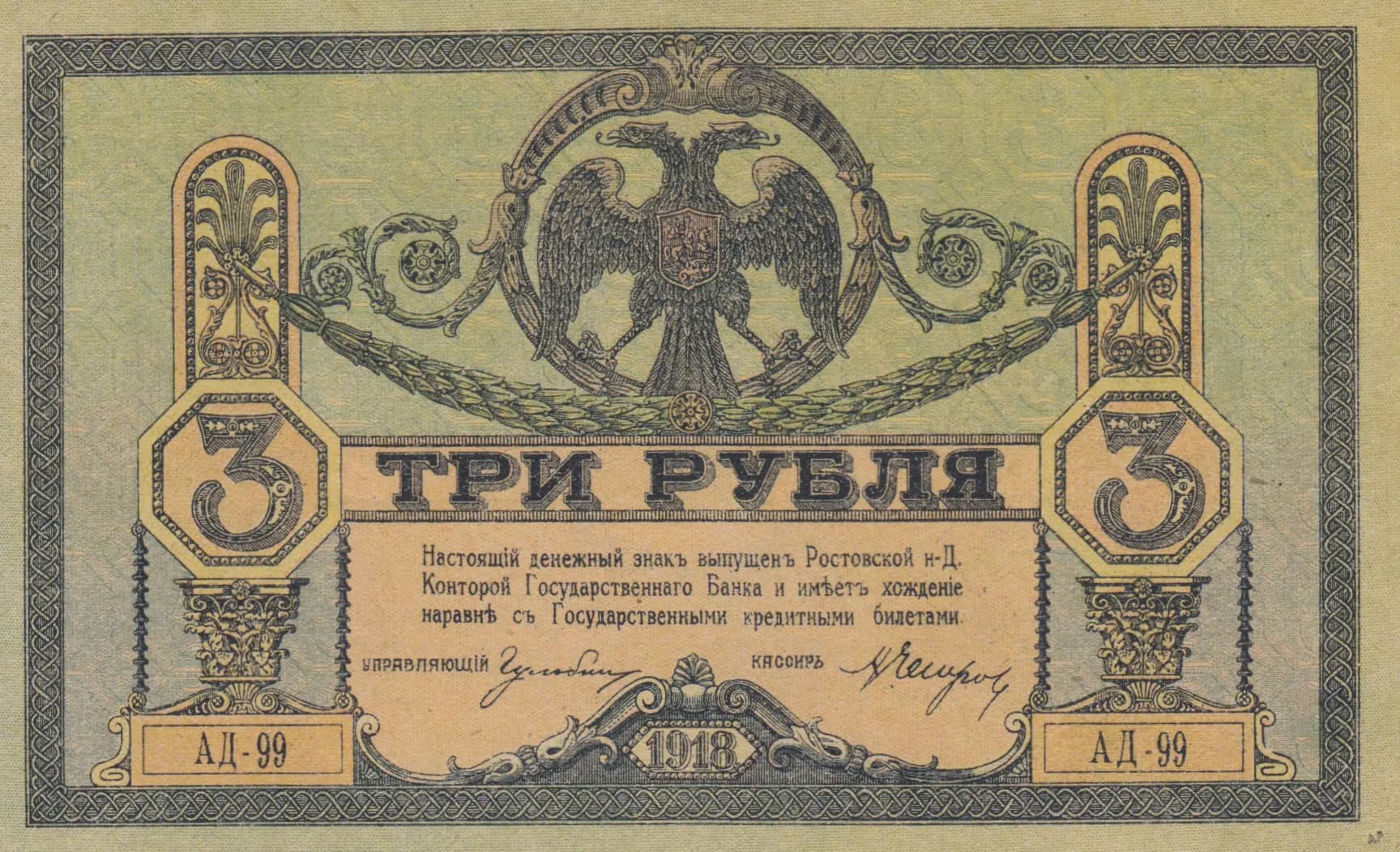
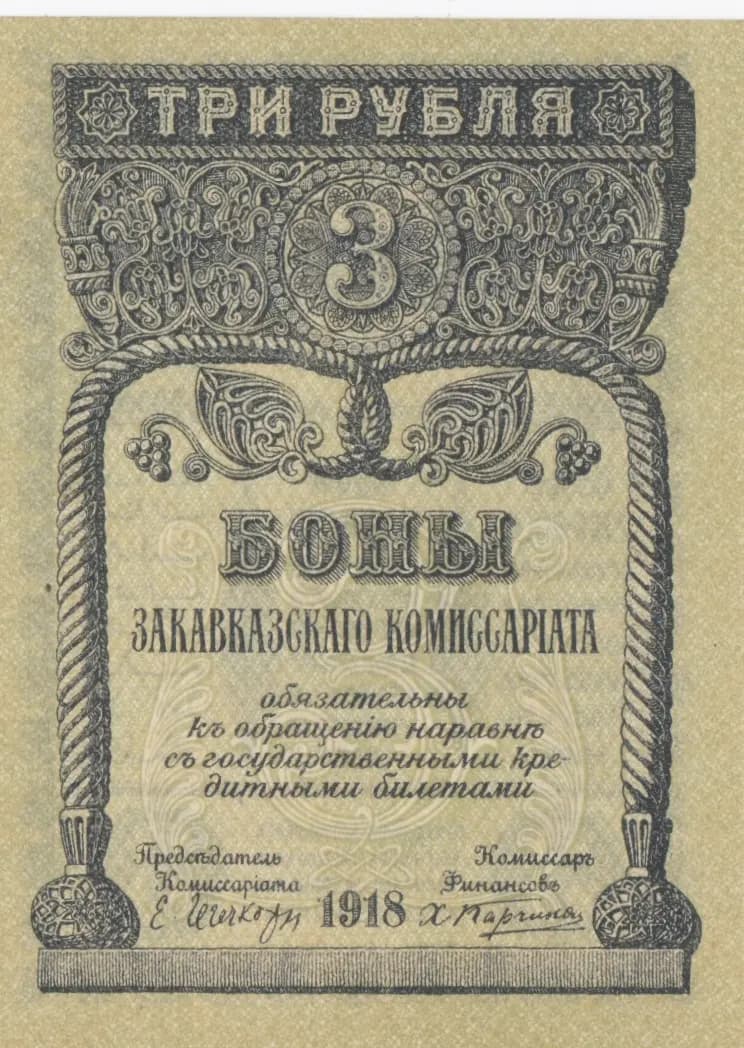
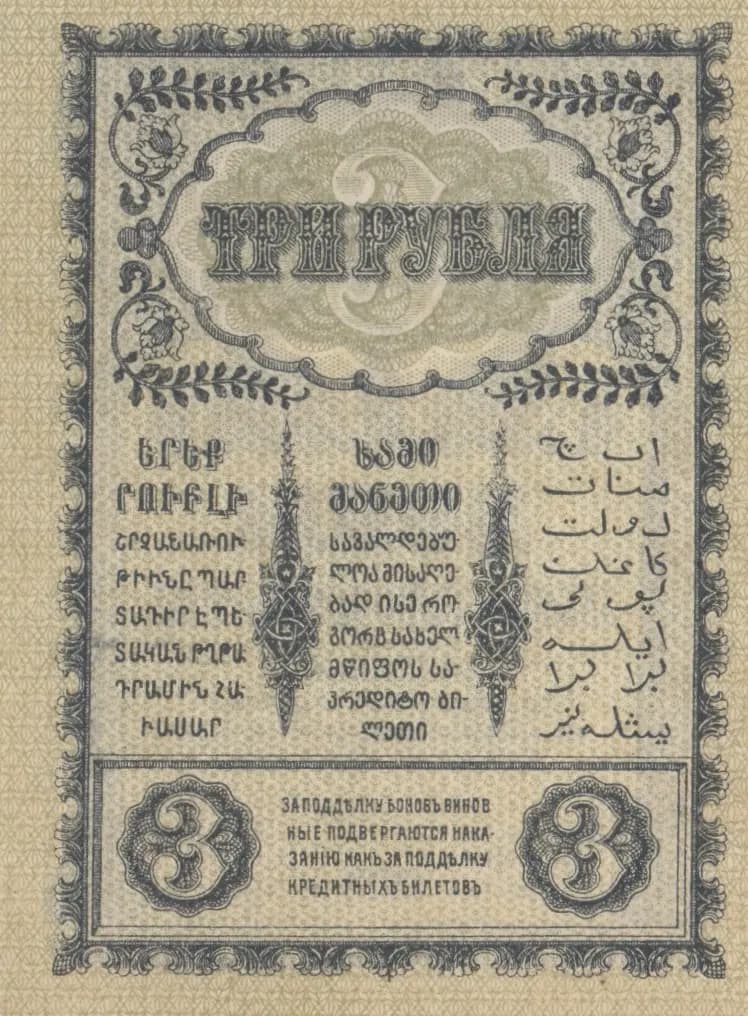
This is an exceptional UNC example of a 3 Ruble note issued by the Transcaucasian Commissariat in March 1918, representing a historically significant currency from the brief Soviet period in the Caucasus region. The note features pristine ornate engraving with elaborate floral and geometric borders, a prominent numeral '3' in a circular medallion, and multilingual inscriptions in Russian, Armenian, Georgian, and Persian—reflecting the diverse populations of the issuing territory. Despite over 100 years of age, the paper exhibits only minor foxing and yellowing consistent with age, with no tears or major damage, making this an outstanding example of early Soviet-era numismatic design.
Common. The Transcaucasian Commissariat, despite its historical significance, issued these notes in reasonable quantities for the regional circulation they were intended to serve. No evidence indicates exceptionally limited print runs or rapid recalls for the 3 Ruble denomination. While these notes are now over 100 years old and examples in pristine UNC condition are less frequently encountered than lower grades, the denomination itself and the issuing authority do not fall into the 'rare' category in numismatic market terms. Examples in various conditions remain available to collectors regularly.
The Transcaucasian Commissariat was a short-lived Soviet administrative body governing the South Caucasus region (present-day Georgia, Armenia, and Azerbaijan) following the Russian Revolution. This 1918 issue represents one of the earliest Soviet banknotes and demonstrates the Commissariat's attempt to establish monetary authority over a multilingual, ethnically diverse region by prominently featuring Armenian, Georgian, Russian, and Persian text. The note's elaborate pre-revolutionary design aesthetic and formal warnings against counterfeiting reflect the transitional period between Imperial Russian currency standards and early Soviet monetary practices.
This ornately designed banknote employs a classical early 20th-century engraved aesthetic typical of Imperial Russian currency practice. The front features a large ornamental numeral '3' enclosed within an intricate circular medallion as the primary design element, surrounded by elaborate rope-like borders and scrollwork ornamental flourishes featuring acanthus leaves and floral motifs characteristic of neoclassical numismatic design. The back maintains architectural symmetry with matching large numerals '3' in circular medallions positioned in the bottom corners, flanked by stylized minaret or tower designs that reference the Islamic architectural heritage of the Caucasus region. The multilingual inscription approach (Russian, Armenian, Georgian, and Persian) on the reverse was a deliberate security and administrative feature emphasizing the Commissariat's multinational governance. No portraits of political figures appear on the note, instead relying entirely on decorative and symbolic elements to convey authority and denomination value.
FRONT SIDE: 'ТРИ РУБЛЯ' (Three Rubles) - denomination in Russian; 'БОНЫ ЗАКАВКАЗСКОГО КОМИССАРИАТА' (Bonds of the Transcaucasian Commissariat); 'обязательны к обращению наравню со государственными кредитными билетами' (Obligatory in circulation on equal terms with state credit notes); 'Председатель Комиссариата' (Chairman of the Commissariat); 'Комиссар Финансов' (Commissar of Finance); '1918 г Марциала' (March 1918). BACK SIDE: 'ТРИ РУБЛЯ' (Three Rubles in Russian); 'ԵՐԵՔ ՌՈՒԲԼԻ' (Three Rubles in Armenian); 'სამი ლარი' (Three Rubles in Georgian); 'سه روبل' (Three Rubles in Persian); 'ЗАПРЕЩАЛОСЬ БОНОВЬ БИНОВ НЫЕ ПОДВЕРГАЮТСЯ НАКАЗАНИЮ КАК ЗА ПОДДЕЛКУ КРЕДИТНЫХ БИЛЕТОВ' (Counterfeiting these notes is prohibited and subject to punishment as forgery of credit notes).
The note was produced using intaglio engraving (line engraving), evidenced by the fine, precise line work visible throughout the decorative elements, the crisp definition of ornamental borders, and the consistent depth of impression in the numeral designs. The intricate detail of the floral scrollwork, rope borders, and ornamental flourishes—all clearly visible in the visual analysis—demonstrates the sophisticated engraving techniques employed by Russian security printers of the Imperial and early Soviet period. The security features including fine line patterns throughout the design and potential watermark areas indicate production by a state security printing facility, consistent with Transcaucasian Commissariat monetary operations in 1918.
This specific note is dated March 1918 ('1918 г Марциала') and represents the standard issue from the Transcaucasian Commissariat for the 3 Ruble denomination under Pick catalog number P-S602. Potential varieties for this Pick number may include differences in signature blocks (Chairman and Finance Commissar positions may have had multiple signatories during the brief existence of the Commissariat), though no specific signature varieties are noted in the visual analysis of this particular example. The consistent presence of all four language versions (Russian, Armenian, Georgian, Persian) on all examples is a defining characteristic of this issue rather than a variety marker.