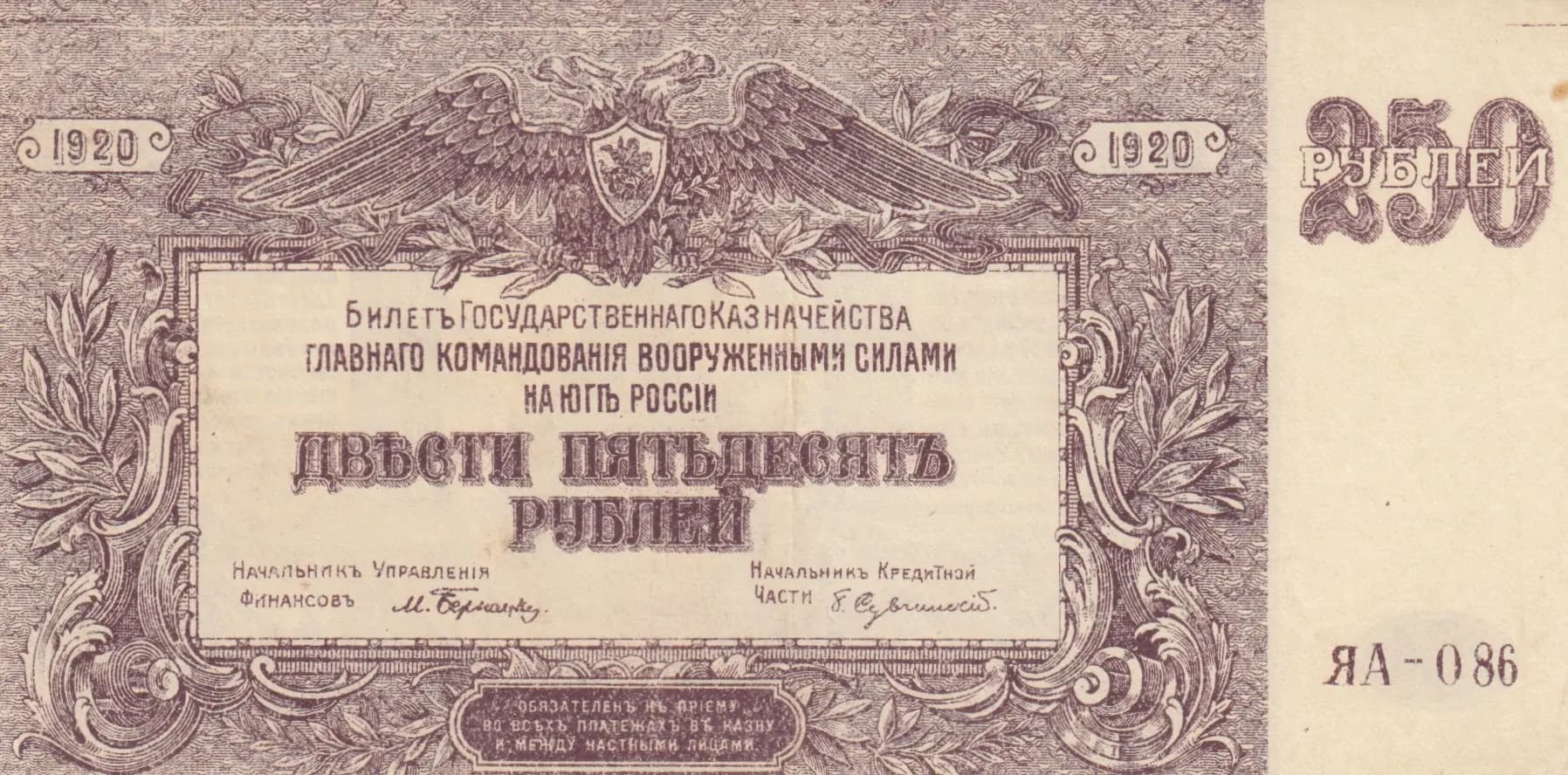
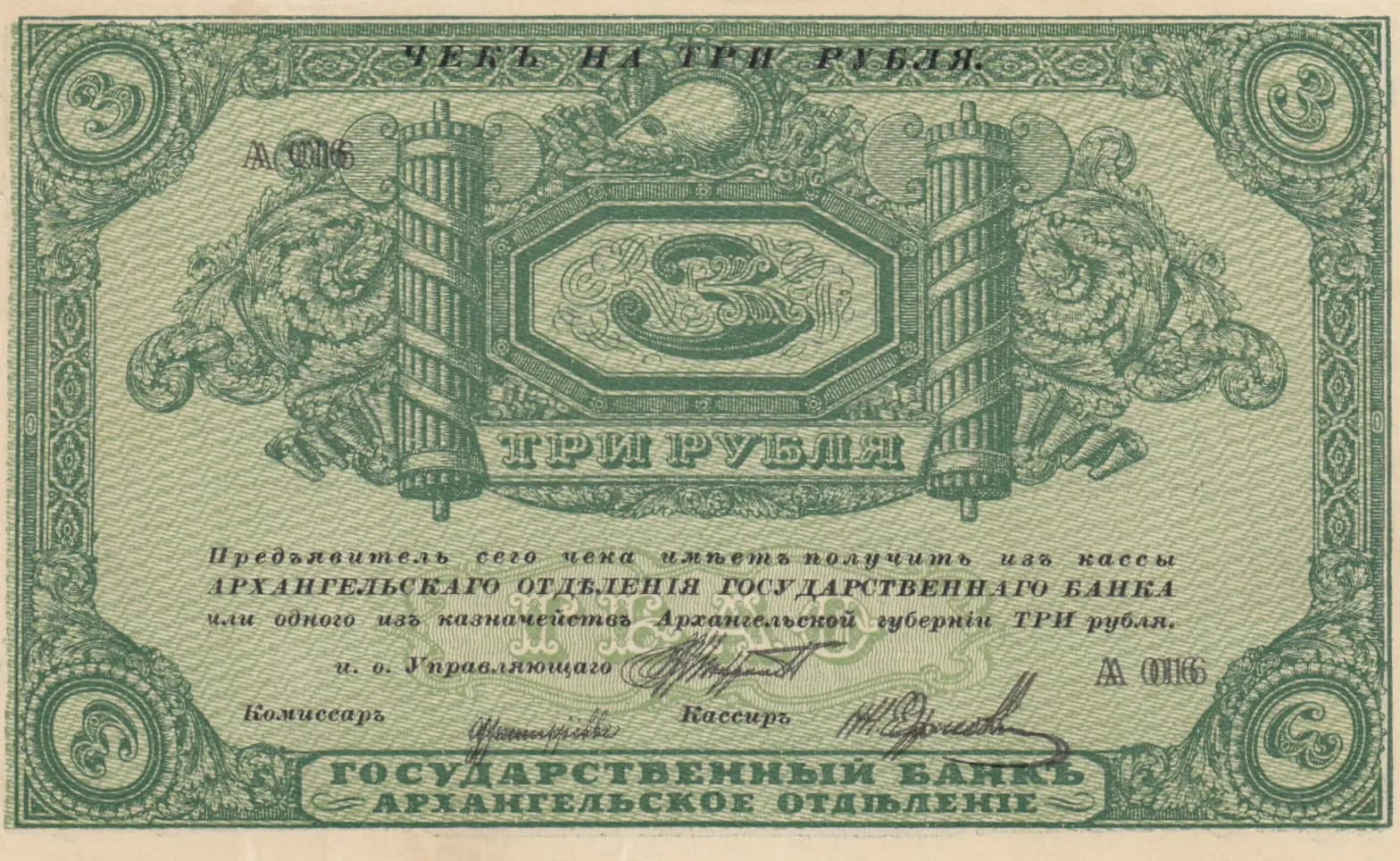
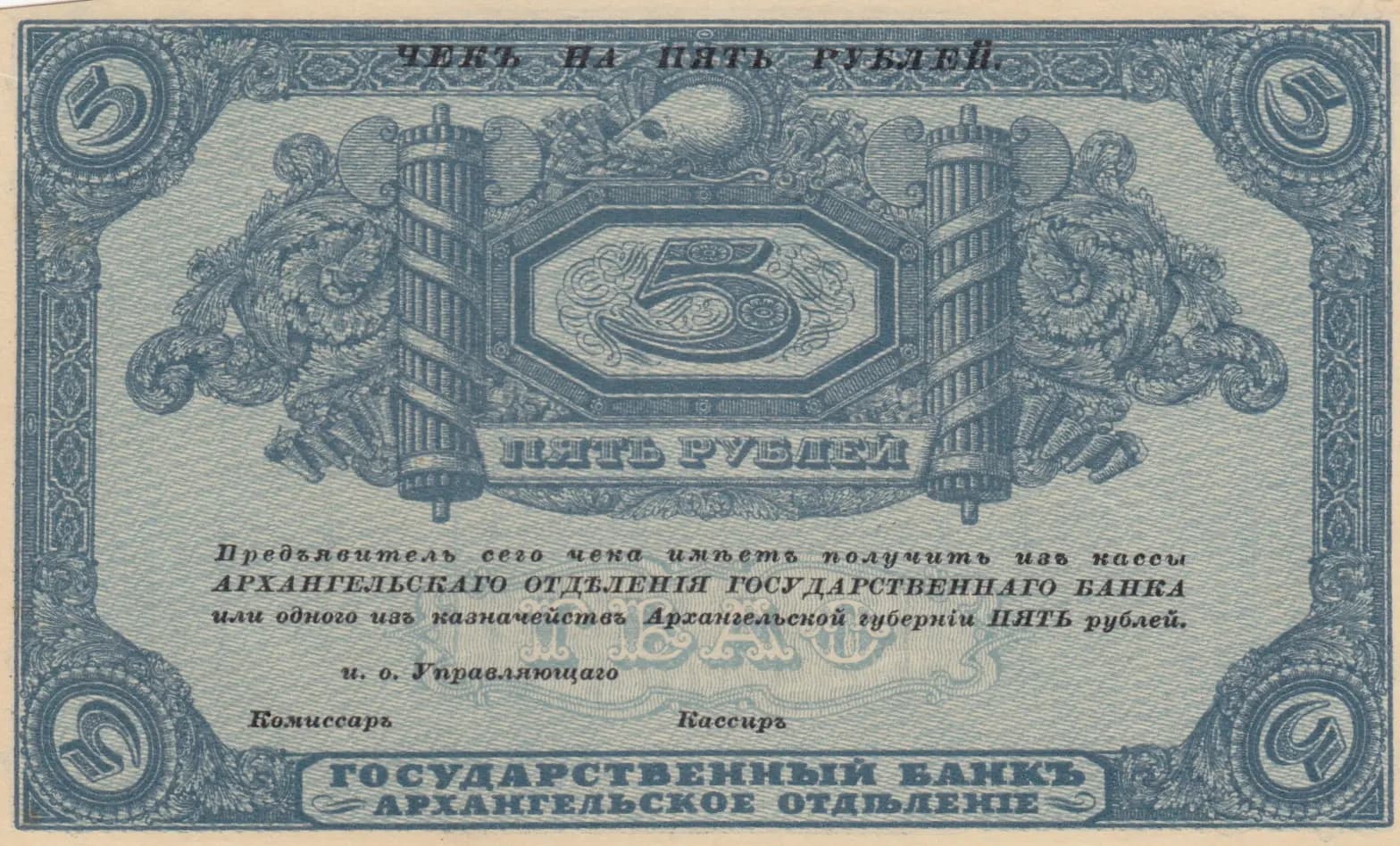
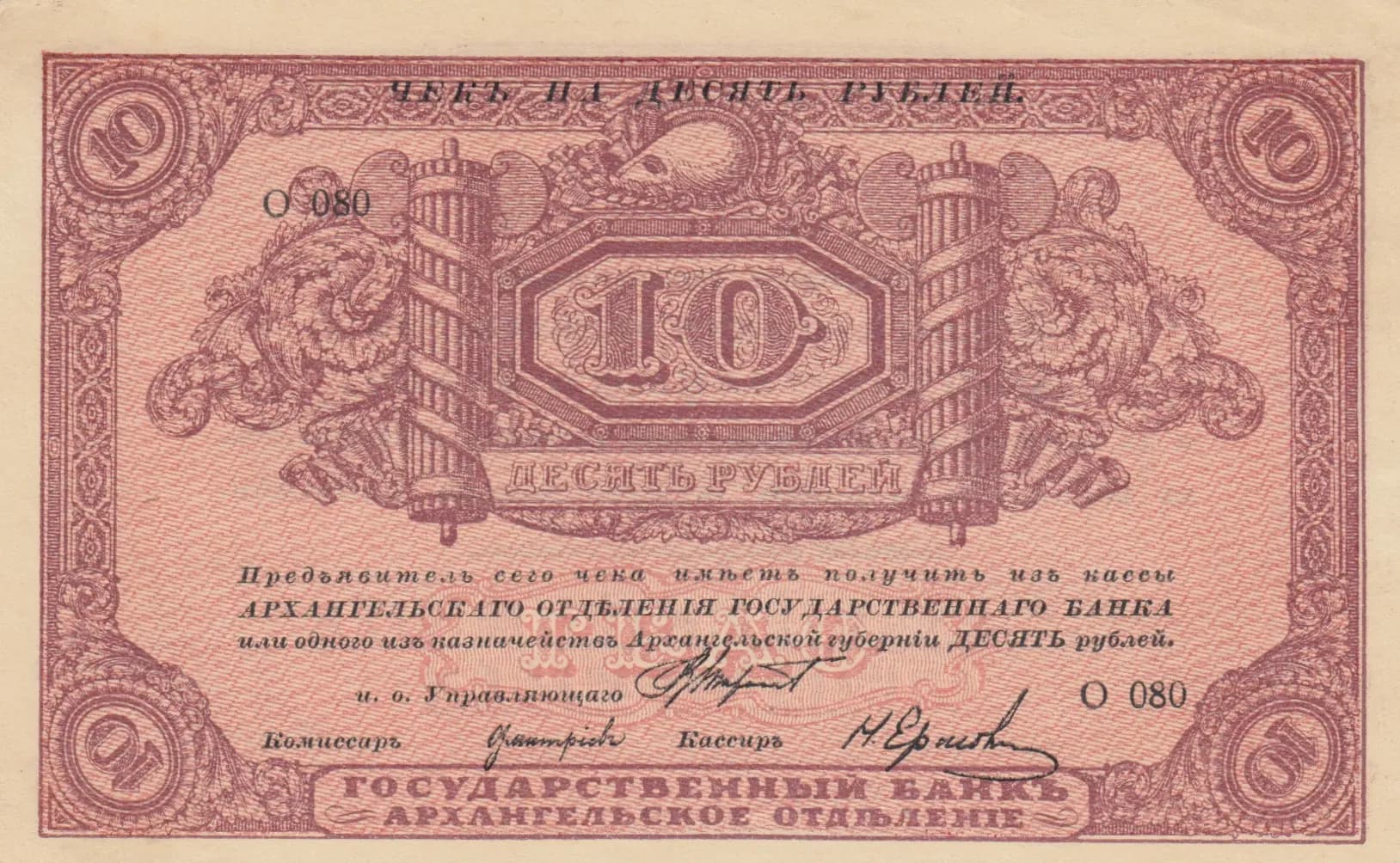
250 rublei 1920
“Chita”
About This Note
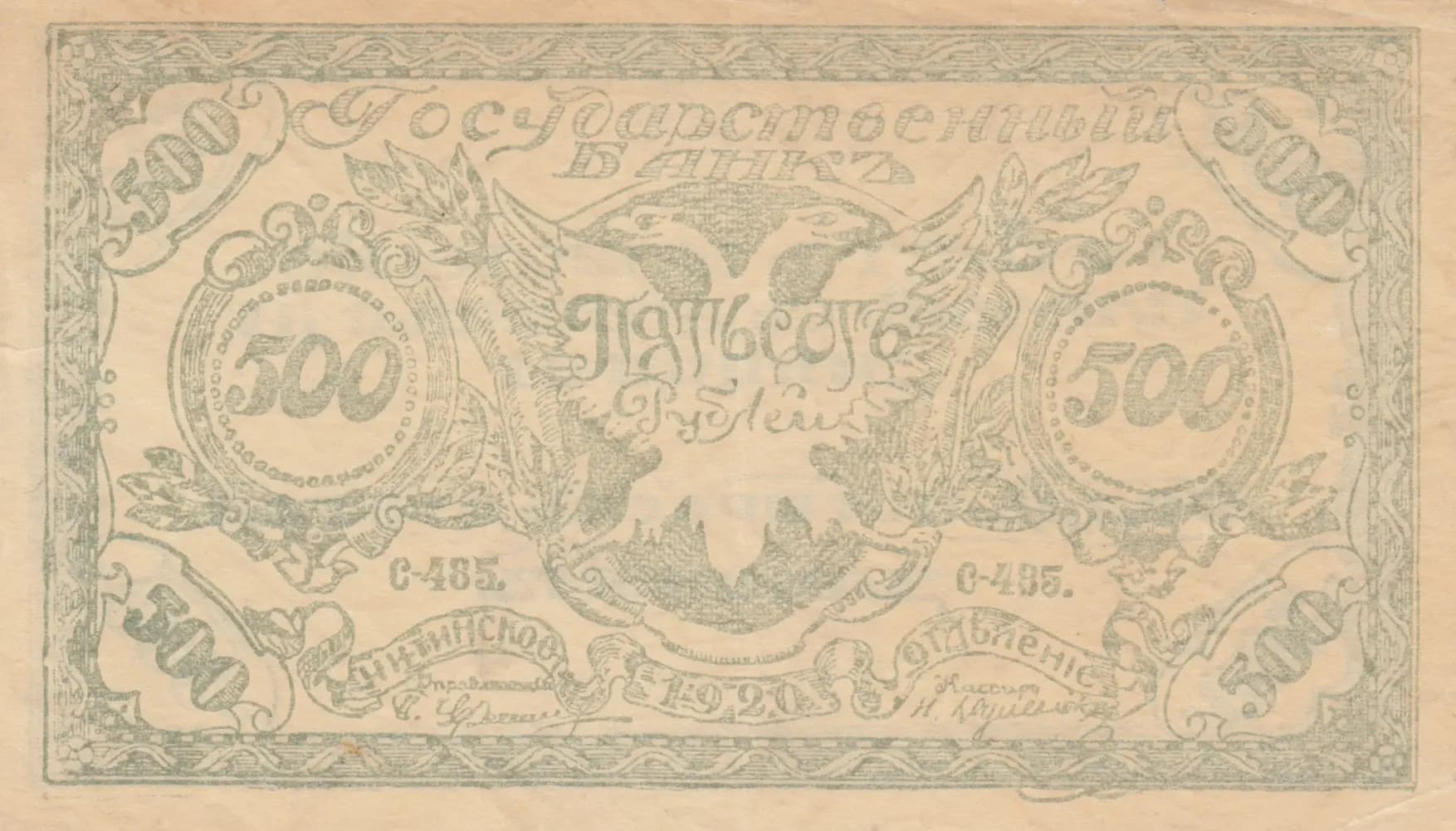
This is a 250 rublei note from 1920 issued by the Chita State Bank Branch, graded EF despite showing considerable age-related wear including foxing, creasing, and yellowing consistent with a century of storage and potential circulation. The note features a striking symmetrical design centered on a double-headed eagle with ornate scrollwork borders and circular denomination medallions, rendered in green/olive tones on a cream background. The visual inspection reveals this is actually a 500-denomination piece based on the depicted numerals, suggesting either a cataloging discrepancy or a variant of the issued series from this remote Siberian banking authority.
Uncommon. Notes issued by the Chita State Bank Branch in 1920 represent a specific regional currency from a remote Siberian authority during the Russian Civil War, making them less commonly encountered than central Soviet issues of the same period. However, they are not rare in absolute terms as banknotes from this issuer and denomination were produced in reasonable quantities for regional circulation. The EF condition grade is desirable but not exceptional for these notes given their tendency to survive in collections. Chita Branch notes represent a specialized collecting area rather than a scarce rarity.
This note was issued during the Russian Civil War period when the Chita State Bank Branch in the Russian Far East operated as a regional financial authority during the fragmentation of Soviet control. The double-headed eagle motif represents the imperial Russian heraldic tradition that persisted in regional currencies of this chaotic period. The reference to 'Russian Socialist Federative Soviet Republic' on the obverse reflects the competing ideological claims of various issuing authorities during the 1919-1921 period when multiple governments and banks simultaneously issued currency in different regions.
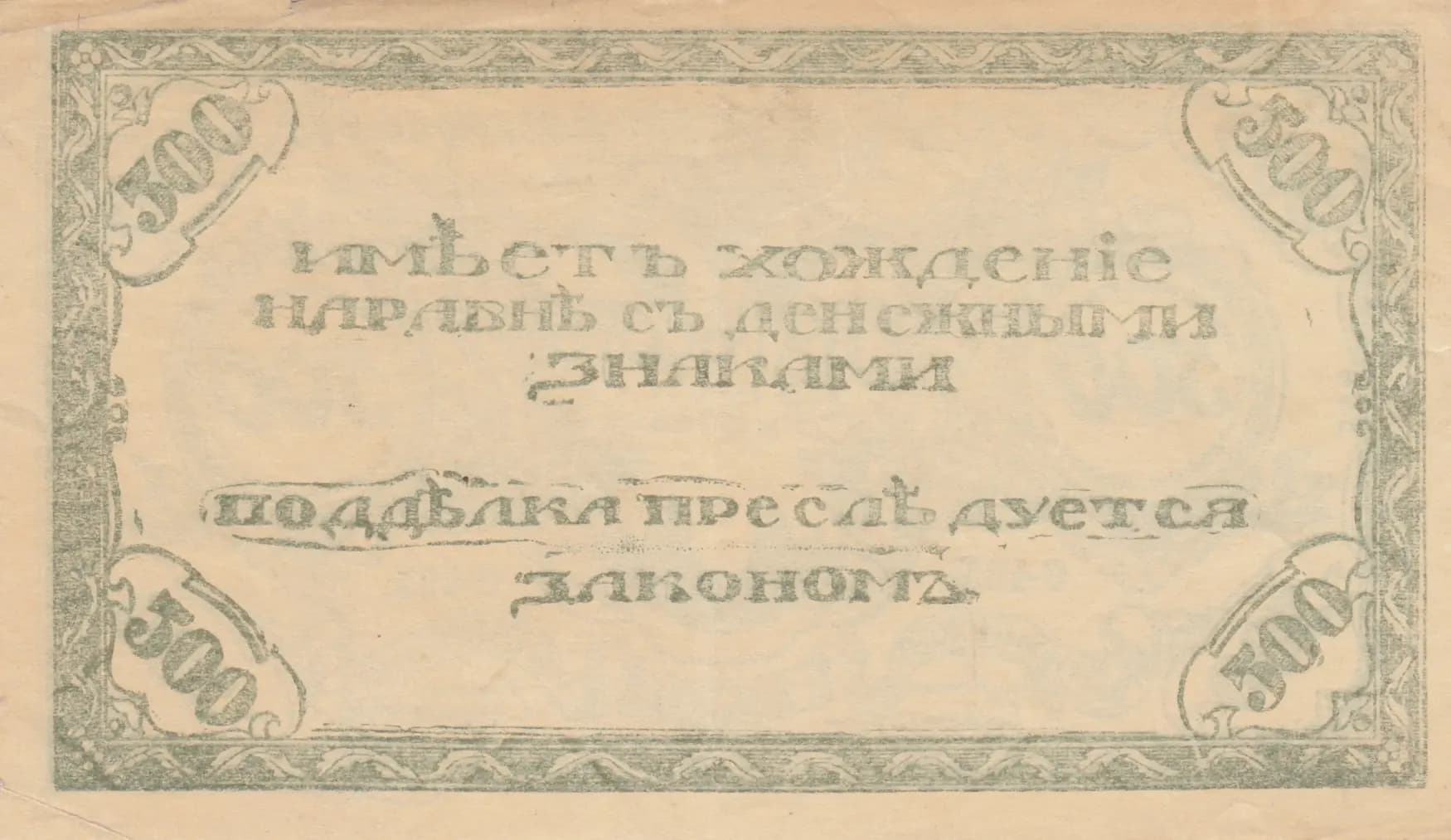
The obverse features a prominently centered double-headed eagle with fully spread wings as the primary heraldic symbol, flanked by circular medallions containing the numeral 500 on both left and right sides. The design employs a strict bilateral symmetry with elaborate corner ornaments featuring scrollwork and flourishes typical of late Imperial Russian banknote design. The reverse maintains the same ornamental border framework with decorative corner elements but presents a largely open field with centered text in Russian Cyrillic script. The color scheme throughout uses green/olive inks applied to a cream/beige paper stock, with gray-green tones in the fine engraved details. The double-headed eagle represents the historical Russian state emblem, adapted here for use by a regional Soviet banking authority.
Front Side: 'РОССИЙСКАЯ СОЦИАЛИСТИЧЕСКАЯ ФЕДЕРАТИВНАЯ РЕСПУБЛИКА' (Russian Socialist Federative Soviet Republic); '500' (denomination numeral, appears in circular medallions); Serial numbers '6-485' and '0-485'. Back Side: Text appears partially legible and somewhat faded, with inscriptions referencing 'ИМПЕРИЯ ХОЗЯЙСТВЕННО' (Empire of Economic), 'ИМПЕРИЯ СЬ ОСНОВНЫМИ' (Empire With Basic), 'ЗНАКАМИ' (Signs), 'ПРОВОДНИКА ПРЕСС ДУЕТСЯ' (Conductor Press Is Conducted), 'ЗАКОННОСТЬ' (Lawfulness), and '500' (denomination). The back text appears to reference legal or administrative authority.
Intaglio/engraving process, evidenced by the fine line work visible in the eagle design, the intricate engraved border patterns, and the detailed scrollwork ornaments characteristic of security printing of the Russian Civil War era. The precision of the decorative elements and circular medallions indicates professional banknote production using steel plates. The printer is not definitively identified from the visual analysis, though Chita State Bank Branch notes of this period were typically produced by regional Russian printing facilities adapted to wartime conditions.
The visual analysis indicates this note displays the numeral '500' in the circular medallions rather than '250' as stated in the catalog data, suggesting this may be a 500 rublei denomination rather than the cataloged 250 rublei, or represents a specific variety variant of the Chita series. The serial numbers '6-485' and '0-485' visible on the note should be recorded for variety identification. The EF condition and the presence of significant foxing and age-related wear suggest this is a standard circulation example from the initial printing run. Further research into Pick S1188b variants may clarify whether multiple denominations or overprints exist within this catalog listing.