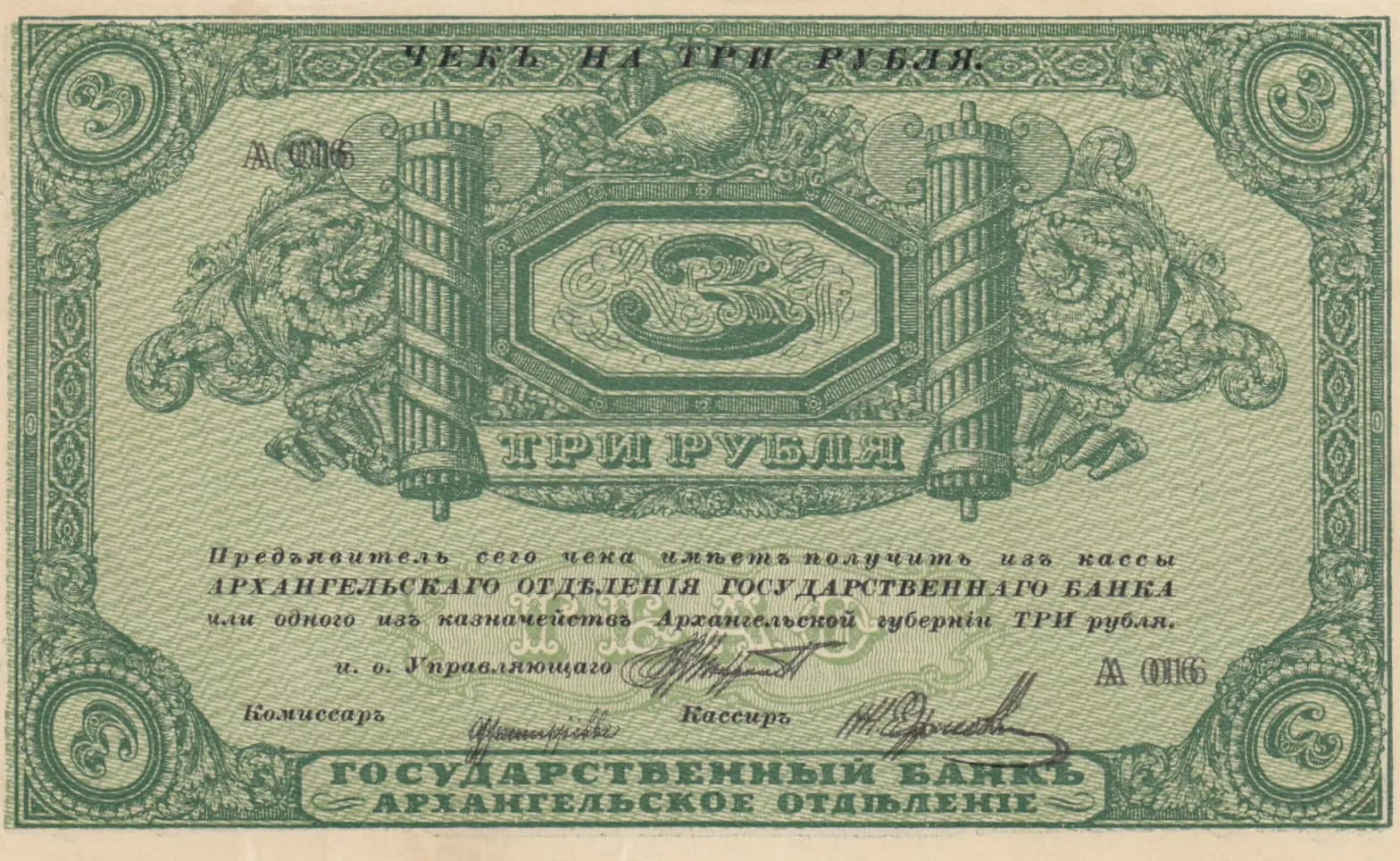
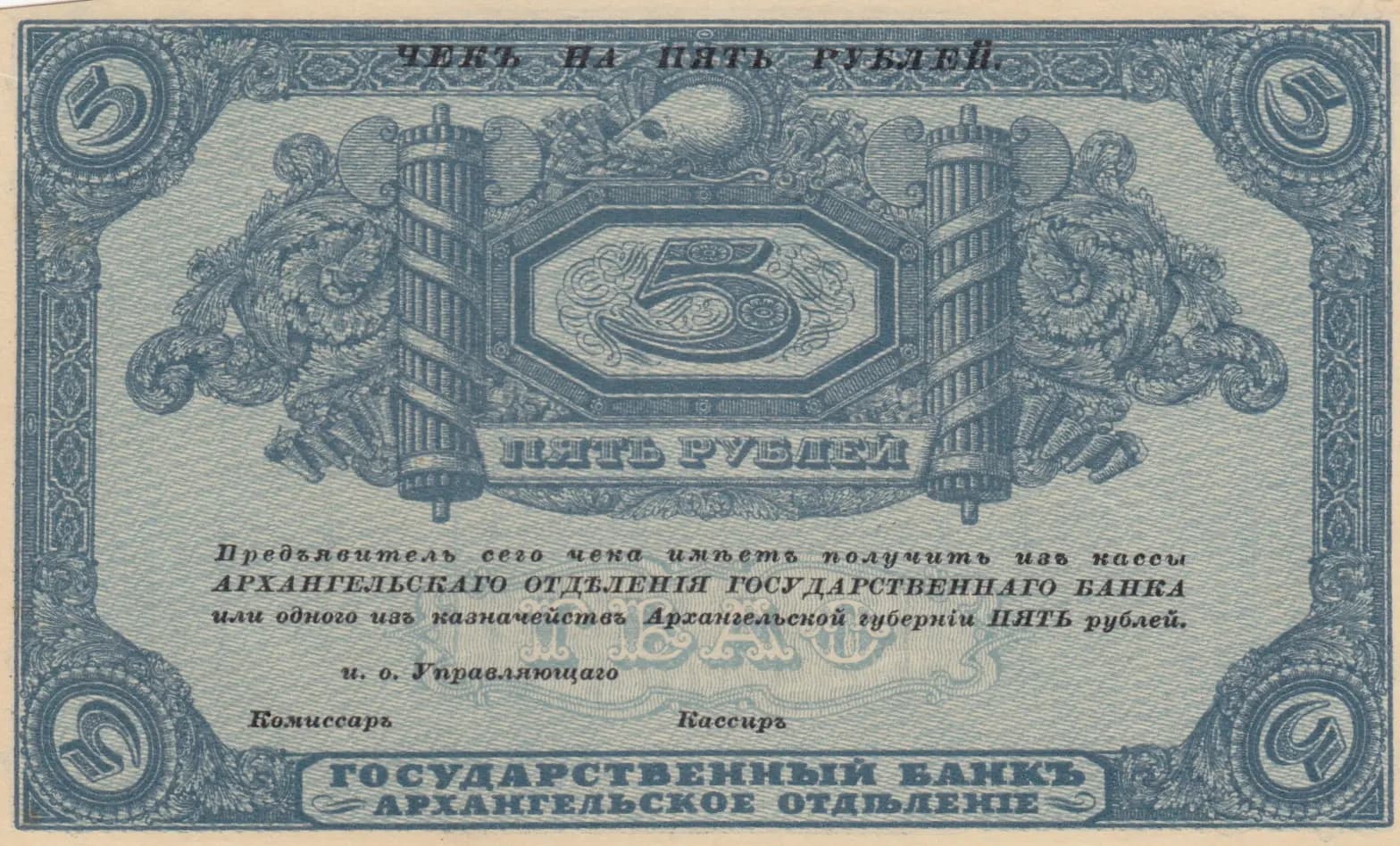
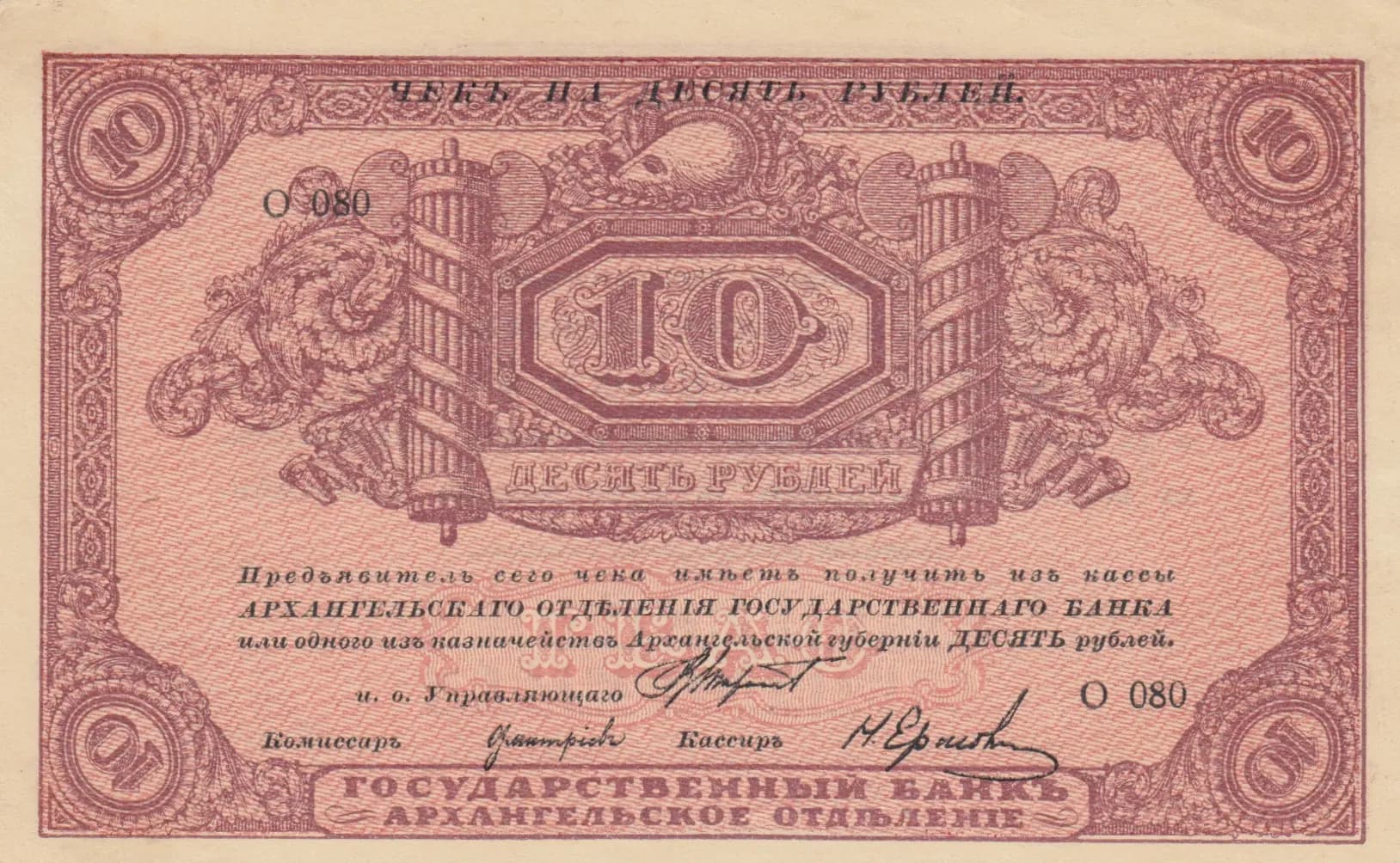
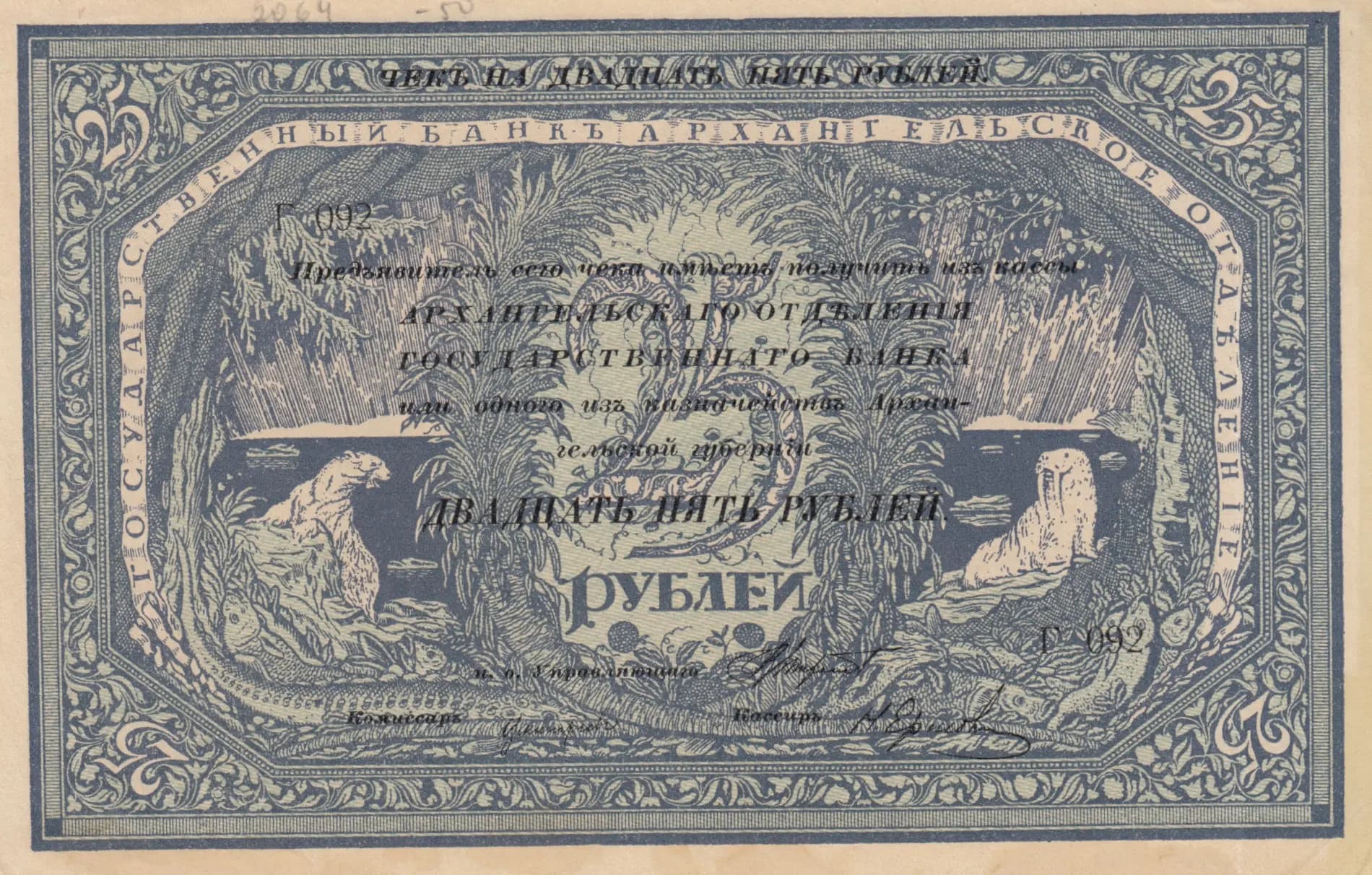
25 rublei 1917
“Orenburg”
About This Note
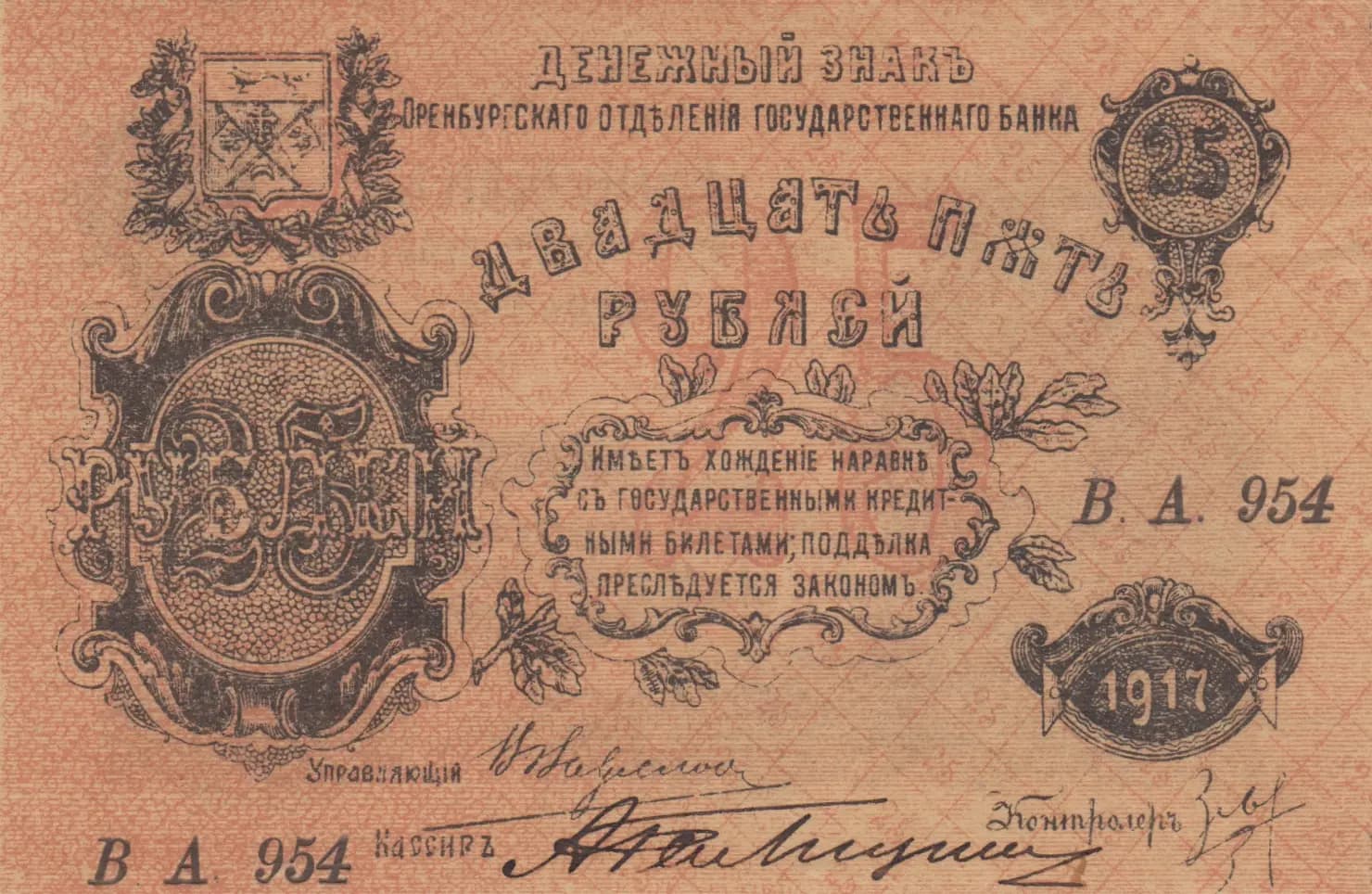
This is an AU-grade 25 Ruble note issued by the Orenburg Branch of the Russian State Bank in 1917, during the tumultuous final year of Imperial Russia. The note features elaborate baroque-style engraving with ornate decorative frames, heraldic emblems, and fine guilloché patterns on tan/salmon-colored paper. The presence of hand-signed authorization lines for both the Cashier and Manager, combined with the excellent preservation of the fine engraved details, makes this an appealing example of Russian Imperial emergency currency from the Revolutionary period.
Common. While this is a regional branch note from a specific issuer during a transitional period, the 25 Ruble denomination from Orenburg in 1917 was produced in substantial quantities for circulation. The AU condition grade and survival of this note are not unusual; these notes circulated widely during the period and many examples survive. The lack of any special markings, recalled status, or known print run restrictions indicates standard production levels for a regional emergency note during this period.
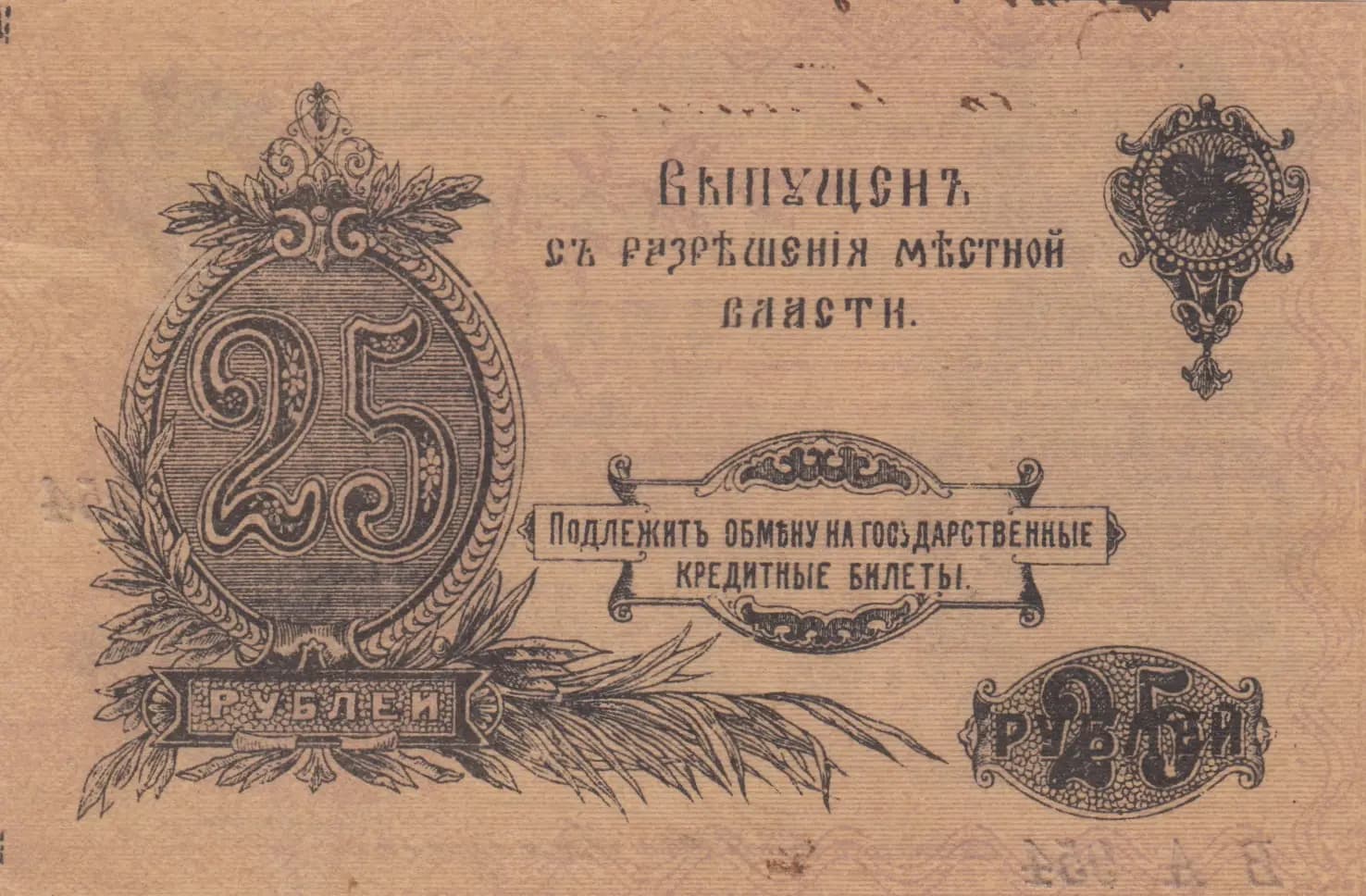
Issued during 1917 as the Russian Empire collapsed, this Orenburg branch note represents regional emergency currency issued with local authority permission during the political upheaval of the Russian Revolution. The prominent Imperial Russian coat of arms and heraldic eagles reflect the note's status as official state currency before the Bolshevik takeover. The inscriptions specifically state the note was issued 'With the permission of local authority' and would be exchanged for state credit notes, indicating this was temporary emergency money during the transition period when central authority was weakening.
The front features an elaborate Imperial Russian design with a large decorative oval frame on the left containing ornamental baroque elements, housing the Imperial coat of arms with its characteristic double-headed eagle. The center-right displays text identifying the Orenburg State Bank Branch and denomination in 25 Rubles. Heraldic emblems with eagles appear in both upper corners, and shield designs with heraldic ornaments are positioned in the lower right corner, dated 1917. The entire design is rendered in fine line engraving with intricate guilloché background patterns. The back is dominated by a massive ornate numeral '25' centered in an elaborate oval cartouche with laurel wreath decoration and baroque flourishes. Heraldic floral ornaments occupy the upper corners, and a wheat or grain sheaf design element appears in the lower left, symbolizing Russia's agricultural wealth. All text is enclosed in decorative frames with consistent baroque styling throughout.
FRONT SIDE: 'ДНЕВНОЙ ЗНАКОНЬ' (Daily Promissory Note) | 'ОРЕНБУРГСКОГО ОТДЕЛЕНИЯ ГОСУДАРСТВЕННОГО БАНКА' (Of the Orenburg Branch of the State Bank) | 'ДВАДЦАТЬ ПЯТЬ РУБЛЕЙ' (Twenty-Five Rubles) | 'ИМЕТЬ ХОЖДЕНИЕ НАРАВНЕ В ГОСУДАРСТВЕННЫМИ КРЕДИТ-НЫМ БИЛЕТАМИ; ПОДДЫХНА ПРЕСЛЬДУЕТСЯ ЗАКОНОМ' (To have circulation equal to state credit notes; counterfeiting is punishable by law) | 'В.А. 954' (V.A. 954 - serial number reference) | 'КАССИР' (Cashier) | 'Управляющий' (Manager) | '1917' (Year). BACK SIDE: 'ВЫПУЩЕНТ' (Issued) | 'С'Ь РАЗРЕШЕНИЯ МЕСТНОЙ ВЛАСТИ' (With the permission of local authority) | 'Подлежить обмену на гос.дарственные кредитные билеты.' (Subject to exchange for state credit notes.) | 'РУБЛЕЙ' (Rubles) | '25' (denomination) | 'РУБЛЬ' (Ruble).
Fine line engraving (intaglio printing) on paper, evidenced by the precise, detailed baroque frames, ornamental rosettes, guilloché patterns, and sharp serif lettering visible throughout both sides. The depth and clarity of the engraved lines, combined with the ornamental security patterns, indicate professional security printing typical of Imperial Russian banknote production. Hand-signed signatures in manuscript ink were added after printing.
The note exhibits the standard Orenburg Branch variety with serial number reference 'В.А. 954' visible on both front and back. The hand-signed authorization lines for 'КАССИР' (Cashier) and 'Управляющий' (Manager) are characteristic of this issue, with signatures in contemporary cursive script. No overprints, date variations, or other documented varieties are apparent on this example. The tan/salmon paper color and printing style are consistent with the standard 1917 Orenburg issuance.