10 rublei 1920
About This Note
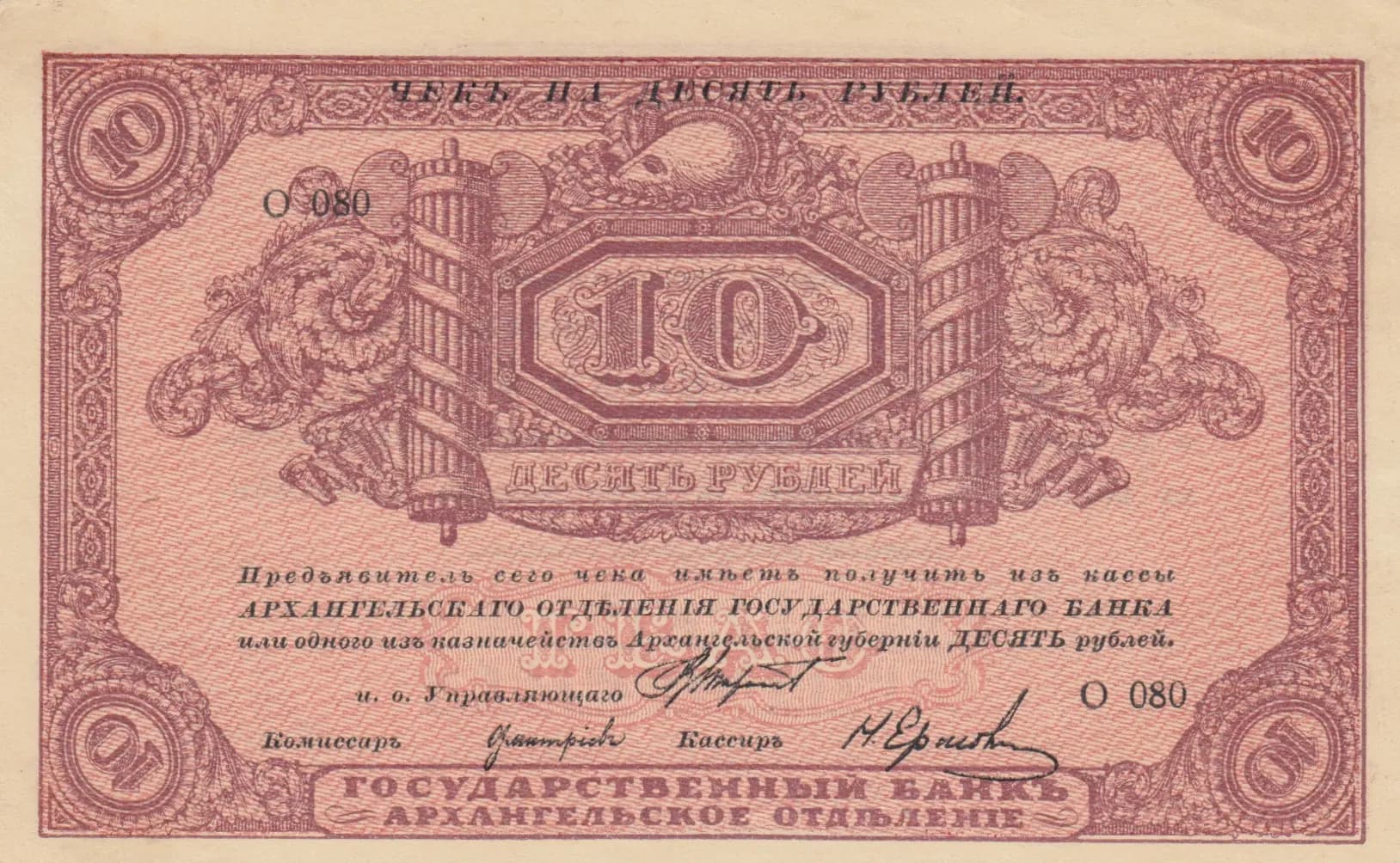
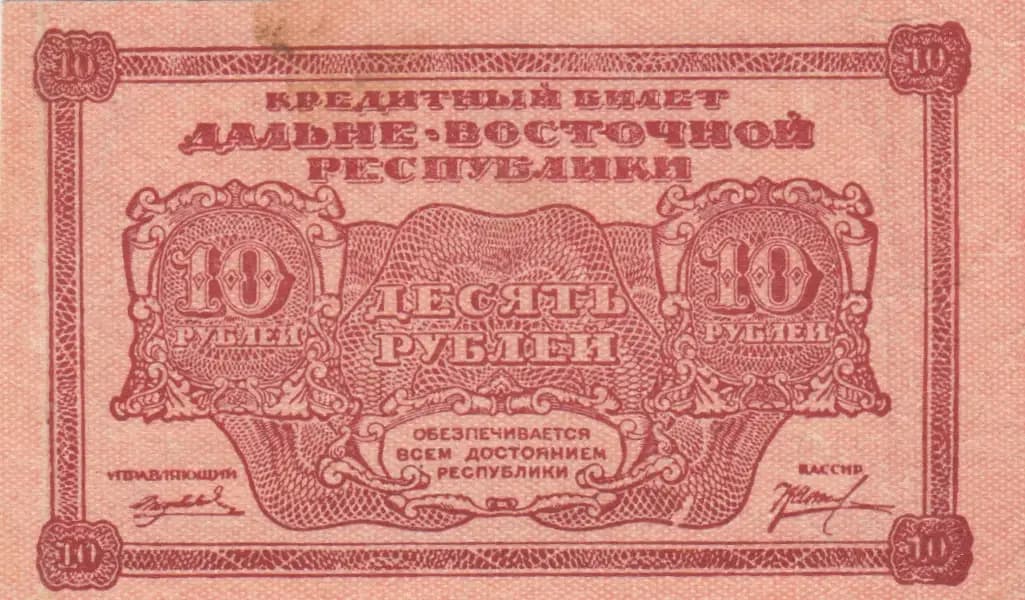
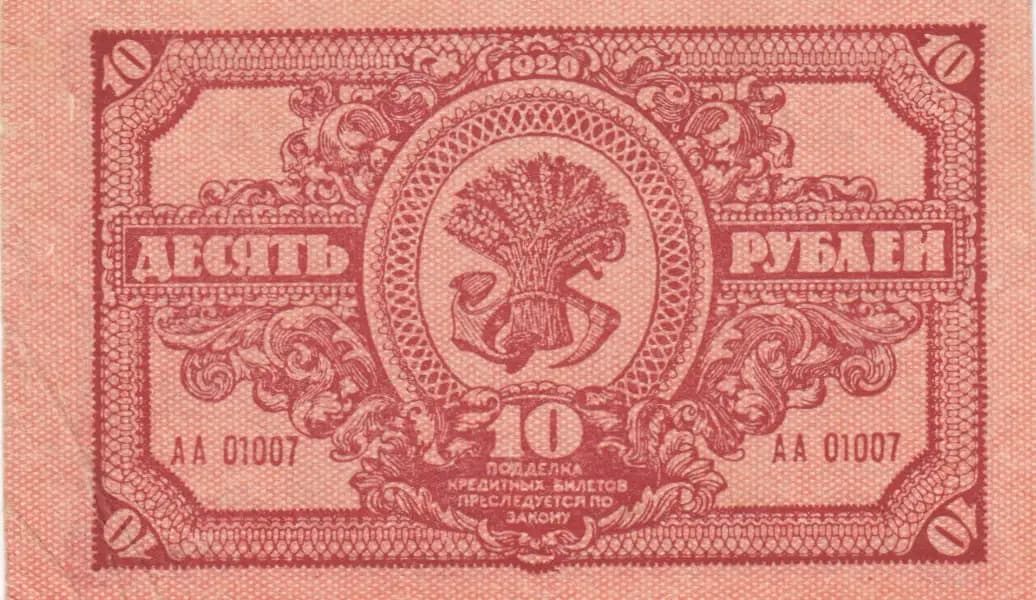
This 10 Rublei note from the Far Eastern Republic (1920) presents an exceptional example of early Soviet-era currency design, featuring elaborate baroque-style ornamental borders and a striking central wheat sheaf medallion on the reverse. The note exhibits AU-grade preservation with crisp printing, well-saturated rose-pink and burgundy coloration, and minimal wear, making it an attractive specimen for collectors of Russian Civil War period currency. The intricate line-work security patterns and multiple denomination indicators reflect the sophisticated anti-counterfeiting measures employed by the short-lived Far Eastern Republic's monetary authority.
Common. The Far Eastern Republic issued multiple denominations of credit tickets during its brief existence (1920-1922), and while the FER itself was short-lived and politically marginal, its banknotes were produced in substantial quantities for regional circulation. This Pick S1204 10 Rublei denomination appears with regularity in the numismatic market. AU-condition examples command modest premiums over lower grades, but the note itself is not scarce. Collector interest remains limited to specialists in Russian Civil War currency and Far Eastern Republic history.
The Far Eastern Republic (1920-1922) was a buffer state established between Soviet Russia and Japanese-occupied Vladivostok during the Russian Civil War, and this credit ticket represents its attempt to establish independent monetary credibility. The note's inscriptions—specifically 'Secured by all the wealth of the republic'—reflect the FER's effort to convince domestic and international creditors of its fiscal legitimacy during a period of extreme political and economic instability. The prominent wheat sheaf imagery on the reverse symbolized agricultural wealth and economic recovery, common iconographic elements in early Soviet currency design.
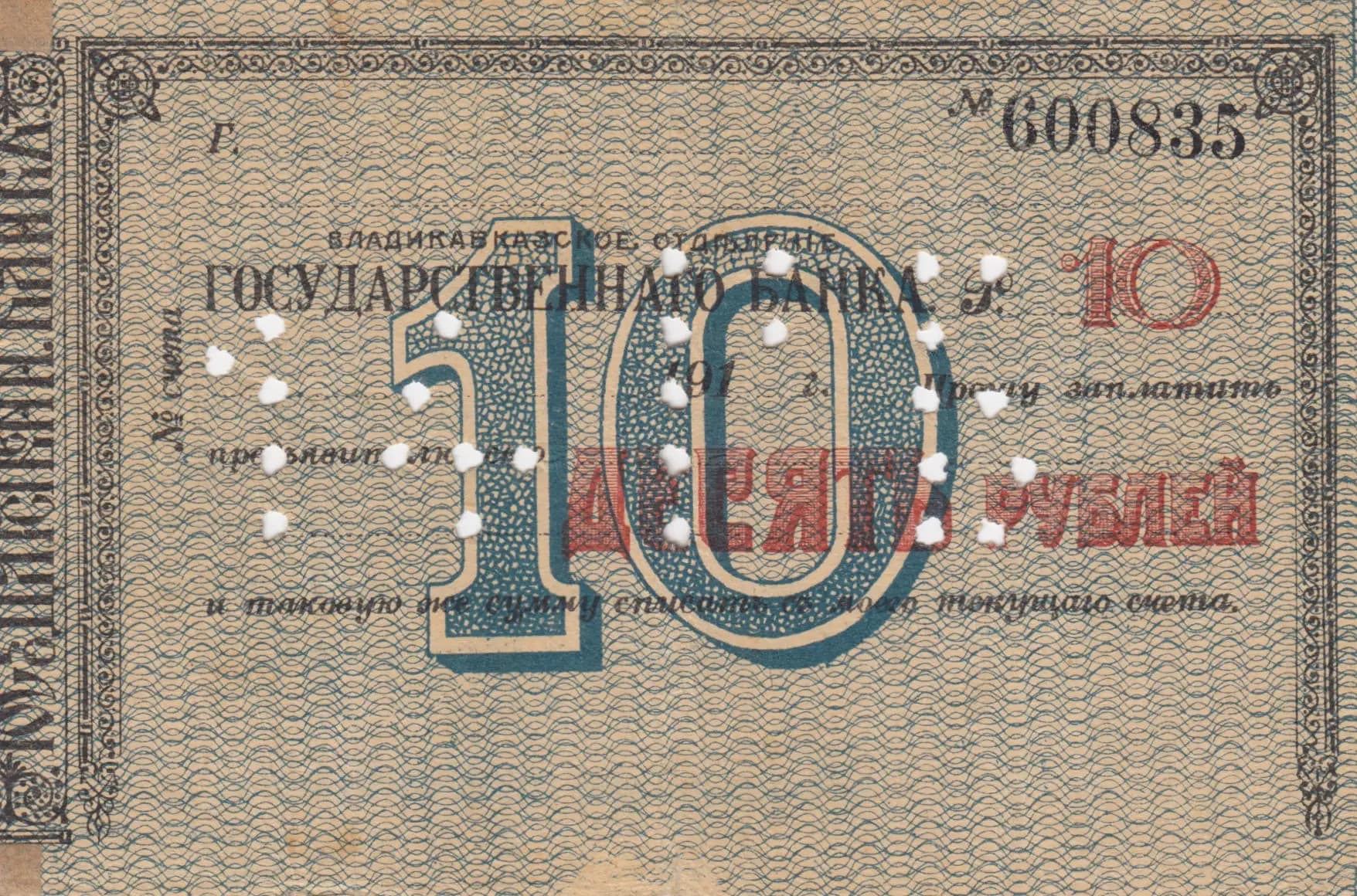
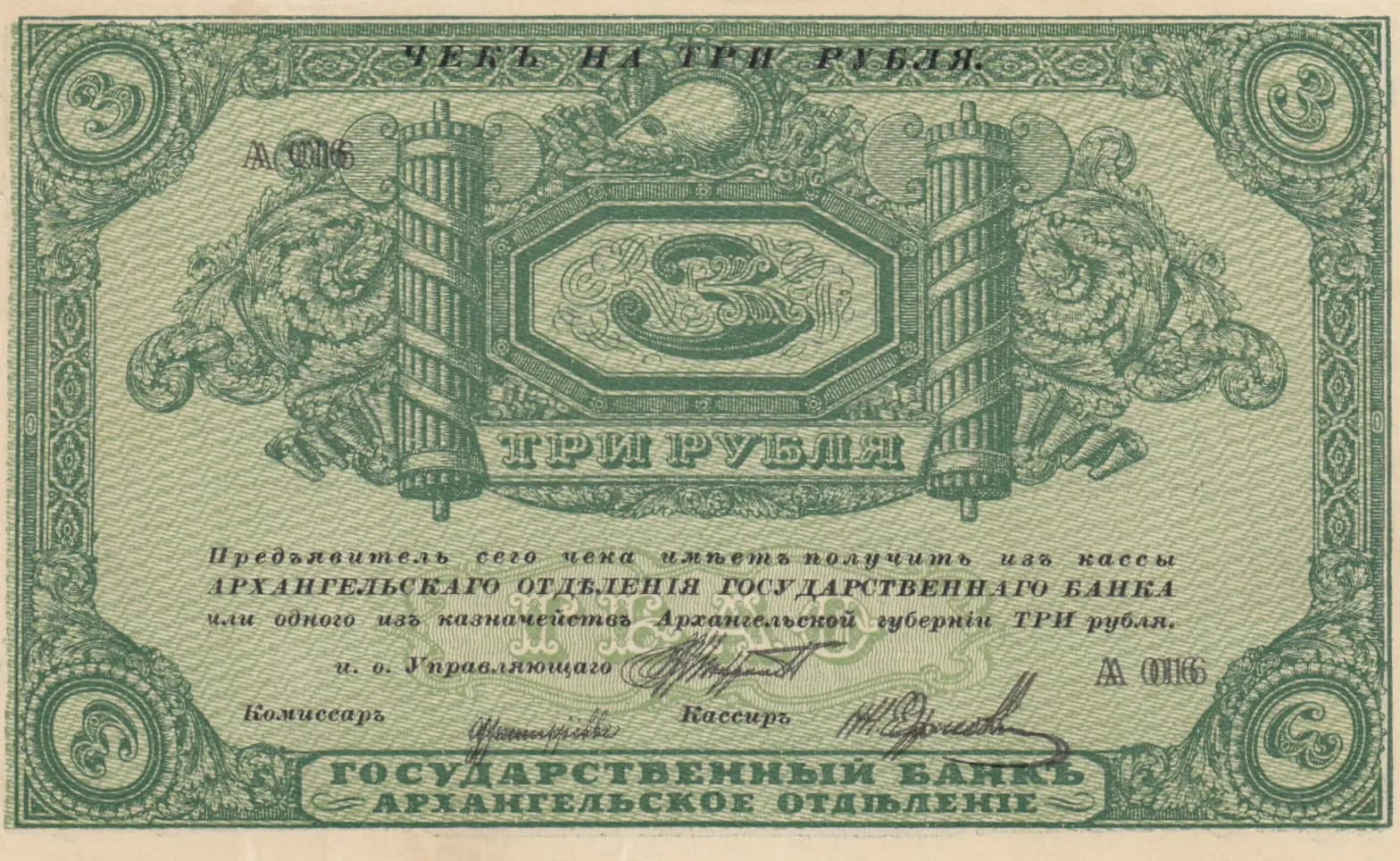
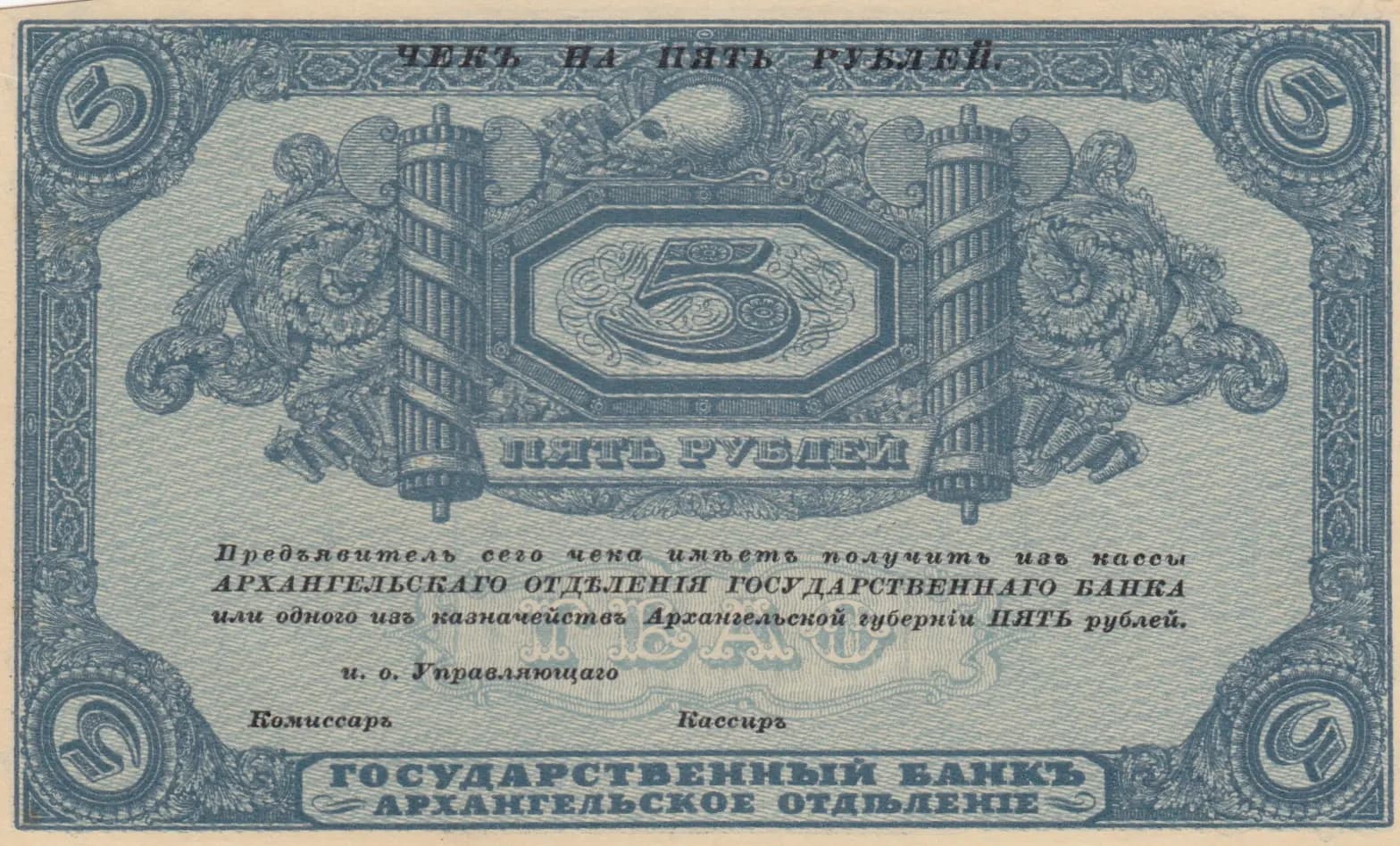
This banknote exemplifies the ornamental aesthetic of early Soviet currency, eschewing portraiture in favor of purely decorative and symbolic elements. The front features elaborate baroque cartouches containing the numeral 10 in each corner and a prominent central shield or emblem, all framed by intricate interlocking border patterns typical of high-security banknote design of the period. The reverse centers on a circular medallion depicting a wheat sheaf with radiating grain stalks, a potent symbol of agricultural prosperity and national wealth, surrounded by matching baroque corner ornaments and decorative frames. The symmetrical composition and consistent use of rose-pink and burgundy inks create a unified, formally balanced design that conveys governmental authority despite the FER's precarious political status.
Front side: 'КРЕДИТНЫЙ БИЛЕТ' (Credit ticket); 'ДАЛЬНЕ-ВОСТОЧНОЙ РЕСПУБЛИКИ' (Far Eastern Republic); 'ДЕСЯТЬ РУБЛЕЙ' (Ten rubles); 'ОБЕСПЕЧИВАЕТСЯ ВСЕМ ДОСТОЯНИЕМ РЕСПУБЛИКИ' (Secured by all the wealth of the republic). Back side: 'ДЕСЯТЬ РУБЛЕЙ' (Ten rubles); 'АА 01007' (Serial number); '1920' (Year); '1 ДЕСЯТКА КРЕДИТНЫХ БИЛЕТОВ ПРЕДСТАВЛЯЕТСЯ ПО ЗАКОНУ' (1 denomination of credit tickets presented according to law).
This note was produced using intaglio (relief engraving) printing, evident from the crisp, deeply-impressed line work visible in the intricate background patterns and ornamental borders. The consistent saturation of the rose-pink and burgundy inks across both sides and the precise registration of the complex design elements indicate professional security-printing standards. The FER's printing facilities, likely located in Vladivostok or Chita, would have employed traditional engraved steel plate techniques common to central European security printers of the era.
Serial number АА 01007 is visible on the reverse. Known varieties of FER 10 Rublei notes include different serial number prefixes and potentially multiple printings; however, without access to a comprehensive FER currency registry, specific varieties cannot be definitively identified from this example alone. The noted serial number format (two Cyrillic letters followed by numerals) is consistent with FER issues. Collectors should cross-reference with Pick catalog supplementary notes or specialized Russian Civil War currency references for documented variety information.