10 mark 1919
“Mitau”
About This Note
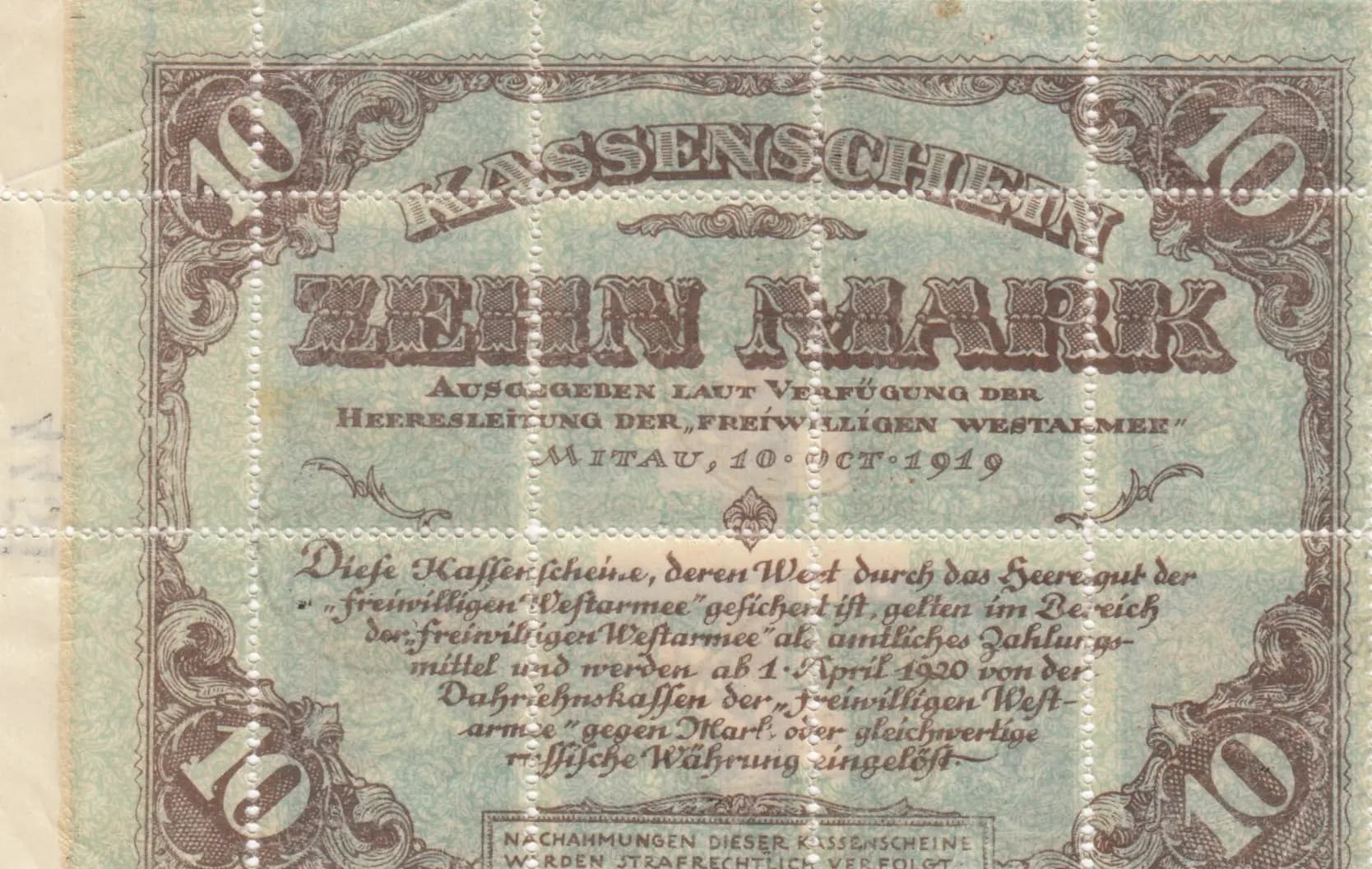
A historically significant emergency currency note issued by the Western Army of Volunteers (Weiße Armee) during the Russian Civil War, dated October 10, 1919 from Mitau (modern-day Jelgava, Latvia). The note displays excellent ornate engraving with baroque-style decorative elements and double-headed eagle motifs characteristic of the period. In VF condition, the note shows expected aging with creasing and foxing, but retains strong visual clarity and all inscriptions remain legible.
Uncommon. The Western Army of Volunteers operated for a brief period (1919-1920) in a limited geographic area, and this Kassenschein was issued under emergency wartime conditions with likely modest print runs. Pick S228 represents a specialized collecting category (Russian Civil War emergency currency) with smaller surviving populations than mainstream imperial or Soviet issues. The VF condition grade is respectable for this fragile emergency currency. However, these notes are not 'rare' in the strictest sense—examples appear periodically in specialized auctions and dealers' stock, particularly among European collectors. Attribution to a specific, short-lived issuing authority and the limited geographic distribution support an 'uncommon' rather than 'common' assessment.
This 10-mark Kassenschein represents a critical moment in the Russian Civil War when anti-Bolshevik volunteer forces controlled portions of the Baltic region. Issued under the authority of the Western Army's leadership, the note's German-language inscriptions and Mitau location reflect the German occupation and subsequent White Army control of the region following World War I. The ornate double-headed eagle symbolism emphasizes the tsarist legitimacy these volunteer forces claimed, while the redemption clause promising conversion to marks or Russian currency by April 1, 1920 documents the currency chaos of the period.
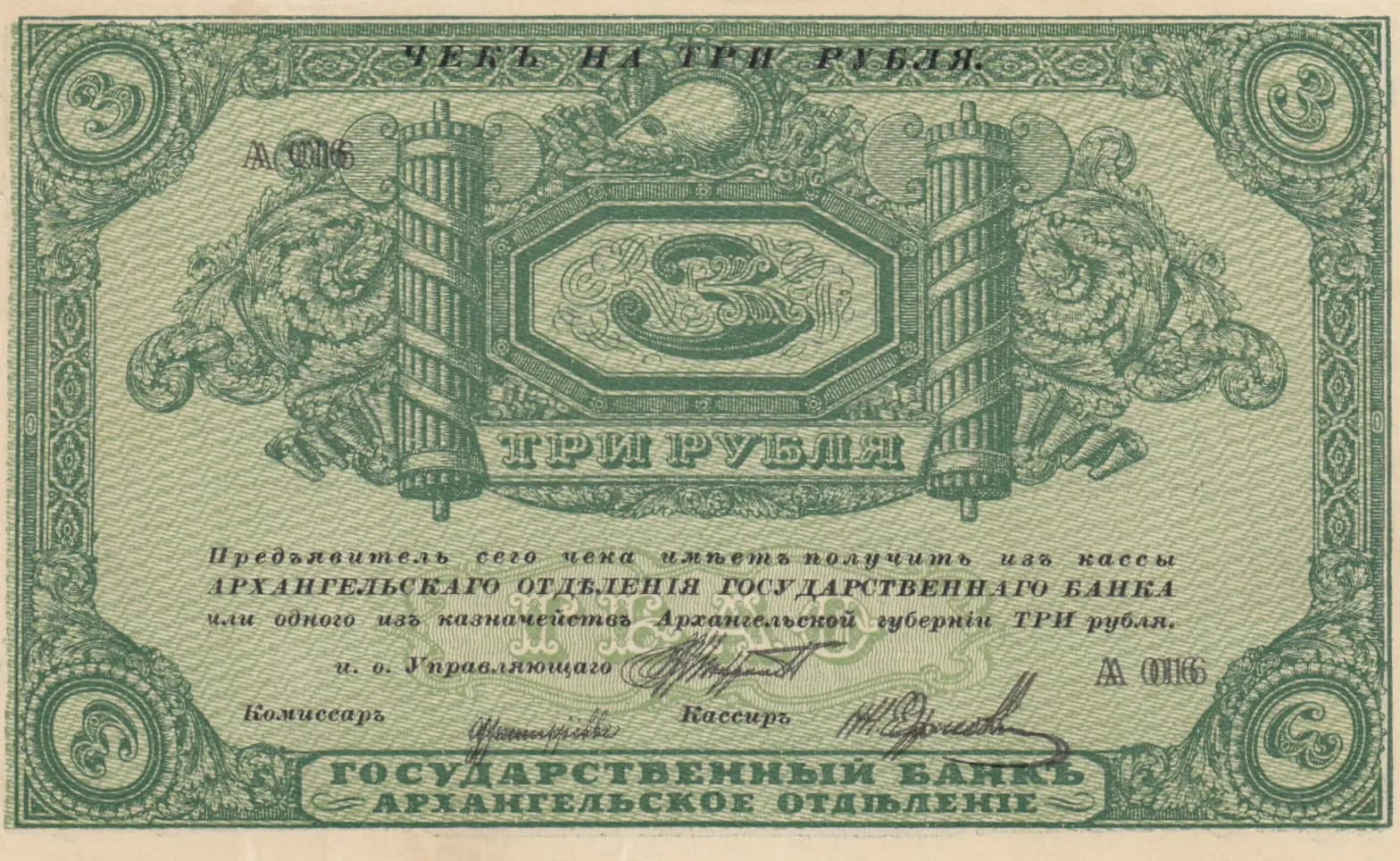
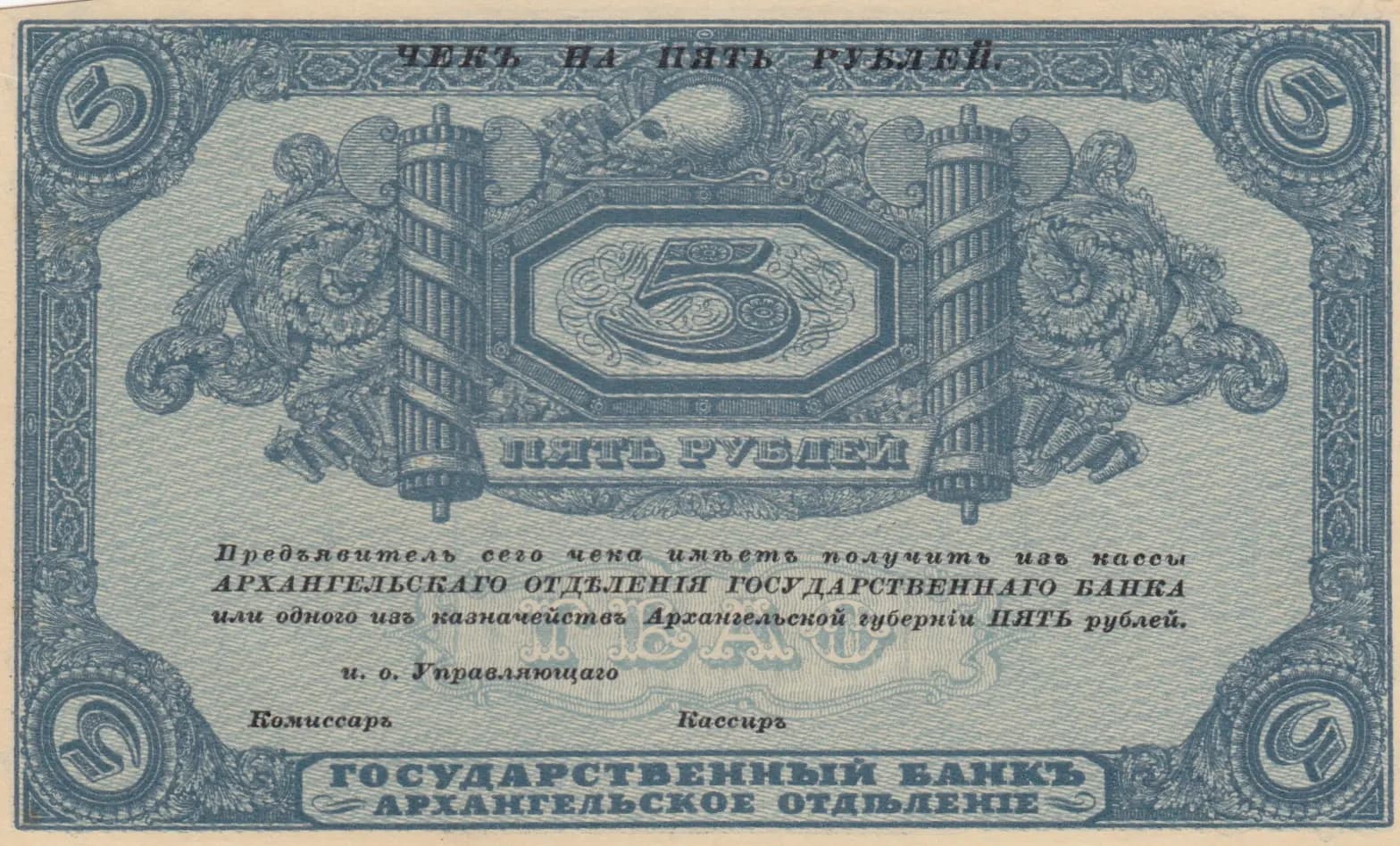
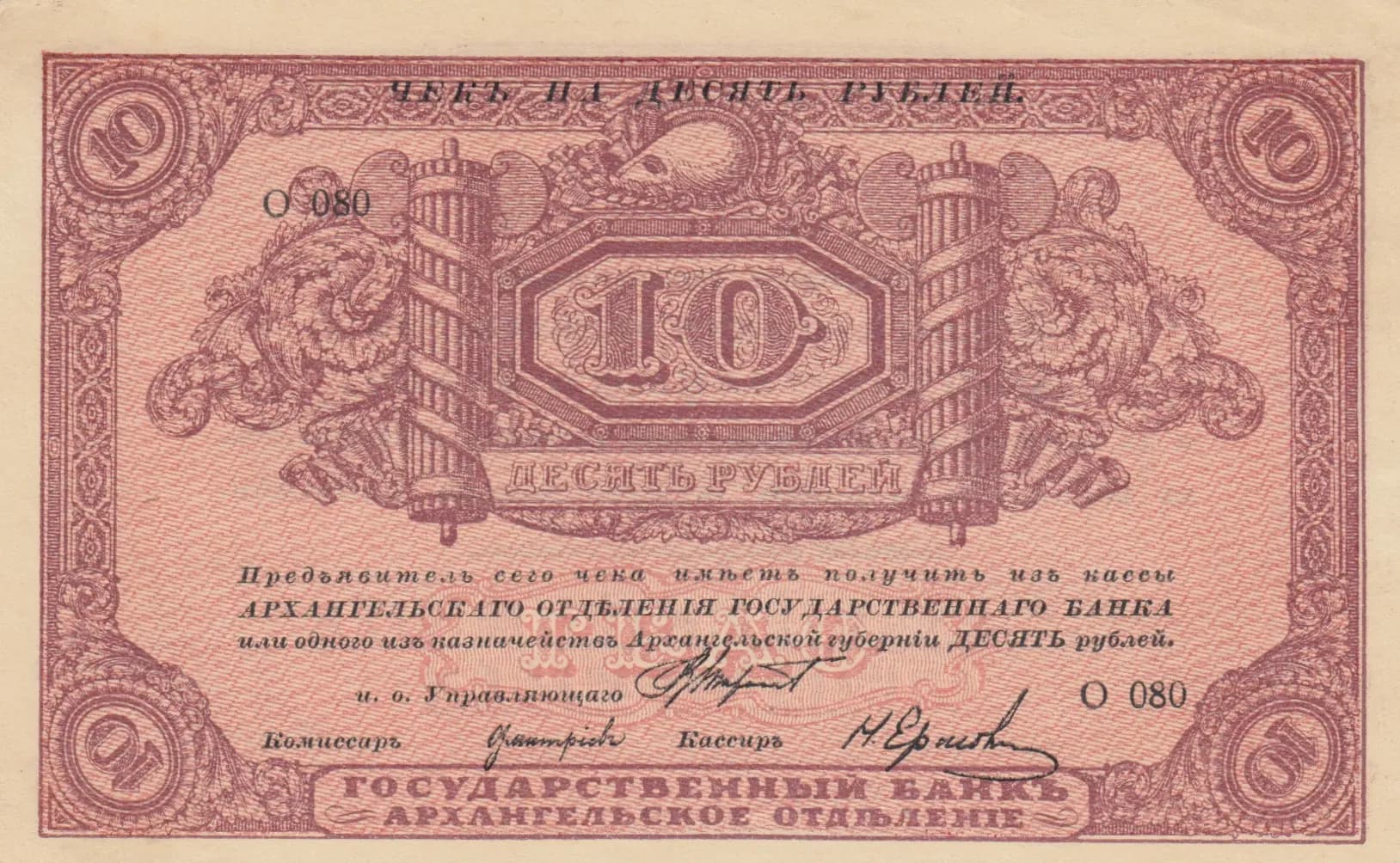
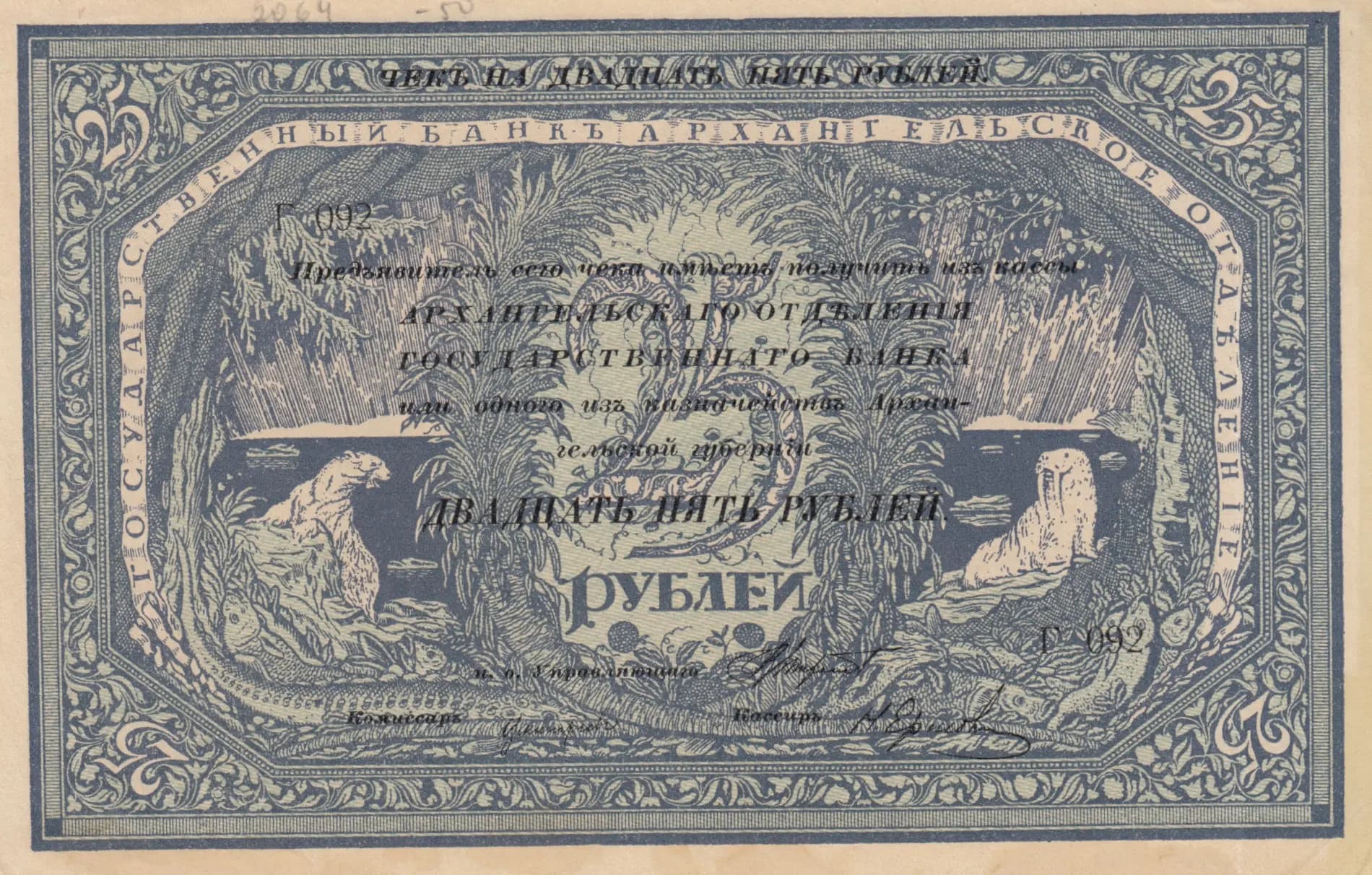
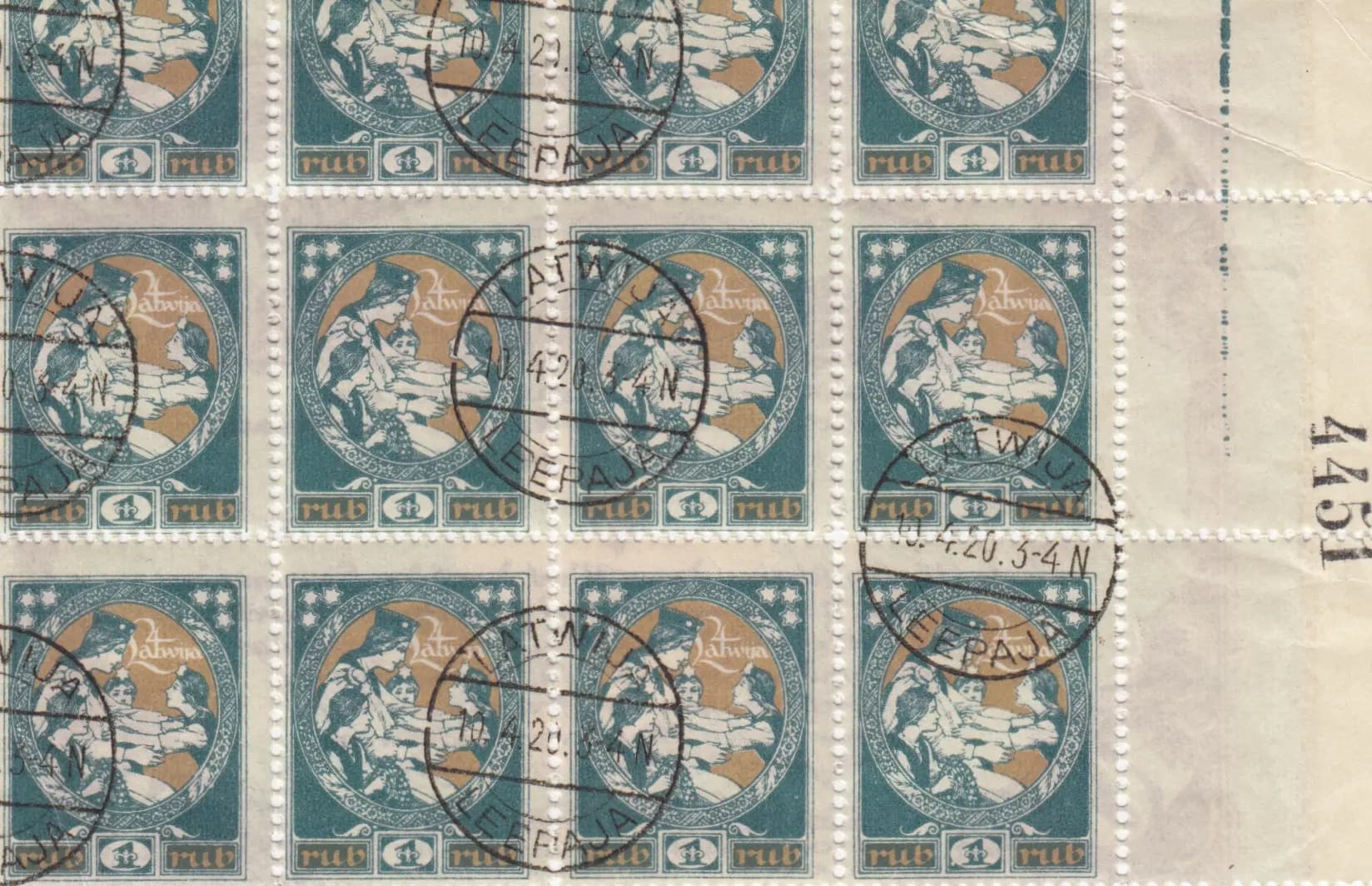
The obverse features a substantial decorative border in brown and sepia tones on pale greenish paper, incorporating baroque-style corner flourishes and scrollwork typical of Austro-Hungarian and German security printing of the era. The central design includes a prominent fleur-de-lis symbol and ornamental framing. Double-headed eagles appear in the corner numerals, representing tsarist imperial authority—a deliberate choice by the White Army to emphasize legitimacy against the Bolsheviks. The reverse shows a series of affixed or printed Russian imperial postage stamps (appearing to be 1-ruble denominations) featuring heraldic shields with the imperial eagle, teal borders, and tan-brown central imagery. This unusual hybrid design—combining German-language emergency currency with Russian imperial postal elements—reflects the complex territorial and political situation in the Baltic region during late 1919.
FRONT: 'AUSSENCHEMEI' (Foreign certificate); 'ZEHN MARK' (Ten marks); 'AUSSGEGEBEN LAUT VERFÜGUNG DER HERRESLEITUNGDER "FREIWILLIGEN WESTARMEE"' (Issued pursuant to decree of the leadership of the 'Free Volunteer Western Army'); 'MITTAU, 10. OCT. 1919' (Mitau, October 10, 1919); Main text: 'These payment certificates, whose value is secured by the military property of the volunteer Western Army, are valid within the territory of the volunteer Western Army as official currency and will be redeemed from April 1, 1920 by the treasury of the volunteer Western Army against marks or equivalent Russian currency'; 'NACHAHMUNGEN DIESER KASSENSCHEINE WERDEN STRAFRECHLICH VERFOLGT' (Counterfeits of these payment certificates will be prosecuted); Denomination numerals '10'. BACK: Russian imperial postal stamps with Cyrillic inscriptions 'РОССИЯ' (Russia), 'рубль' (ruble), and denomination '1'.
Intaglio/engraving printing method, evidenced by the fine line detail, deep impressions, and the characteristic appearance of ornate security borders. The note was likely printed by a German security printer (possibly Giesecke+Devrient or similar firm), given the high-quality engraved design and German operational control in the region. The affixed or printed Russian stamps on the reverse suggest either postal stamps physically mounted to backing paper or a sophisticated multi-color lithographic/engraving hybrid technique combining German and Russian design elements.
Pick S228 represents the 10-mark denomination of the Kassenscheine issued by the Western Army of Volunteers from Mitau. This specific note is dated October 10, 1919. Varieties within this series likely include different denominations (5, 10, 20, etc. marks) and possibly minor printing variations. The incorporation of Russian imperial postal stamps on the reverse of this example may represent a specific production variety or mounting technique variation. No major overprints or signature variations are evident in the visual analysis, though such details should be verified against the complete Pick catalog entry for this series.