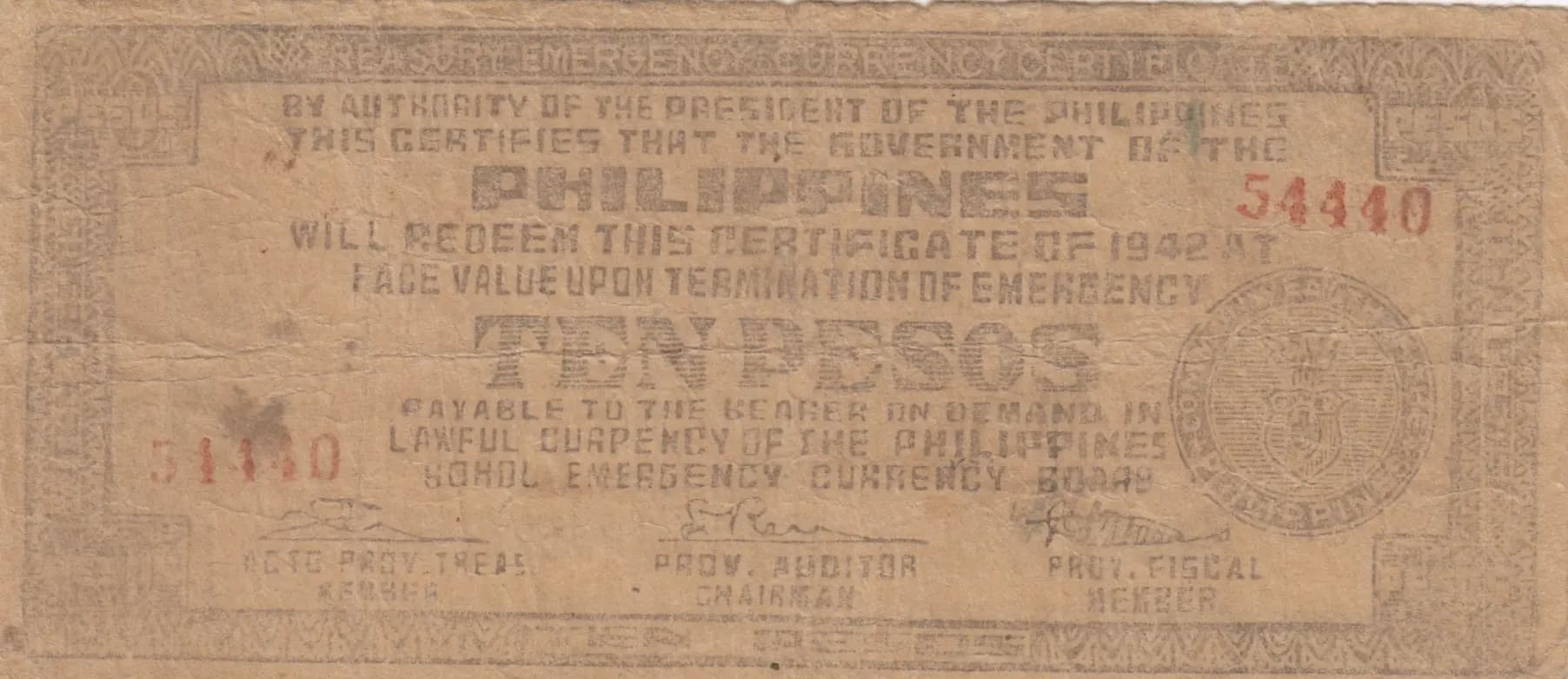
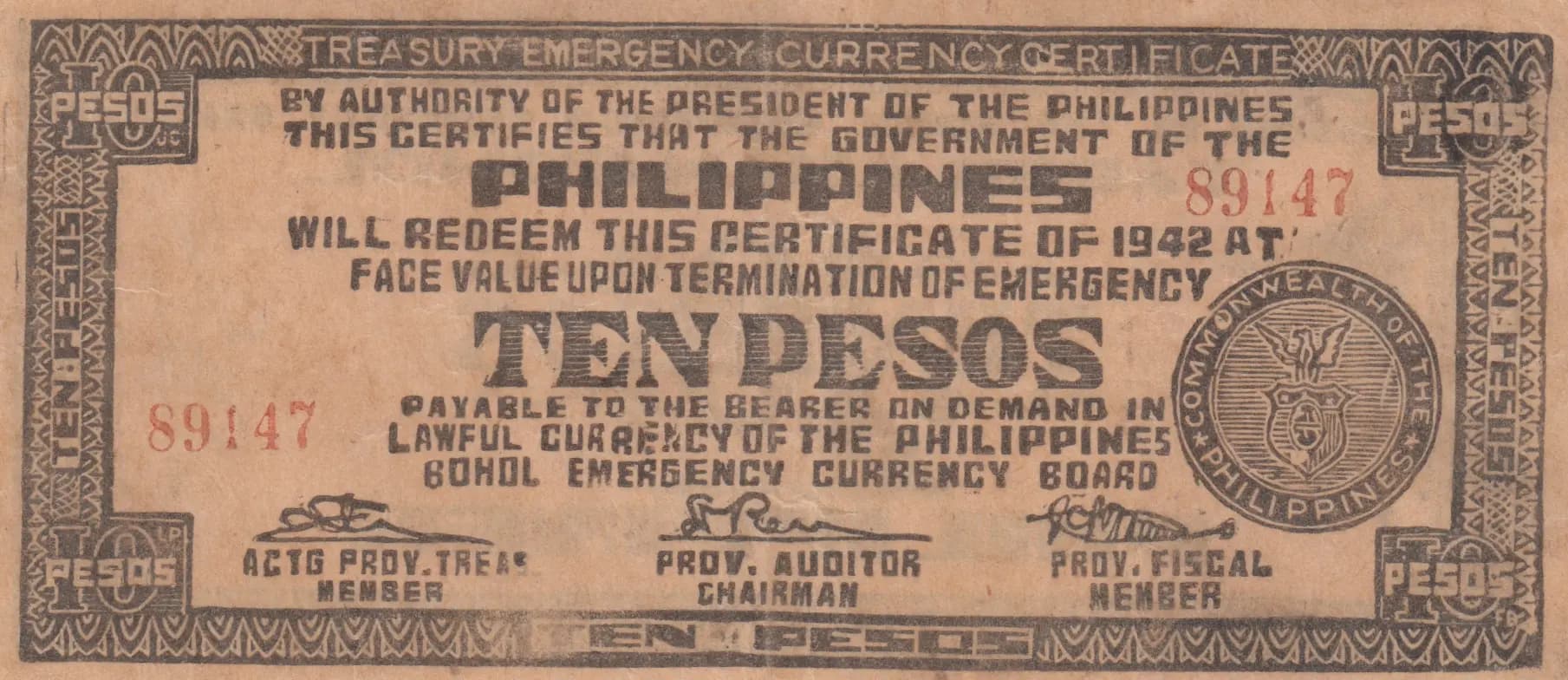
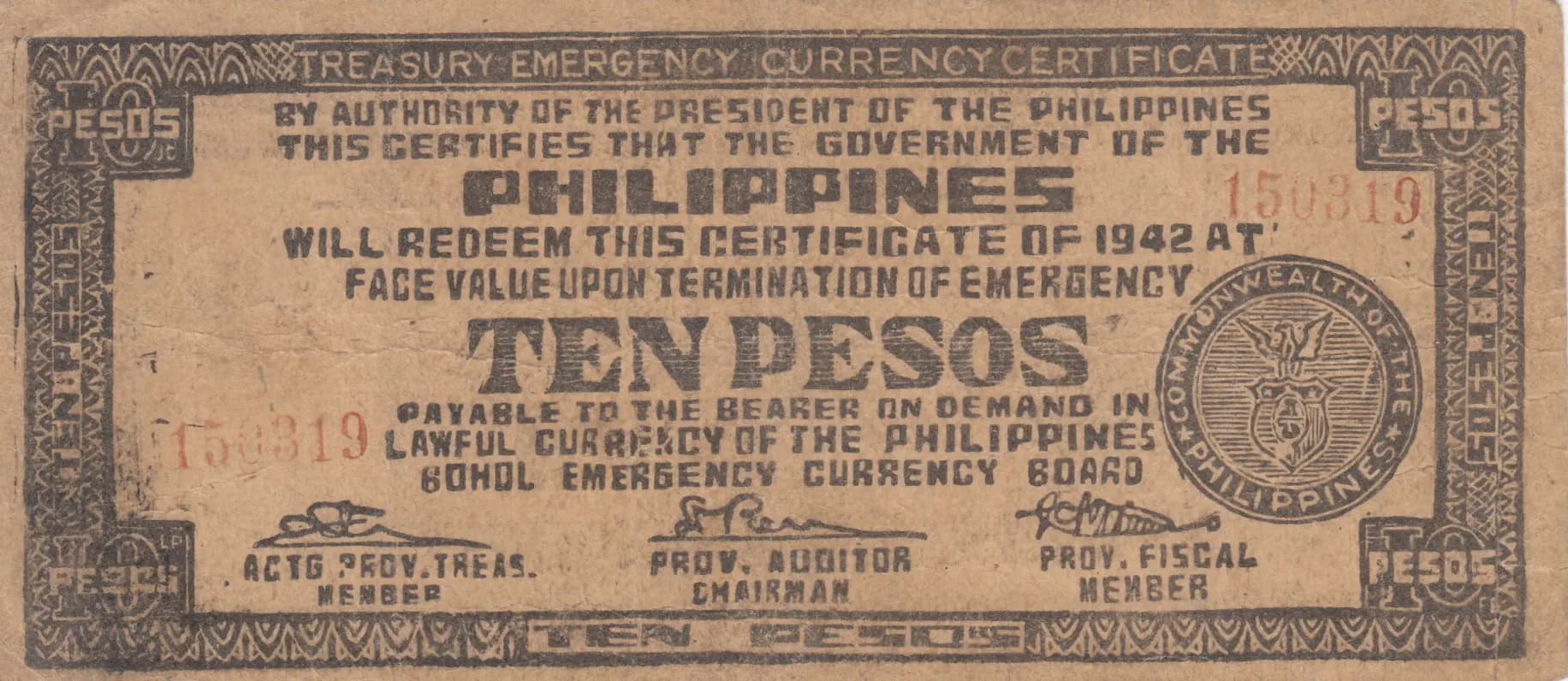
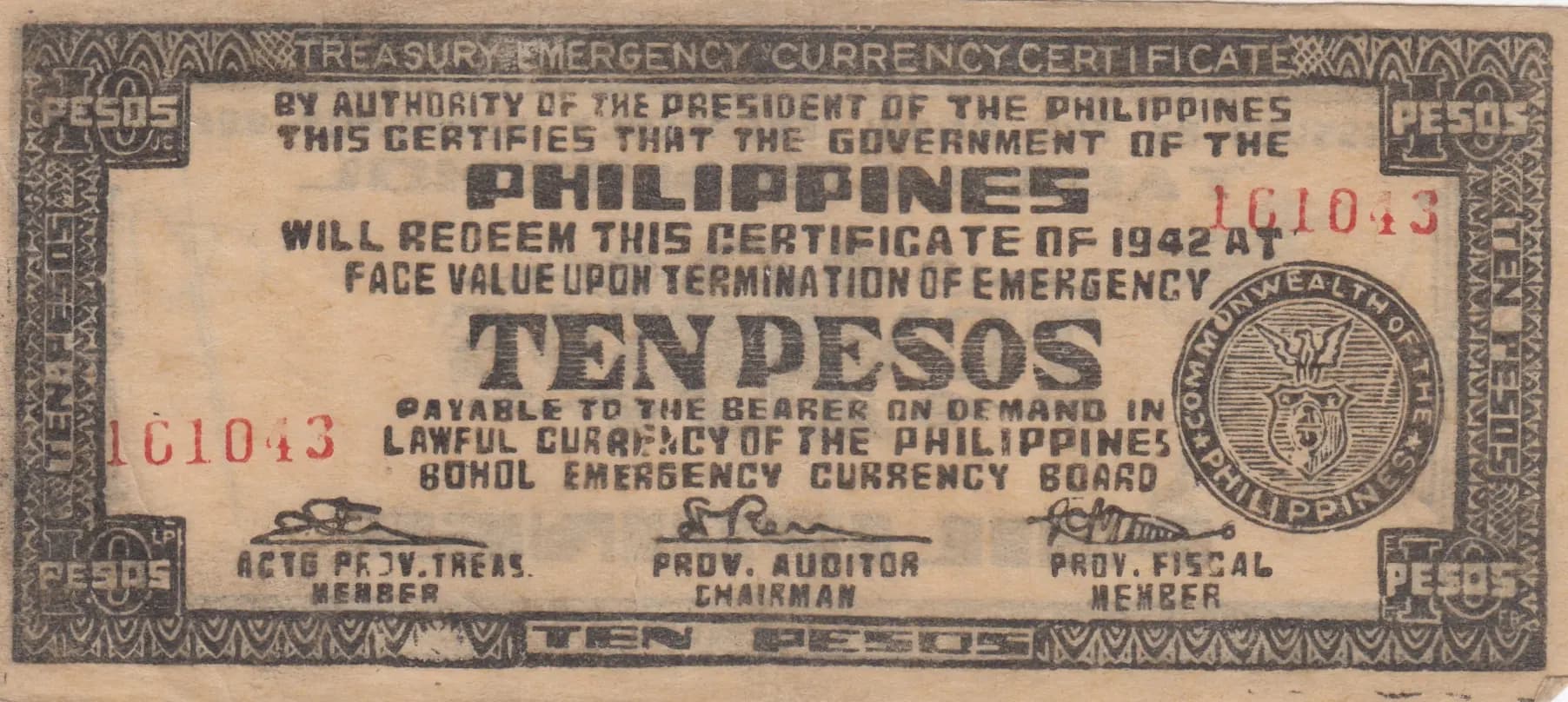
10 pesos 1942
Market Prices
3 salesAbout This Note
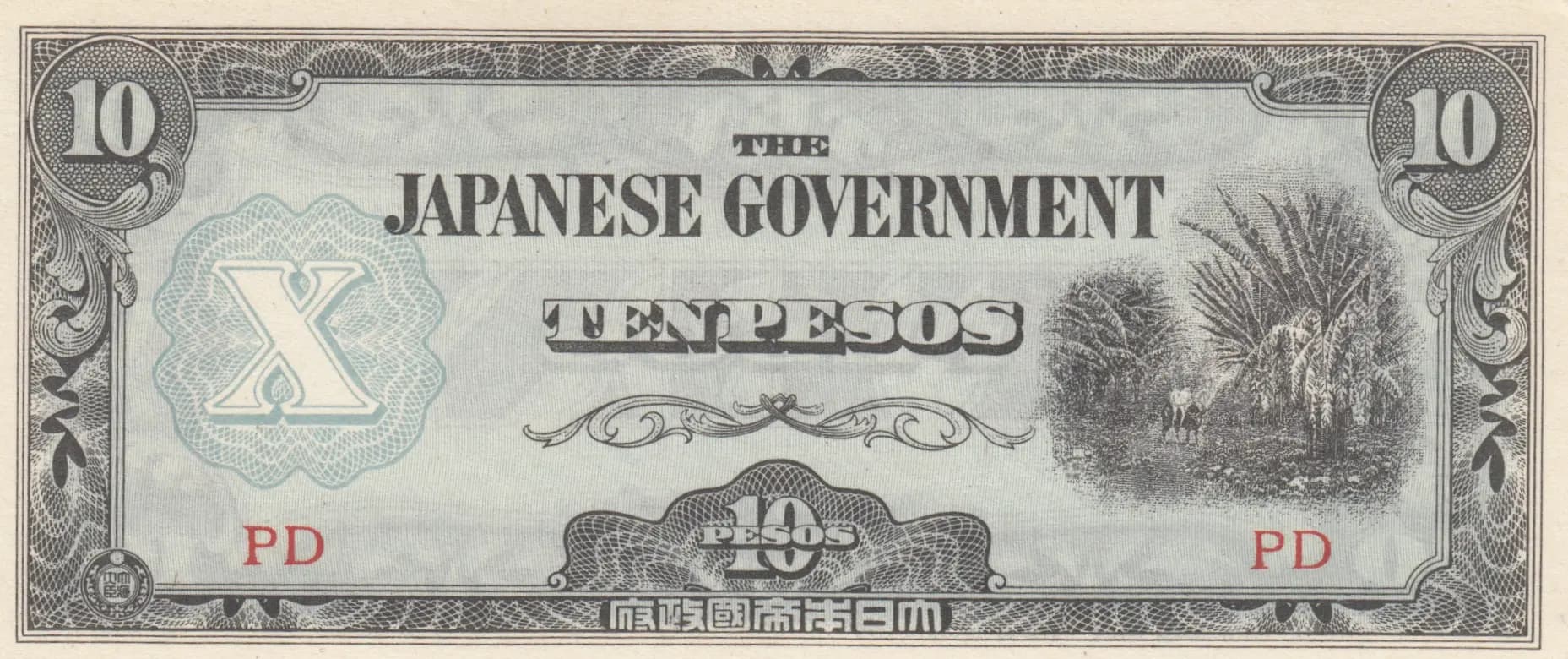
This Philippine 10 Pesos note from 1942 represents a fascinating artifact of Japanese military occupation currency, issued by the Japanese Government as an overprint on existing Philippine peso denominations. The note exhibits exceptional condition graded as AU, displaying sharp, crisp printing with no visible wear, creases, or foxing. The striking design features a decorative plantation landscape vignette on the right obverse, combined with ornate guilloche borders and an elegant 'X' monogram shield, making this a visually compelling example of WWII-era occupation currency.
Common. While this represents occupation currency from WWII, the Japanese Government peso series from the Philippines had substantial print runs across multiple denominations. The catalog reference data from realbanknotes.com shows these notes trading at minimal valuations (VF at $0.75, UNC at $1.75 as of 2016), with eBay sales typically ranging from under $1 to approximately $3 for most condition grades. Even PMG-graded examples (PMG 63 at $27.60) reflect modest collector interest. The AU condition grade, while desirable, does not elevate rarity significantly given the abundance of these notes in the collector market.
This note was issued during Japan's occupation of the Philippines (1942-1945) following the fall of the Commonwealth Government. The Japanese Government overprint replaced Philippine peso denominations to facilitate military administration and commerce in occupied territory. The Japanese date of 'Showa 16' (September 1941) visible on the obverse, combined with the 1942 issuance date, reflects the pre-occupation design being repurposed with Japanese governmental authority for use in the newly occupied Philippines.
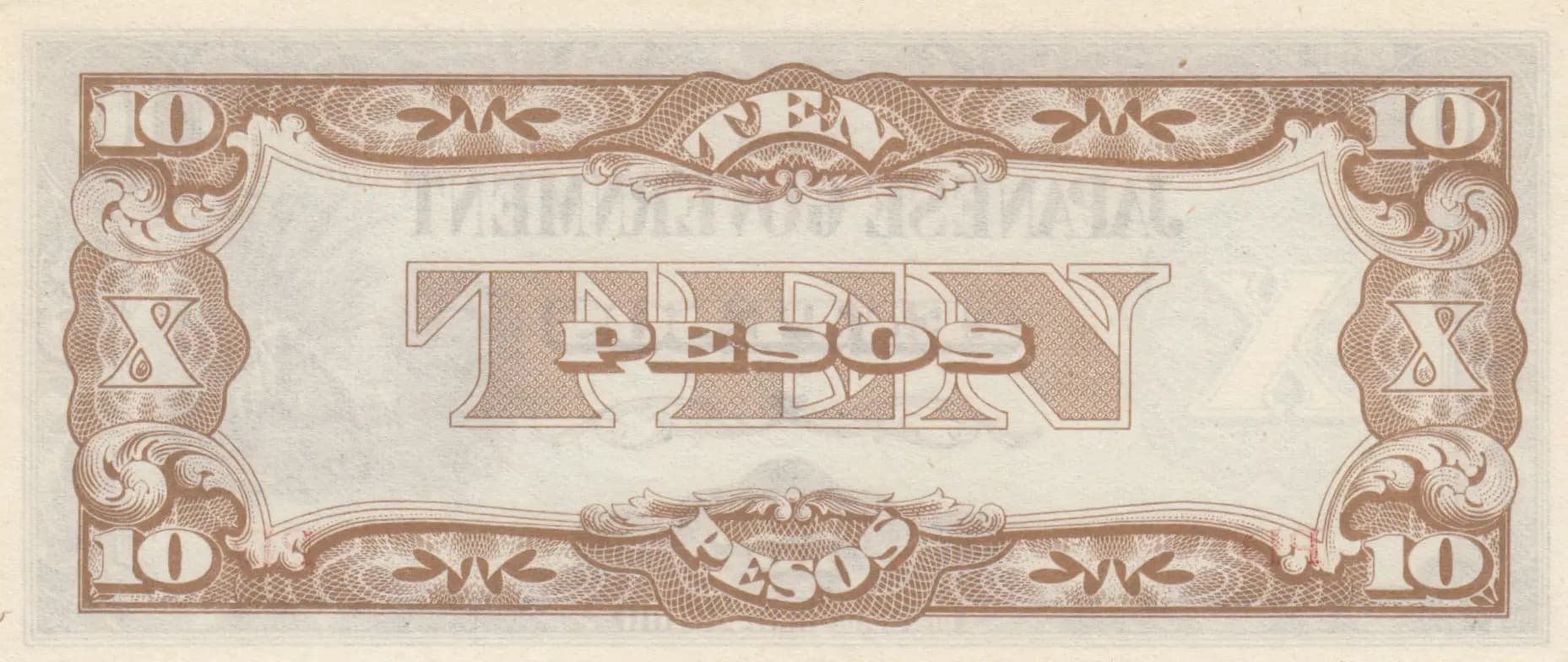
The obverse features a predominantly grayscale composition with tan/beige background tones and light green accents on the monogram. The central design displays the text 'THE JAPANESE GOVERNMENT' with 'TEN PESOS' prominently featured. On the left side sits an ornate shield containing a decorative 'X' monogram in light green, while the right side showcases a landscape vignette depicting trees and pastoral vegetation characteristic of Philippine plantation scenery. Ornamental corner designs and elaborate border guilloche patterns frame the entire design. The reverse presents a more austere brown and tan color scheme, with the denomination 'TEN PESOS' rendered in large, intricately patterned numerals featuring elaborate geometric designs. Corner elements display decorative shields with Roman numeral 'X' in all four corners, emphasizing the denomination throughout.
Front side: 'THE JAPANESE GOVERNMENT' (English), 'TEN PESOS' (English), Roman numeral 'X' (denoting ten), 'PD' (appears twice, likely printer's mark), '昭和十六年九月' (Japanese: 'September, Showa 16' referring to 1941 in the Japanese calendar). Back side: 'TEN PESOS' (English), 'PESOS' (English), Roman numeral 'X' in corner shields (denoting denomination).
This note was produced using intaglio (relief) printing combined with letterpress techniques, evident from the fine line work, detailed guilloche patterns, and sharp definition of the vignette and monogram. The multi-color printing (black on blue underprint on obverse; brown on buff paper on reverse) indicates plate-based currency production typical of official government note printing. The ornate security features, including the intricate borders and fine-line vignette work, are characteristic of professional security printers employed for military occupation currency.
This note belongs to the Japanese Government Philippine peso series, Pick catalog number P-108. The specific variety can be identified by the printer designation 'PD' visible twice on the obverse. The Japanese date of 'Showa 16' (1941) on the obverse combined with the 1942 historical issue date indicates this is from the initial occupation currency series. No specific signature varieties or serial number prefix variations have been documented for this denomination in standard catalogs, though variations in the shade of the blue underprint and paper quality may exist across different printings. The plantation vignette design on the right obverse is consistent across documented examples of this Pick number.