10 centavos 1882
Market Prices
About This Note
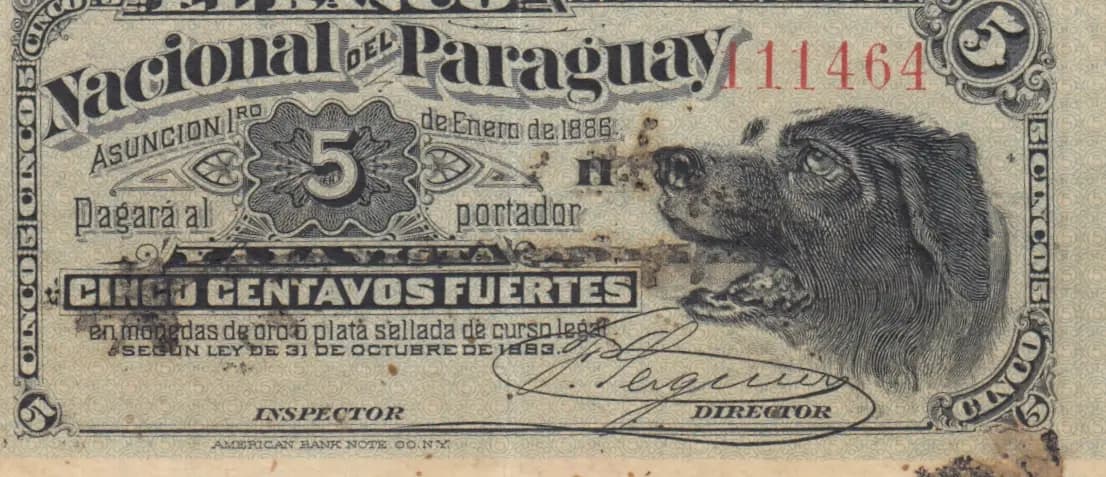
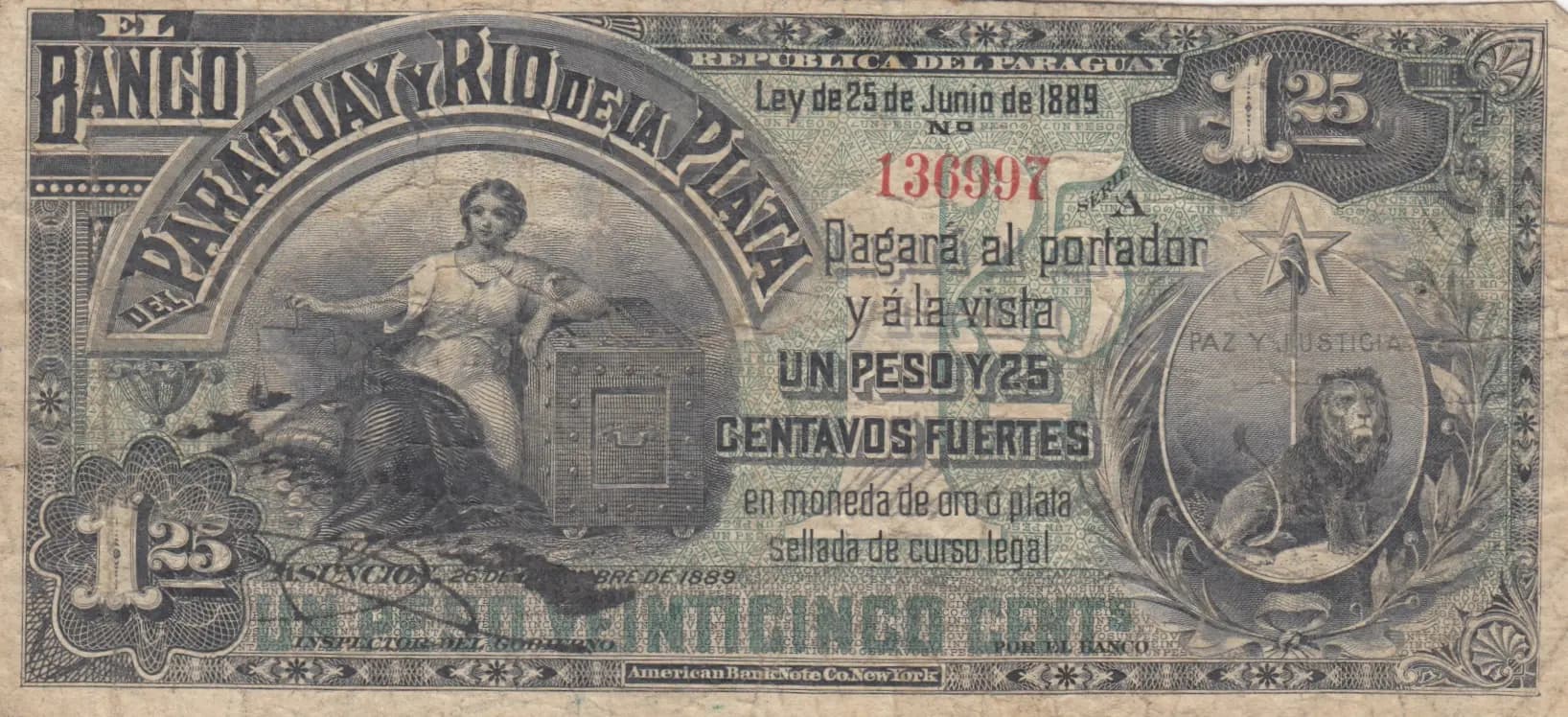
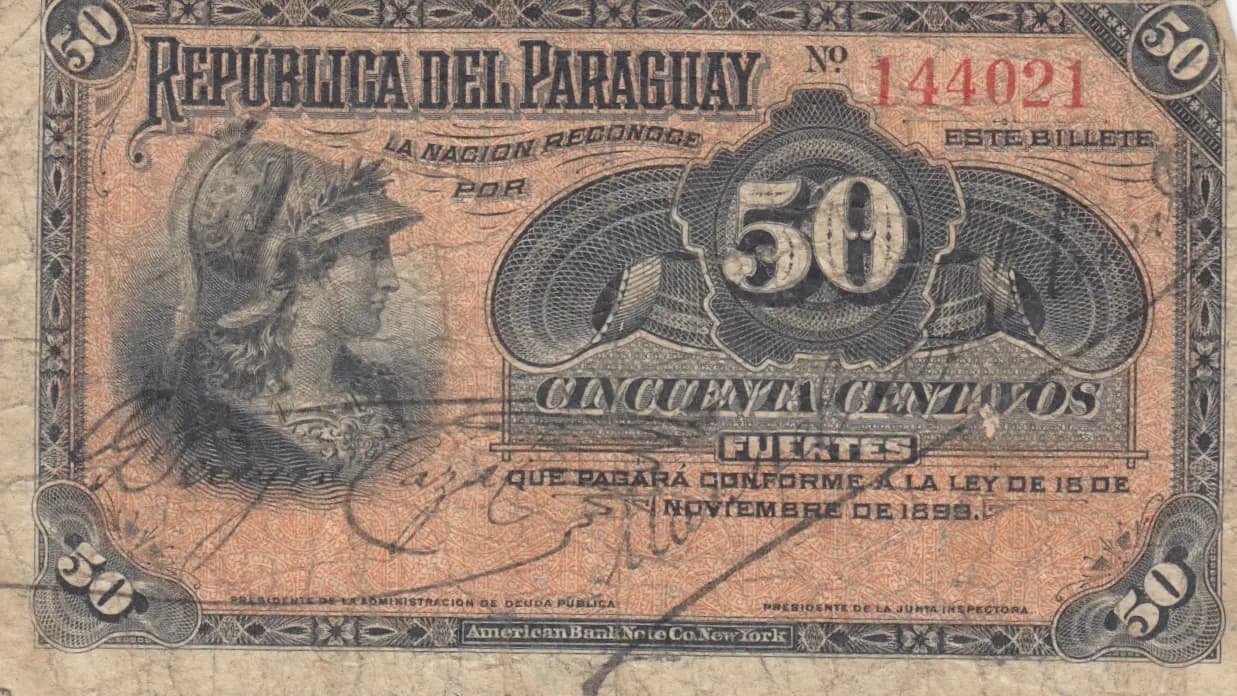
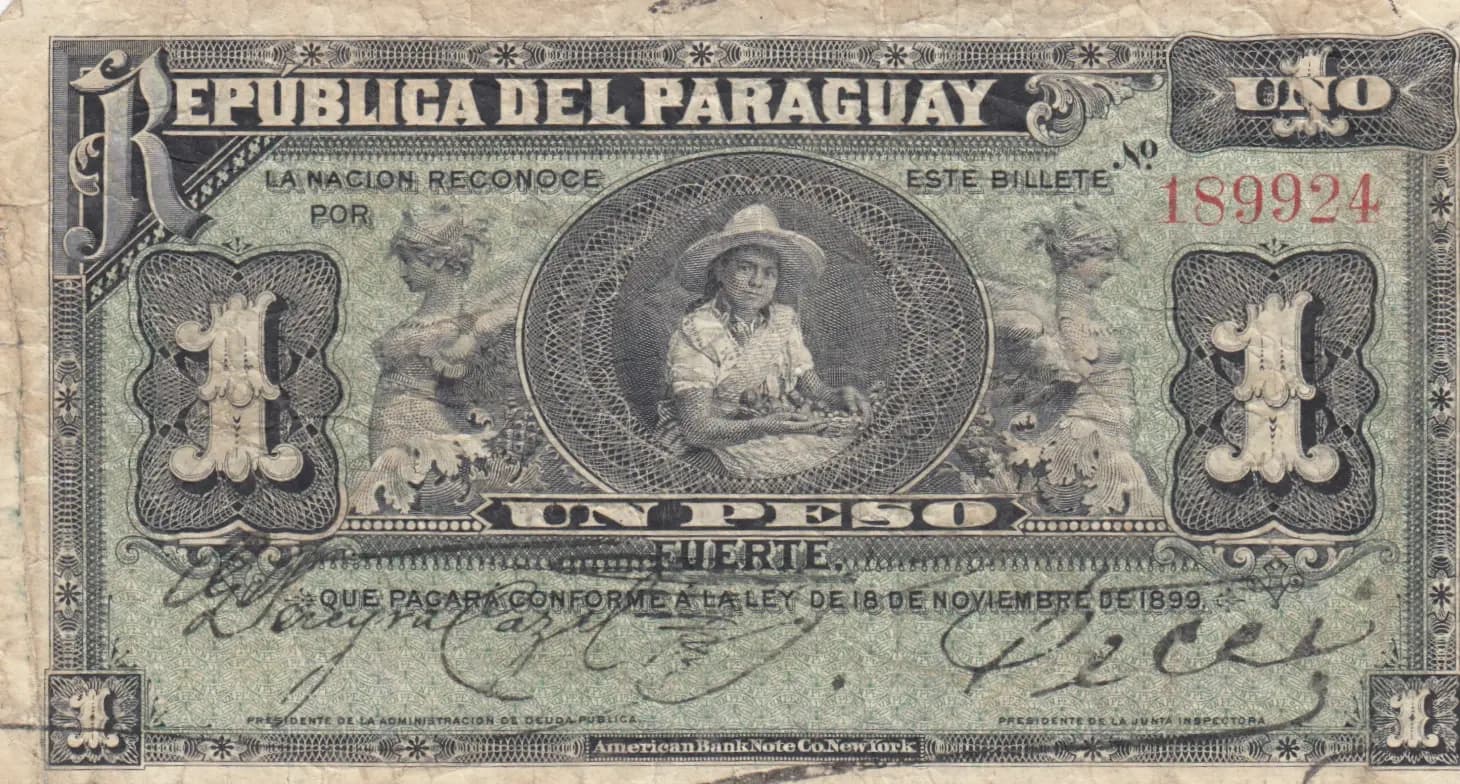
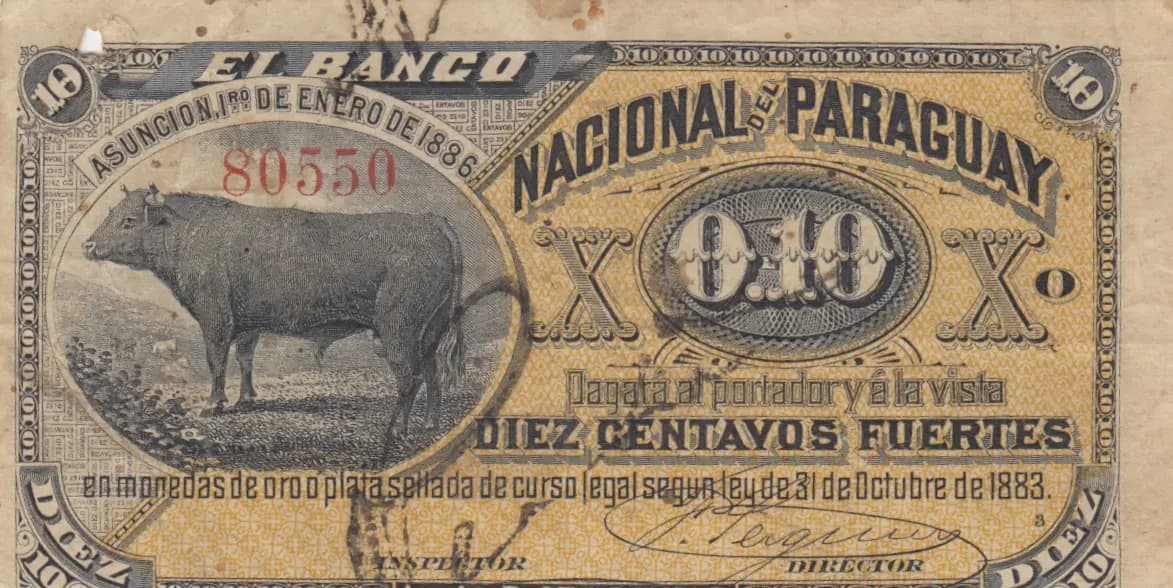
This is a Paraguay 10 Centavos from the inaugural 1882 emission of the Banco del Paraguay, featuring a distinctive cattle vignette at left and ornate engraved border work characteristic of American Bank Note Company production. The note exhibits VF condition with significant age-related wear including creasing, foxing, and tan patination consistent with 140+ years of circulation and storage. The handwritten signatures and serial number 80550 add to its historical appeal as an early Paraguayan monetary instrument.
Common. While this is an early emission from 1882, the eBay price data shows VF examples selling in the $599-$800 USD range, which is moderate for a 140-year-old banknote but not indicative of scarcity. The Banco del Paraguay likely issued these centavos in substantial quantities for commercial circulation. The PMG population report shows only 1 catalogued variant, but this reflects limited professional grading submissions rather than true rarity. The note remains collectible and desirable for early Paraguay specialists, but it is not scarce or rare in the broader numismatic context.
This note represents Paraguay's early attempt at national currency standardization following the devastating War of the Triple Alliance (1865-1870). The January 1st, 1882 issue date marks the establishment of the Banco del Paraguay's currency operations, with the cattle vignette reflecting Paraguay's agrarian economy and pastoral wealth. The legal tender notation referencing the October 21, 1883 law demonstrates the government's effort to create a regulated, backed currency system during a period of national reconstruction.
The obverse features a black engraving on gold/tan underprint characteristic of 19th-century security printing. The left side displays a detailed circular vignette containing an engraved cattle head or bull, symbolizing Paraguay's pastoral economy and agricultural importance. The center-right contains an oval denomination cartouche reading '0.10' with 'NACIONAL DEL PARAGUAY' text arranged above and below. Ornamental corner designs incorporating the numeral '10' frame the composition, with repeating border pattern elements forming the outer margin. The design is uniface (single-sided printing), which was common for smaller denominations of this era. Fine-line engraving throughout provides the security features typical of ABNC production. Handwritten signatures of officials appear at the bottom of the note.
FRONT SIDE: 'EMISION' (Emission/Issue); 'ASUNCION 1RO DE ENERO DE 1882' (Asuncion, January 1st, 1882); '80550' (Serial number); 'NACIONAL DEL PARAGUAY' (National [Bank] of Paraguay); 'DIEZ CENTAVOS FUERTES' (Ten Strong Centavos); 'pagadera a portador y a la vista' (payable to bearer and on sight); 'emitidos de oro plata sellada de curso legal segun ley de 21 de Octubre de 1883' (issued in gold [and] silver sealed of legal tender according to law of October 21, 1883); 'EMISOR' (Issuer); 'DIRECTOR' (Director). BACK SIDE: Blank or text entirely faded/illegible.
Intaglio engraving (line engraving) on a gold/tan colored paper stock. The printer is identified as the American Bank Note Company (ABNC), a leading security printer of the period. The intricate border patterns, detailed cattle vignette, and fine-line work throughout are characteristic of high-quality intaglio production. The uniface printing on a colored underprint was a cost-effective yet secure method for lower denominations.
This note is identified as Pick S122 (or P-S122), with the 's' designation indicating it is from a series or supplementary listing. The specific variety documented here is the 1882 January 1st emission with serial number 80550. The handwritten signatures visible on the note may vary by individual specimens, as was common with notes requiring manual signature application. The PMG population report indicates one main variant for this Pick number, suggesting limited known varieties, though signature variations and possibly different serial number ranges may exist within the series that have not been formally catalogued.