10 pounds 1988 specimen
Market Prices
6 salesAbout This Note
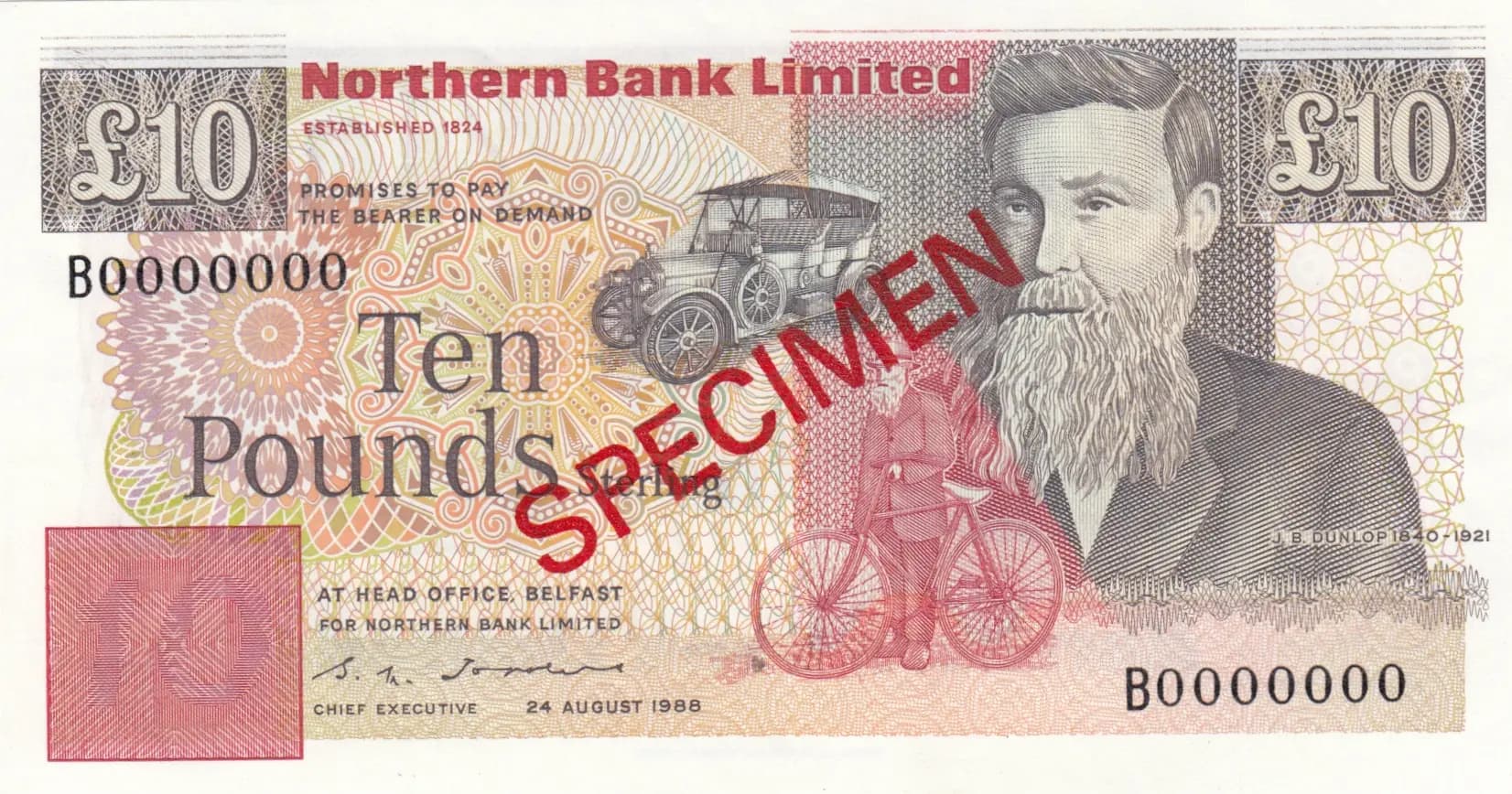
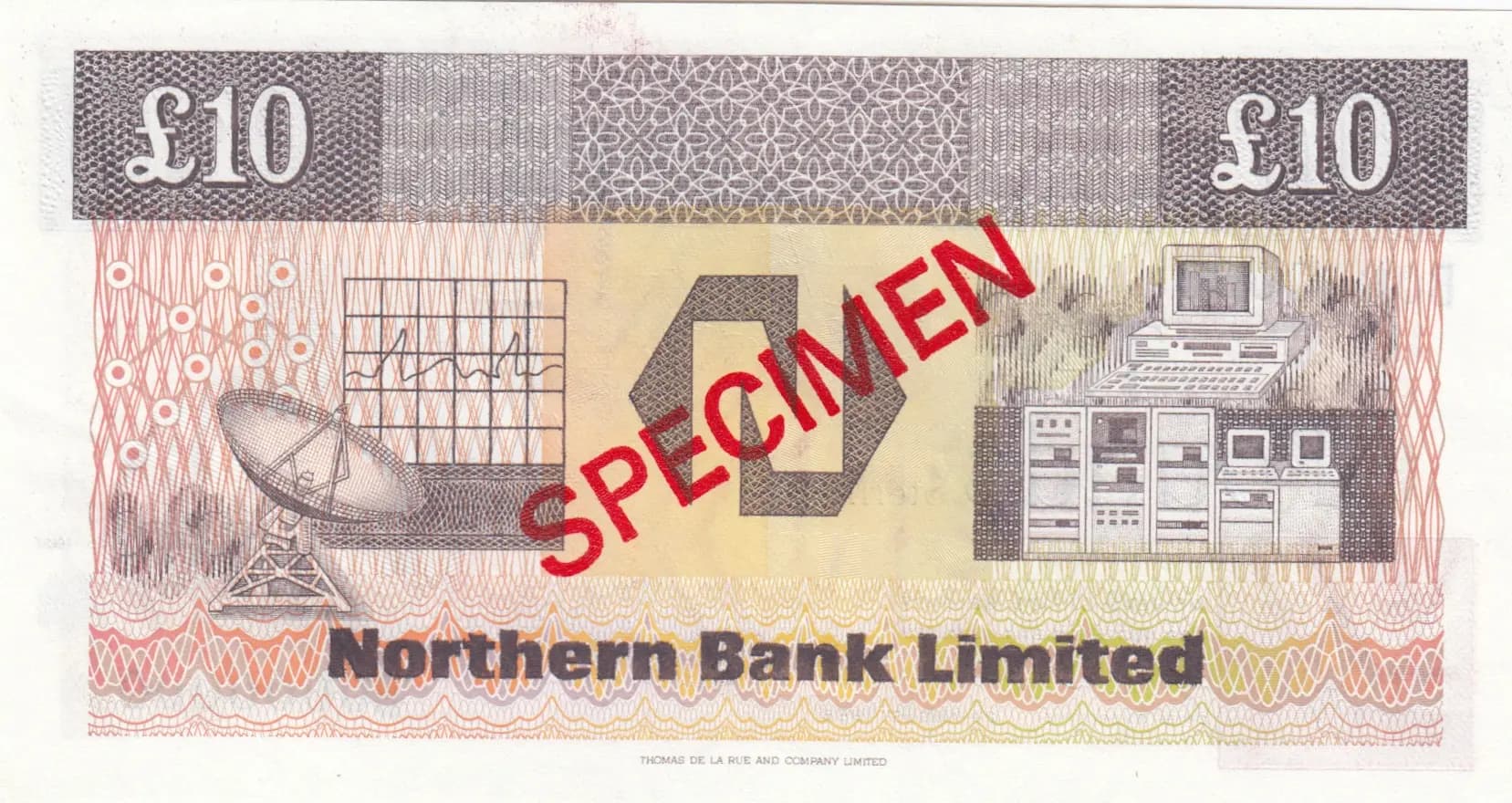
This is a 1988 Northern Bank Limited £10 specimen note in uncirculated condition, featuring an impressive technological theme design. The obverse showcases John Boyd Dunlop (1840-1921), the Scottish inventor of the pneumatic tire, alongside an early automobile and bicycle, while the reverse depicts a satellite dish and 1980s computer systems—reflecting the bank's forward-looking design philosophy. The large red SPECIMEN overprint indicates this is a presentation or archival example, and the crisp intaglio printing with multi-colored underprint remains pristine without any signs of circulation or wear.
Common. While specimen notes command a modest premium over regular circulation notes, this 1988 Northern Bank £10 is from a standard issue with typical print runs for a major UK regional bank. The eBay market data shows PMG 65 graded examples selling in the $113-$375 range (2018-2025), with catalog values (2019) at $160 UNC, indicating solid collector demand but no scarcity. Specimen overprints were routinely distributed to banks, governments, and archives, so these notes were produced in significant quantities relative to regular issues.
Issued during the height of the microelectronics revolution, this 1988 note celebrates technological innovation through its imagery of both historical invention (Dunlop's bicycle tire and early motorcar) and contemporary technology (satellite communications and computing). Northern Bank Limited, established in 1824, positioned itself as a forward-thinking institution by choosing these symbols of progress and engineering advancement for its currency designs during the final decades of the 20th century. The note reflects Northern Ireland's economic optimism and the transition from industrial to information-age technologies during the late 1980s.
The obverse features a formal portrait of John Boyd Dunlop (1840-1921), the Scottish veterinarian and inventor of the pneumatic bicycle tire, positioned at the right side of the note in formal attire. The design incorporates an early-20th-century automobile and a bicycle at center-left, symbolizing Dunlop's contribution to transportation innovation. The reverse depicts a large satellite dish or radio telescope on the left, representing telecommunications advancement, and a detailed 1980s-era computer system with multiple terminals and components on the right, symbolizing the digital revolution. Both sides feature intricate ornamental geometric and floral patterns in beige, pink, and gray tones, with complex fine-line intaglio detailing throughout. The color scheme of red/pink, beige/cream, and gray creates a sophisticated, professional appearance appropriate for a major regional financial institution.
FRONT: £10 (Ten Pounds); Northern Bank Limited; ESTABLISHED 1824; PROMISES TO PAY THE BEARER ON DEMAND; Ten Pounds; AT HEAD OFFICE, BELFAST FOR NORTHERN BANK LIMITED; CHIEF EXECUTIVE; 24 AUGUST 1988; B. DUNLOP 1840-1921; Serial number B0000000; SPECIMEN. BACK: £10 (Ten Pounds) [appears twice]; Northern Bank Limited; THOMAS DE LA RUE AND COMPANY LIMITED; SPECIMEN.
Intaglio printing (likely combined with offset color separation), executed by Thomas De La Rue and Company Limited, London—the world's premier security printer. The visual analysis confirms the characteristic fine-line patterns, complex geometric background designs, and multiple color printing layers typical of De La Rue's advanced banknote production. The crisp, detailed engraving and intricate security patterns visible in both the portraits and decorative elements are hallmarks of intaglio-based currency production.
This note is cataloged as Pick P-194as, where the 's' suffix denotes SPECIMEN status. The serial number format shown (B0000000) is typical for specimen notes; regular circulation notes would display sequential numbering. The date inscription of 24 AUGUST 1988 on the note itself is the official issue date. No significant varieties have been noted for this Pick number in standard references, though serial number prefixes on regular (non-specimen) issues may vary by banking region within Northern Ireland. This particular example exhibits the standard specimen overprint characteristics consistent with Northern Bank's distribution practices.