1 escudo 1941
Market Prices
19 salesAbout This Note
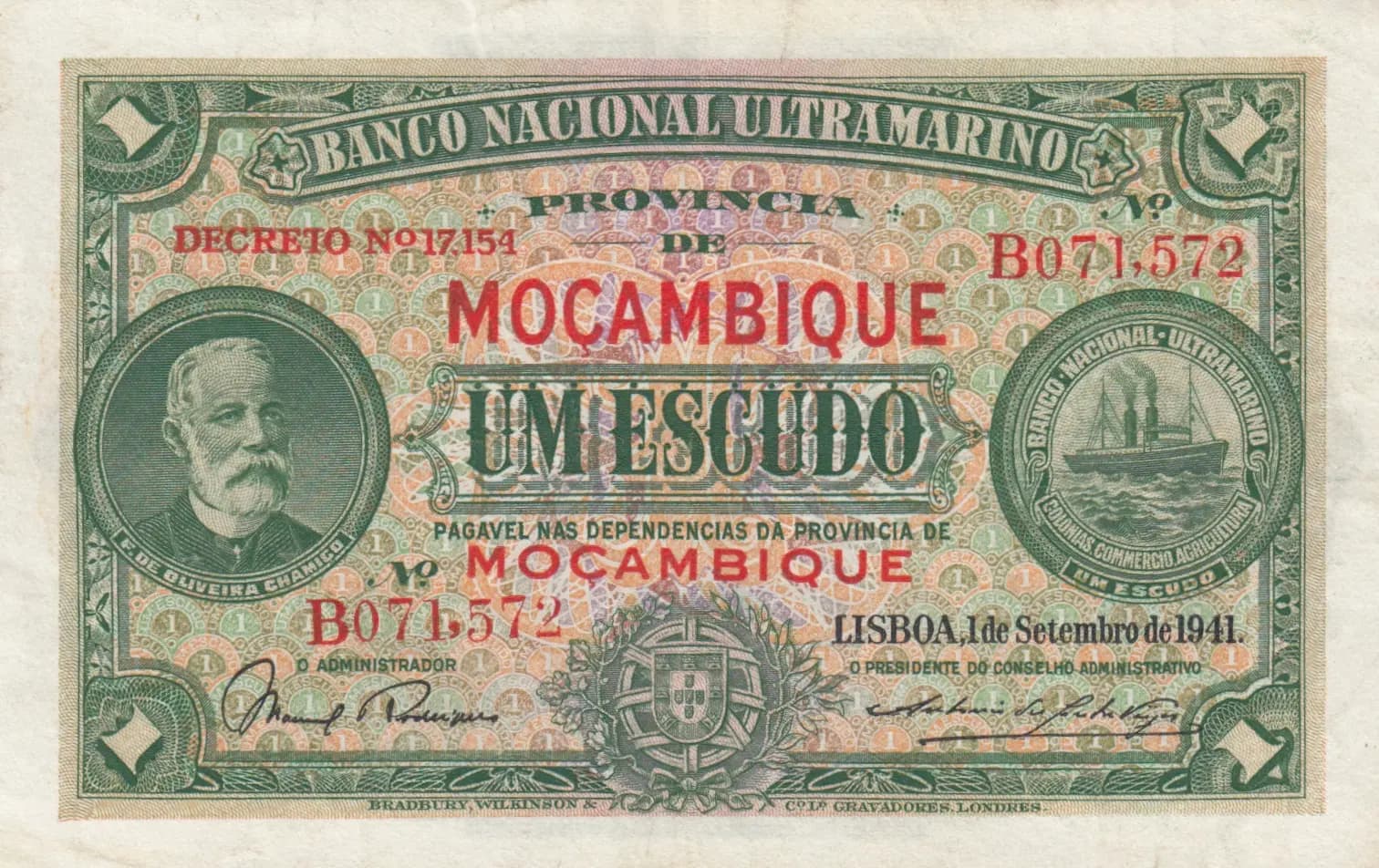
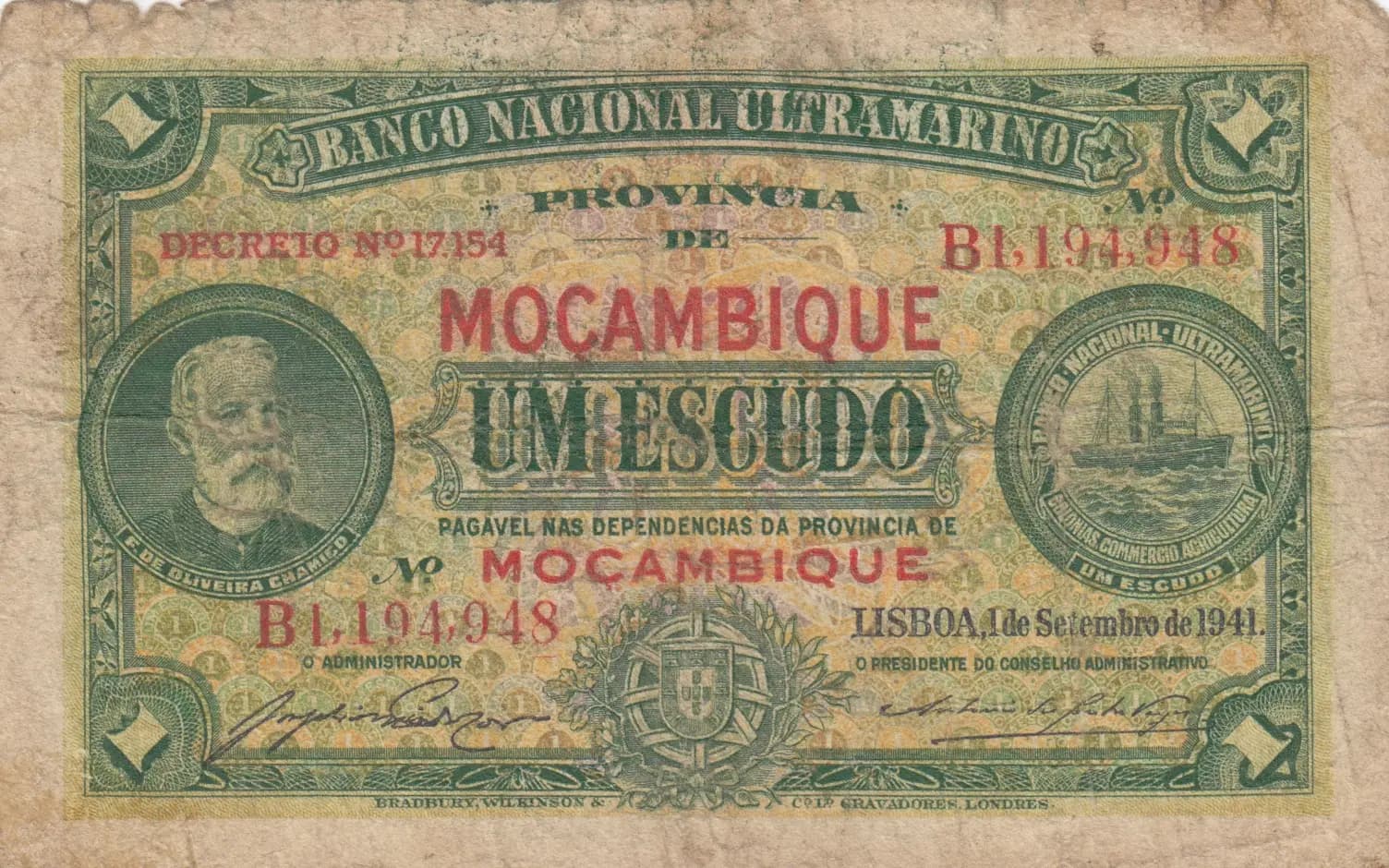
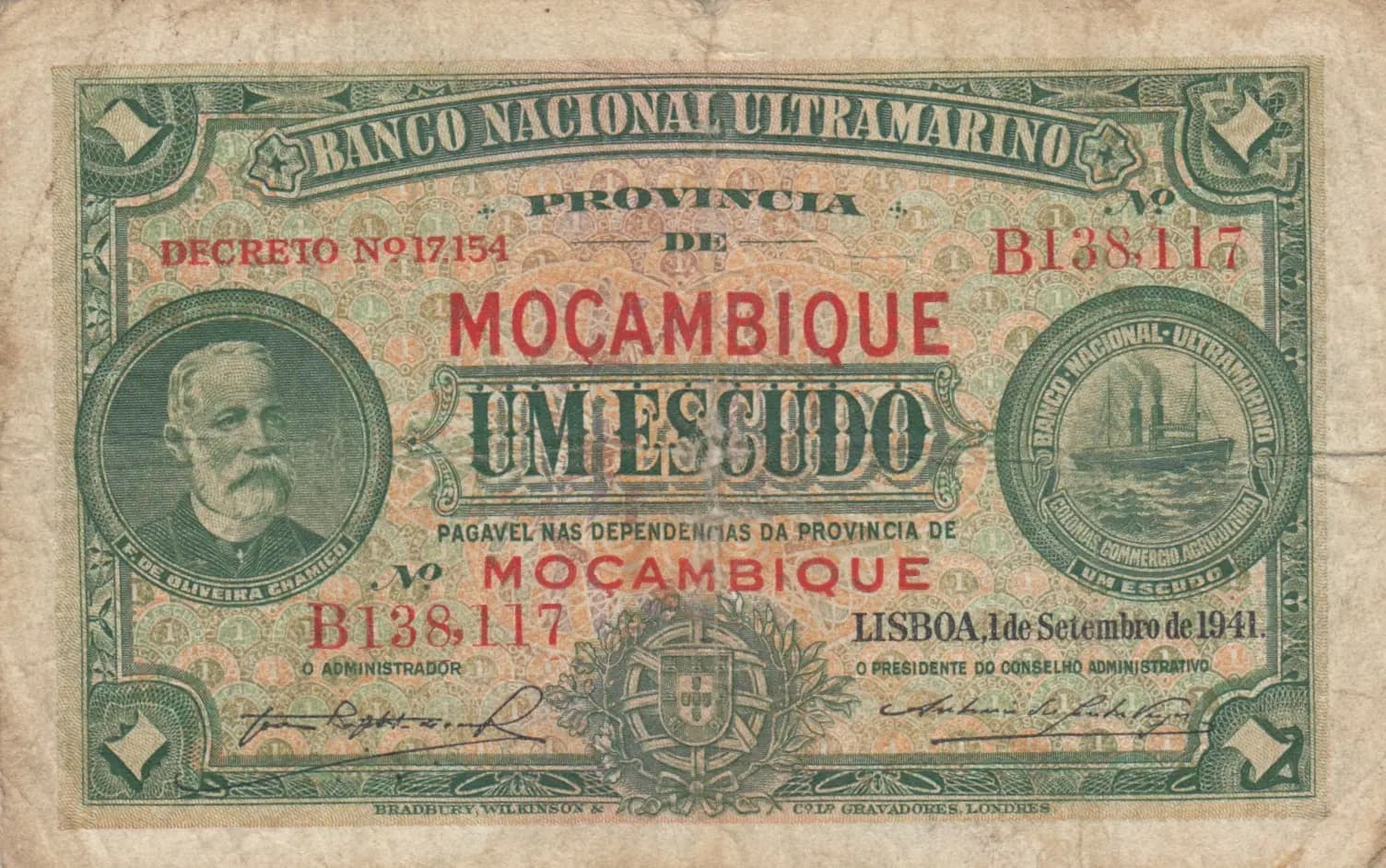
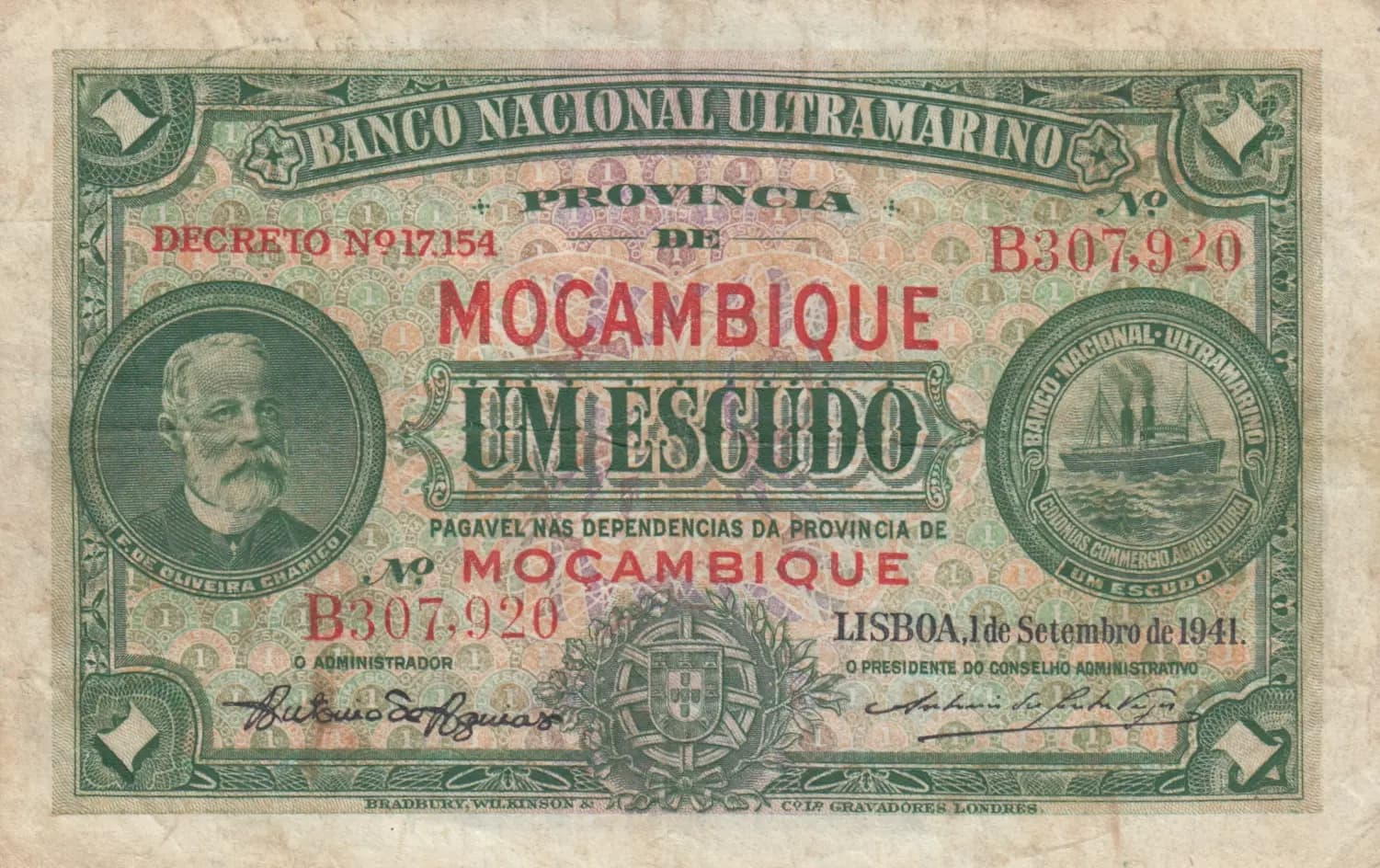
This Mozambique 1 Escudo from 1941 is an attractive example of early Portuguese colonial currency featuring elegant engraved design work by Bradbury, Wilkinson & Co. The note displays the characteristic green coloring with red and beige central vignettes, presenting portraits of Francisco de Oliveira Chamico and a merchant ship—symbolic of Portuguese commercial interests in the African colony. In Fair condition, the note shows expected age-related wear including creasing and foxing, yet the fine line engraving remains legible throughout, making it a solid piece of Mozambique's pre-independence numismatic history.
Common. eBay price history shows consistent sales in the $5–$20 range for Fine condition examples across a 13-year period (2011–2023), with numerous transactions indicating ready market availability. The most recent 2023 sale of a Fine specimen achieved only $11.05. Catalogue values place this note at $3–$17.50 depending on grade, well within common territory. The 1941 1 Escudo was a standard issue from Banco Nacional Ultramarino with no documented rarity factors such as limited print runs, recall, or short issuing period.
Issued on September 1, 1941, during the Portuguese Estado Novo regime under Salazar, this note represents Mozambique's monetary system as a colonial possession of Portugal, formally styled as the 'Provincia de Mocambique.' The depicted merchant ship on the obverse symbolizes the commercial ties binding the colony to the metropolitan power, while the reverse portrait reflects the importance of colonial administrators in Portuguese Africa. The issuer, Banco Nacional Ultramarino, served as the central banking authority for all Portuguese overseas territories, consolidating economic control from Lisbon.
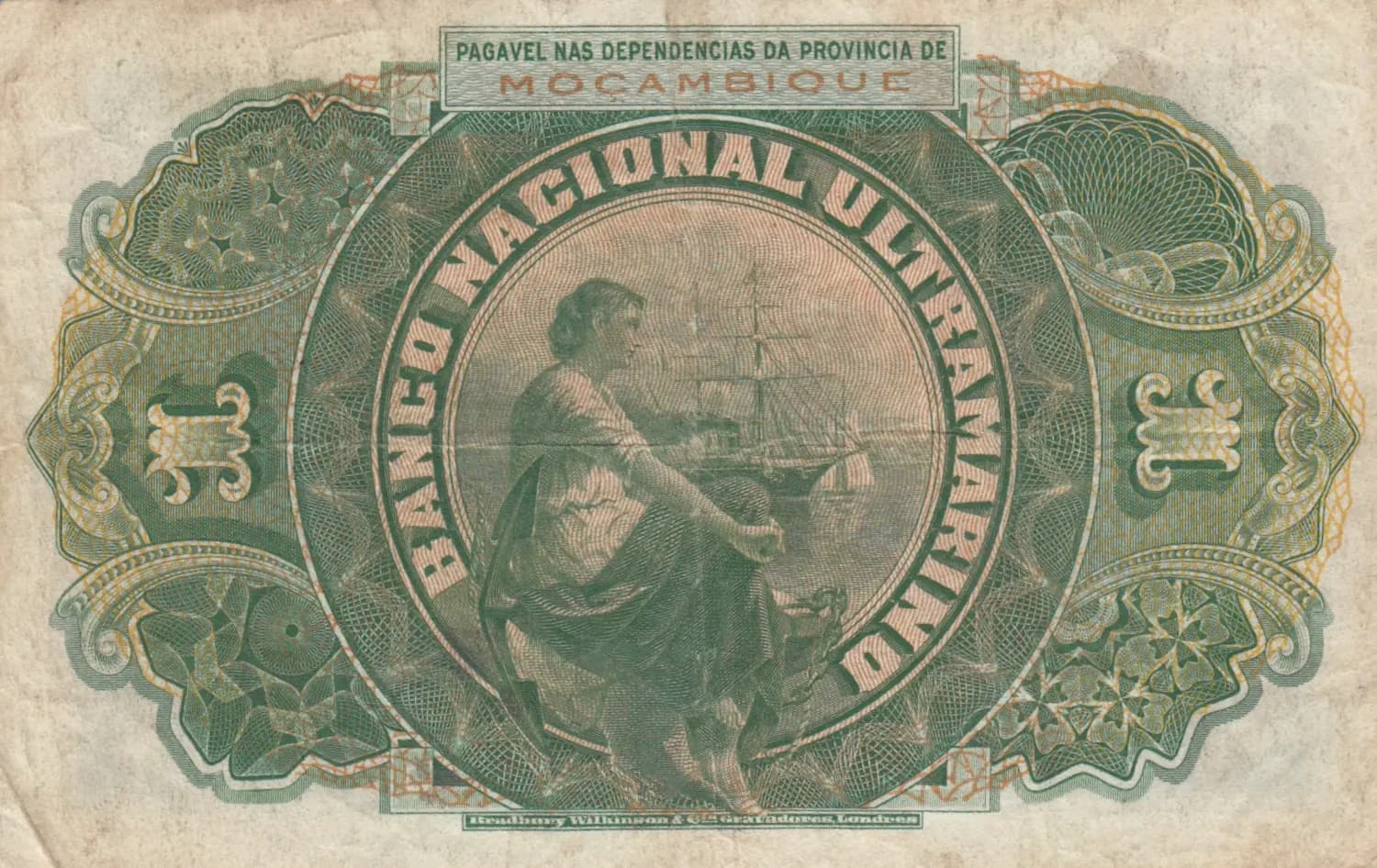
The obverse features Francisco de Oliveira Chamiço in left profile within an ornate circular medallion, representing a notable colonial administrator or historical figure. The right medallion depicts a steam-powered merchant vessel, symbolizing Portuguese maritime commerce and colonial trade routes. The central rectangular frame in red and beige contains the denomination 'Um Escudo' in large green letters. A Portuguese shield or coat of arms appears in the center-bottom area, flanked by signature lines for administrative officials. Ornamental diamond shapes and elaborate floral-geometric patterns in the border frame complete the design. The reverse presents a classical historical figure in robes within an elaborate circular medallion with radiating line patterns, further emphasizing the note's commemorative historical character. The entire design employs fine line engraving with detailed crosshatching throughout, creating sophisticated visual security and aesthetic appeal typical of high-quality colonial currency.
FRONT: 'Banco Nacional Ultramarino' (Overseas National Bank) / 'Provincia de Mocambique' (Province of Mozambique) / 'Decreto No 17154' (Decree No. 17154) / 'Um Escudo' (One Escudo) / 'Pagavel nas Dependencias da Provincia de Mocambique' (Payable at the Dependencies of the Province of Mozambique) / 'Lisboa, 1 de Setembro de 1941' (Lisbon, September 1, 1941) / 'O Administrador' (The Administrator) / 'O Presidente do Conselho Administrativo' (The President of the Administrative Council) / 'De Oliveira Chamiço' (Of Oliveira Chamiço—historical figure depicted) / 'Bradbury, Wilkinson & Co., Gravadores, Londres' (Bradbury, Wilkinson & Co., Engravers, London). BACK: 'Banco Nacional Ultramarino' (around top of central medallion) / 'Pagavel nas Dependencias da Provincia de Mocambique' (Payable at the Dependencies of the Province of Mozambique) / 'Bradbury, Wilkinson & Co., Gravadores, Londres' (Bradbury, Wilkinson & Co., Engravers, London).
Intaglio engraving (fine line engraving with detailed crosshatching). Printed by Bradbury, Wilkinson & Co., the renowned London security printer. The visual analysis confirms characteristic intaglio features including fine linear patterns, intricate portrait work, and complex decorative scrollwork that could only be reliably reproduced through engraved steel plate printing. This represents the premium security printing standard of the era.
Pick catalog identifies two variants for base number P-81: the standard P-81 and P-81s (specimen note with overprint or special marking). The analyzed note appears to be the standard P-81 type based on visual inspection. The note may display signature variety as noted in external references ('Like number 66-69 but different signature titles'), though specific signature officials cannot be fully identified from visual analysis alone. Serial number B307,920 indicates normal circulation issue rather than specimen or special variant.