10 dirhams 1968
Market Prices
8 salesAbout This Note
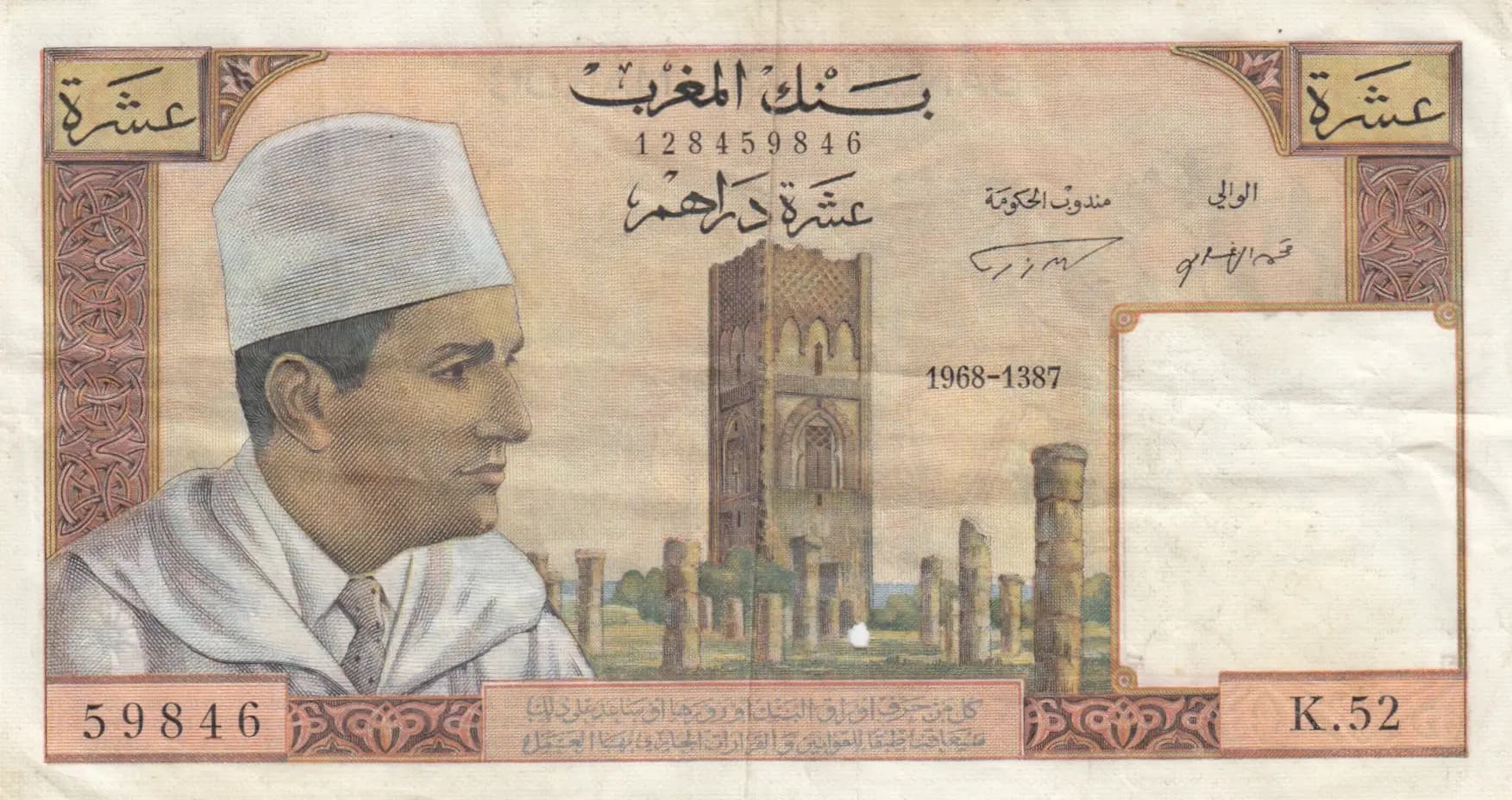
This is a VF-graded 1968 Morocco 10 Dirhams (Pick-54) issued by Banque du Maroc, featuring King Muhammad V in profile on the obverse and a detailed agricultural harvest scene on the reverse. The note displays the characteristic beige and brown color palette typical of this issue, with visible aging and light circulation wear consistent with a 56-year-old banknote. The fine engraving work and ornamental Islamic geometric borders exemplify the craftsmanship of French banknote printers, making this a representative example of Morocco's post-independence currency design.
Common. The 1968 10 Dirhams Pick-54 is a widely circulated standard issue with no known print run restrictions or special rarity factors. eBay market data confirms this assessment, with VF examples consistently selling in the $5–$47 range (with a 2019 catalog value of $20 for VF), indicating healthy supply and modest collector demand. No evidence of recalls, design variants affecting value, or limited distribution supports this common classification.
This 10 Dirhams note was issued in 1968 (1387 in the Islamic calendar), during the reign of King Hassan II, though it features his father King Muhammad V who had died in 1961. The reverse design celebrating agricultural harvest reflects Morocco's economic foundation in citrus production and rural development during the post-colonial period. The architectural imagery on the obverse—featuring the Hassan Tower and Islamic ruins of Rabat—symbolized Morocco's cultural heritage and the nation's newly consolidated sovereignty following independence in 1956.
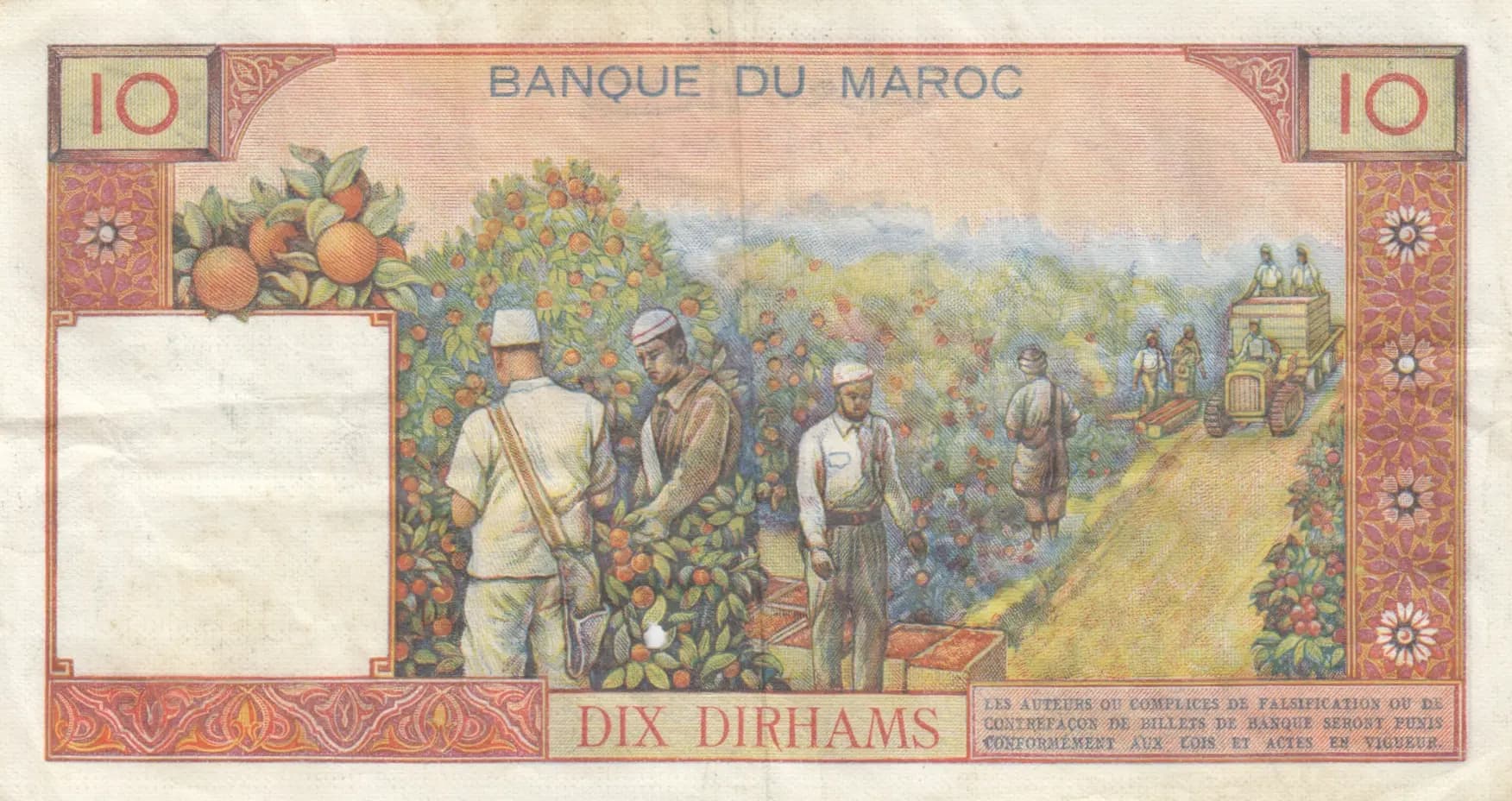
The obverse features a left-facing profile portrait of King Muhammad V wearing a traditional white fez and formal dark-tied attire, positioned in the left portion of the note. To the right is an architectural vignette depicting the Hassan Tower (Rabat's iconic minaret) along with scattered ancient columns and fortified wall structures from Islamic Morocco's heritage sites. The reverse displays a dynamic agricultural scene showing multiple figures in traditional Moroccan white head coverings engaged in harvesting operations among what appear to be citrus or orange orchards, with a fortified gateway or kasbah structure visible in the background. Both sides feature ornamental borders with Islamic geometric patterns and floral motifs in rust, brown, red, and purple tones. The denomination '10' appears prominently in the corner panels.
FRONT SIDE: بنك المغرب (Bank of Morocco); عشرة درهمـ (Ten dirhams); 1968-1387 (Western and Islamic calendar dates); عشرة (Ten, appears in corners); Serial number: 128459846; Reference marking: K.52. BACK SIDE: BANQUE DU MAROC (Bank of Morocco in French); DIX DIRHAMS (Ten dirhams in French); 10 (denomination numeral); LES AUTEURS OU COMPLICES DE FALSIFICATION OU DE CONTREFAÇON SERONT POURSUIVIS CONFORMÉMENT AUX LOIS ET ACTES EN VIGUEUR (The authors or accomplices of falsification or counterfeiting will be prosecuted in accordance with current laws and acts in force).
Intaglio engraving (fine line engraving) executed by a French security printer, as indicated by the catalog reference and the fine line work visible throughout the portrait, architectural details, and agricultural figures. The security features include ornamental geometric patterns integrated into the design borders and the overall composition employing traditional high-security engraving methods common to French banknote production of this era.
The PMG population report indicates five cataloged varieties (P-54a through P-54e) for this Pick number, though the specific distinguishing characteristics of each variety are not detailed in available references. This example displays the date 1968-1387, serial number 128459846, and reference marking K.52. Without detailed examination of signature variations, printer marks, or overprint differences visible in the images, the specific sub-variety (a through e) cannot be definitively determined from the visual analysis alone, though the standard 1968 dating and French printing indicate this is from the primary issue period.