10 pesos 1915
About This Note
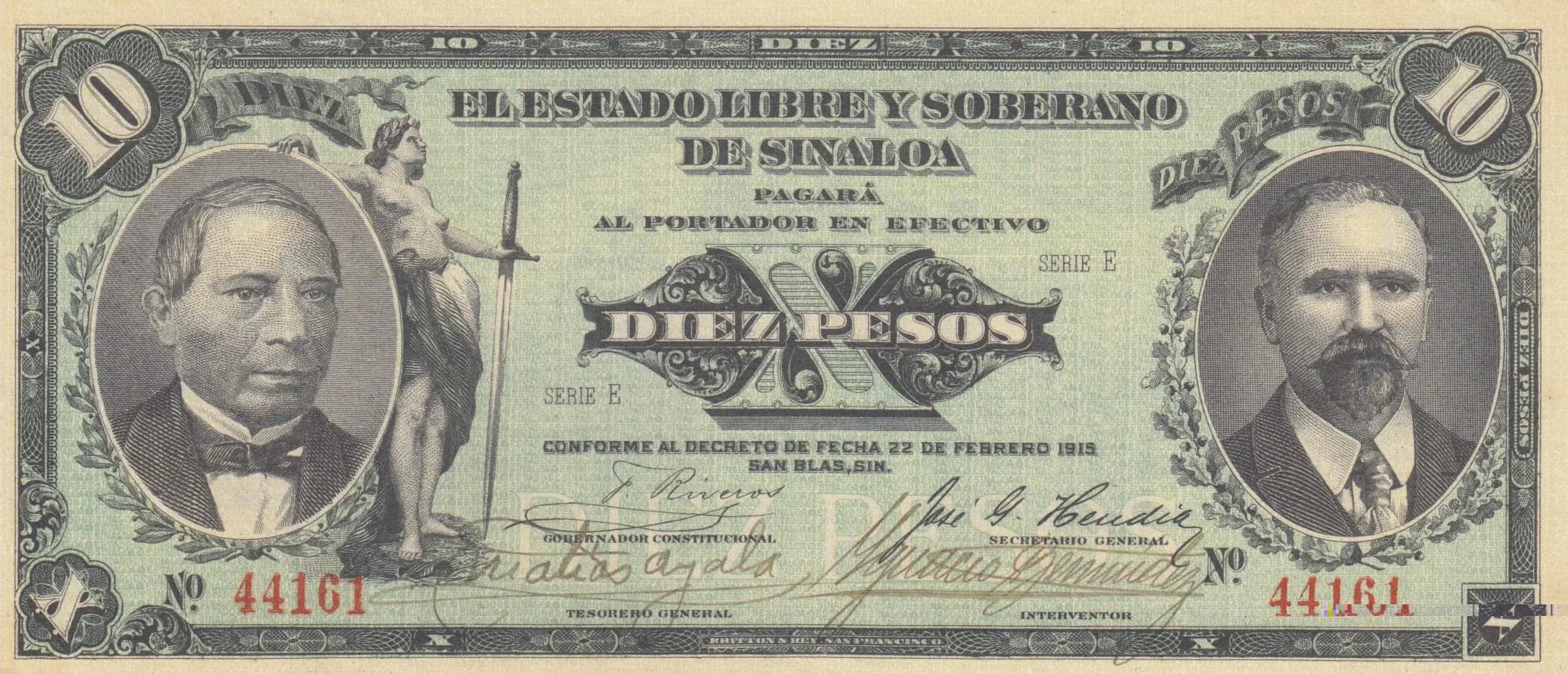
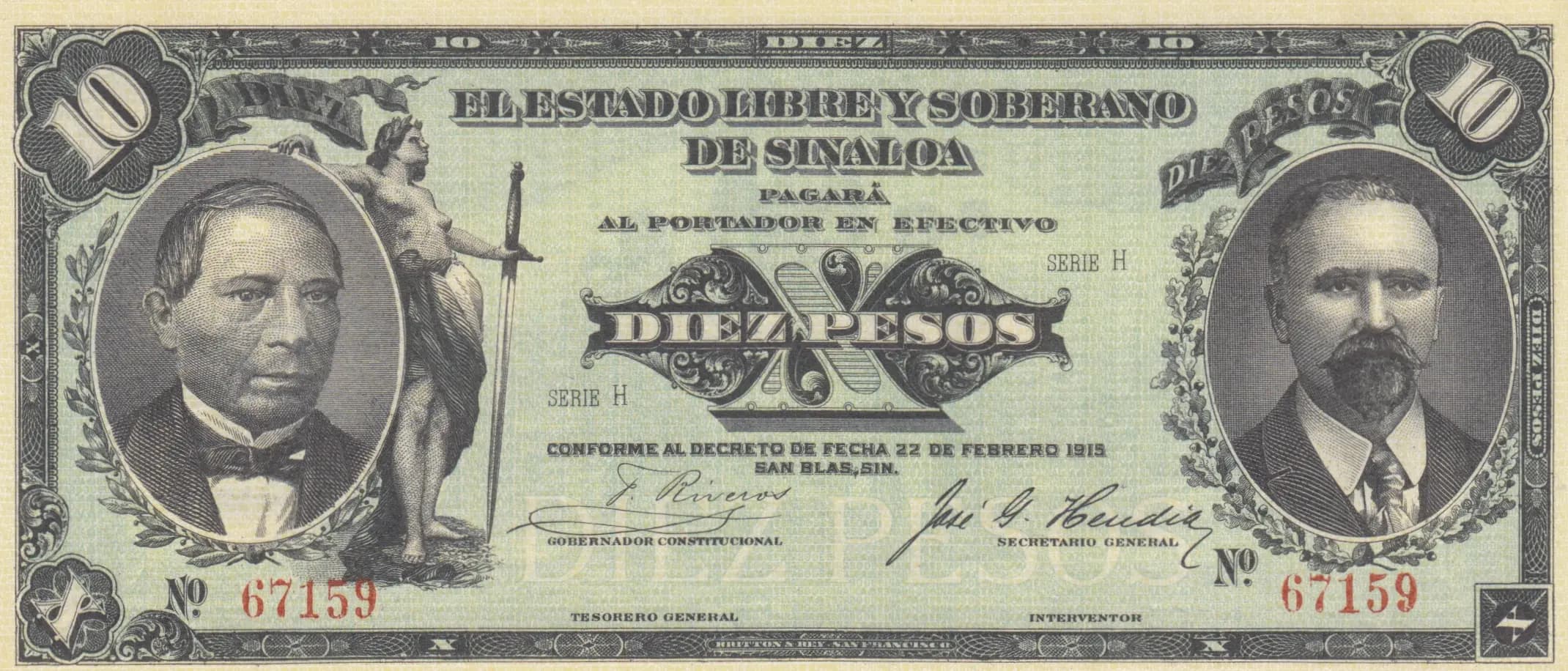
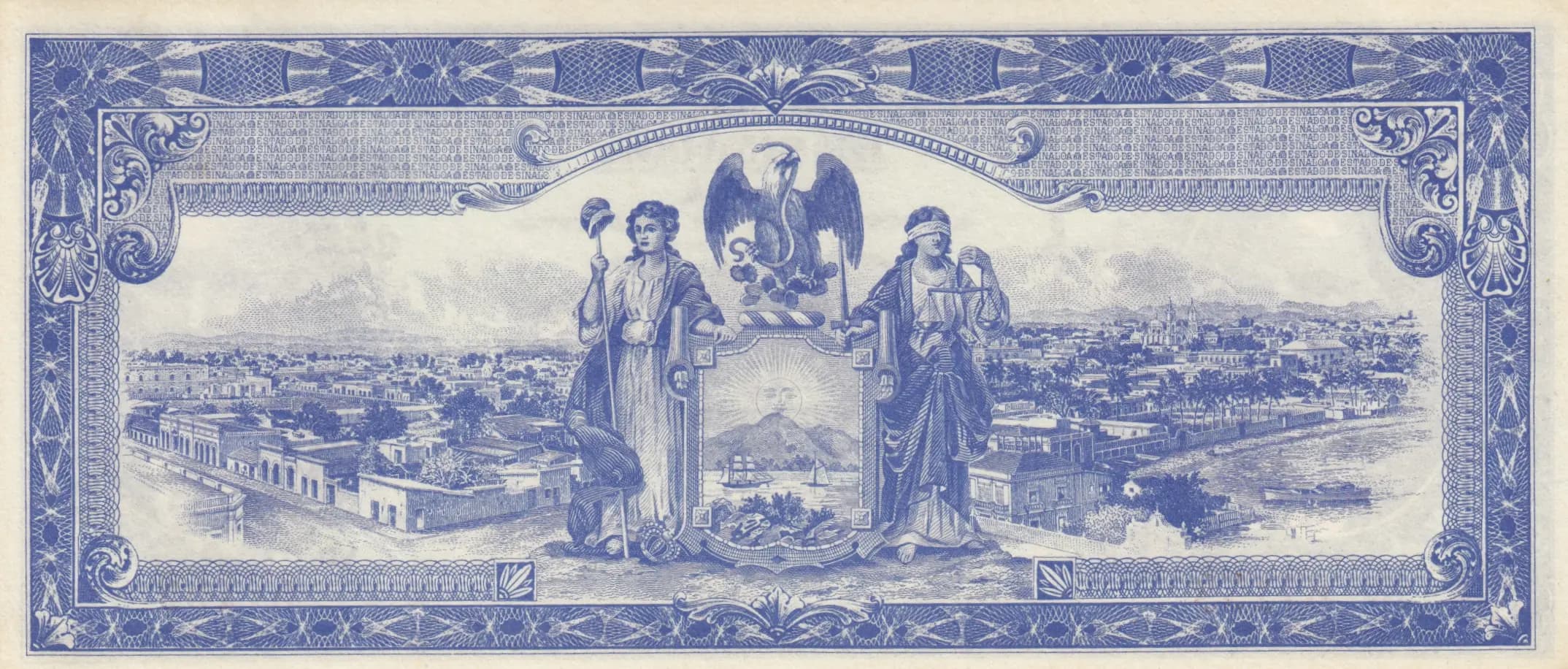
This is an exceptionally well-preserved example of a 1915 Estado Libre y Soberano de Sinaloa 10 pesos note in uncirculated condition. The front features ornate classical allegorical figures flanking portrait medallions and a central shield bearing the denomination, while the reverse presents an elaborate allegorical scene with a mountain backdrop and panoramic cityscape. The note's crisp colors, fine engraving detail, and complete absence of circulation wear make this an excellent specimen of Mexican Revolutionary-era regional currency.
Common. State of Sinaloa notes from 1915 were issued in substantial quantities to circulate within the state during the Revolutionary period. Series H with serial number 67159 suggests multiple series were printed, indicating a reasonable production run. While Mexican Revolutionary-era regional notes are collector items, the widespread availability of Sinaloa 1915 issues across multiple denominations in the numismatic market indicates this was not a rare or short-lived emission. Notes from established regional authorities like Sinaloa typically survive in greater numbers than those from more ephemeral or contested authorities.
Issued during the Mexican Revolution on February 22, 1915, this banknote represents the monetary independence of the State of Sinaloa under its constitutional government. The classical allegorical imagery—featuring robed female figures representing virtue, progress, and sovereignty—reflects the aspirational ideals of Mexican state governments during this period of political fragmentation. The inclusion of Sinaloa's mountainous landscape and cityscape panorama on the reverse emphasizes regional pride and the state's geographic and economic significance during a time of national upheaval.
The front of this note showcases a formal, high-art composition typical of early 20th-century Mexican regional currency. Two male portraits in ornamental circular medallions occupy the left and right sides—likely representing state officials or historical figures of significance to Sinaloa. A classical allegorical female figure positioned in the upper left holding a sword or staff represents Liberty or Justice. The central ornamental shield displays 'DIEZ PESOS' prominently. The reverse presents a more elaborate allegorical composition: two robed classical female figures (representing virtues such as Commerce and Agriculture) flank a central classical architectural altar or urn. A majestic eagle crowns the upper center, symbolizing Mexican national sovereignty. Behind this central scene rises a prominent mountain or pyramid formation, likely representing Sinaloa's Sierra Madre or a significant regional landmark. Below stretches a panoramic cityscape rendering the urban development of San Blas or another major Sinaloan city. Ornamental borders throughout feature elaborate scrollwork, laurel wreaths, and geometric floral patterns characteristic of security printing of the era.
FRONT: 'EL ESTADO LIBRE Y SOBERANO DE SINALOA' (The Free and Sovereign State of Sinaloa) / 'PAGARÁ AL PORTADOR EN EFECTIVO' (Will pay the bearer in cash) / 'DIEZ PESOS' (Ten Pesos) / 'SERIE H' (Series H) / 'CONFORME AL DECRETO DE FECHA 22 DE FEBRERO 1915' (According to decree dated February 22, 1915) / 'SAN BLAS, SIN.' (San Blas, Sinaloa) / 'GOBERNADOR CONSTITUCIONAL' (Constitutional Governor) / 'SECRETARIO GENERAL' (General Secretary) / 'TESORERO GENERAL' (General Treasurer) / 'INTERVENTOR' (Comptroller) / 'No 67159' (Serial number) / 'DIEZ' (Ten) / '10' (10) / 'BRITTON & REY, SAN FRANCISCO' (printer credit) / Signatures: 'Rivera' and 'Jul S. Heudler'. BACK: 'SINALOA'
Steel plate engraving with multi-color printing, executed by Britton & Rey of San Francisco, one of the most respected security printers of the period. The fine line work visible throughout both sides, the precision of the portrait medallions, the intricate border patterns, and the complex allegorical compositions are hallmarks of intaglio engraving. The color separation into distinct zones (black/gray on the front, blue/white on the reverse) indicates separate press passes or color printing blocks, typical of security currency production methods employed in this era.
This specimen is identified as Pick catalog number P-S1045a (Series H variety). The note bears serial number 67159 and carries signatures of Rivera and Jul S. Heudler in their respective official capacities. The Series H designation indicates this is part of a specific printing series; other series (potentially A through G, or continuing beyond) may exist for this denomination and issuer, constituting distinct catalogue varieties. The uncirculated condition grade and preservation of all original colors and fine detail distinguish this as a premium example within the P-S1045a variety.