500 francs 1973
Market Prices
25 salesAbout This Note
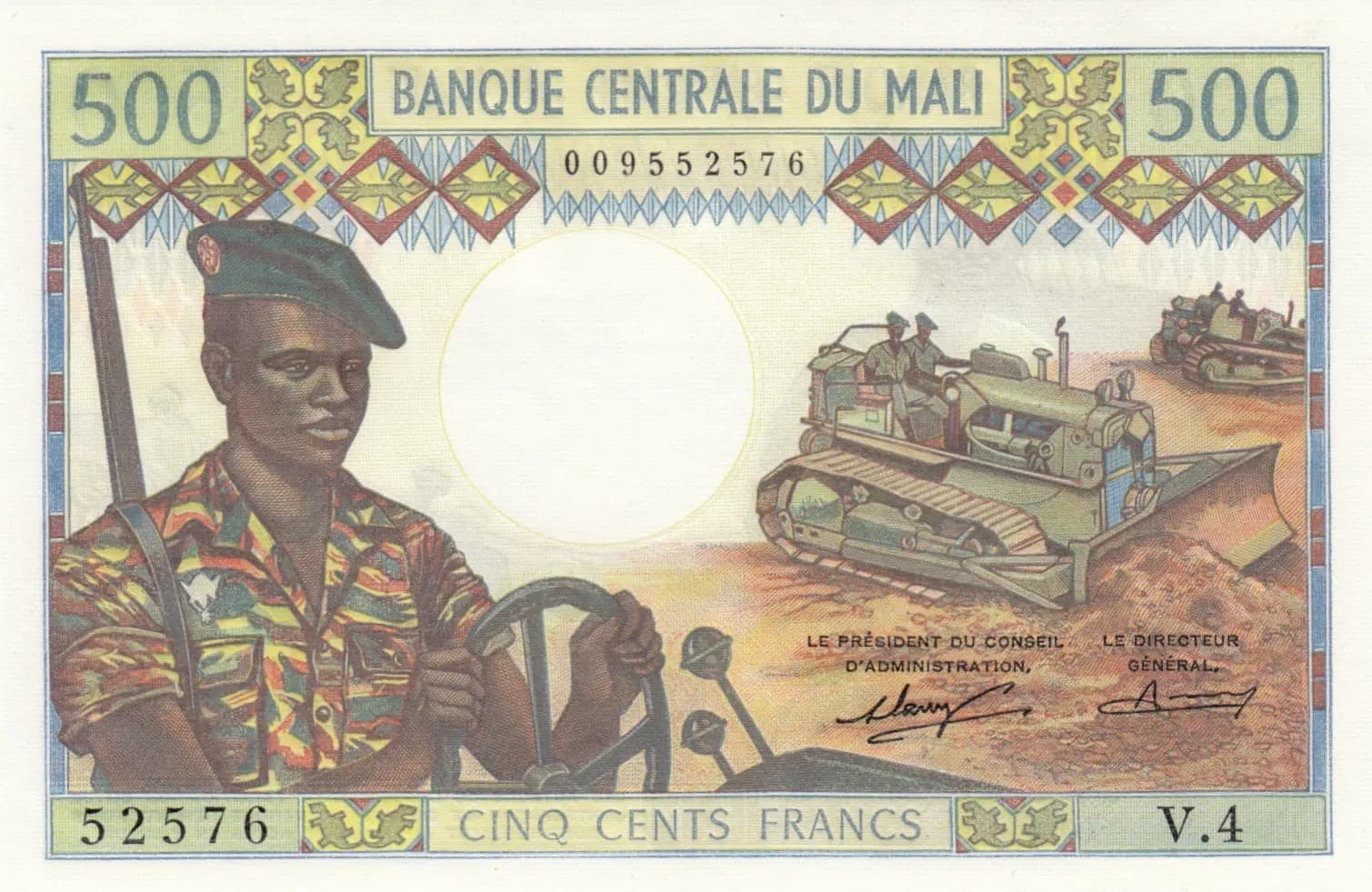
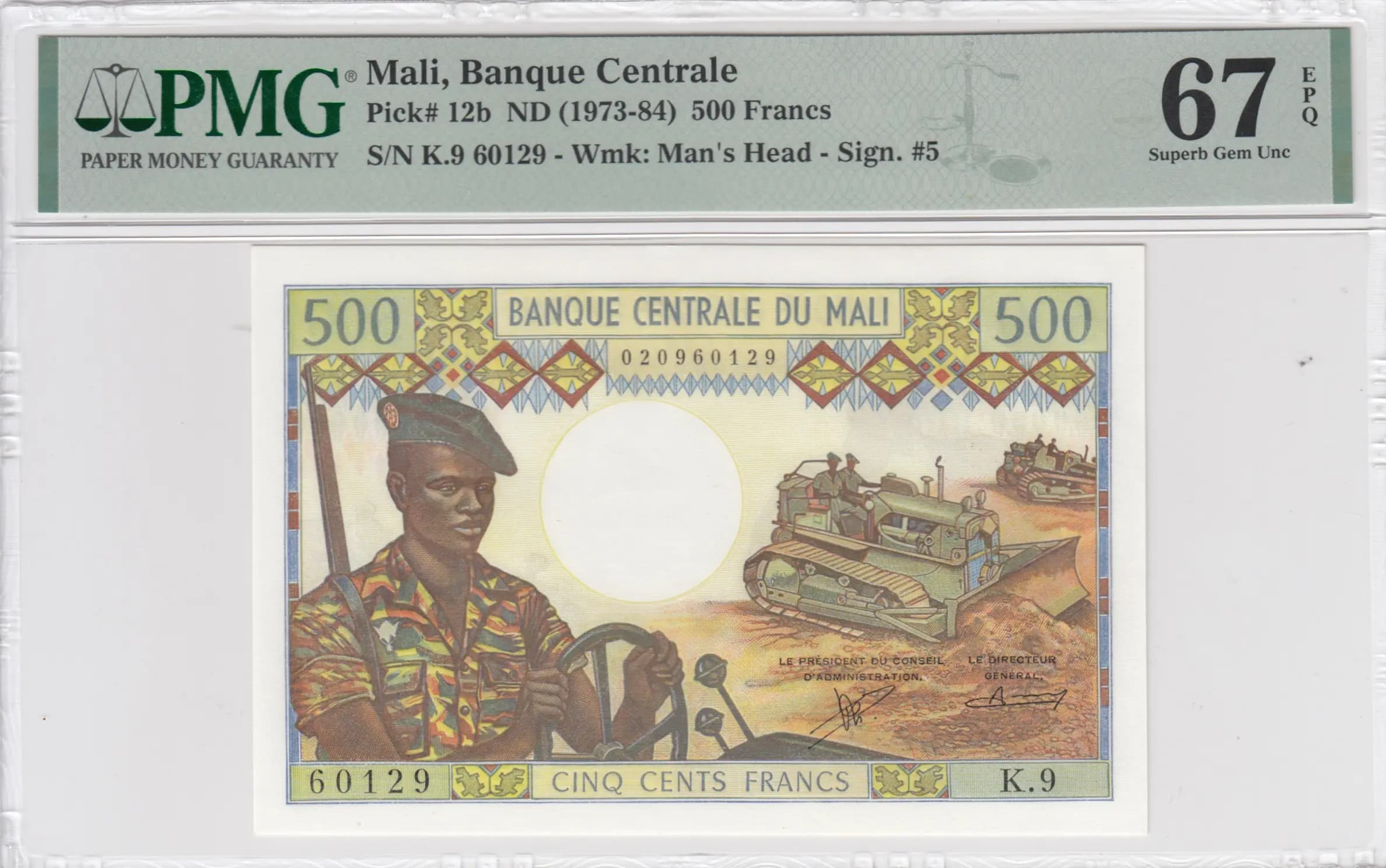
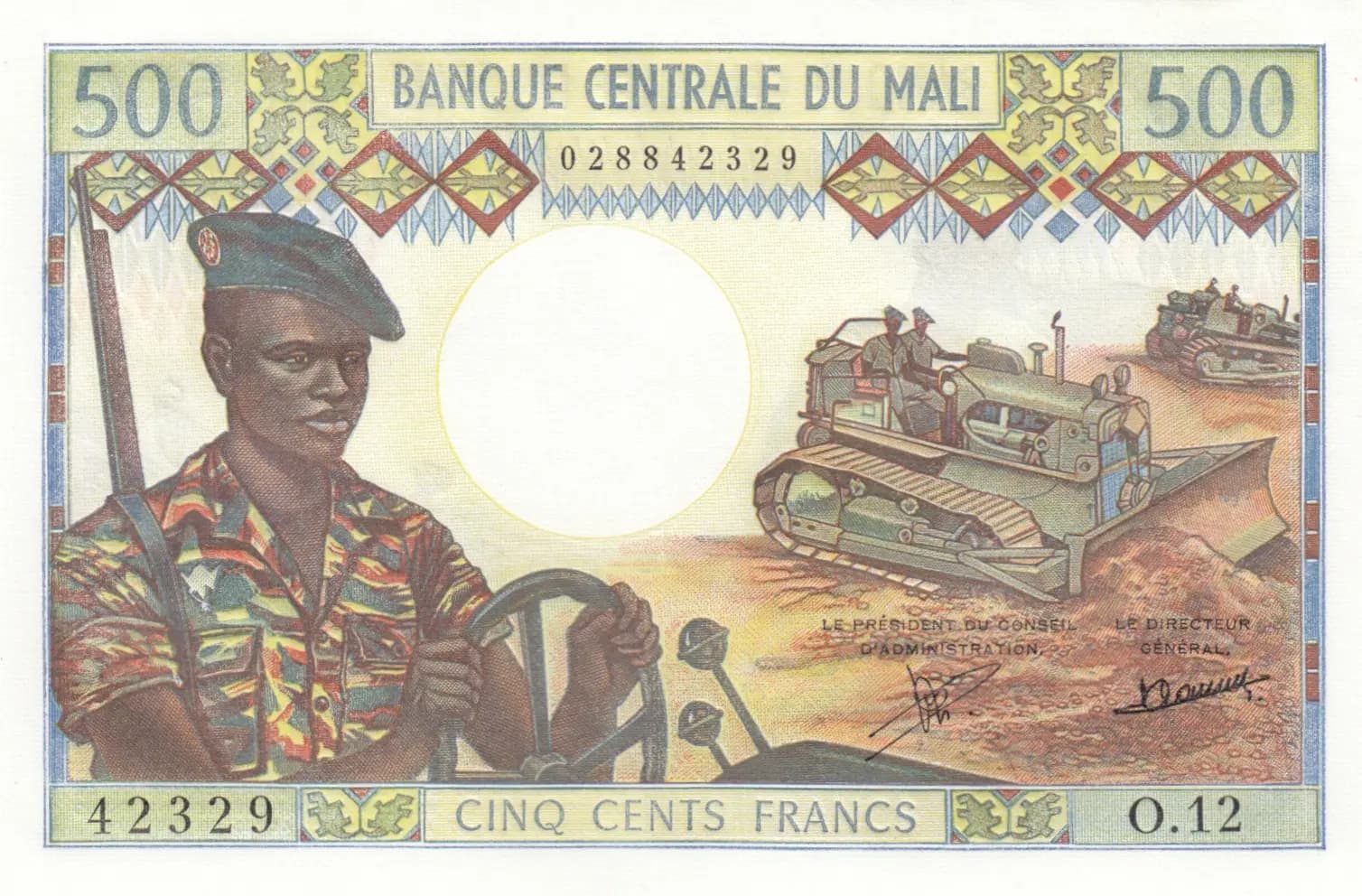
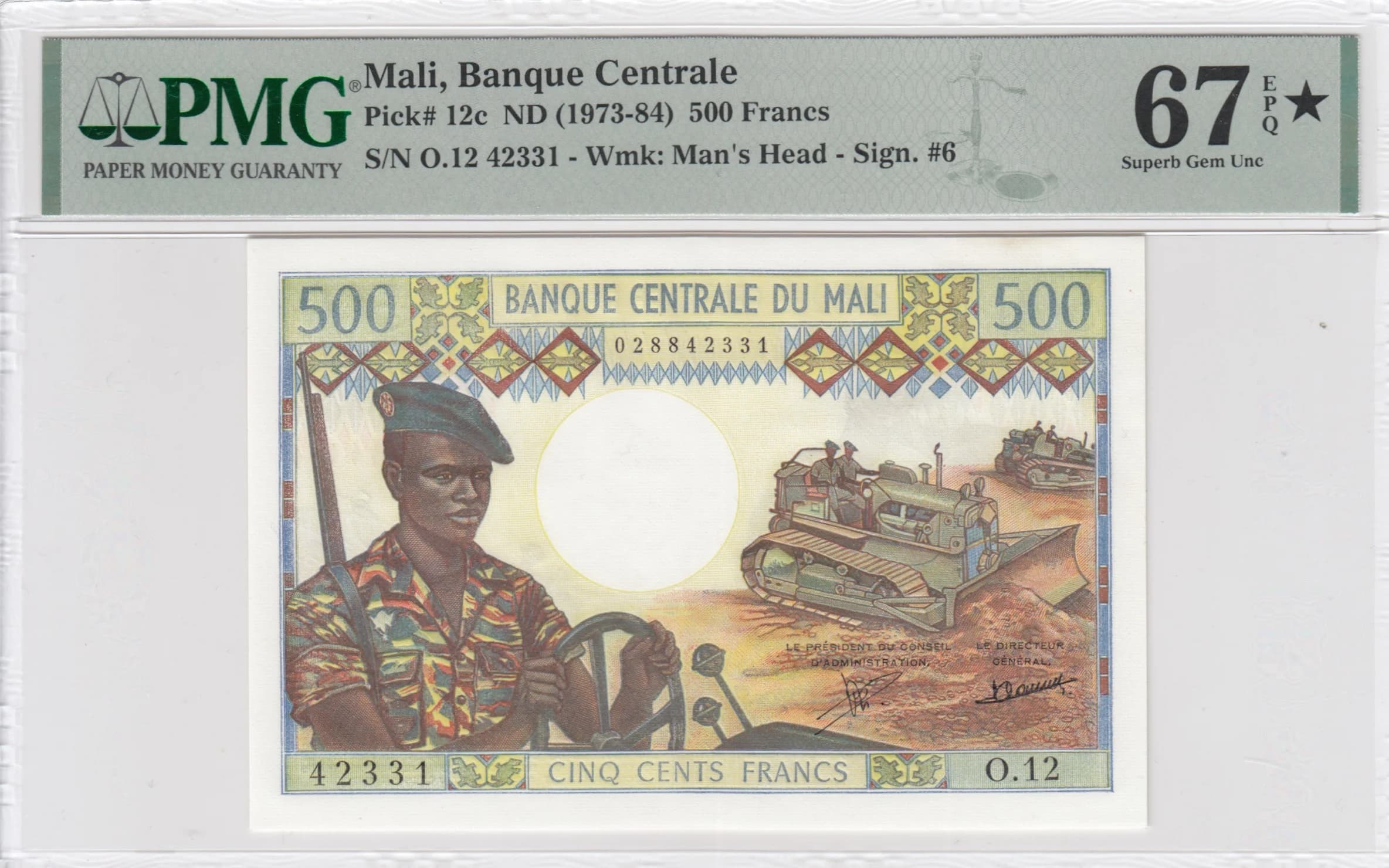
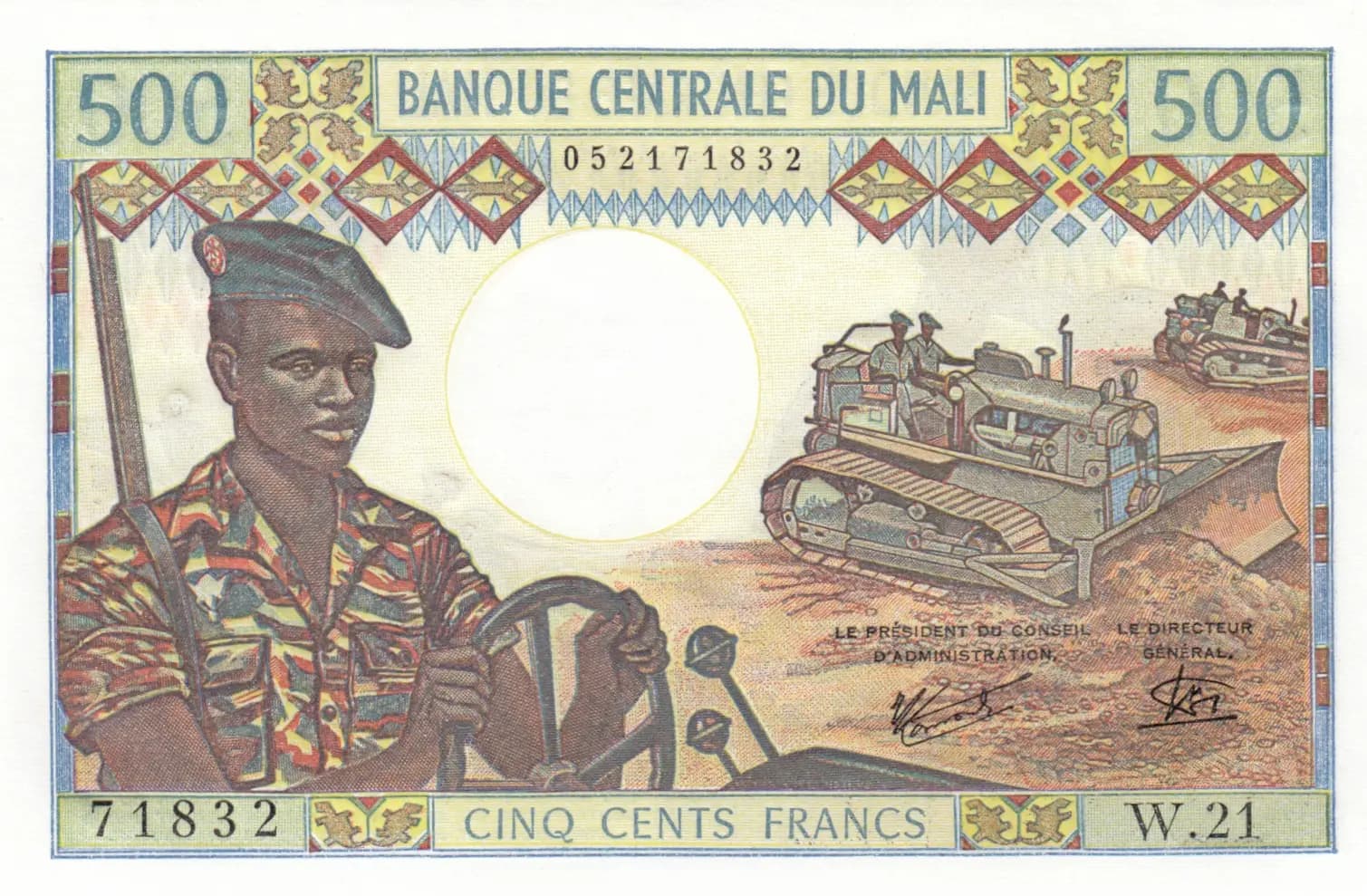
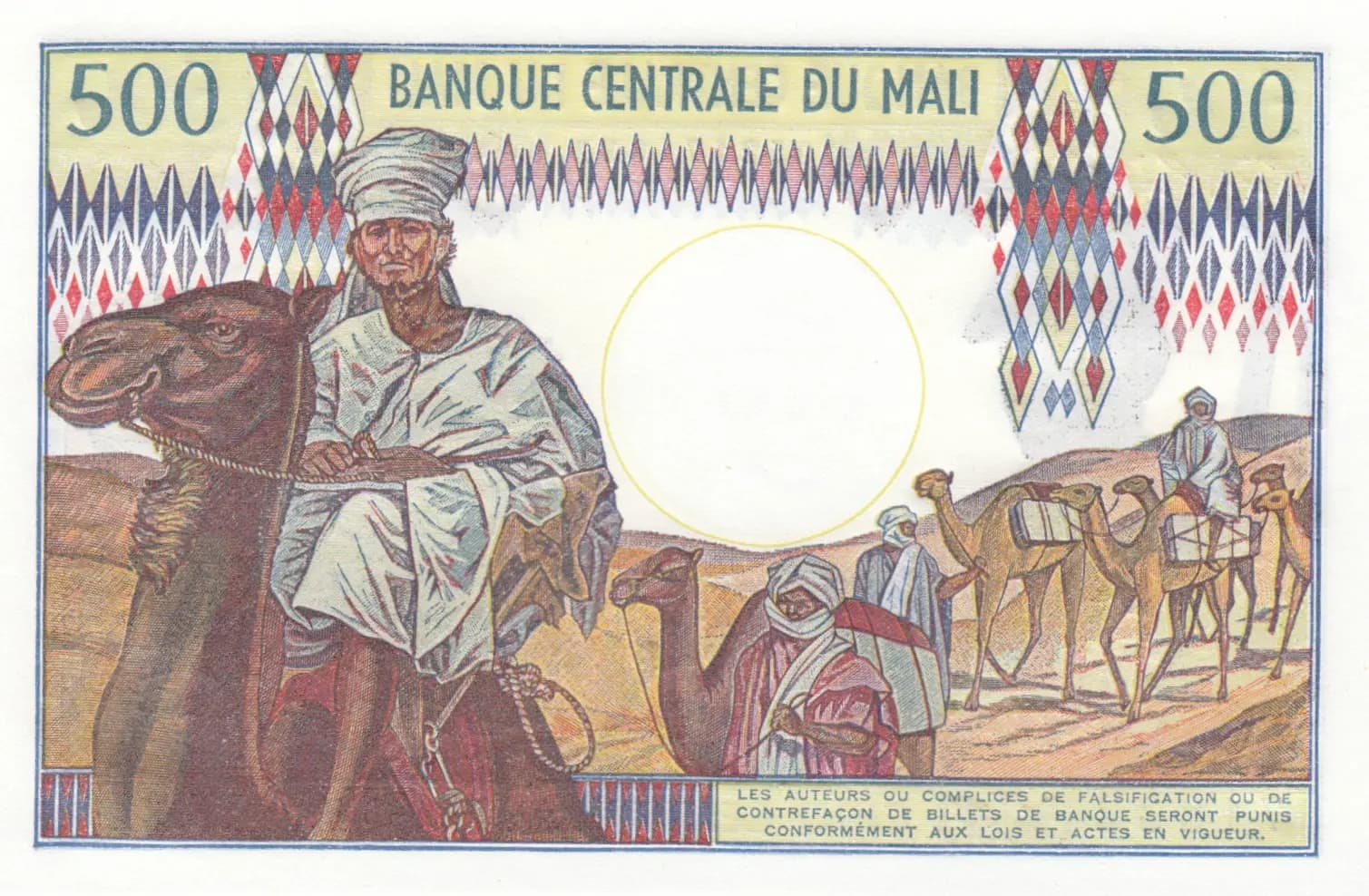
A striking Uncirculated example of Mali's 500 Francs from 1973, featuring vibrant multicolored imagery celebrating the nation's military and agricultural heritage on the obverse and nomadic traditions on the reverse. The note displays crisp printing with no signs of circulation, excellent color saturation, and sharp detail throughout—typical characteristics of an uncirculated specimen. This P-12e variant represents an important early issue from the Banque Centrale du Mali during the post-independence period.
Common. eBay market data shows consistent availability with numerous sales across all condition grades from 2012 to 2025, with UNC examples regularly selling in the $50–$100 range. The 1973-1984 date range (P-12a through P-12f variants) indicates a substantial, sustained print run over more than a decade. Current catalog values of $70 for UNC and robust secondary market activity confirm this is a readily obtainable note for collectors, with no evidence of scarcity or limited issuance.
Issued in 1973 during Mali's early years following independence (1960), this banknote commemorates the nation's modernization efforts and cultural identity through its dual imagery: the soldier with rifle and industrial tractors on the obverse symbolize national security and agricultural development, while the horseman and camel caravan on the reverse honor Mali's Saharan heritage and pastoral traditions. The prominence of these themes reflects the young nation's attempt to balance modernization with respect for its diverse ethnic and nomadic populations.
The obverse features a left-facing profile portrait of a Malian soldier in traditional West African dress—a patterned tunic and cap—holding a rifle, positioned on the left side of the note. To the right, a scene of modern agricultural and industrial machinery (tractors and construction equipment) occupies the landscape, symbolizing national development. The reverse depicts a Tuareg or North African horseman in profile on the left, wearing traditional indigo or light-colored robes and head wrapping, mounted on a decorated horse. The right side shows a desert caravan scene with multiple figures and camels in an arid landscape, representing the nomadic pastoral heritage of Mali's Saharan regions. Both sides feature decorative geometric border patterns in red, blue, yellow, and cream colors—diamond and chevron motifs typical of West African textile traditions. Prominent circular watermark areas occupy the center-right of both sides, bordered in yellow.
FRONT: 'BANQUE CENTRALE DU MALI' (Central Bank of Mali), 'CINCO CENTS FRANCS' (Five Hundred Francs), '500' (denomination), 'LE PRÉSIDENT DU CONSEIL D'ADMINISTRATION' (President of the Board of Administration), 'LE DIRECTEUR GÉNÉRAL' (General Director), serial number '052171832', and designation 'W.21'. BACK: 'BANQUE CENTRALE DU MALI' (Central Bank of Mali), '500' (denomination), and the anti-counterfeiting warning: 'LES AUTEURS OU COMPLICES DE FALSIFICATION OU DE CONTREFAÇON DE BILLETS DE BANQUE SERONT PUNIS CONFORMÉMENT AUX LOIS ET ACTES EN VIGUEUR' (The authors or accomplices of falsification or counterfeiting of banknotes will be punished in accordance with the laws and acts in force).
Multicolor offset lithography, characteristic of mid-20th-century central bank security printing. The crisp registration, even color saturation across blue, brown, red, and yellow inks, and the detailed portrait work suggest professional security printing, likely produced by an established European or American banknote printer such as Thomas De La Rue, Waterlow & Sons, or similar institutions that frequently contracted with newly independent African nations during this period.
This note is identified as Pick P-12e, one of six known variants (P-12a through P-12f) cataloged for the 500 Francs denomination from the 1973–1984 period. Varieties within this series likely reflect printing date changes, signature variations, or serial number prefix differences across the extended issuance window. The serial number format '052171832' and designation 'W.21' visible on this specimen may indicate a specific printing lot or security features unique to the P-12e variant, though detailed variety characteristics would require comparison with other variants in the series.