500 francs 1973
Market Prices
16 salesAbout This Note
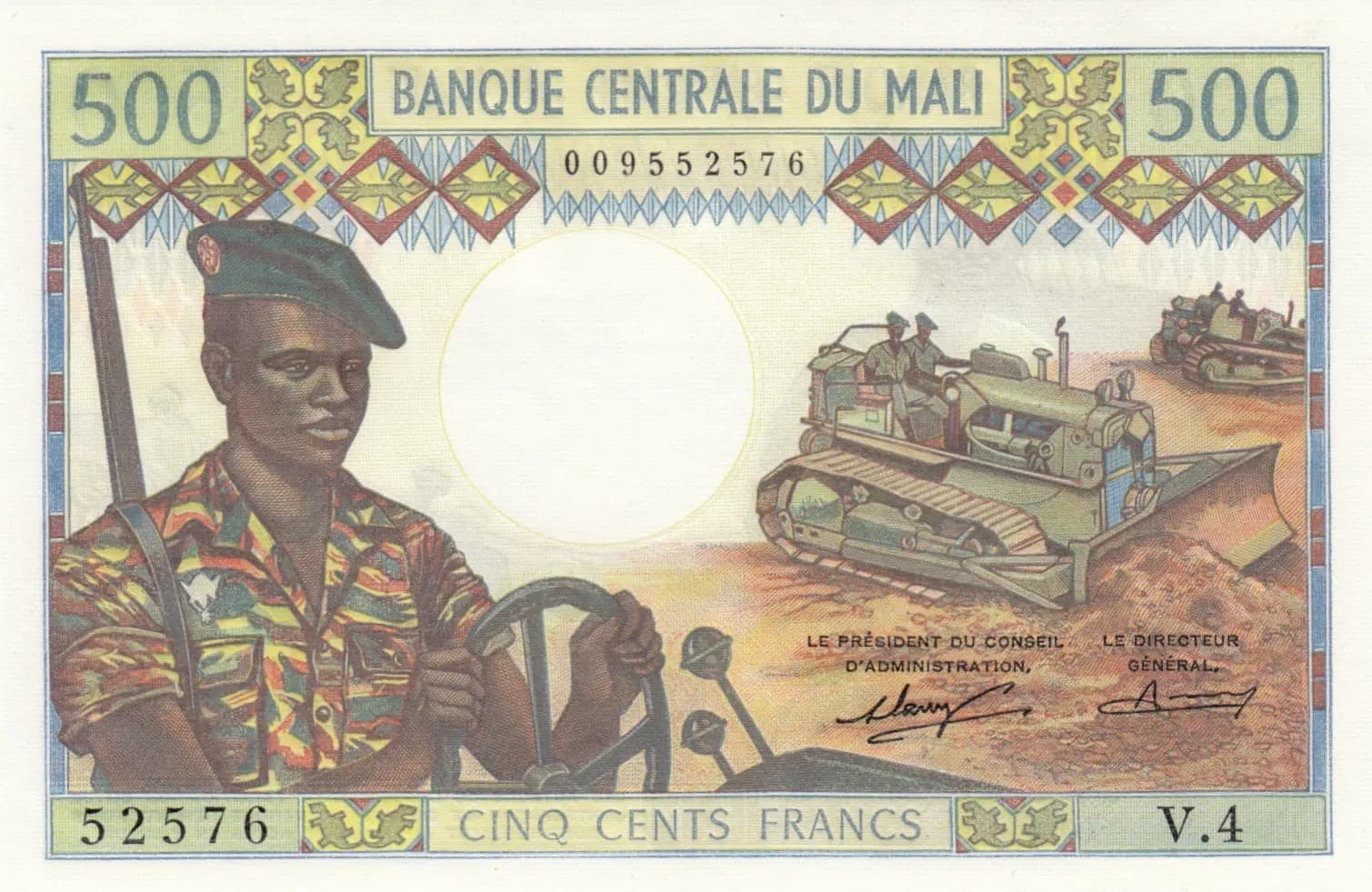
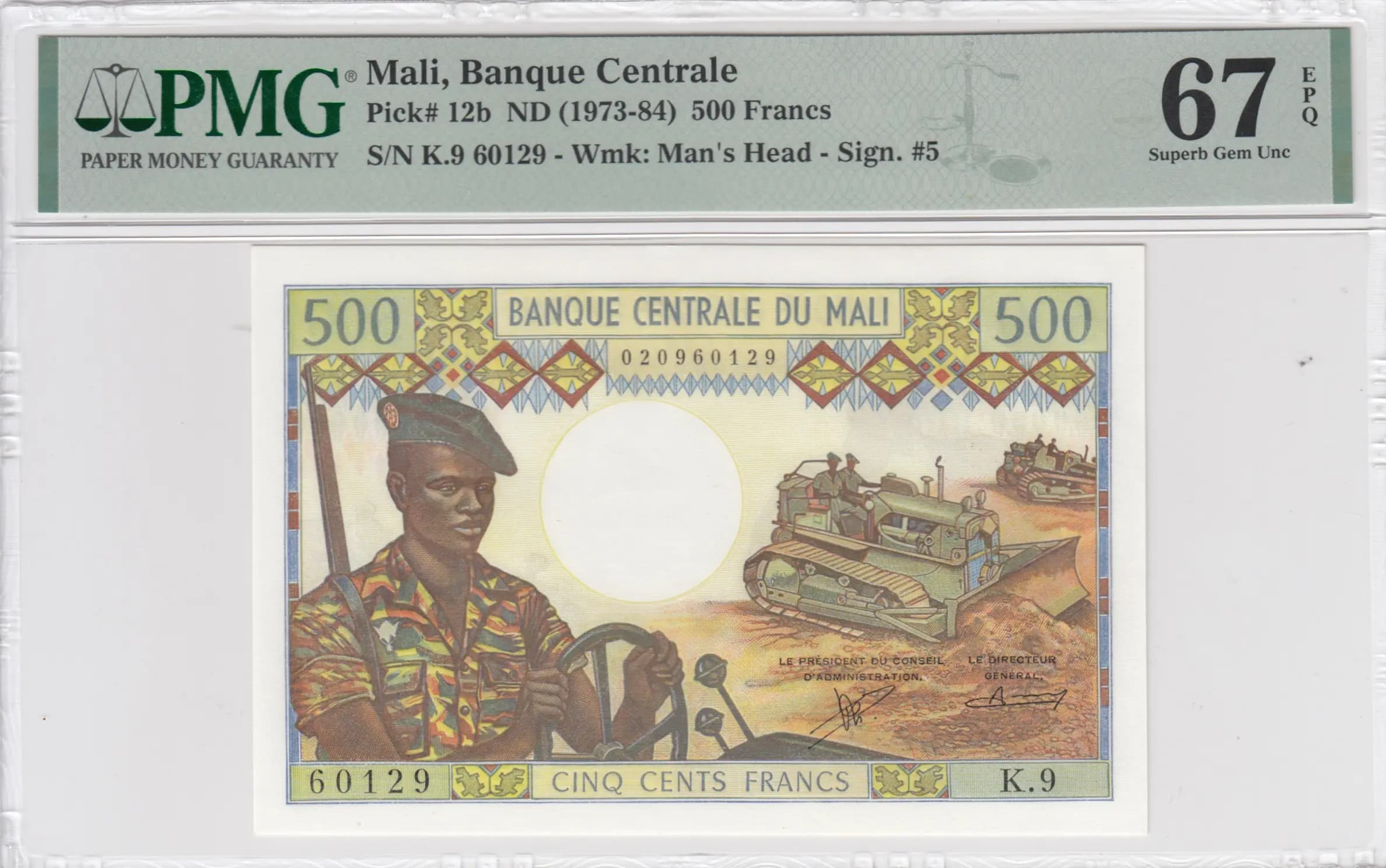
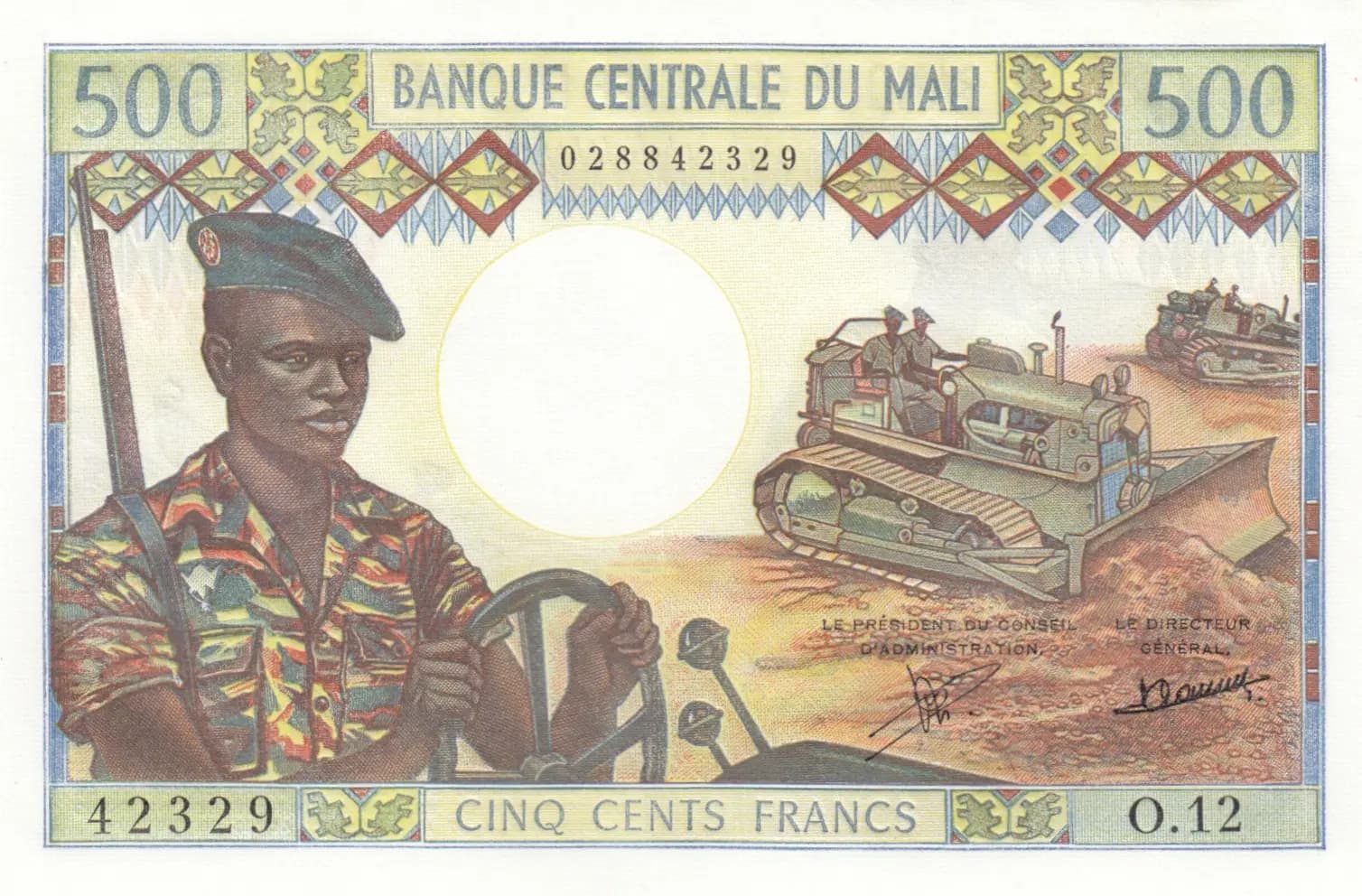
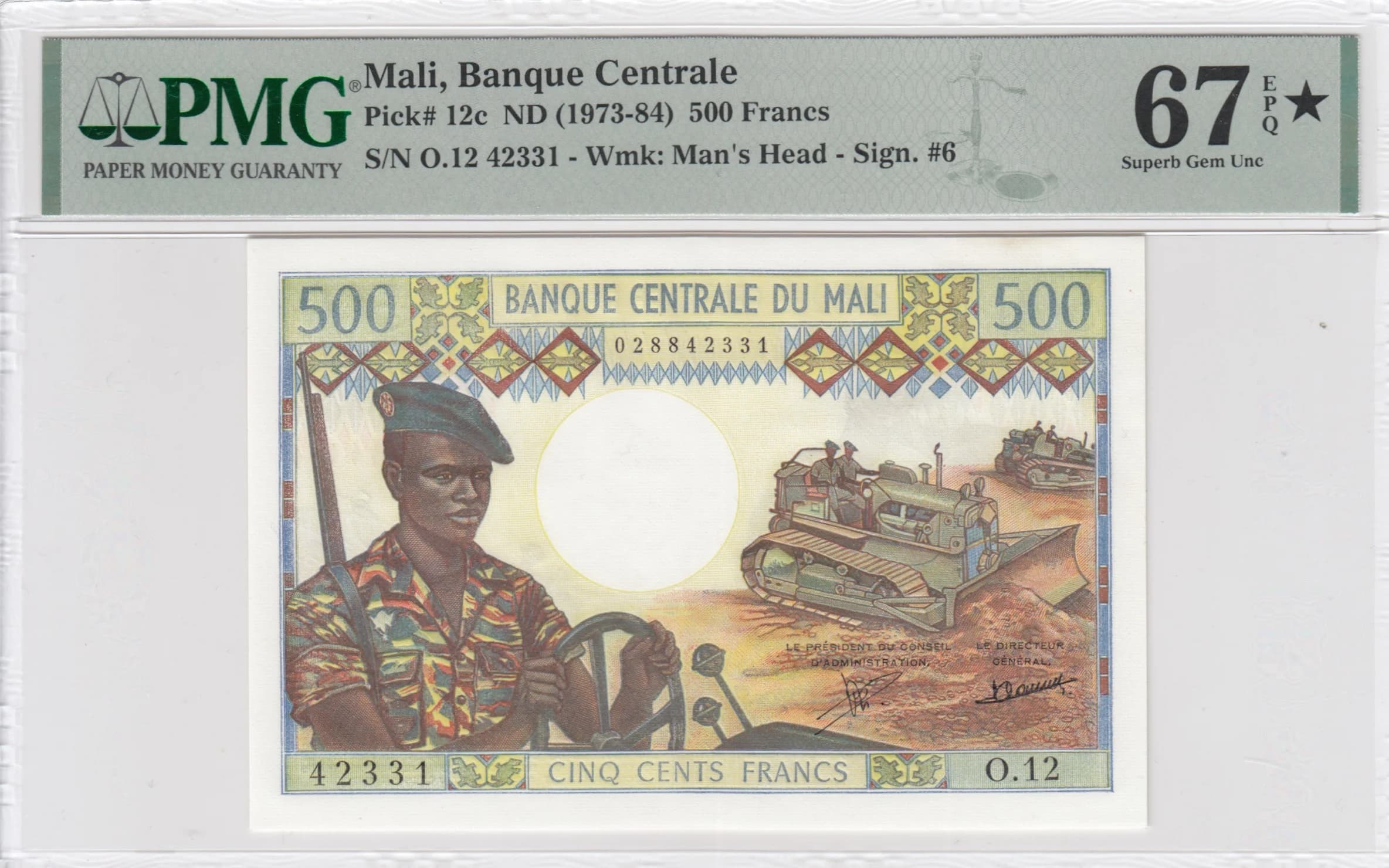
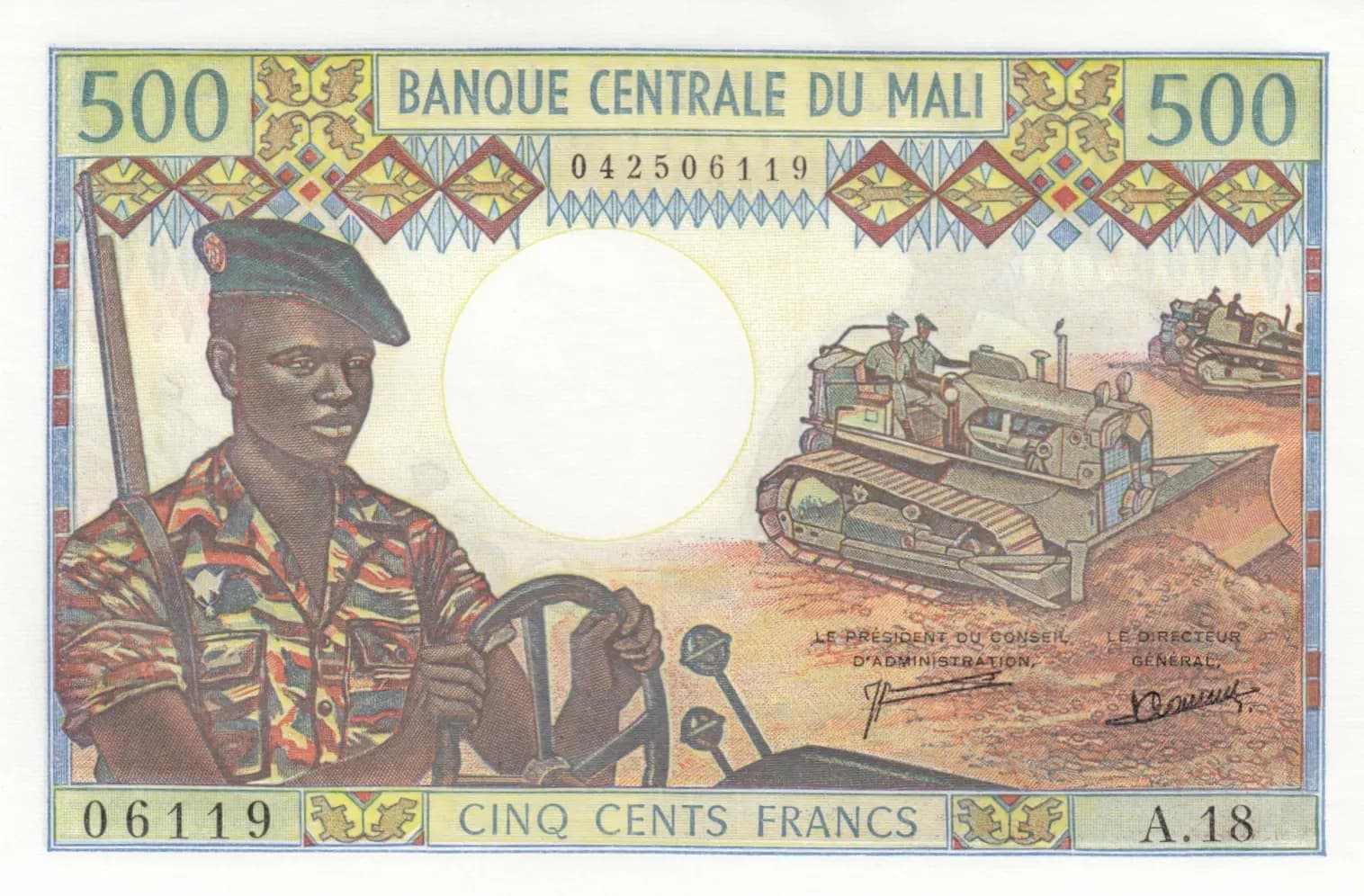
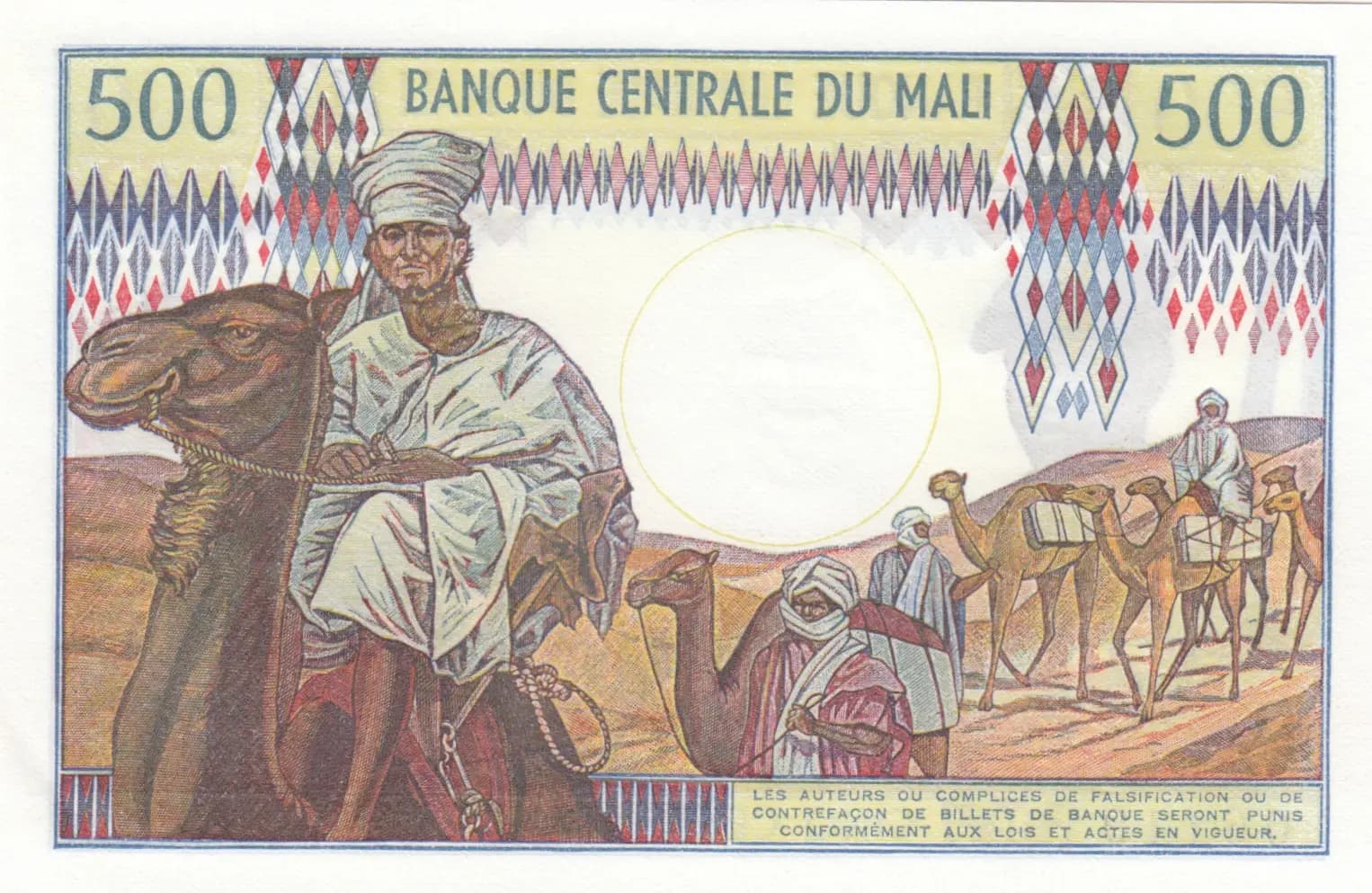
This is an uncirculated example of the Mali 500 Francs P-12d from 1973, issued by the Banque Centrale du Mali. The note displays vibrant multicolored design with brown, yellow, cream, blue, and red tones, featuring a soldier in traditional patterned dress on the obverse and a camel caravan scene on the reverse. In UNC condition, this note represents excellent preservation of a mid-20th century West African banknote with strong eye appeal and historical significance.
Common. The 500 Francs denomination from 1973-1984 (P-12 series) was produced in significant quantities for regular circulation. eBay market data shows consistent sales at modest prices ($37-$125 range), with UNC examples typically selling in the $70-$80 range as of 2019-2022. The existence of six catalogued varieties (P-12a through P-12f) within the same base denomination indicates substantial printing runs across multiple plates or printing sessions. No evidence of rarity or scarcity; this is a standard issue from a functional central bank.
This 1973 banknote was issued during Mali's early post-independence period under the rule of Moussa Traoré's military government. The obverse imagery of a soldier with modern industrial equipment (tractors) reflects the nation's aspirations toward agricultural modernization and military strength, while the reverse depicts the traditional camel caravan—a reference to Mali's historical importance as a hub of trans-Saharan trade and the legendary routes that defined the Mali Empire and Songhai Empire periods.
The obverse features a uniformed soldier or military officer positioned on the left, wearing traditional Malian dress with bold geometric patterned textiles in red, yellow, and blue, along with a dark blue cap, holding what appears to be a walking staff or ceremonial implement. To the right, industrial tractors and bulldozers work on sandy desert terrain, symbolizing national development. The reverse depicts a Saharan caravan scene with a man in traditional white robes and turban mounted on a camel on the left, with additional figures and camels visible in the desert landscape on the right, evoking Mali's historical role in trans-Saharan trade. Both sides feature a large circular watermark area in the center and ornamental geometric borders with diamond and interlocking patterns characteristic of West African design traditions.
Front side: 'BANQUE CENTRALE DU MALI' (Central Bank of Mali), 'CINQ CENTS FRANCS' (Five Hundred Francs), '500' (denomination), 'LE PRÉSIDENT DU CONSEIL, LE DIRECTEUR D'ADMINISTRATION, GÉNÉRAL' (The President of the Council, The Director of Administration, General), with serial numbers 'A.18' and '0425061119'. Back side: 'BANQUE CENTRALE DU MALI' (Central Bank of Mali), '500' (denomination), 'LES AUTEURS OU COMPLICES DE FALSIFICATION OU DE CONTREFAÇON DE BILLETS DE BANQUE SERONT PUNIS CONFORMÉMENT AUX LOIS ET ACTES EN VIGUEUR' (The authors or accomplices of falsification or counterfeiting of banknotes will be punished in accordance with laws and acts in force).
Multicolor offset lithography with intaglio elements, typical of 1970s-era banknote production. The note exhibits the characteristic color separation and registration associated with professional security printing of the period. The geometric border patterns and portrait work suggest commercial banknote printing technology of the era, likely produced by a European or international security printer contracted by the Banque Centrale du Mali.
This note is catalogued as P-12d, one of six known varieties within the 500 Francs 1973 Pick series. Varieties within this series are distinguished by signature combinations and serial number prefixes reflecting different printing periods or plate variants between 1973-1984. The serial number prefix 'A.18' visible on this specimen may indicate a specific printing designation, but without access to detailed variety guides distinguishing P-12a through P-12f characteristics, specific identification of what differentiates this P-12d from other variants in the series cannot be definitively stated from the visual evidence alone.