10 ringgit 1972
Market Prices
19 salesAbout This Note
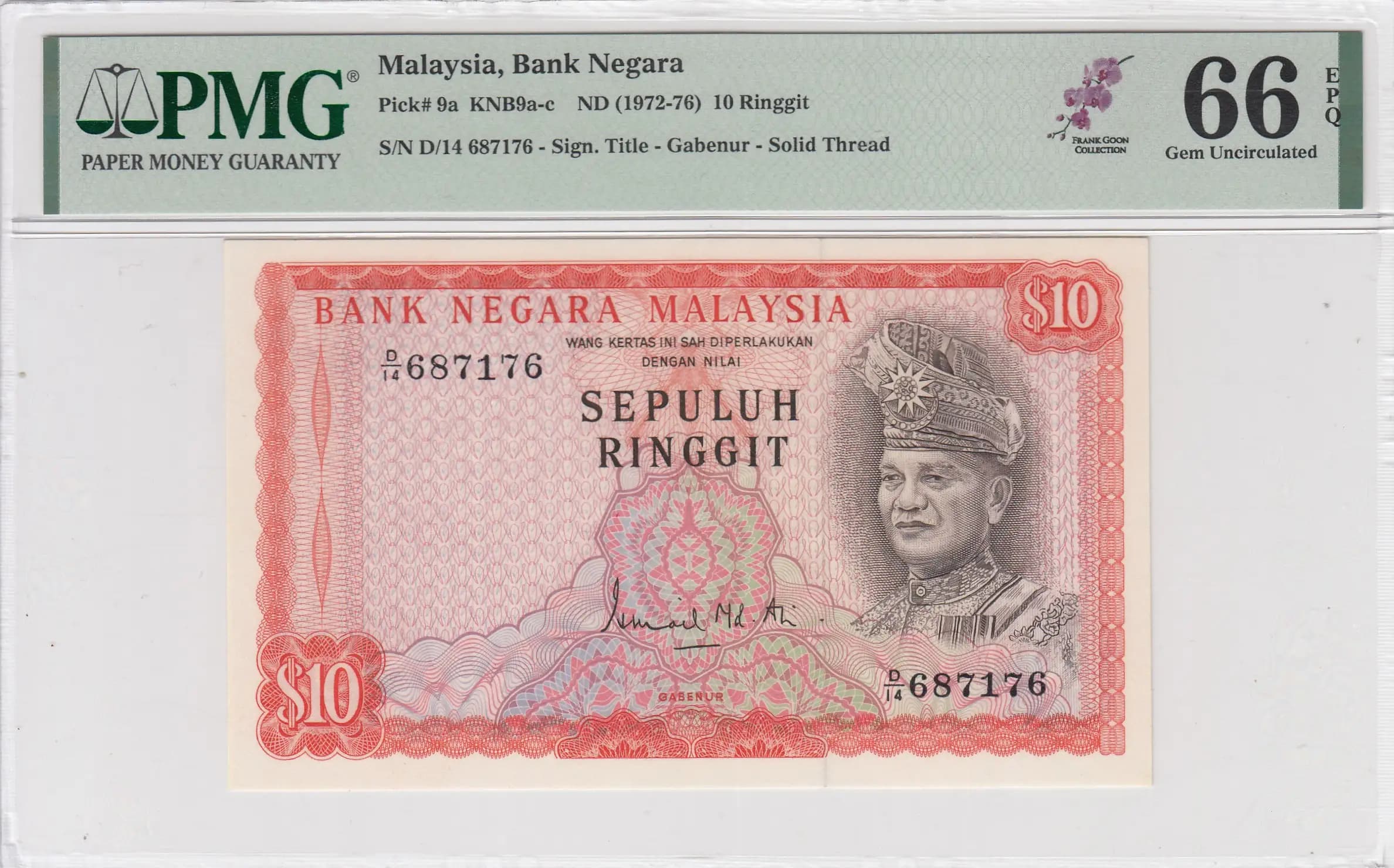
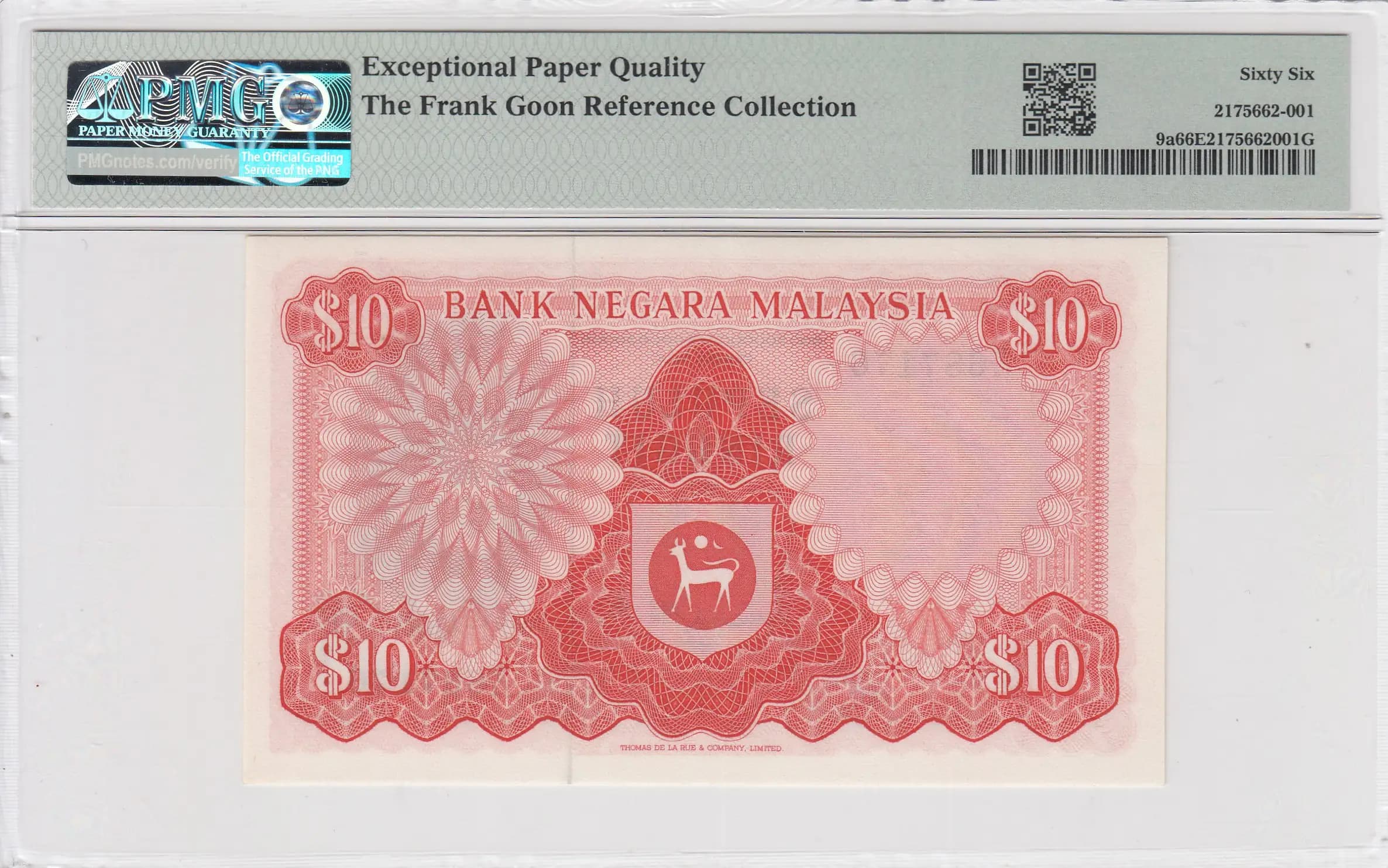
This is a pristine example of Malaysia's first series 10 Ringgit banknote from 1972, graded PMG 66 Gem Uncirculated EPQ. The note features an elegant portrait of Tuanku Abdul Rahman in traditional Malay ceremonial dress on the obverse, complemented by intricate red and pink intaglio printing with ornate geometric patterns throughout. This particular specimen exhibits the 'new spelling' DIPERLAKUKAN variant and represents an important early issue from Bank Negara Malaysia with exceptional eye appeal and preservation.
Common. While this is the first series 10 Ringgit from 1972, market data from realbanknotes.com shows regular auction activity with multiple PMG 66 examples selling between $82-$255 since 2016. The catalog value for VF condition is listed at $15 and UNC at $75 (2019 estimate), indicating robust supply in the collector market. The note had a substantial print run from a major established security printer, and examples remain readily available to collectors.
Issued in 1972, this banknote marks Malaysia's early post-independence currency period under the leadership of King Tuanku Abdul Rahman, whose portrait appears prominently on the obverse. The elaborate geometric patterns and traditional Malay iconography reflect the nation's cultural identity during a formative period of economic development. The Thomas De La Rue printing attribution underscores Malaysia's reliance on established British security printers for its nascent national currency.
The obverse features a formal portrait of Tuanku Abdul Rahman, the first Yang di-Pertuan Agong (King) of Malaysia, depicted wearing the tengkolok (traditional Malay royal headdress) and formal regalia positioned on the right side of the note. The central design elements include an ornate floral seal or emblem representing national authority, flanked by decorative rosette patterns. The reverse displays an elaborate symmetrical composition with a central circular medallion containing a stylized national emblem or figure, surrounded by four large corner ornaments with radiating geometric patterns creating a mandala-like aesthetic. The entire design employs fine-line intaglio work with intricate geometric borders and scalloped edges, typical of high-security currency from this era.
FRONT: 'BANK NEGARA MALAYSIA' (Bank Negara Malaysia / National Bank of Malaysia); '10' and 'SEPULUH RINGGIT' (Ten Ringgit); 'WANG KERTAS INI SAH DIPERLAKUKAN DENGAN NILAI' (This banknote is legal tender with the value [indicated]); Serial number 'D/14 687176'. BACK: 'BANK NEGARA MALAYSIA' (Bank Negara Malaysia); '10' (Ten Ringgit denomination); 'THOMAS DE LA RUE & COMPANY, LIMITED' (printer attribution).
Intaglio printing (line engraving), executed by Thomas De La Rue & Company Limited, London. The note exhibits the characteristic fine-line work, deep impression, and crisp detail typical of intaglio-printed currency. Security features include a solid security thread and watermark (tiger's head), along with the inherent security provided by the extremely complex geometric patterns and repeating designs that are difficult to counterfeit.
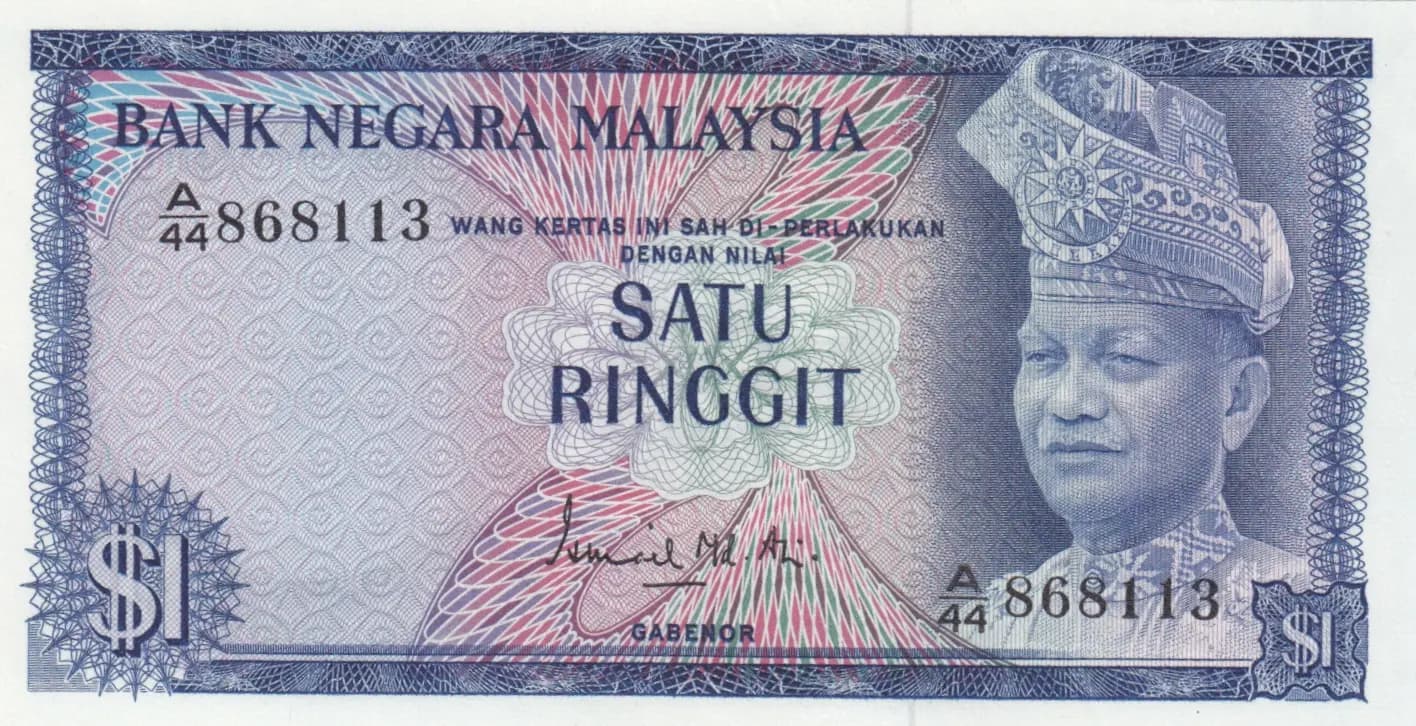
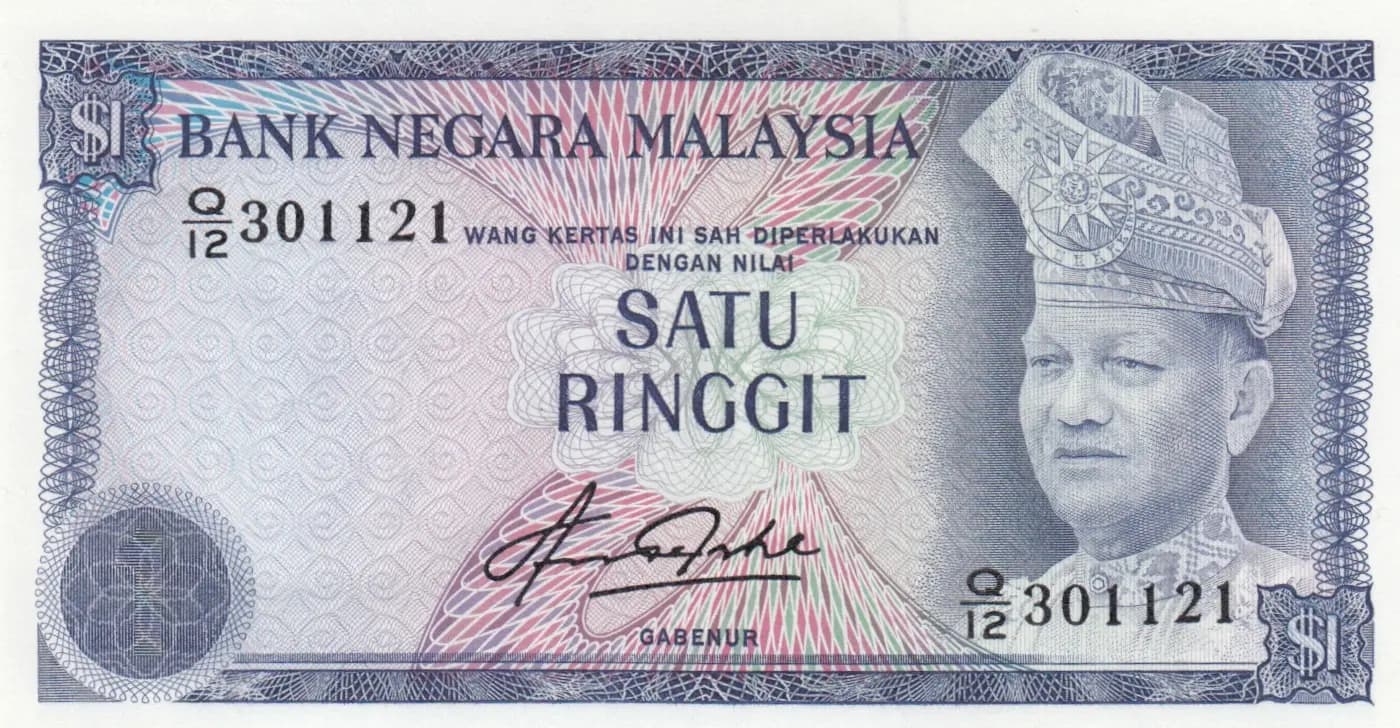
This specimen exhibits the P-9a variety characteristics: the 'new spelling' DIPERLAKUKAN (versus the earlier 'DI-PERLAKUKAN' found on P-3), and the signature title spelled as GABENUR (versus GABENOR on earlier issues). The solid security thread variant without latent numerals distinguishes this from later varieties P-15 and P-15a which feature latent numerals at the lower left on the front. Serial number prefix 'D/14' is consistent with this printing period.