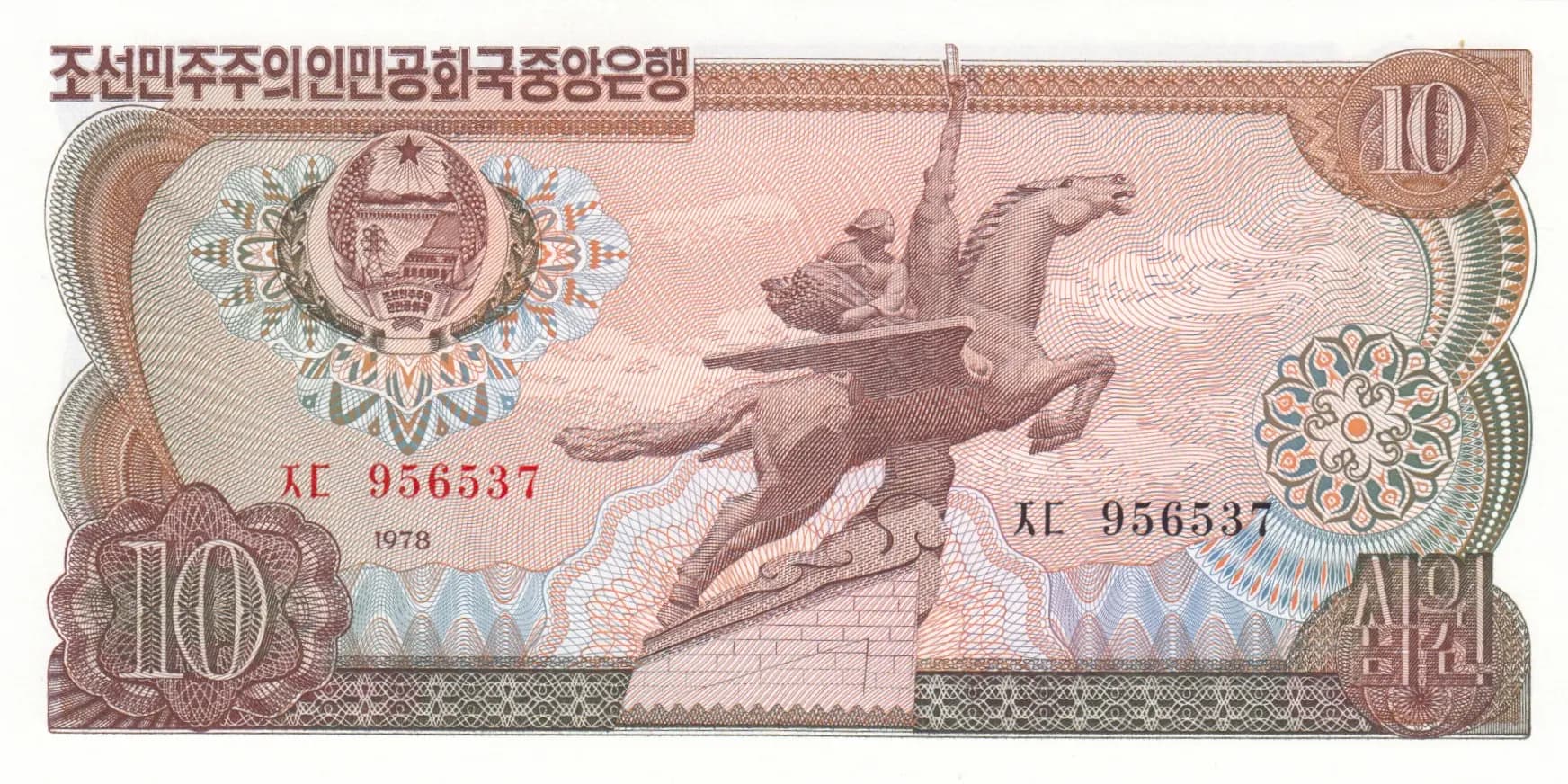
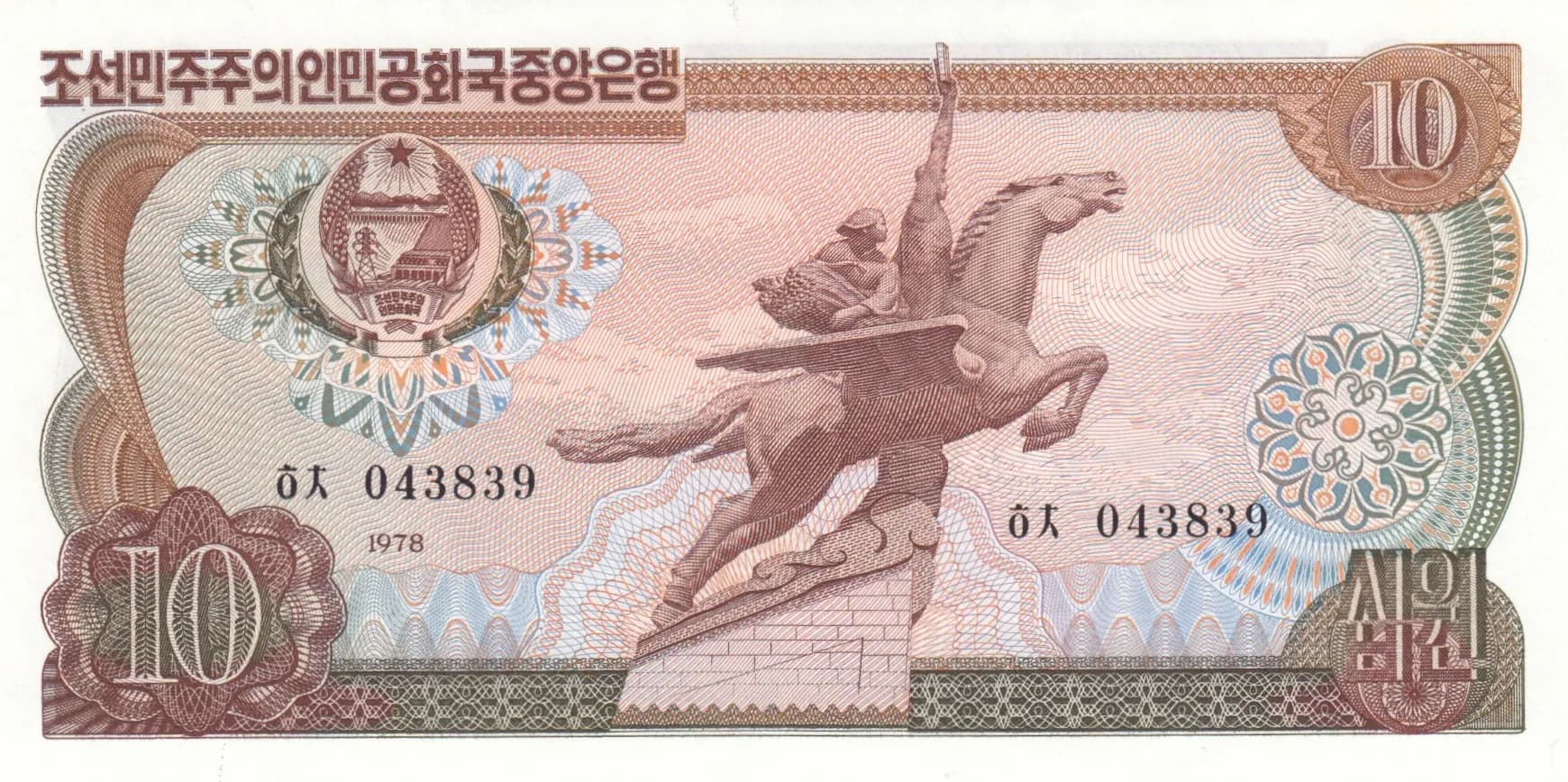
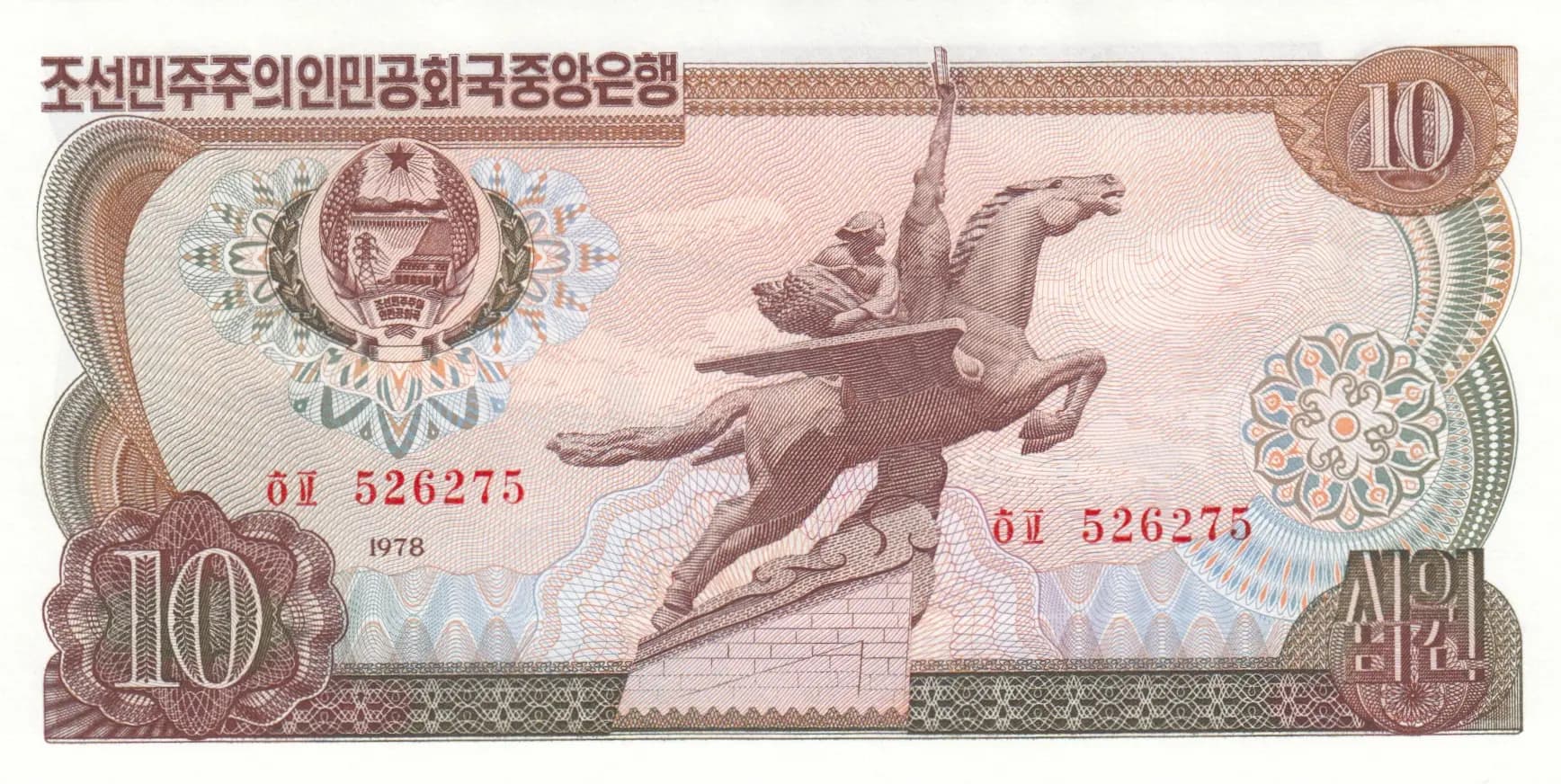
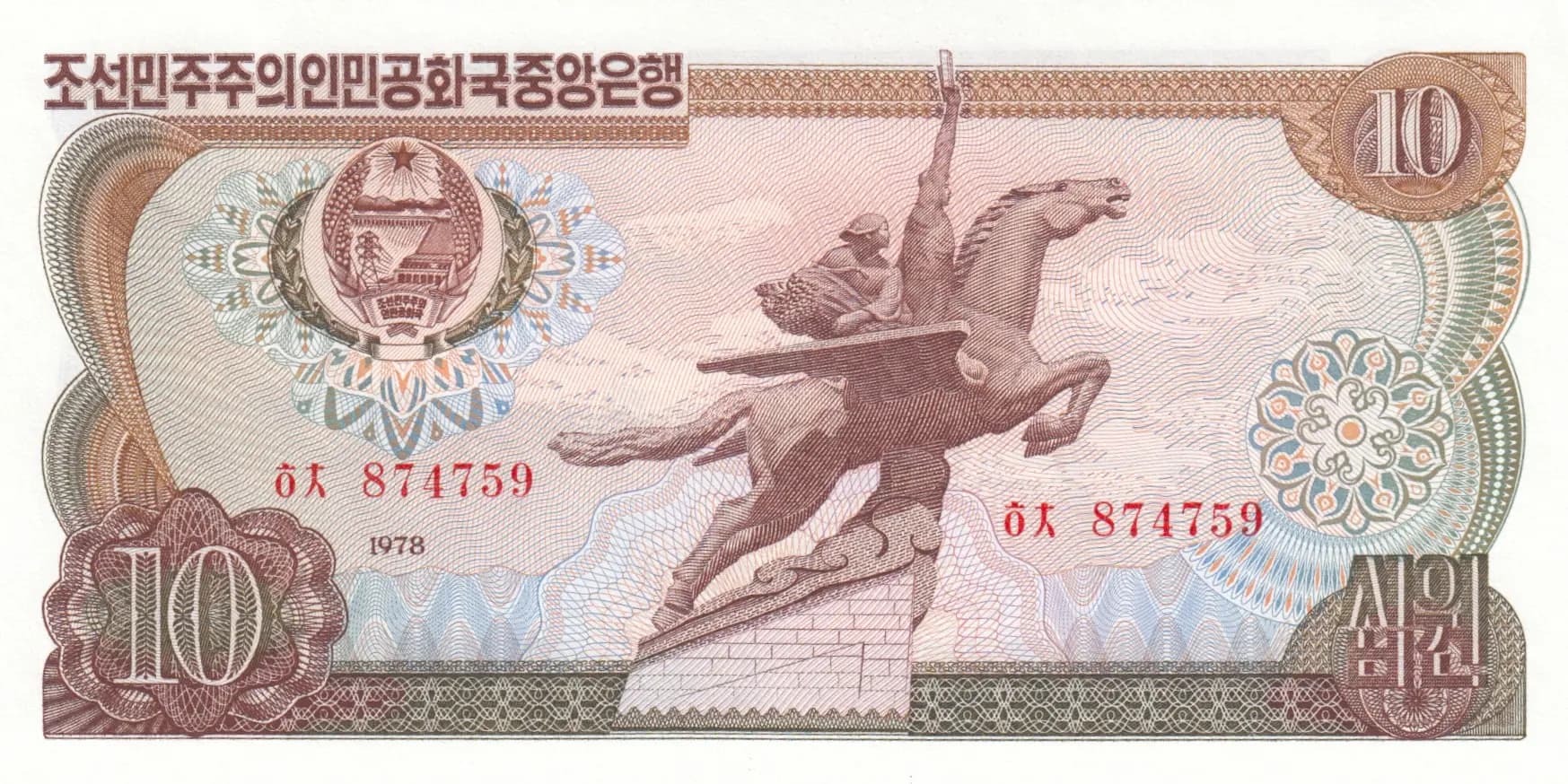
10 won 1978
About This Note
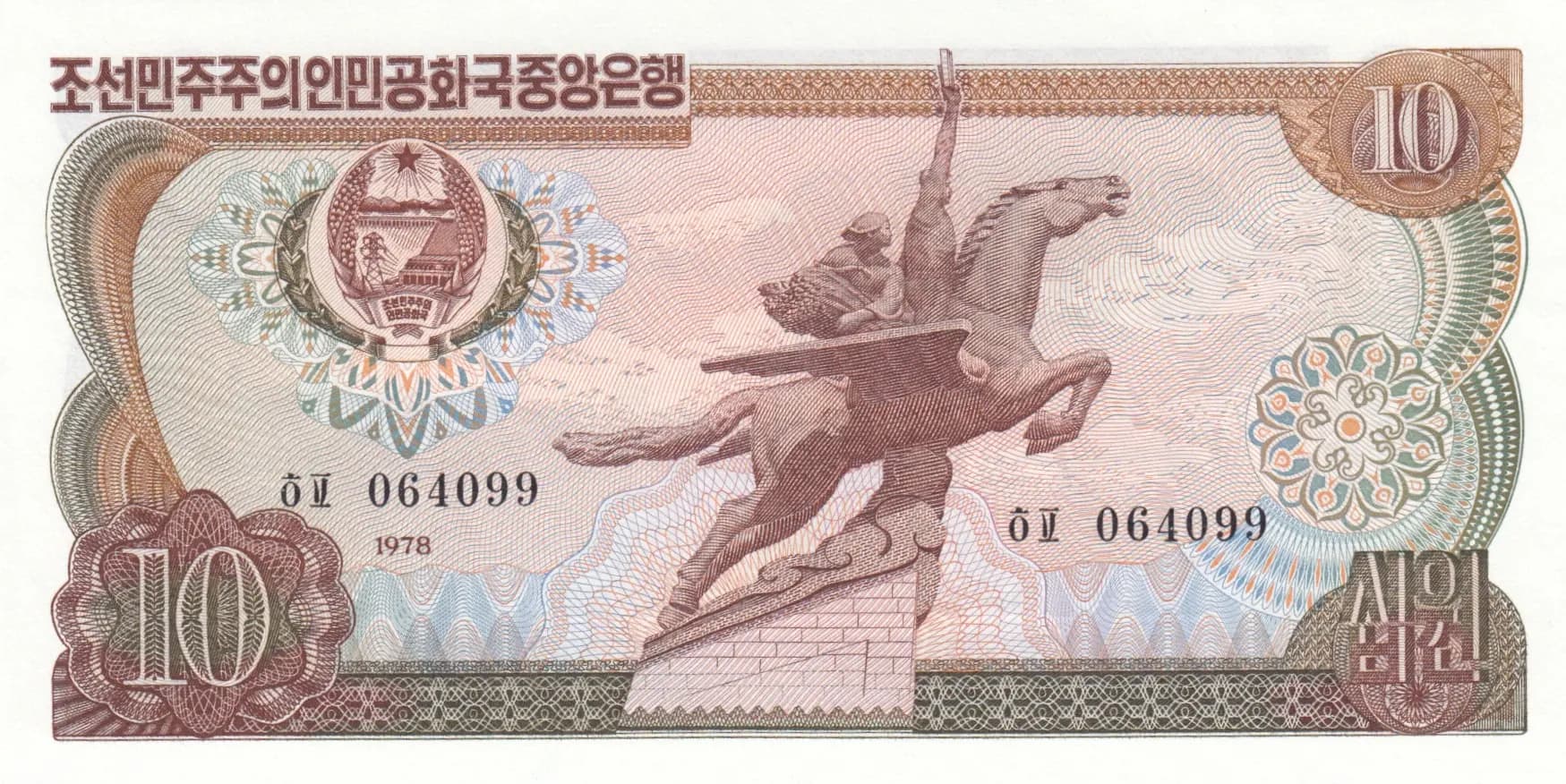
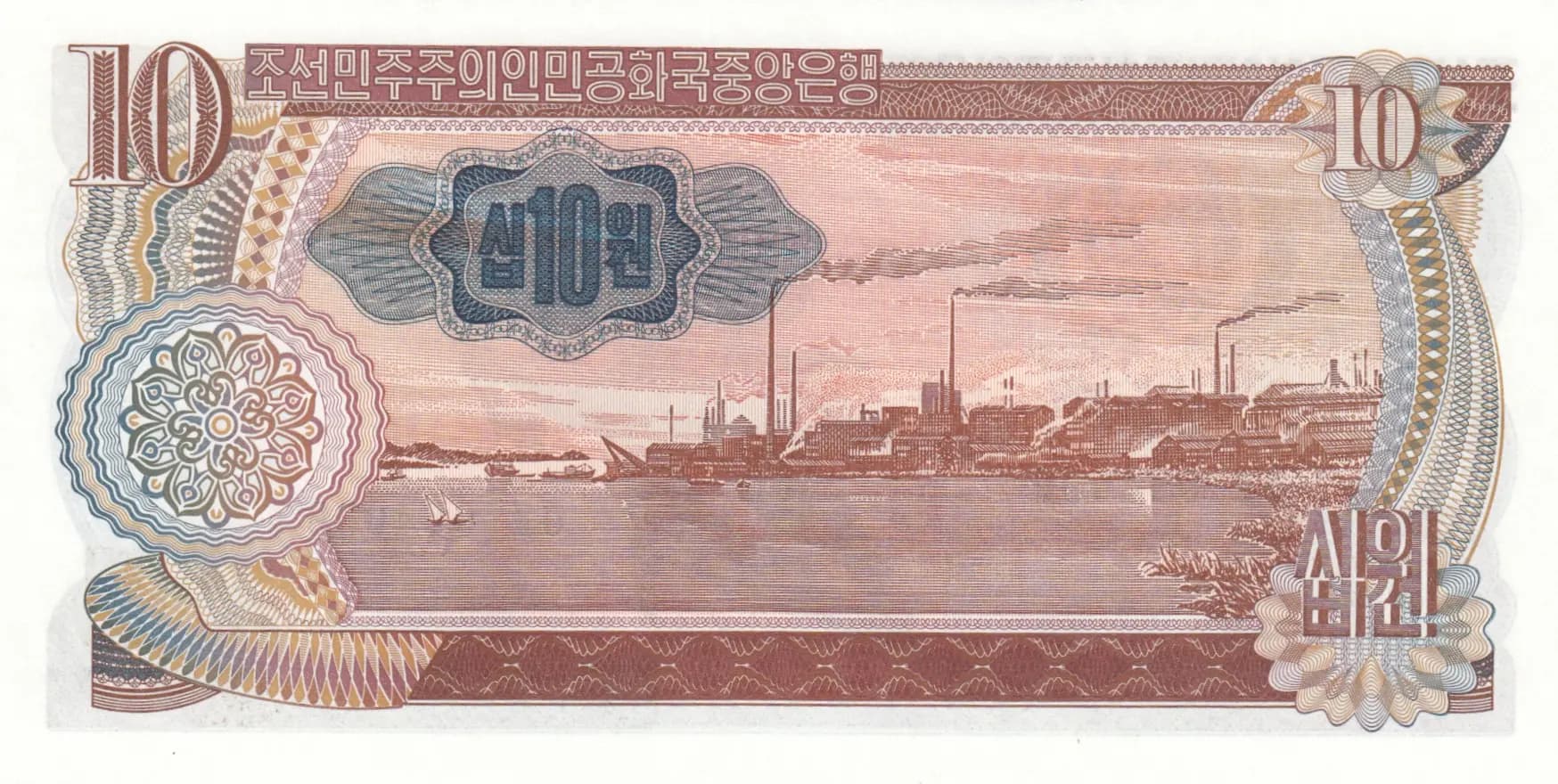
This is a 1978 North Korean 10 Won note (Pick P-20e) in uncirculated condition, representing a classic example of Cold War-era DPRK currency design. The note features distinctive propaganda imagery including a dynamic human figure with outstretched arms on the obverse and an idealized industrial cityscape on the reverse, both rendered in warm earth tones with meticulous engraved detail work. The exceptional condition with no visible wear combined with the historically significant imagery makes this a notable piece of numismatic interest from the isolated Korean peninsula during the height of the Cold War period.
Common. The 1978 10 Won note (Pick P-20e) was produced in substantial quantities as part of regular North Korean currency circulation during the late 1970s. No historical record of limited print runs, recalls, or special circumstances affecting availability exists. Notes from this series appear regularly in international numismatic markets and collections. Uncirculated examples command modest premiums over circulated specimens but remain affordable and relatively accessible to collectors.
The 1978 10 Won note was issued during a period of economic development and consolidation under Kim Il-sung's regime in North Korea. The front's dynamic figure symbolizes the revolutionary spirit and labor mobilization central to North Korean ideology, while the reverse's industrial landscape reflects the DPRK's emphasis on heavy industry and economic self-reliance (Juche philosophy). This note type represents an era before the economic collapse of the 1990s, when North Korea maintained a functioning centralized currency system with regular banknote production.
The obverse features a symbolic revolutionary figure depicted in dynamic motion with outstretched arms, representing the mobilization and energy of the North Korean state. The figure is rendered in brownish tones against a light background. On the left side is the state emblem of North Korea (featuring the Five-Pointed Star and architectural motif) surrounded by wreaths in a circular frame, symbolizing national sovereignty and socialist ideals. The reverse depicts an industrial city complex along a waterfront with multiple factory buildings, smokestacks, and boats, representing North Korea's emphasis on heavy industry and economic development. Both sides feature ornate decorative borders with geometric and floral medallions, and denomination numerals '10' in elaborate circular frames positioned at cardinal corners.
Front side: '조선민주주의인민공화국중앙은행' (Central Bank of the Democratic People's Republic of Korea), '여10원' (10 Won - appears multiple times), '10' (denomination numeral), '1978' (year of issue). Back side: '조선민주주의인민공화국중앙은행' (Central Bank of the Democratic People's Republic of Korea), '여10원' (10 Won - appears multiple times), '10' (denomination numeral).
Intaglio engraving (line engraving and steel engraving techniques), evidenced by the detailed fine-line work throughout the design, complex guilloche security patterns in background areas, and the characteristic sharp, precise linework visible in both the portraits and landscape scenes. The multi-color printing with distinct color separation in browns, pinks, greens, and blues is consistent with multi-pass intaglio production. This note was produced by North Korea's state security printing facility (likely the Government Printing Bureau or equivalent state printer), as was standard for DPRK currency production in this era.
Based on the visual analysis, this specimen is consistent with the standard 1978 issue without apparent overprints or significant varieties. The serial number is visible in the center of the obverse but is not clearly legible in the provided images. No signature varieties are apparent from the visual inspection. The date '1978' clearly establishes this as the initial 1978 issue of the 10 Won denomination under Pick catalog P-20e. Future detailed examination of the serial number prefix and any micro-printing variations could reveal specific printing batches or facility identifiers, but standard cataloging identifies this as a single primary variety for the 1978 date.