100 yen = 100 won 1947
Market Prices
24 salesAbout This Note
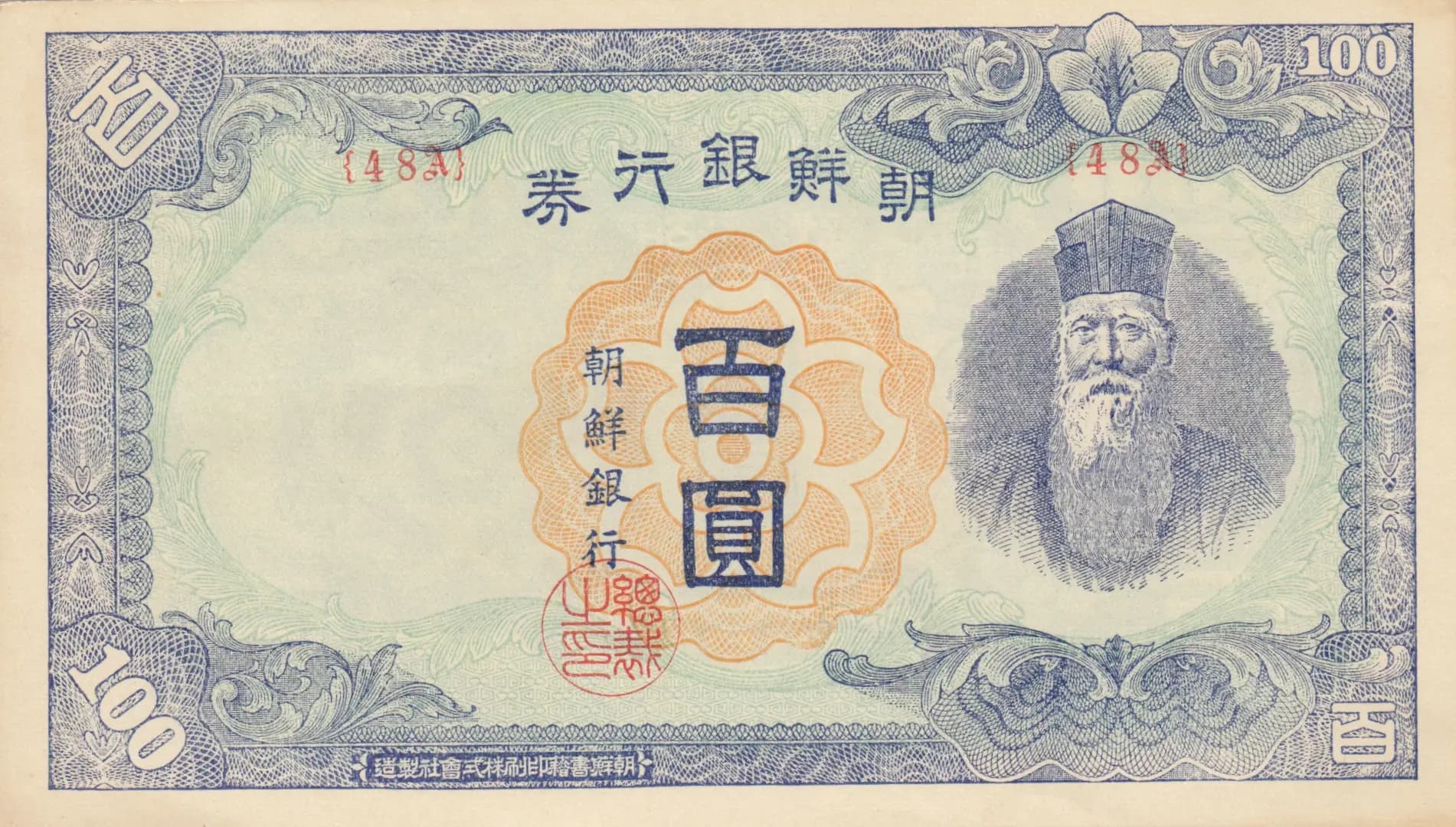
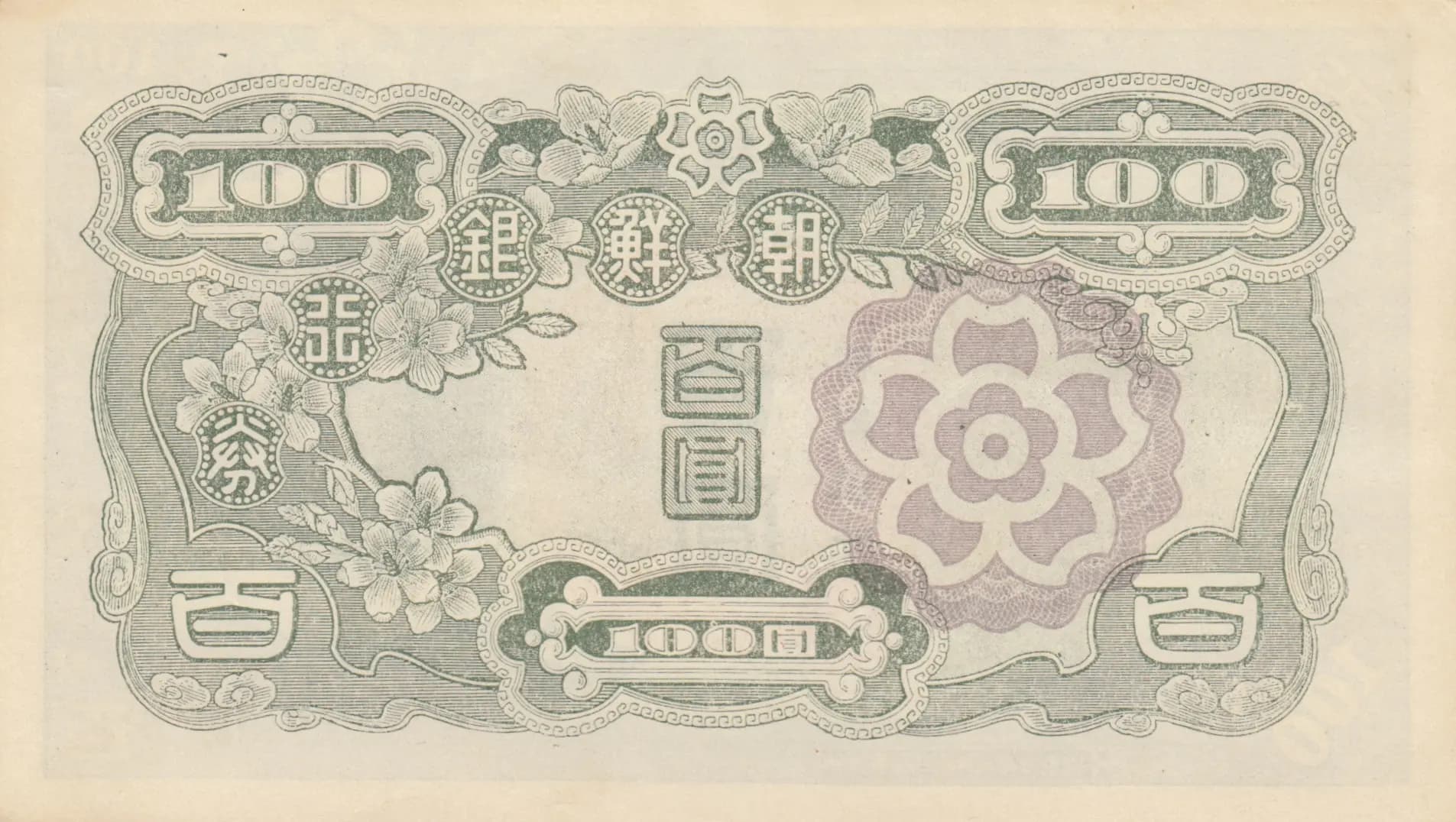
This is a stunning AU example of the 1947 Bank of Chosen 100 Yen = 100 Won note (Pick P-46b), displaying excellent preservation with crisp paper, vibrant multi-color printing in blue, orange, and green, and sharp detail throughout the ornate design. The note features a striking portrait of a bearded man in traditional Korean attire on the obverse, complemented by an elaborate decorative border with fine line engraving and a prominent orange scalloped seal. The reverse showcases a symmetrical design in green and mauve with characteristic floral motifs (five-petaled hibiscus flower arrangement) and geometric patterns typical of East Asian banknote aesthetics of this period.
Common. This note is extremely common in the secondary market, with eBay price tracking data showing consistent sales across a wide range of conditions from Fair to AU/UNC grades, with typical prices ranging from $2-$40 depending on condition and PMG grading. The broad market availability, frequent auction appearances, and catalog valuations (VG: $0.25, VF: $1, UNC: $3 as of 2016) all indicate robust supply. The 1947 issue was printed in substantial quantities as a transitional currency during US Army Administration, and these notes remain readily available to collectors.
This note was issued during the brief transitional period of 1947 when Korea was under US Army Administration following Japanese colonial rule, issued by the Bank of Chosen (the former Japanese-controlled Korean central bank). The dual denomination '100 Yen = 100 Won' reflects the currency transition period as Korea moved toward independence (achieved in 1948) and away from Japanese yen currency. The design elements—including the bearded historical figure portrait and traditional Korean motifs—represent an attempt to emphasize Korean cultural identity during this politically significant post-colonial moment.
The obverse features a formal portrait of a bearded male figure (likely a historical Korean dignitary or leader) rendered in profile facing right, wearing traditional Korean headwear (possibly a scholar's or official's hat from the Joseon period). The portrait is positioned to the right of a large ornate scalloped circular seal rendered in orange/peach with darker outlines, containing Korean characters. The entire design is framed by an intricate guilloche border in blue with fine scrollwork, floral corner elements, and classical ornamentation. Red stamps or seals appear strategically positioned on the left and center. The reverse displays perfect symmetry with a dominant mauve/pink scalloped flower seal (the characteristic five-petaled hibiscus flower noted in catalogs) at center, surrounded by decorative circular medallions, Greek key geometric patterns, and green floral blossom motifs in the corners. The base color is a cream/beige paper with green as the primary ink color on the reverse, complemented by mauve highlights.
Front side: '朝鮮銀行券' (Chosun/Korea Bank Note), '朝鮮銀行' (Chosun/Korea Bank), '朝鮮銀行兌換券' (Chosun/Korea Bank Exchange Note), with denomination '100' appearing in multiple locations. Back side: Denomination '100' in decorative cartouches (upper left and right), with repeating inscriptions of '朝鮮' (Chosun/Korea) and '銀行' (Bank) arranged symmetrically within circular medallions and cartouches. All text is rendered in traditional Chinese characters (Kanji) as was standard for official Korean currency during the Bank of Chosen period.
This note was produced using traditional intaglio (engraved line) printing, as evidenced by the fine detailed line work visible throughout the border designs, guilloche patterns, and geometric elements. The multi-color printing—blue and orange on obverse, green and mauve on reverse—indicates a sophisticated multi-pass printing process typical of 1940s Japanese and Korean banknote production. The precision of the fine line engraving, the complexity of the geometric patterns, and the quality of the registration suggest this was produced by a skilled security printer, likely connected to the Japanese banknote printing infrastructure that remained in place during the Bank of Chosen's operations.
This specimen is identified as Pick P-46b, which according to catalog references is distinguished by the 'Block # only' variety (block number without serial number). Related varieties include P-32 and P-37 which feature both block and serial numbers. The defining characteristic of this P-46b variety is the five-petaled hibiscus flower arrangement above the portrait on the obverse. Other similar notes with different floral arrangements (three leaves and branches) are cataloged separately as P-41 and P-44. The reverse color on this note is pale green, distinguishing it from P-45 which features a brown reverse. No specific signature varieties or date variations appear to apply to this 1947 ND (no date) issue, making the Block # only distinction the primary variety marker for cataloging purposes.