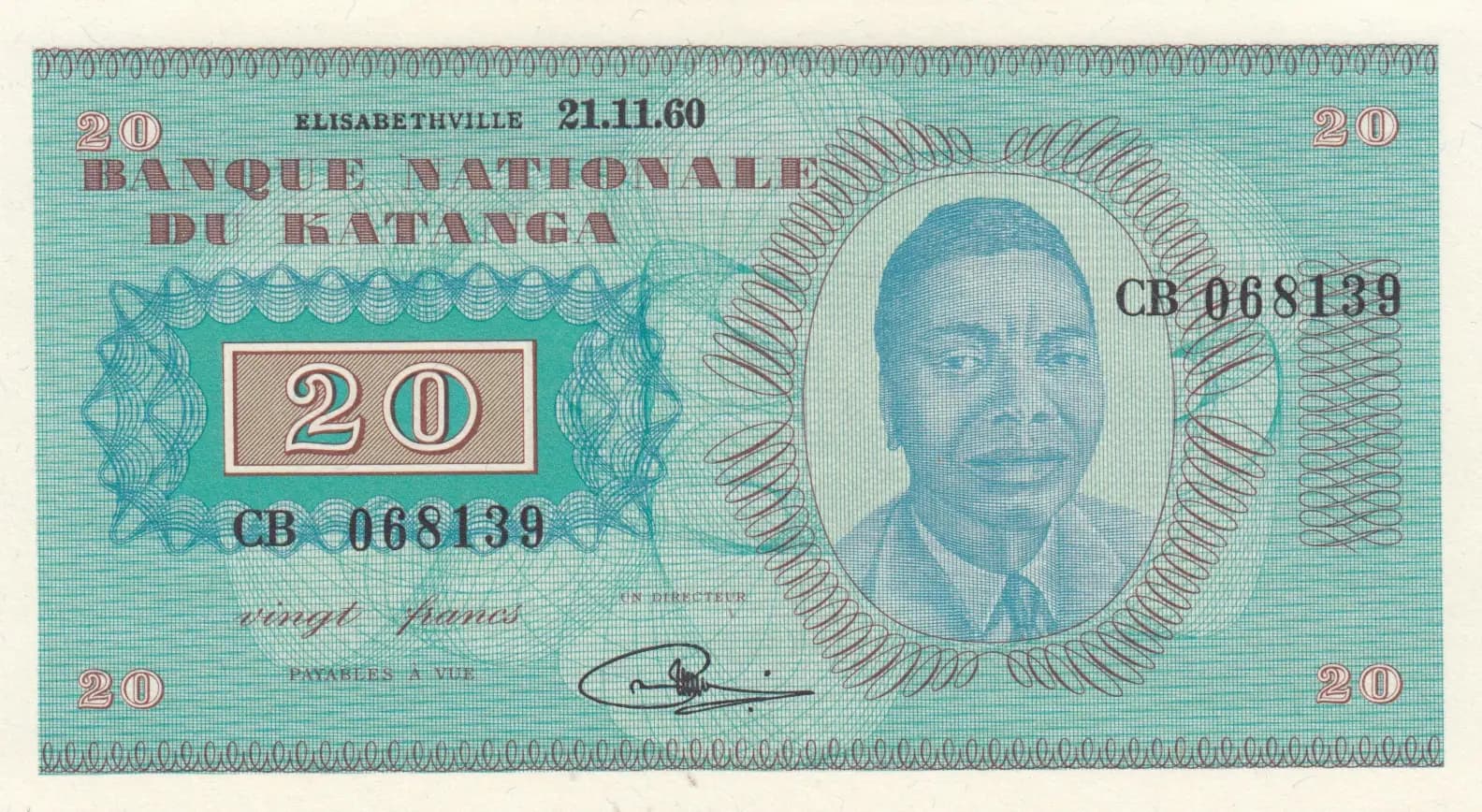
10 francs 1960
Market Prices
26 salesAbout This Note
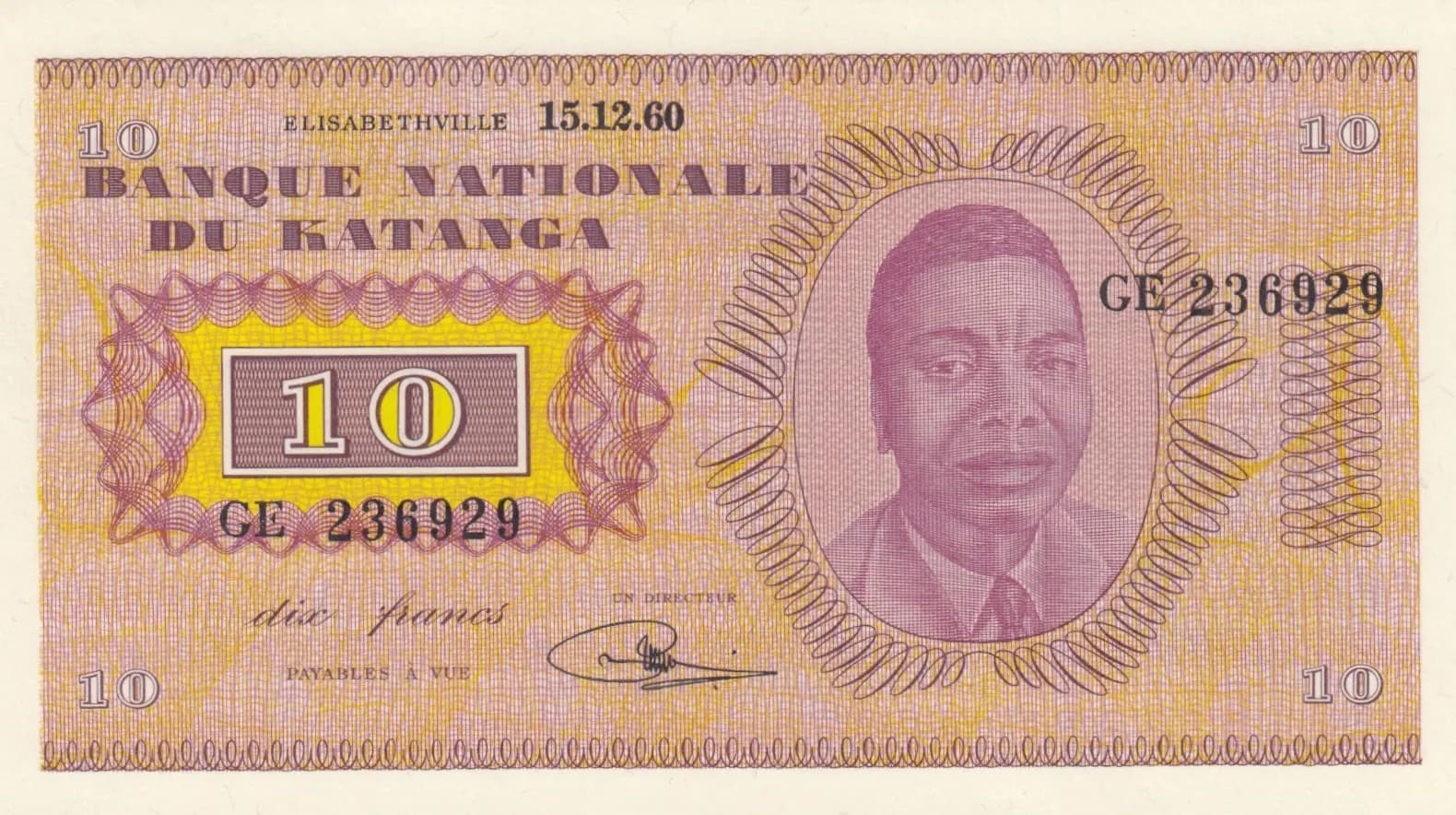
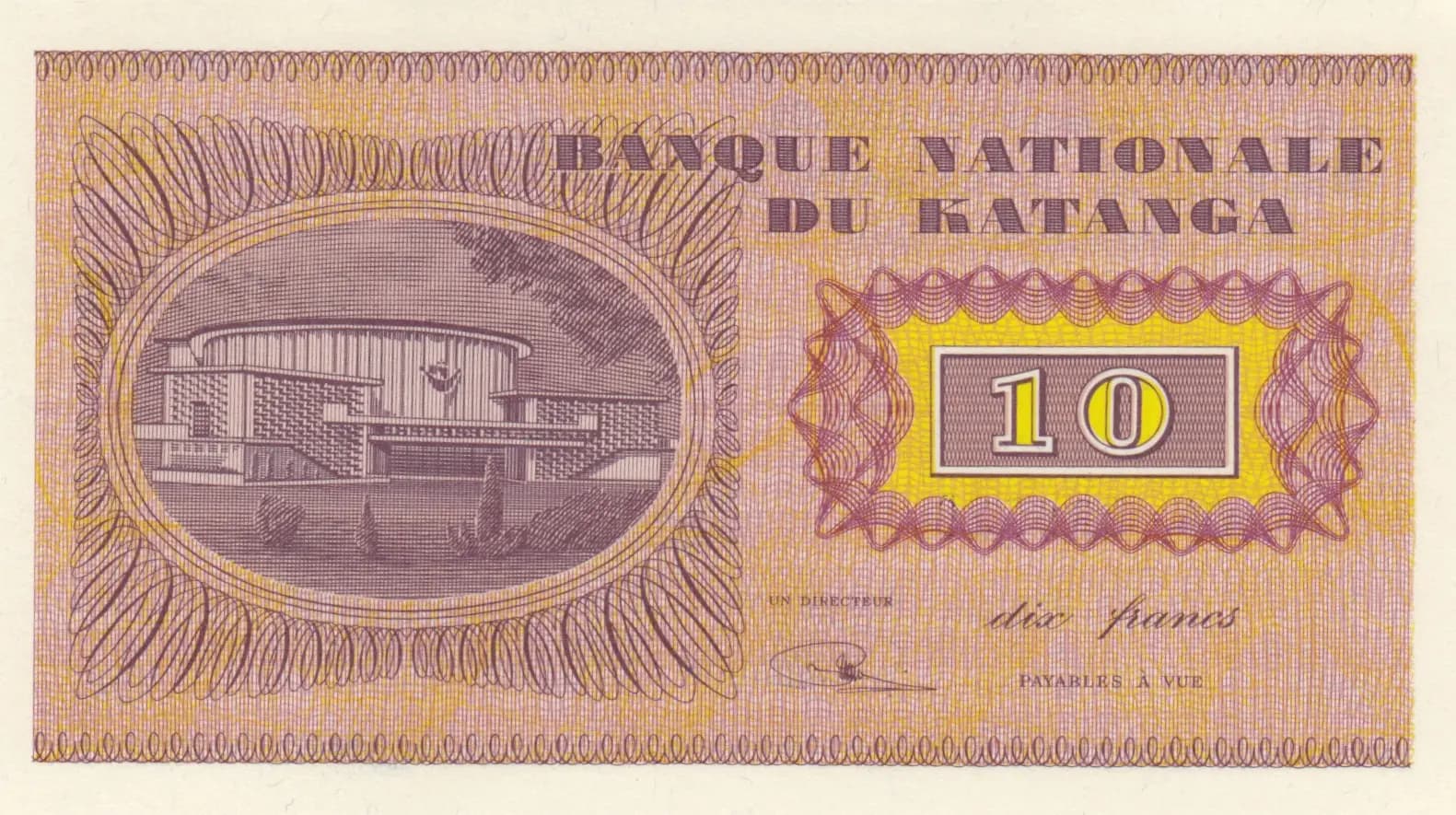
This is an uncirculated example of the Katanga 10 Francs from 1960, issued by the Banque Nationale du Katanga during the brief period of Katangan independence. The note features a striking pink/mauve and yellow color scheme with fine engraving work throughout, depicting President Moïse Tshombé in profile on the obverse and the National Assembly building (Bâtiment du 30 Juin) in Elisabethville on the reverse. The pristine condition with sharp, crisp printing and no visible wear makes this an attractive example for collectors of African colonial-era currency.
Common. While Katangan banknotes have collector interest due to the historical significance of the breakaway state, the 10 Francs denomination remains readily available in the numismatic market. eBay auction data shows consistent sales activity with multiple UNC examples selling between $100-$300 over the past 15 years, indicating steady but not scarce supply. The 2019 catalog value of $250 for UNC examples and the frequency of sales across all condition grades suggest this is a common issue that, while historically important, was printed in sufficient quantities to remain accessible to collectors.
This banknote was issued during the tumultuous period of Katangan secession (1960-1963), when the mineral-rich Katanga province attempted to establish independence from the newly formed Democratic Republic of Congo. The note's inscriptions in French and imagery reflect Katanga's colonial Belgian heritage and aspirations for self-governance, with President Tshombé's portrait symbolizing the leadership of the breakaway state. The reference to Elisabethville (modern-day Lubumbashi) as the seat of authority and the depiction of the National Assembly building underscore the institutional establishment Katanga sought to create during this brief separatist period.
The obverse features a right-facing profile portrait of President Moïse Tshombé enclosed within an ornate circular frame with radiating decorative line patterns, positioned in the center-right of the note. The reverse displays the Bâtiment du 30 Juin (National Assembly building), a modernist institutional structure characterized by horizontal banding and regular fenestration, similarly framed within an ornate oval with radiating decorative elements positioned on the left side. Both sides employ identical color palettes of pink/mauve and yellow with cream backgrounds. The denomination '10' appears in yellow rectangular boxes on both sides, surrounded by complex geometric and wavy border designs typical of high-security banknote engraving. The entire note is surrounded by ornamental corner designs and fine-line engraved patterns that serve both aesthetic and security functions.
FRONT: 'BANQUE NATIONALE DU KATANGA' (National Bank of Katanga), 'ELISABETHVILLE 15.12.60' (Elisabethville, December 15, 1960), '10' (denomination), 'GE 236929' (serial number), 'PAYABLES A VUE' (Payable on demand). BACK: 'BANQUE NATIONALE DU KATANGA' (National Bank of Katanga), '10' (denomination), 'UN DIRECTEUR' (A Director), 'PAYABLES A VUE' (Payable on demand).
This note was produced using intaglio (engraved) printing, evidenced by the fine line work, complex geometric patterns, and high-quality detail visible in both the portrait and architectural imagery. The intricate border designs, radiating line patterns, and overall crispness of the impressions are characteristic of steel-plate engraving. Based on PMG cataloging records indicating a W&S printer variant (P-5Ar), this specific example may have been printed by Waterlow & Sons, a prominent British security printer known for producing currency for colonial territories during this period, though the observed example appears to be from the standard printing variant (P-5a).
This example is cataloged as Pick P-5a (the standard variety). PMG records indicate five cataloged variants for this base Pick number: P-5A, P-5Ar (Waterlow & Sons printer), P-5As, P-5a, and P-5s. The observed note's serial number prefix 'GE' and lack of visible overprints or signature variants suggests this is the standard P-5a variety. The serial number 'GE 236929' falls within the typical range for this issue. Collectors should note that variants may exist based on printer marks, signature combinations, or serial number prefixes, but the present example represents the most commonly encountered variety.