100 solami 1950 specimen
About This Note
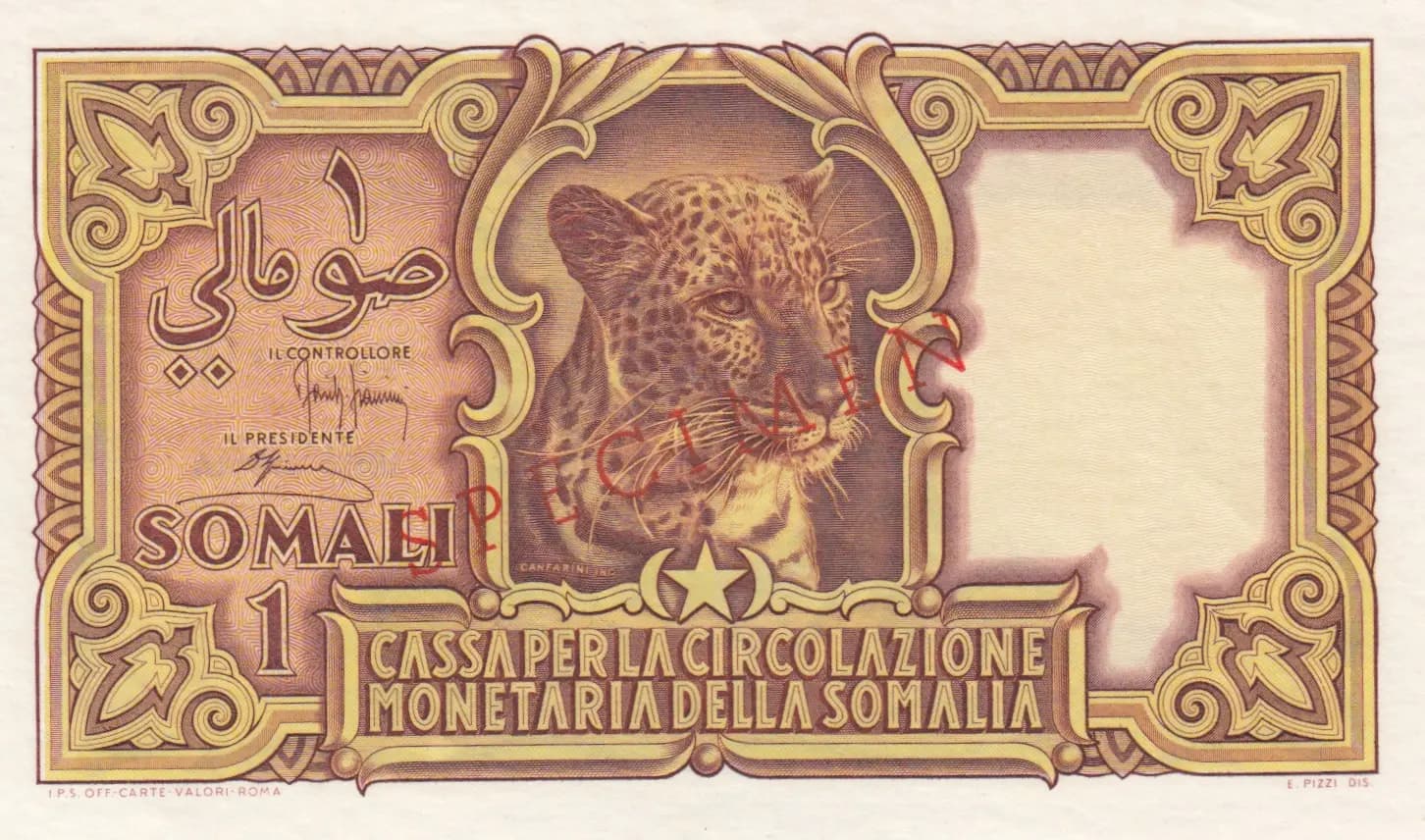
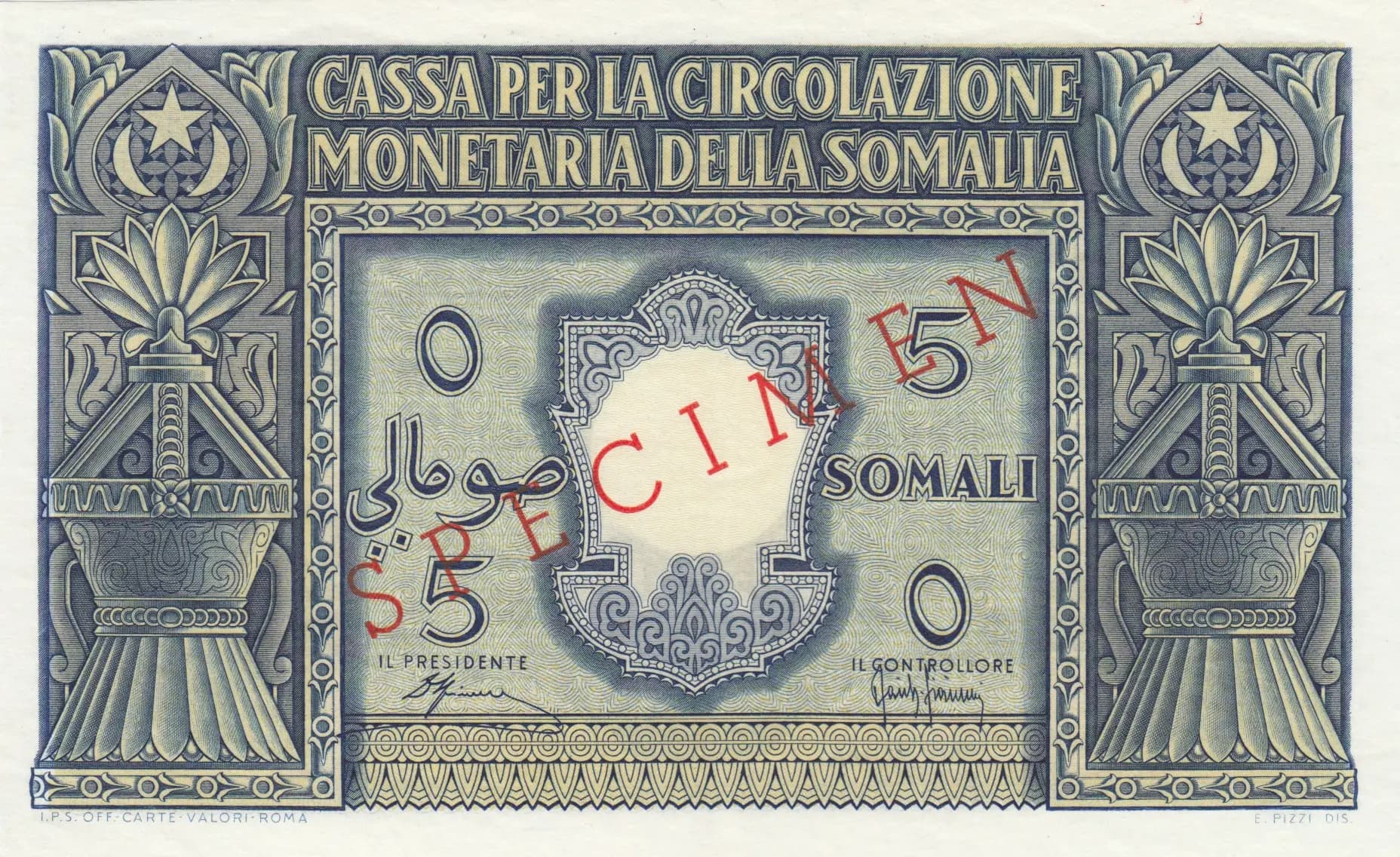
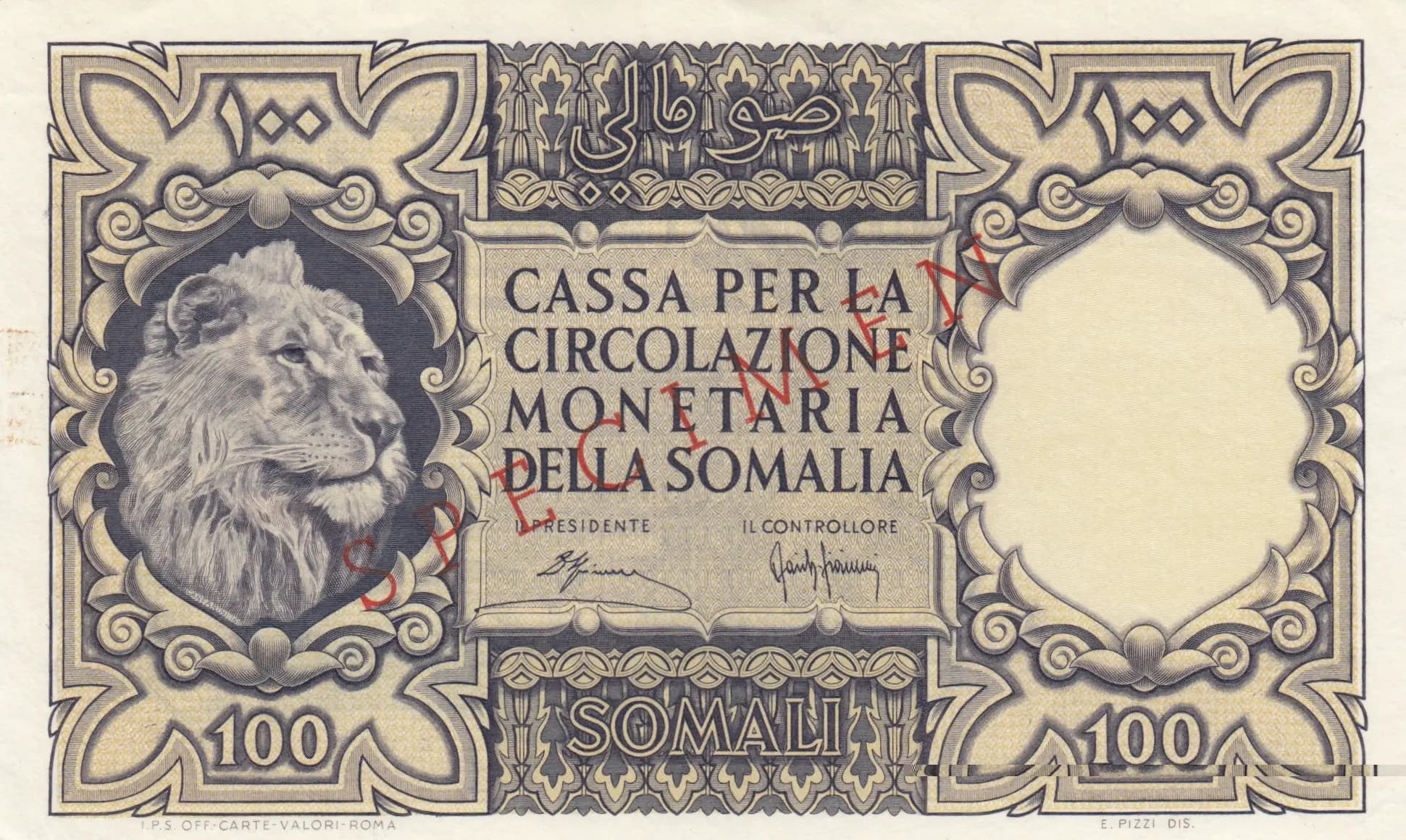
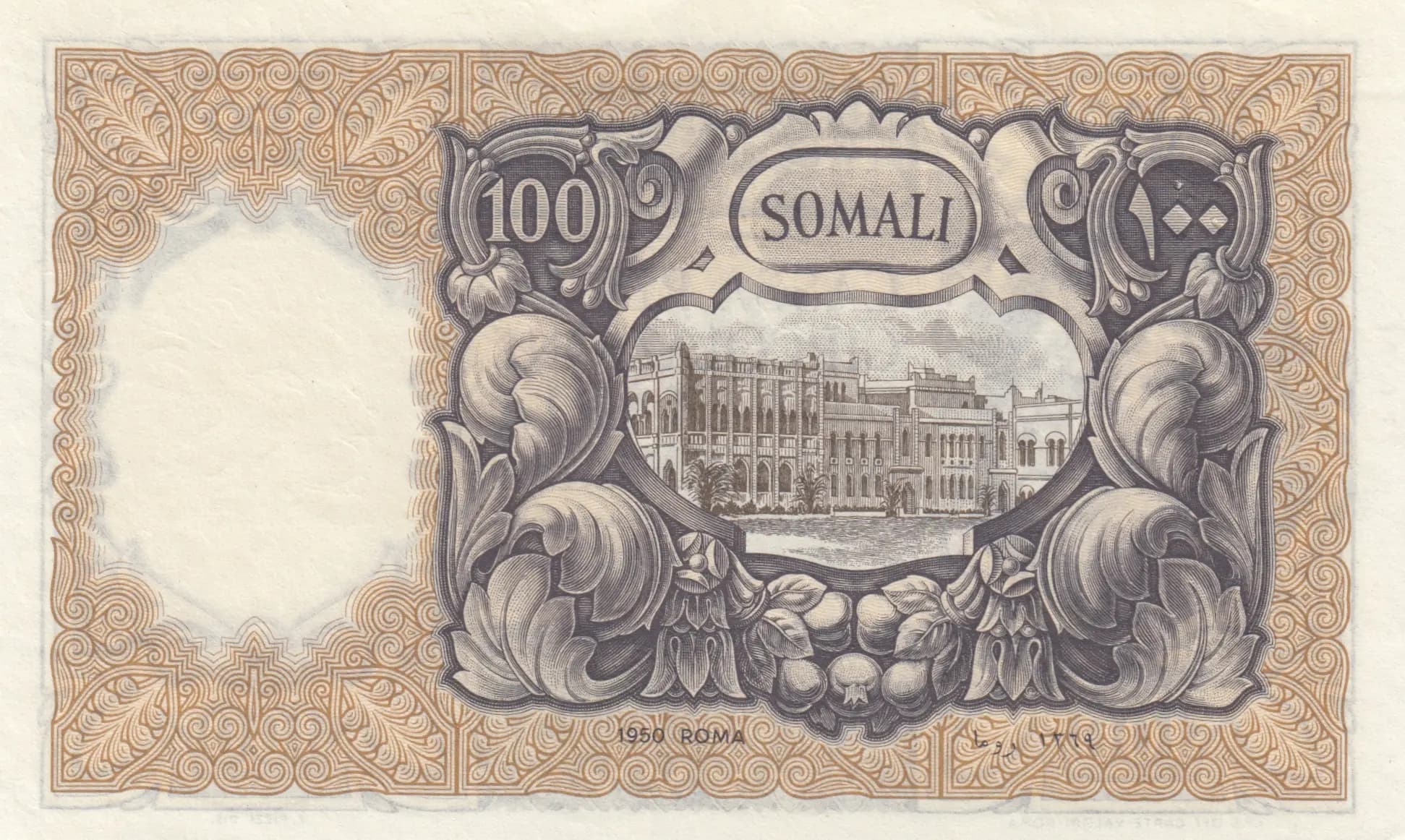
This is a 1950 Italian Somaliland 100 Somali specimen note (Pick P-15s) issued by the Cassa per la Circolazione Monetaria della Somalia, graded in Excellent condition. The note features an ornate baroque-style design with a lion's head portrait on the obverse and an impressive Mediterranean architectural structure on the reverse, both rendered in intricate engraving. The prominent red 'SPECIMEN' overprint across the center confirms this as a non-circulating specimen note, making it a significant piece of Somaliland's brief monetary history under Italian administration.
Common. While Italian Somaliland notes from 1950 are no longer in regular circulation, this is a specimen note from a standard-issue denomination released by a major colonial administration. Specimen notes were typically produced in significant quantities for distribution to banks and government institutions throughout the territory. The 100 Somali denomination was a standard mid-range value. No evidence suggests an exceptionally small print run or recall. Specimen overprints, while not circulating, were routinely issued and are not exceptionally scarce in the collector market for this series.
Italian Somaliland issued this banknote in 1950 during the post-World War II trusteeship period, when Italy administered the territory under United Nations mandate until Somalia's independence in 1960. The Italian text and baroque European design aesthetic reflect the colonial administration's authority, while the Arabic script at the top and Somali denomination acknowledgments indicate the transitional nature of this monetary system serving a predominantly Muslim population. The architectural landmark depicted on the reverse represents an important colonial-era building, symbolizing Italian administrative presence in the Horn of Africa during this critical decade.
The obverse features a meticulously engraved lion's head portrait in left profile, rendered within an ornamental circular frame with baroque flourishes, positioned on the left side with a matching blank ornamental frame on the right—the lion's head watermark motif serves as both a security feature and symbolic representation of Italian heraldry. The reverse displays a substantial colonial-era building with Islamic/Mediterranean architectural characteristics including multiple stories, arched windows, a crenellated roofline, and apparent waterfront positioning, surrounded by ornate cornucopias overflowing with fruits and elaborate spiral and geometric border patterns typical of high-quality security printing. The entire design employs fine line engraving with intricate baroque decorative elements throughout, creating a visually sophisticated and difficult-to-counterfeit composition that reflects the quality standards of Italian security printers of the era.
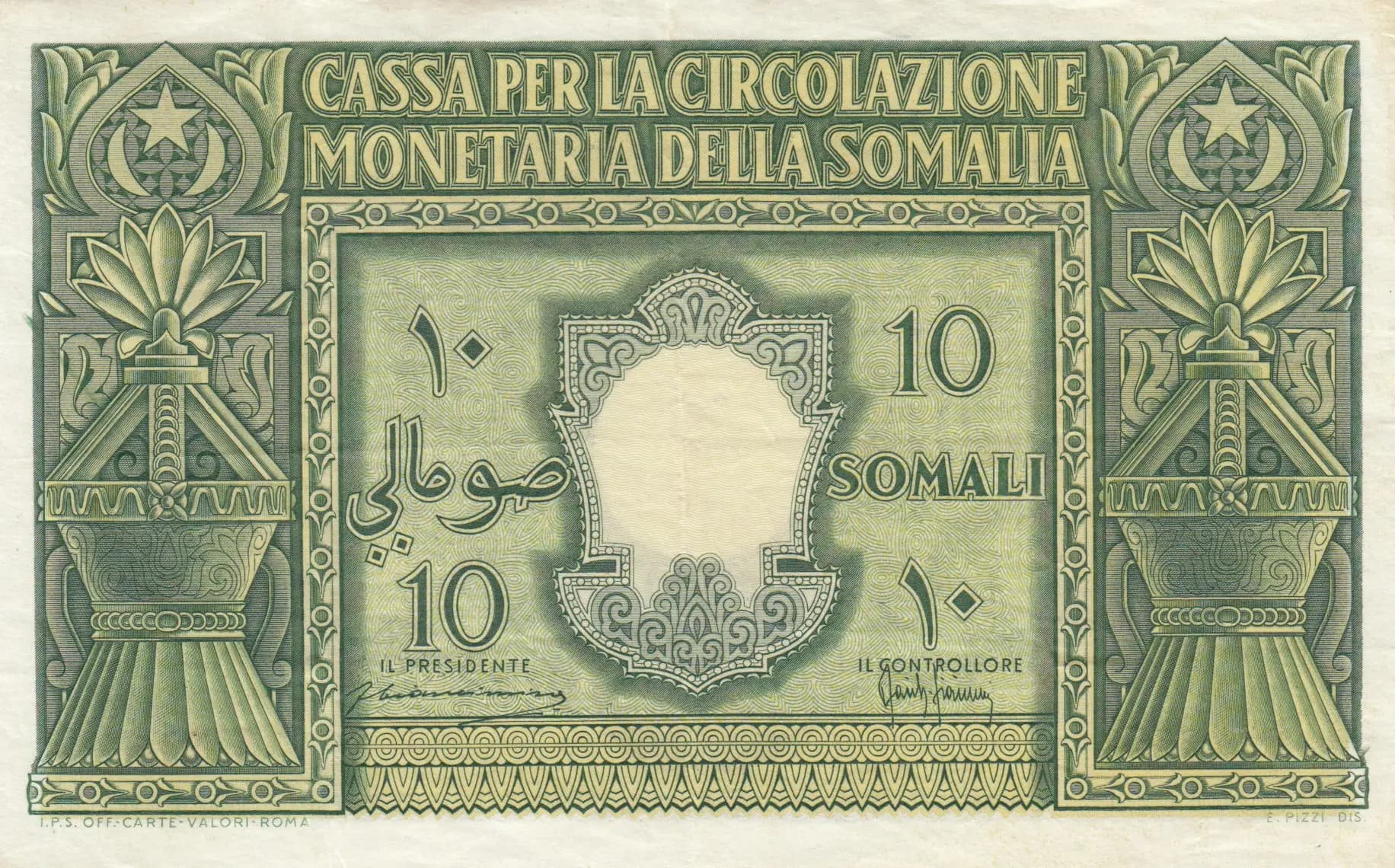
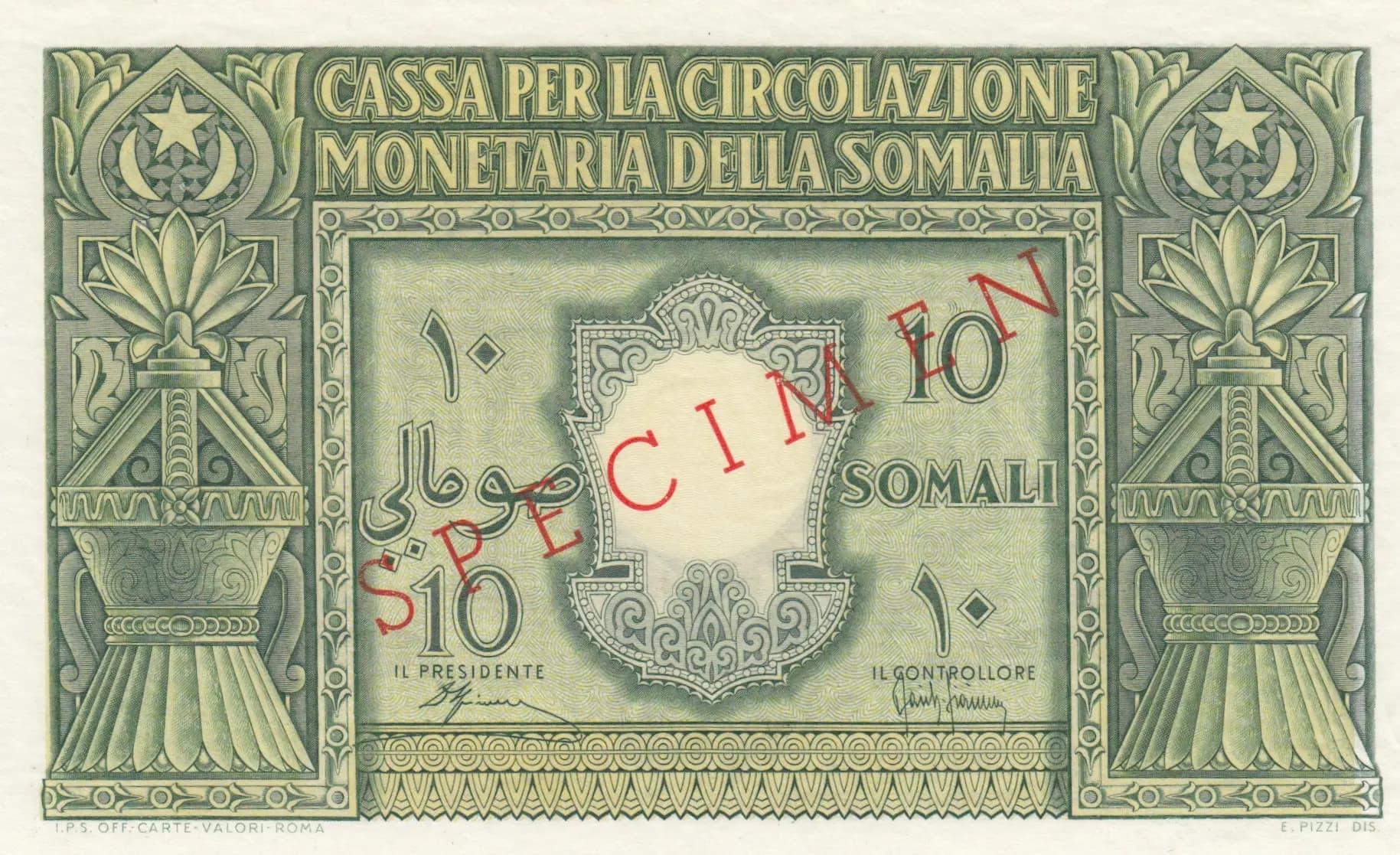
FRONT SIDE: 'CASSA PER LA CIRCOLAZIONE MONETARIA DELLA SOMALIA' (House for the Monetary Circulation of Somalia); 'PRESIDENTE' (President); 'IL CONTROLLORE' (The Controller); '100' (denomination); 'SOMALI' (currency name); 'IPS OFF-CARTE-VALORI-ROMA' (printer information - IPS Off-Carte-Valori, Rome); 'E.PIZZI DIS.' (Designer: E. Pizzi); Arabic text at top (transliteration indeterminate from image). BACK SIDE: '100' (denomination); 'SOMALI' (currency name); 'ROMA' (Rome - printer location). The specimen overprint 'SPECIMEN' appears prominently across the center in red ink.
Intaglio engraving (recess printing), executed by IPS Off-Carte-Valori (Istituto Poligrafico dello Stato), Rome—Italy's premier state security printer. The fine line work, intricate border patterns, and precise architectural rendering visible in the visual analysis are characteristic of high-quality intaglio production. The specimen overprint was applied via a separate printing pass using red ink, a standard practice for marking non-circulating specimen notes.
This is the specimen variety (P-15s) as confirmed by the catalog designation and the prominent red 'SPECIMEN' overprint across the obverse. The PMG population report indicates two catalogued variants: P-15a (standard issued notes) and P-15s (specimens). This note displays the Lion's Head watermark as recorded in the PMG documentation. No visible serial numbers, signatures, or date variations are discernible from the specimen overprint and design layout that would indicate subtypes within the P-15s classification. The designer attribution 'E. PIZZI DIS.' and printer 'IPS OFF-CARTE-VALORI-ROMA' are consistent with standard production for this issue.