1 pound 1972
Market Prices
5 salesAbout This Note
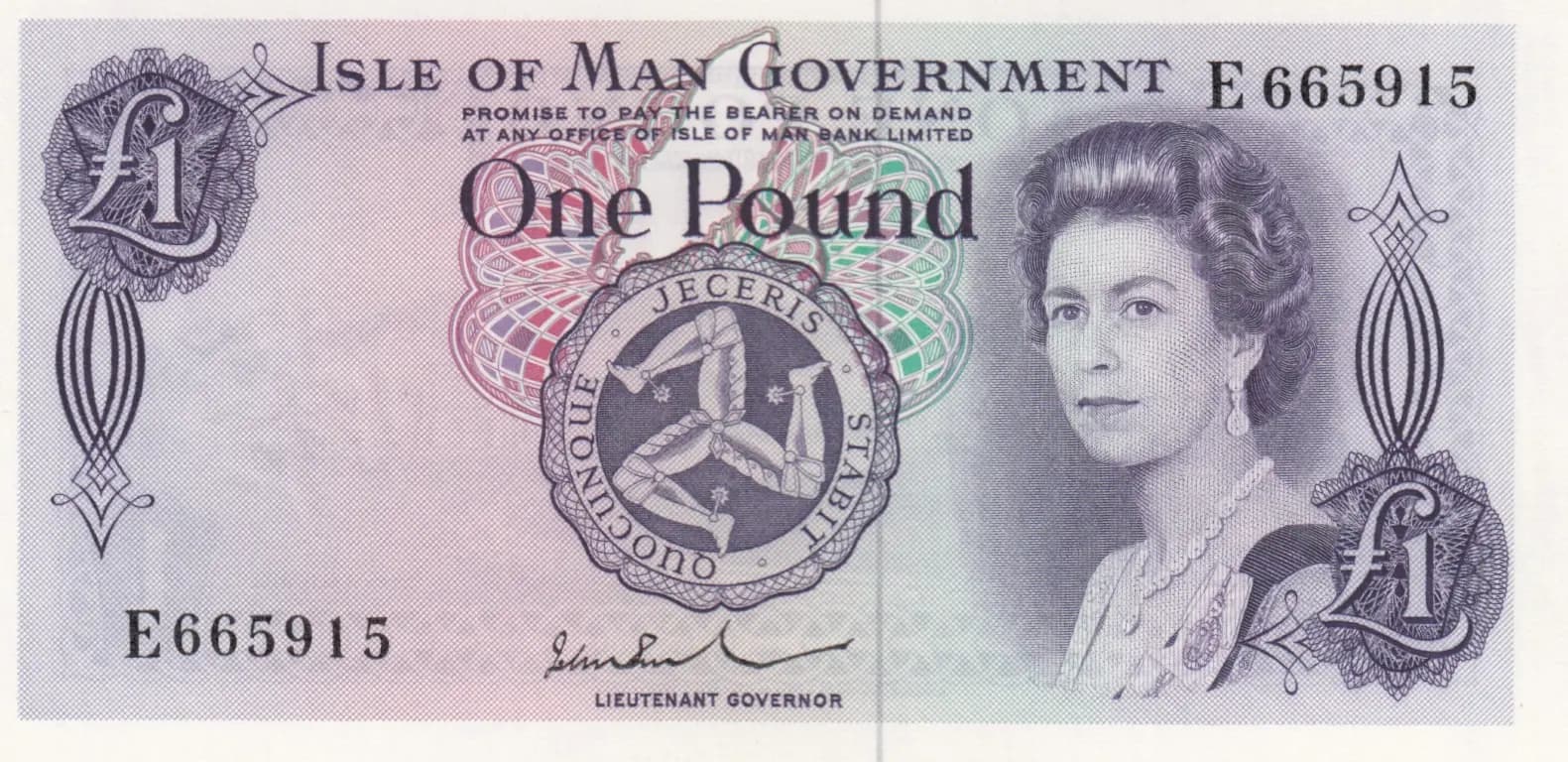
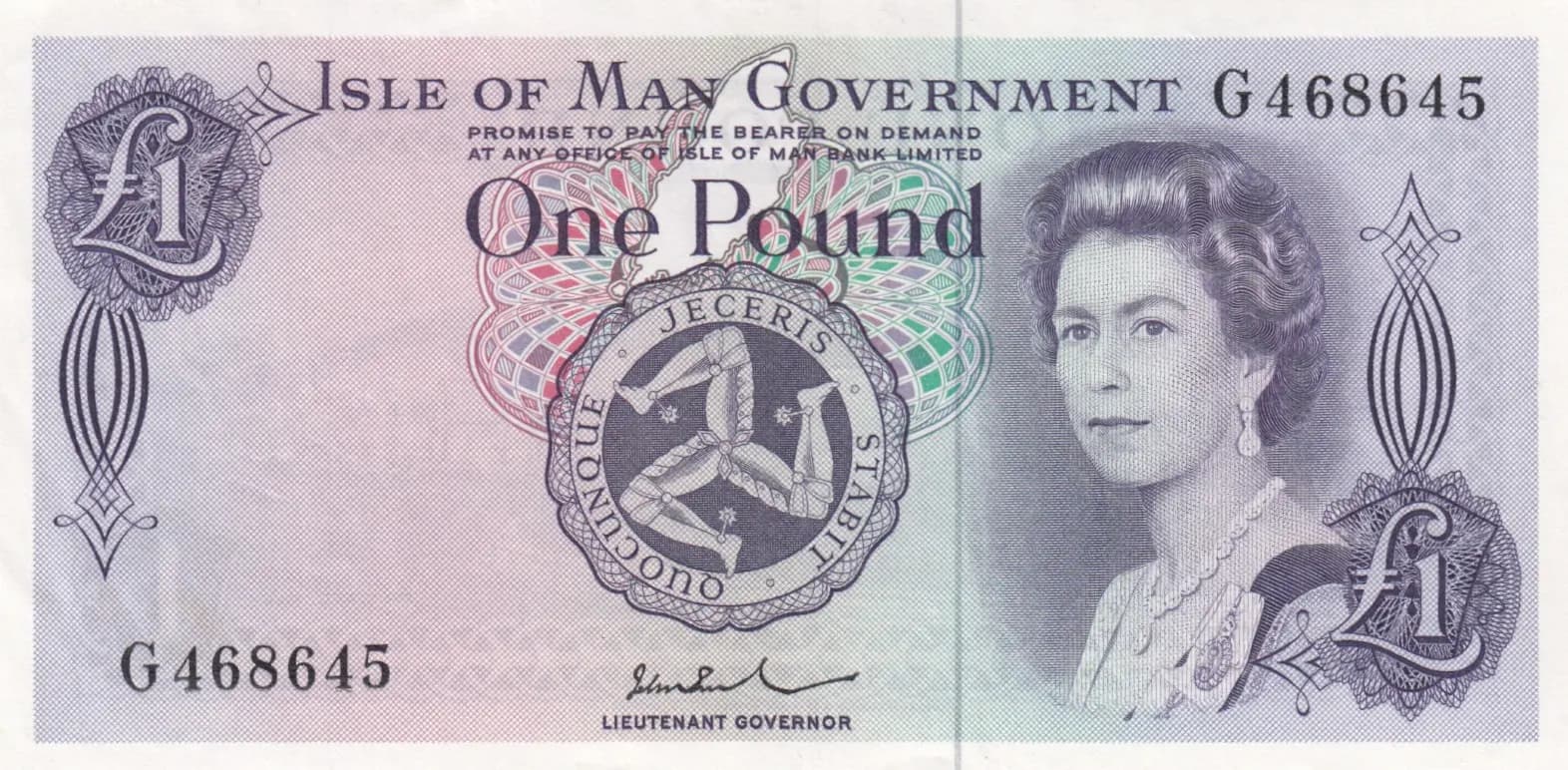
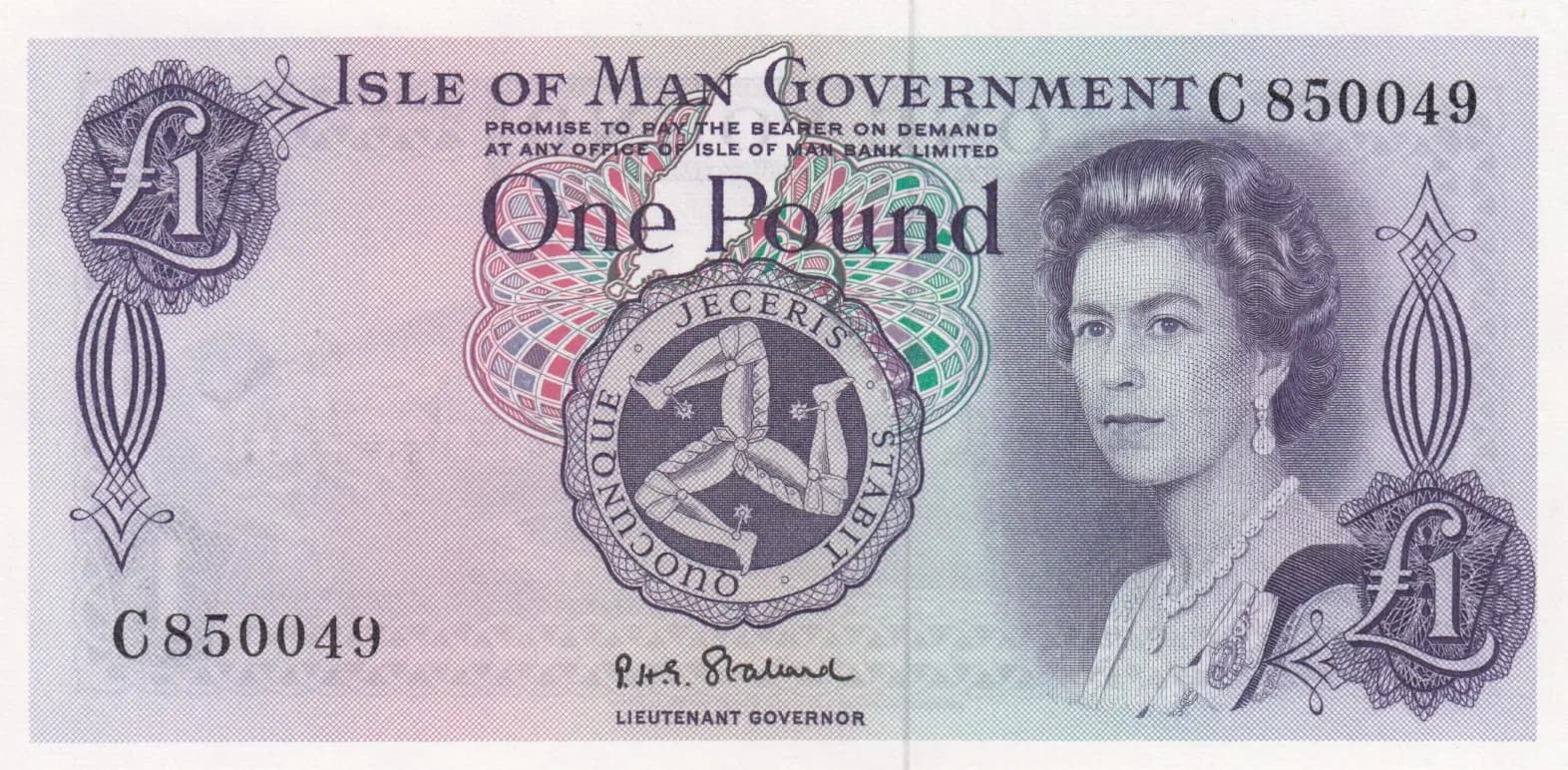
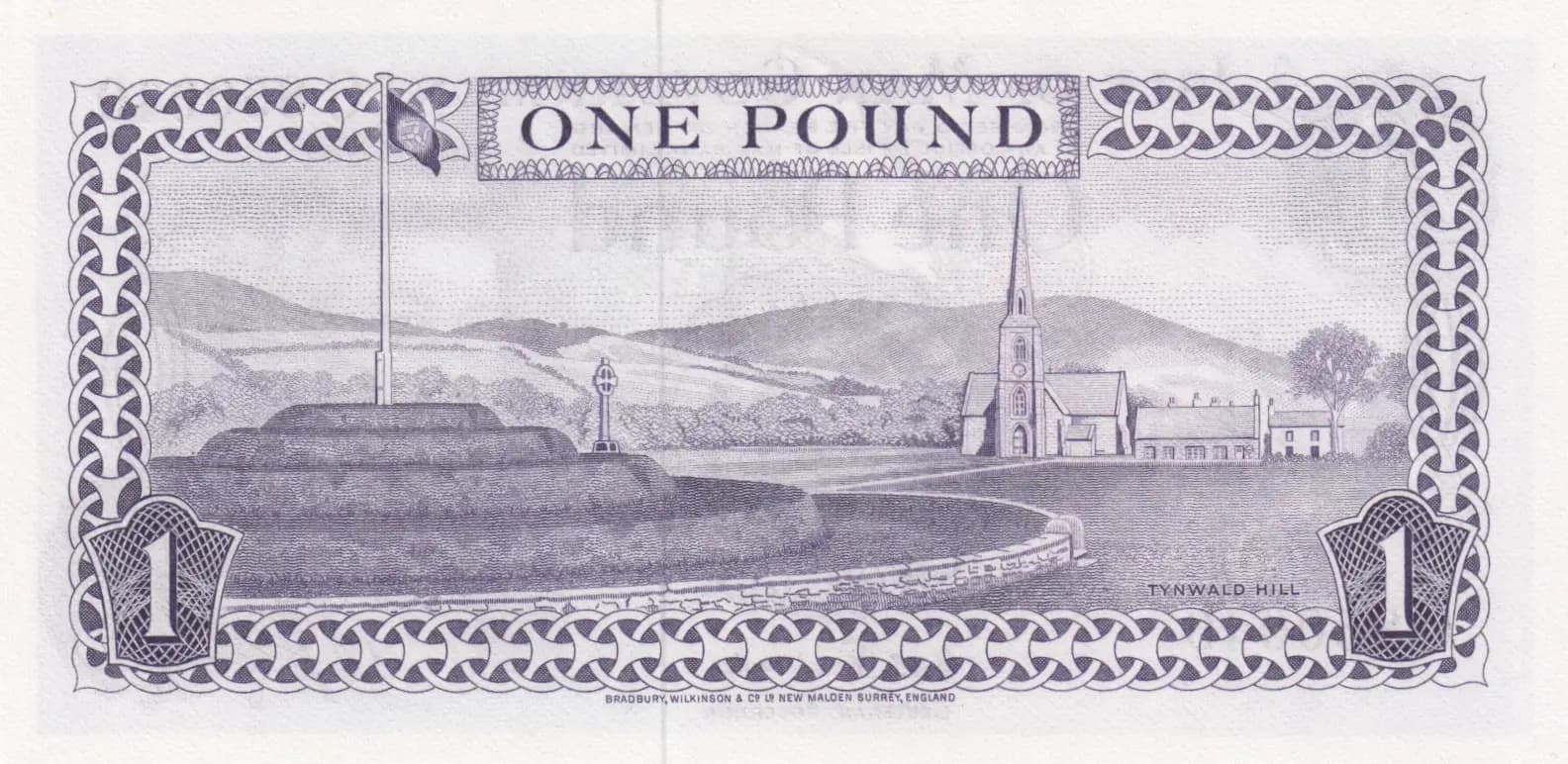
This 1972 Isle of Man Government 1 Pound note (Pick 29a) presents in outstanding Uncirculated condition with crisp printing and no visible signs of circulation. The note features the iconic triskele arms of Mann in an ornate circular design on the obverse, paired with a dignified portrait of Queen Elizabeth II, while the reverse showcases a detailed engraved landscape of Tynwald Hill, the historic seat of the Isle of Man parliament. This classic early Commonwealth regional issue represents an important piece of numismatic history from the Isle of Man's banking heritage.
Common. While this note has historical interest as part of the Isle of Man's early decimal currency series, the catalog values (UNC: $125 as of 2019) and eBay market data showing typical sales in the $20-40 range for UNC examples indicate moderate trading activity consistent with common regional issues. The 1972-1976 series was issued in substantial quantities by the Isle of Man Government, and surviving examples in Uncirculated condition are readily available to collectors. This Pick number (P-29a) represents the standard variety of the basic 1972 issue.
Issued in 1972 by the Isle of Man Government through Isle of Man Bank Limited, this note commemorates the island's distinctive political and cultural identity through its choice of national symbols. The prominent depiction of Tynwald Hill on the reverse reflects the historical significance of this ancient parliamentary site, which has served as the seat of the Isle of Man's legislature since medieval times. The inclusion of Elizabeth II as reigning monarch underscores the island's constitutional relationship with the British Crown during this period of the early 1970s.
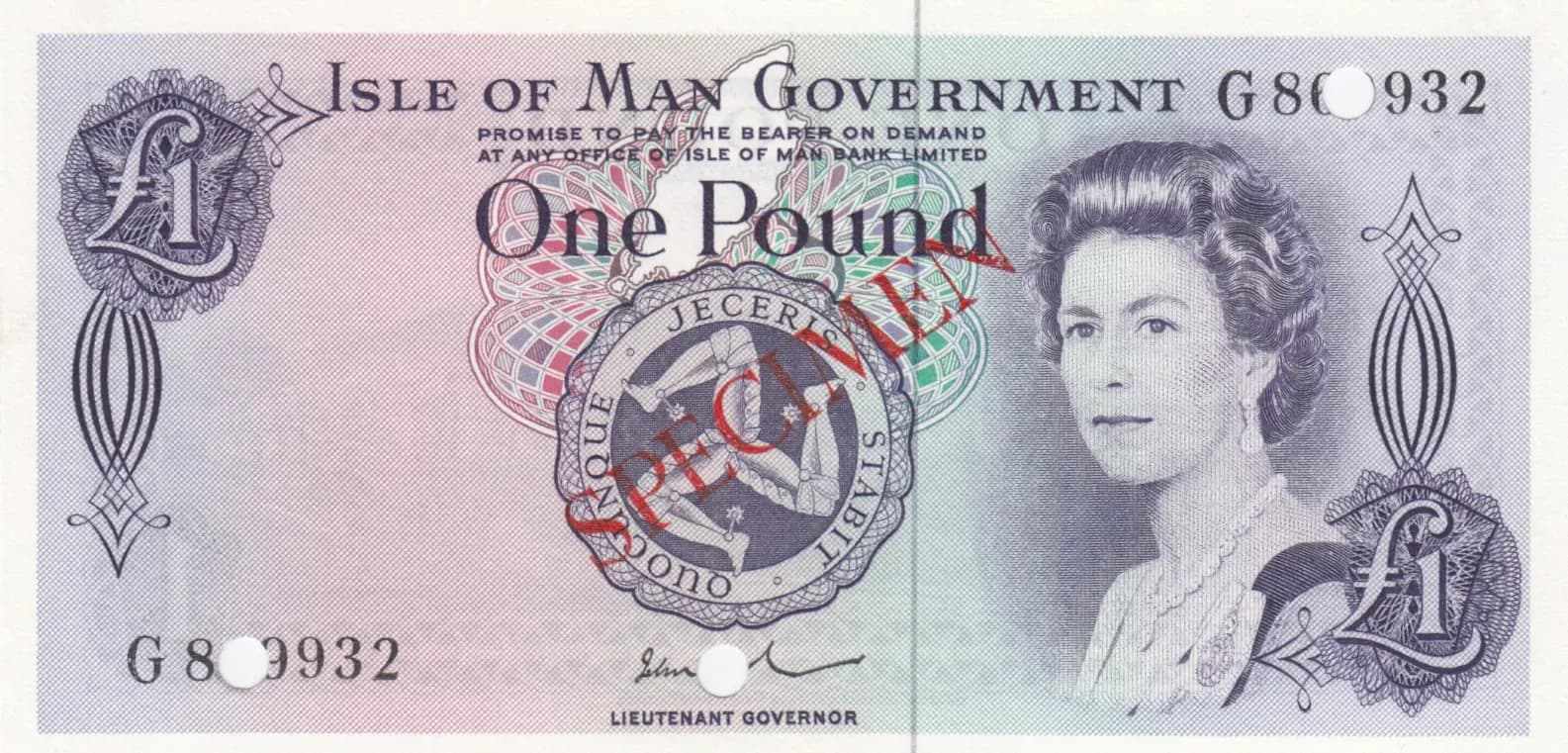
The obverse features a left-facing profile portrait of Queen Elizabeth II positioned on the right side of the note, rendered in the refined portrait style characteristic of Commonwealth currency of the early 1970s. The central design element is the three-legged triskele emblem of the Isle of Man (also known as the Three Legs of Mann), presented within an ornate circular seal with decorative border work and text. The note displays a light purple/lavender background with blue-green and black engraving work, with decorative floral ornaments positioned in all four corners and the denomination '1' featured in oval cartouches at top left and bottom right. The reverse presents a detailed landscape engraving of Tynwald Hill, featuring the historic church building at the center with a flagpole, surrounding residential structures, and mountainous background landscape, all framed by an intricate Celtic knotwork border pattern that reflects the island's cultural heritage. Denomination numerals '1' appear in fan-shaped decorative cartouches at the bottom corners of the reverse.
FRONT: 'ISLE OF MAN GOVERNMENT' (issuing authority); 'PROMISE TO PAY THE BEARER ON DEMAND AT ANY OFFICE OF ISLE OF MAN BANK LIMITED' (promise clause); 'One Pound' (denomination in words); 'LIEUTENANT GOVERNOR' (signature authority title); 'P.M. Stallard' (authorized signature); 'C850049' (serial number). BACK: 'ONE POUND' (denomination); 'TYNWALD HILL' (landmark identification); 'BRADBURY, WILKINSON & CO LTD NEW MALDEN SURREY, ENGLAND' (printer attribution).
Intaglio engraving by Bradbury, Wilkinson & Co Ltd (BWC), the renowned British security printer based in New Malden, Surrey. The visual evidence of fine line work, extensive cross-hatching, detailed shading throughout the portraits and landscape, and the precise guilloche patterns are all characteristic of high-quality intaglio production. This printing method provided superior security and durability for regular issue banknotes of this period.
This note is cataloged as Pick 29a (BWC printer variant). The PMG Population Report indicates multiple varieties exist within this base Pick number: P-29a, P-29b, P-29c, P-29e, P-29s1, and P-29s2, all from Bradbury, Wilkinson & Co. The specific variety here is P-29a, identifiable by the BWC printer attribution visible on the reverse. The signature of P.M. Stallard as Lieutenant Governor and the serial number prefix 'C' are consistent with early 1972 printing, representing the standard regular issue variety rather than a specimen or special issue variant.