1 pound 1977
“20.09.77”
About This Note
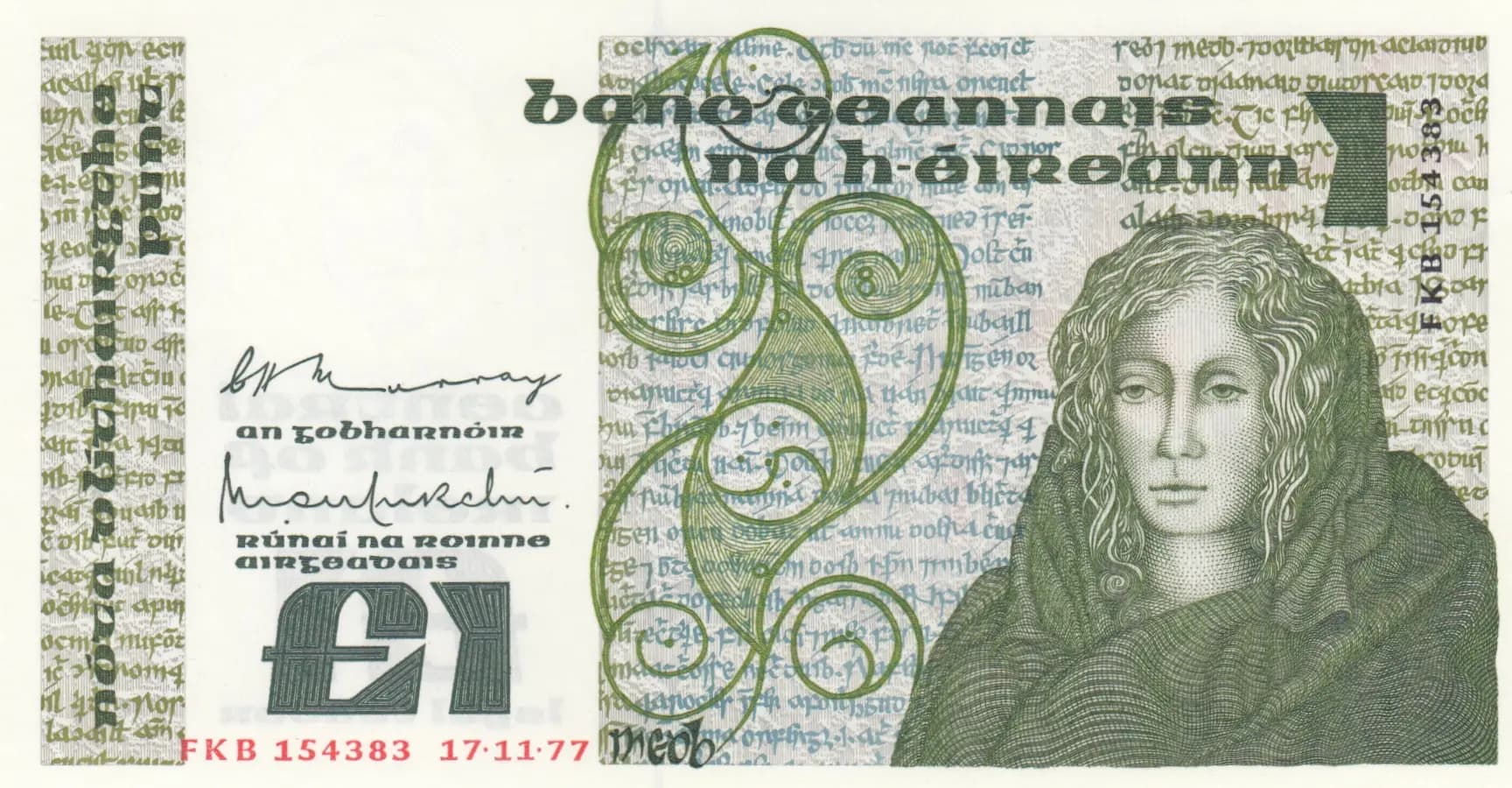
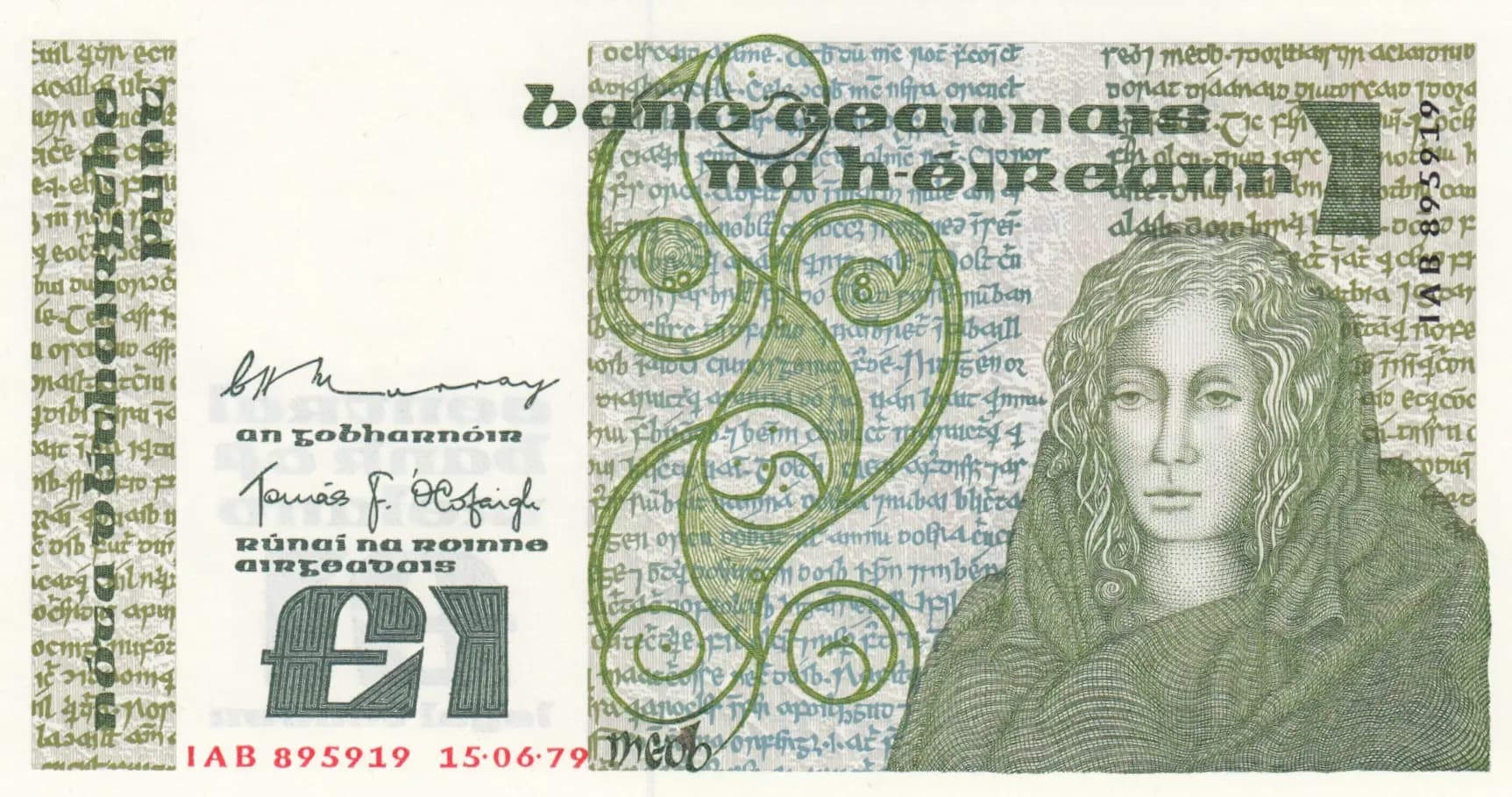
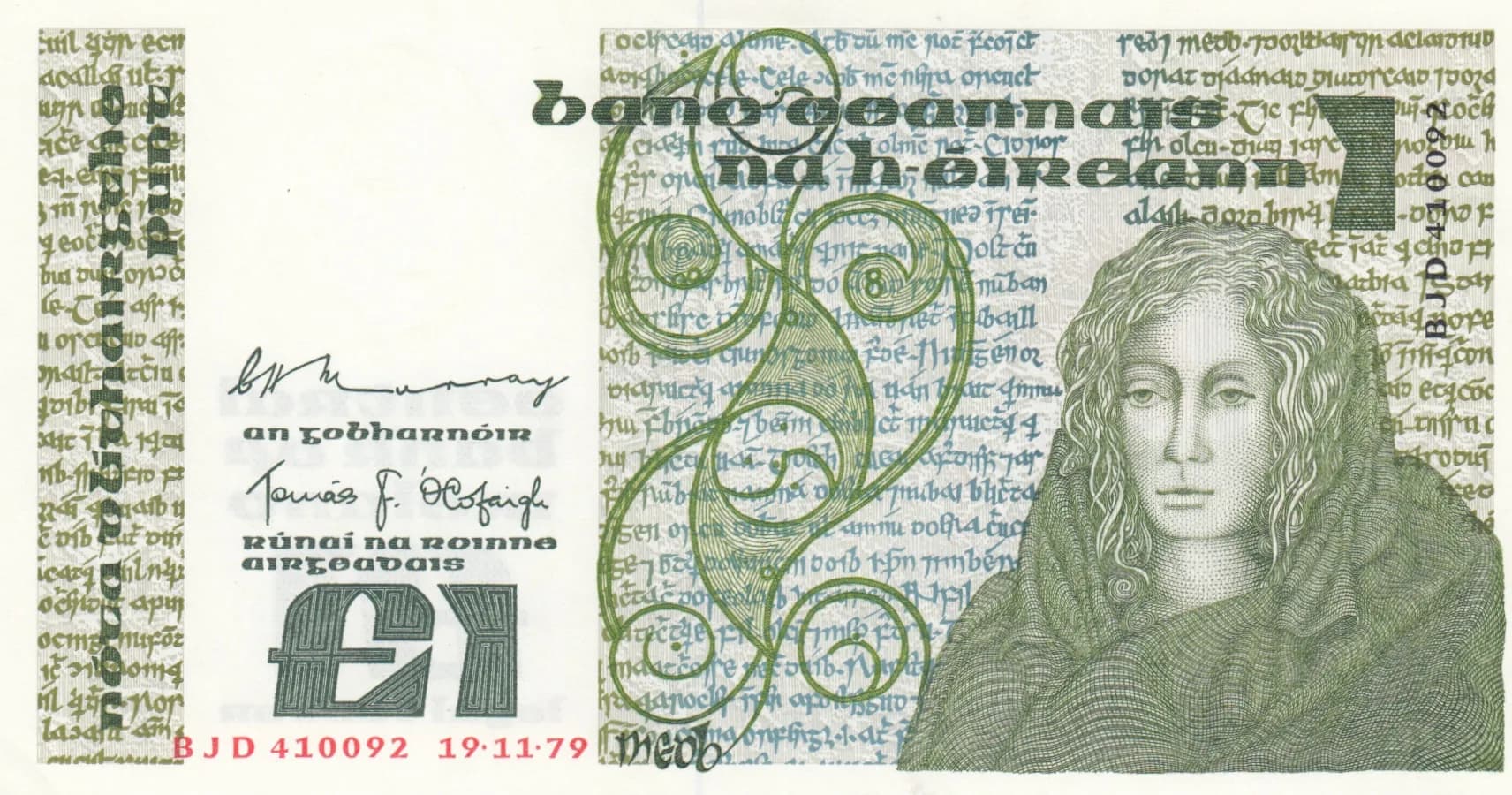
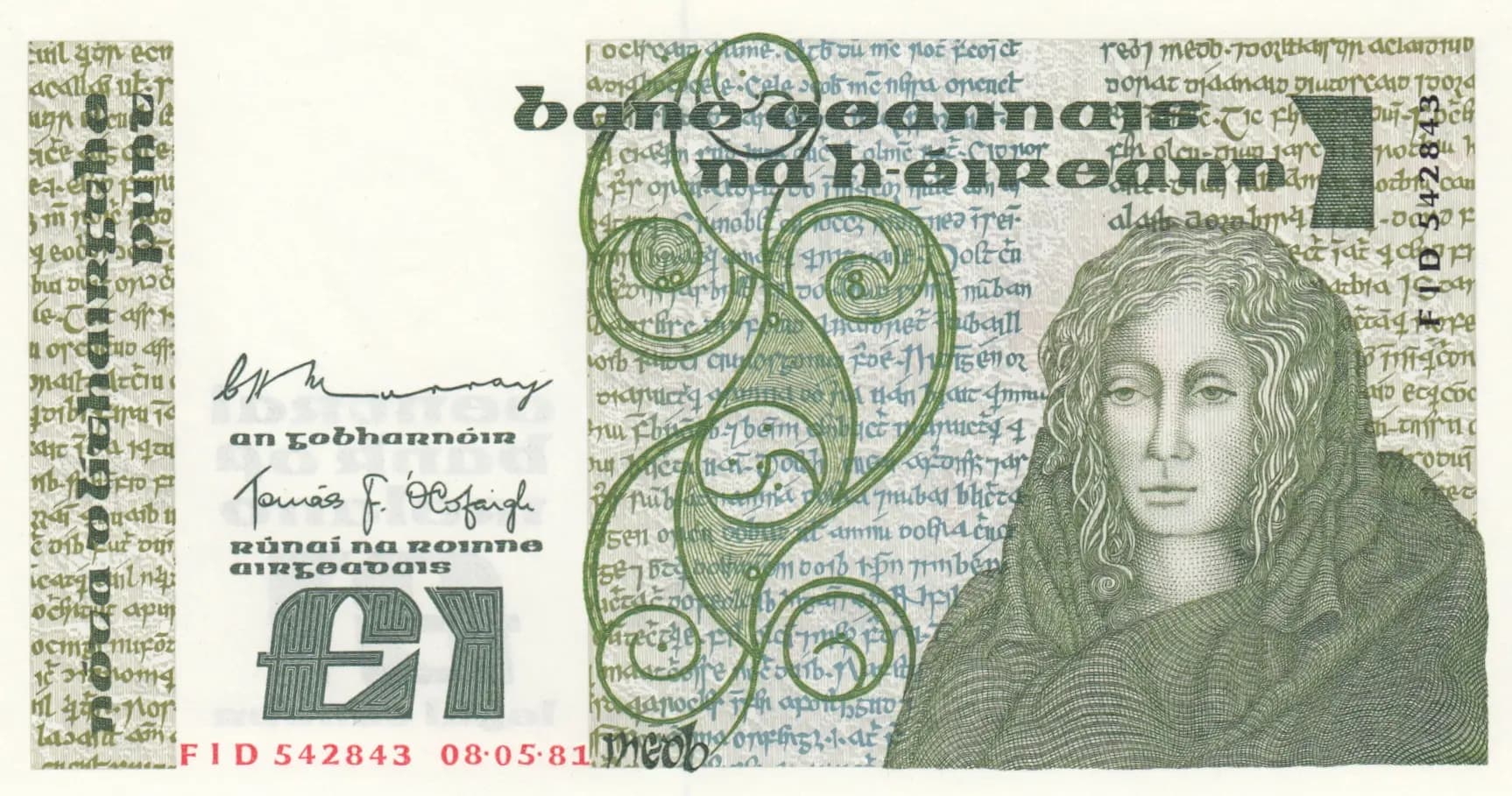
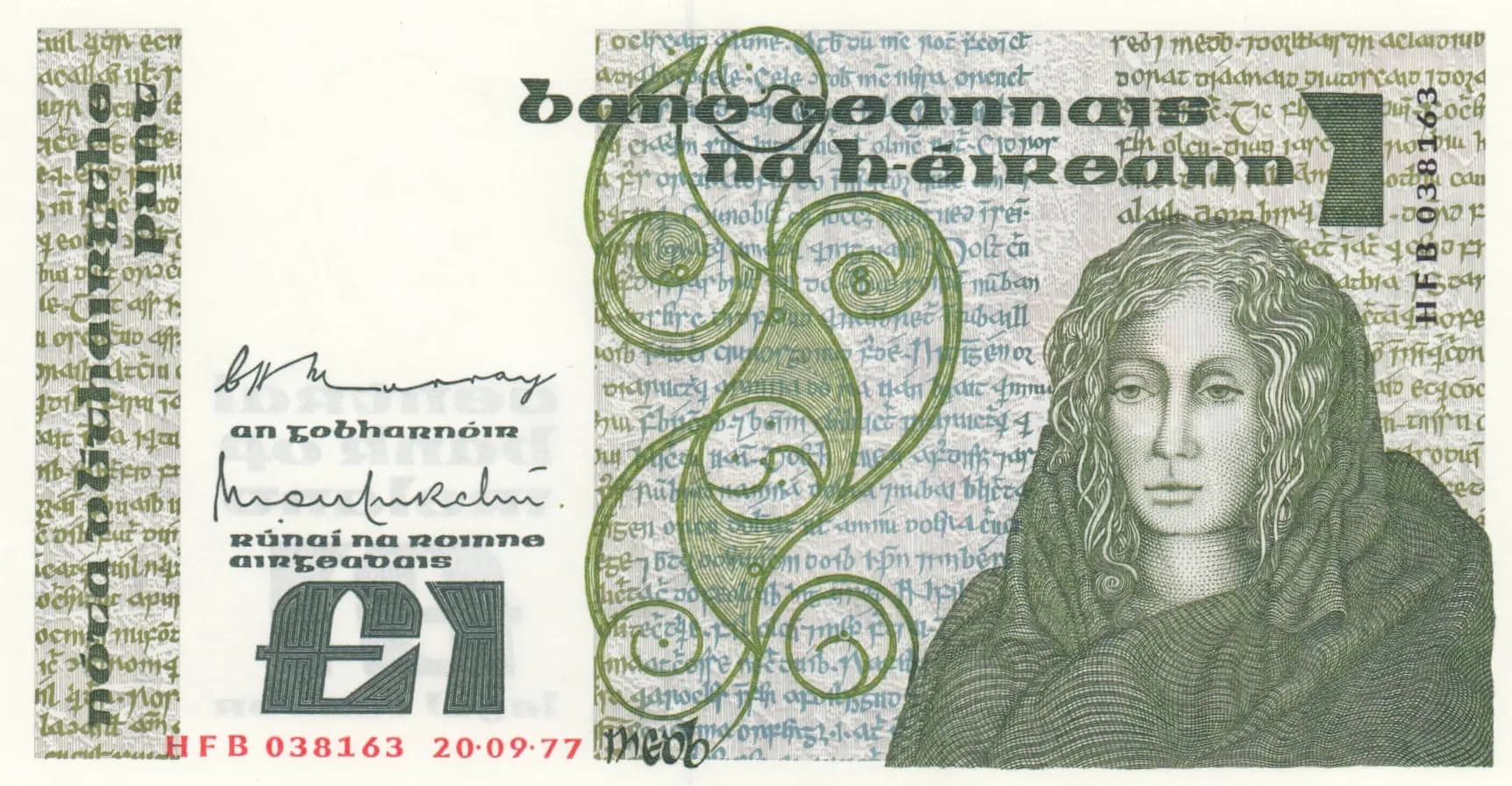
A stunning uncirculated example of the Irish Central Bank's 1977 £1 note (P-70a), featuring the iconic portrait of Queen Maeve rendered in classical engraving style with characteristic long, wavy hair. The note displays pristine condition with vibrant green Celtic spiral designs and decorative elements, accompanied by faded manuscript text in the background and bilingual Irish/English inscriptions. The serial number HFB 038163 with the specific collector date of 20.09.77 marks this as an early issue from the first release date of this series.
common. The 1977-1989 series of Irish £1 notes was produced in substantial quantities by the Central Bank of Ireland for general circulation. While P-70a represents the initial 1977 issue, these notes remain abundant in the secondary market. UNC examples are readily available and typically command prices under €30-50, indicating no scarcity premium. The date of 20.09.77 merely indicates an early print run but does not confer rarity in the absence of documented low mintage figures.
Issued by the Central Bank of Ireland in 1977, this banknote represents Ireland's monetary period between its currency transition and the eventual adoption of the Euro. The prominent imagery of Queen Maeve (Medb), the legendary Irish warrior queen from early Irish mythology, reflects the nation's cultural identity and historical pride during this post-independence era. The reverse's Medieval manuscript-inspired design with ornate illuminated lettering echoes Ireland's rich monastic and literary heritage, particularly referencing the treasures of early Christian Ireland such as the Book of Kells.
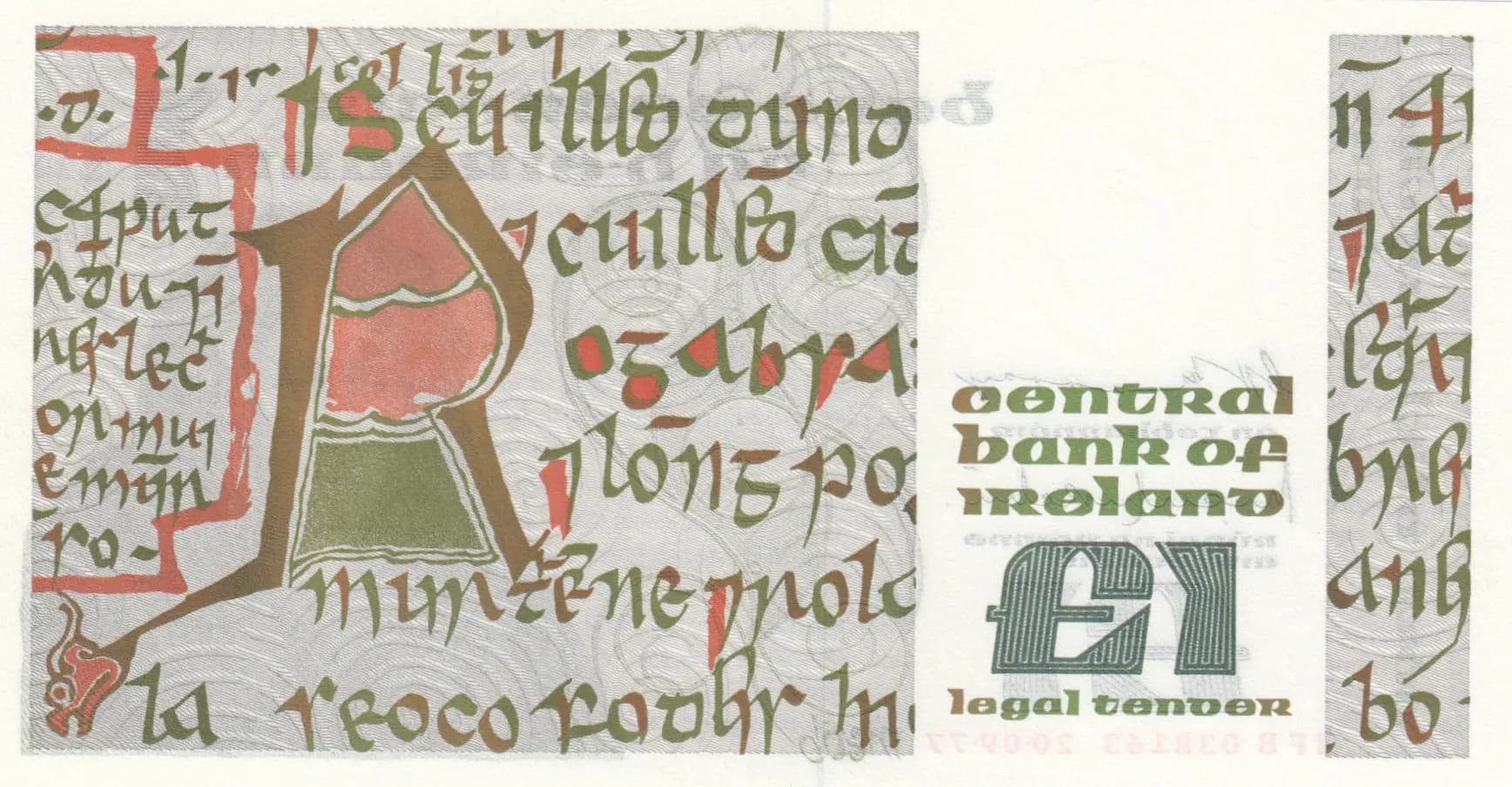
The obverse features Queen Maeve (Medb), the legendary Iron Age warrior queen of Connacht, portrayed with long curly hair in classical engraving style, positioned on the right side of the note. The design incorporates intricate Celtic spiral motifs and circular ornamental patterns rendered in green, characteristic of Celtic art traditions. Decorative vine-like flourishes with spiral elements frame the composition, while faded manuscript text appears as a background security feature. The reverse displays a Medieval illuminated manuscript aesthetic, centered around an ornate initial letter 'R' rendered in red and gold with elaborate decorative flourishes. The design is bordered by Medieval-style manuscript elements and institutional text, evoking the aesthetic of early Irish manuscripts like the Book of Kells. The overall color palette combines green, cream/beige, blue-gray, red, and brown tones.
Front side: '£1' (denomination), 'Beir beannacht ar Mhouireach' (Irish inscription - approximate translation uncertain, possibly related to blessing/benediction), 'rúnaí na roinn airgeadais' (Irish: Secretary of the Department of Finance), 'HFB 038163 20:09:77' (serial number and date code indicating September 20, 1977). Back side: 'central bank of ireland' (English), '£1' (denomination), 'legal tender' (English), plus partial Medieval Irish manuscript text 'scríobh oímo scríobh cír loinge po' (translation uncertain - appears to be decorative Medieval manuscript excerpt).
Intaglio engraving (line engraving) with multicolor offset printing, utilizing the classical banknote security printing techniques standard for Central Bank of Ireland currency of this period. The fine detail work on the portrait and Celtic designs, combined with the layered color application visible in the manuscript elements, indicates professional security printing by De La Rue or similar specialized currency printer. Security features include microprinting elements suggested by the faded manuscript text background and red-printed serial numbering.
This note is identified as P-70a based on the Pick catalog classification. The PMG population report indicates four catalogued variants (P-70a through P-70d), all sharing the Lady Lavery watermark designation. The specific variety P-70a represents the initial 1977 issue variant. The serial number prefix 'HFB' and the specific date code '20:09:77' visible on this note reflect an early production batch from the series' debut, though this does not constitute a distinct cataloged variety.