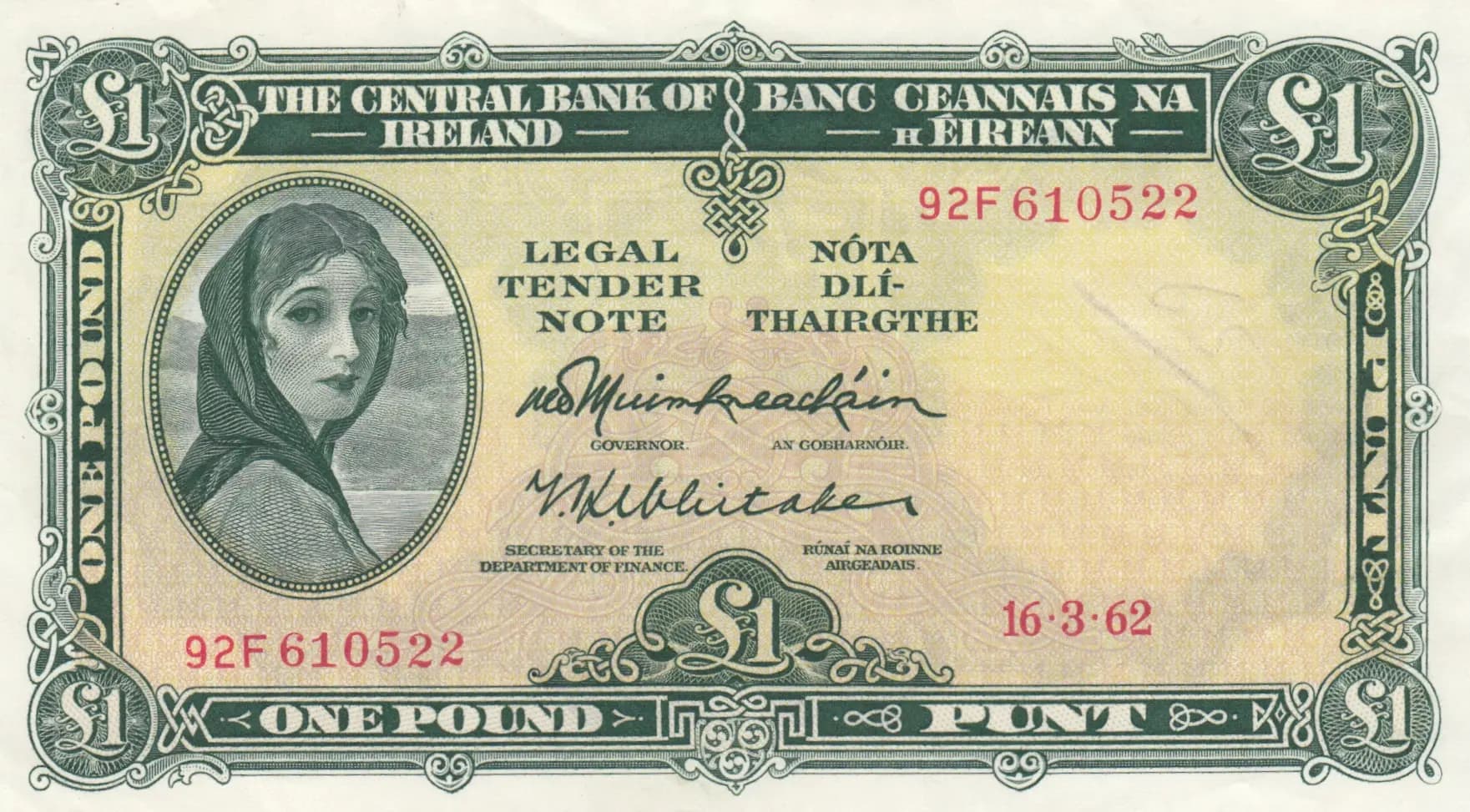
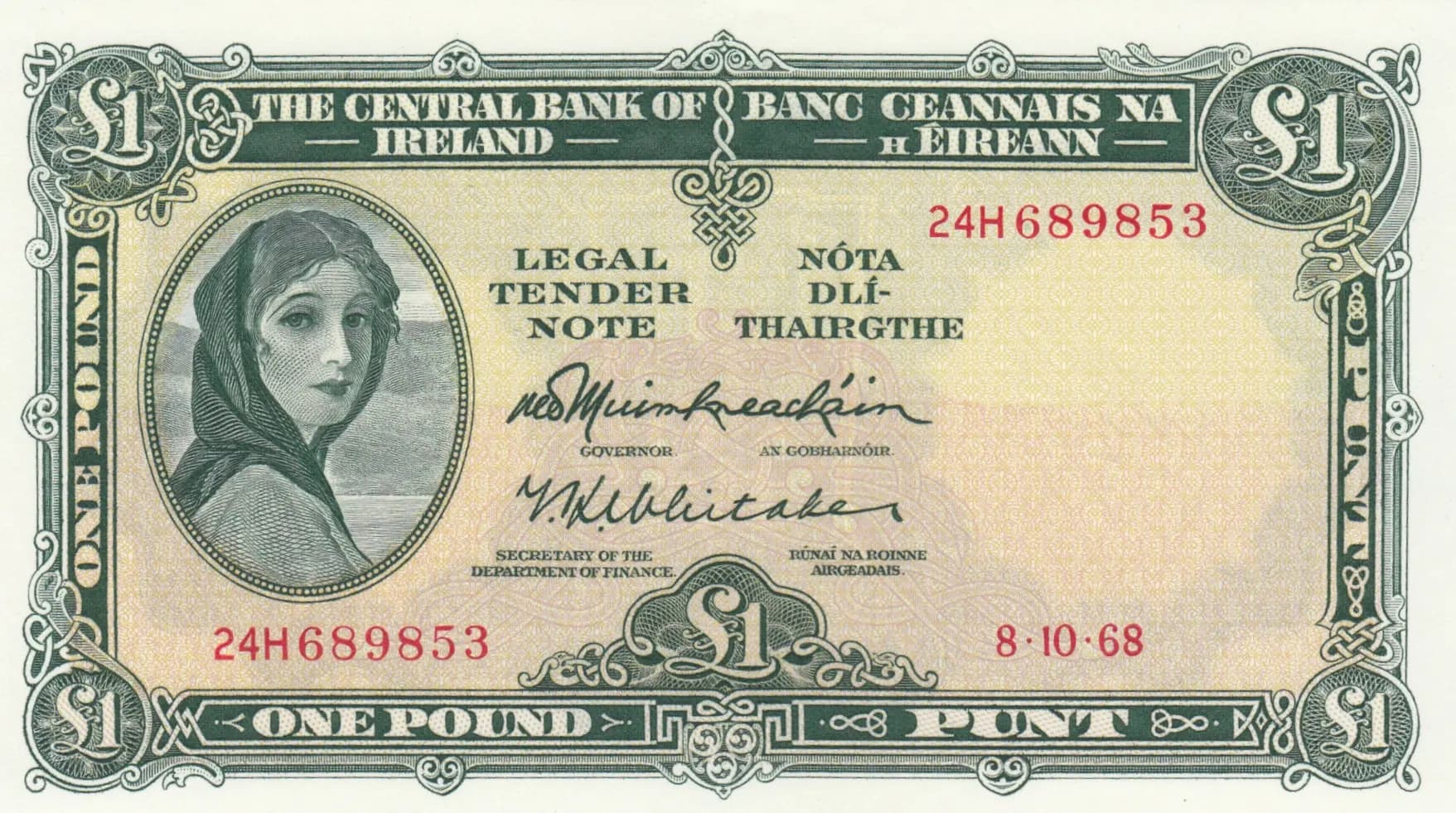
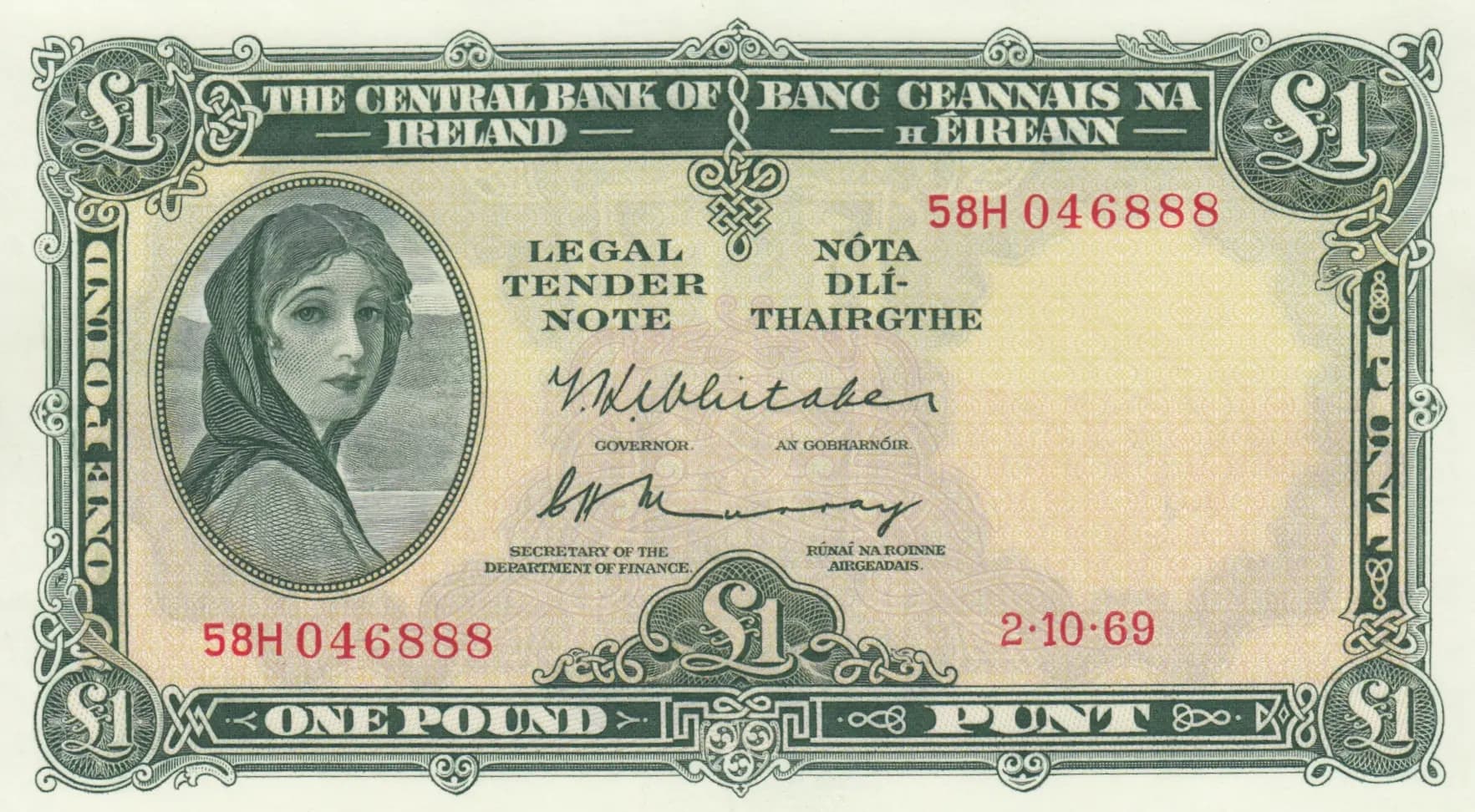
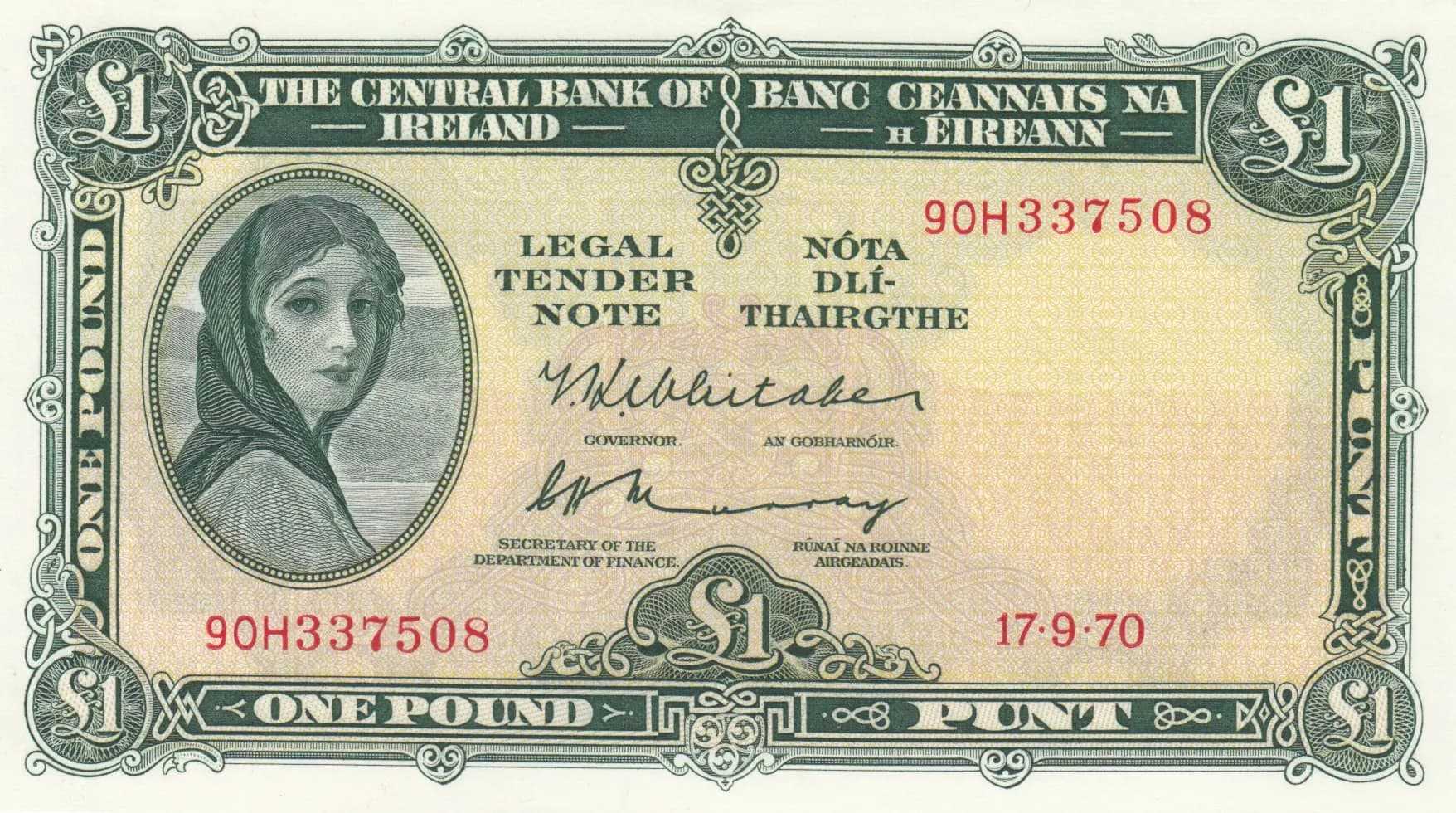
1 pound 1967
Market Prices
About This Note
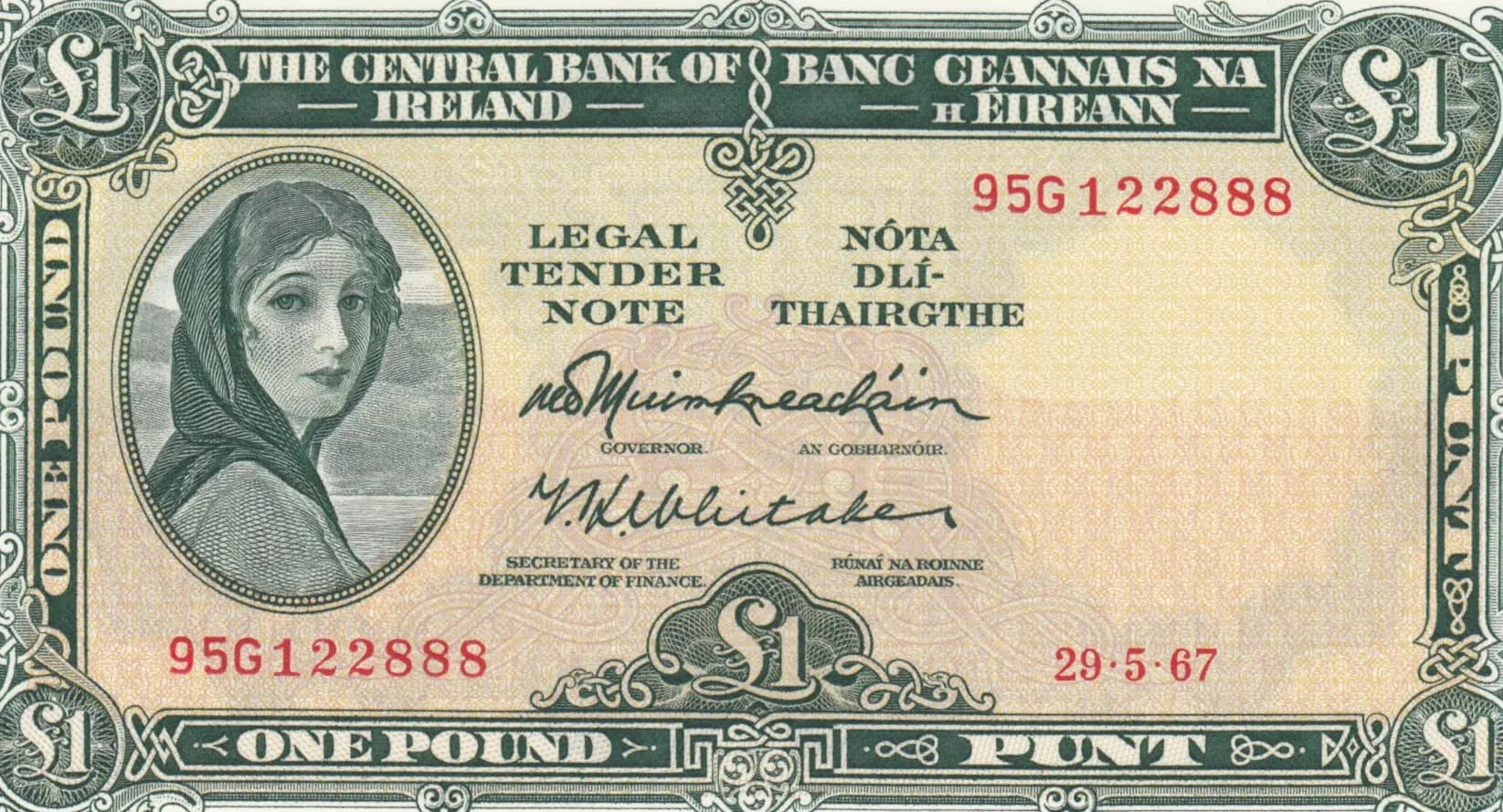
An exceptional example of Ireland's first decimal pound note from 1967, presented in uncirculated condition with pristine paper quality and vibrant green coloring throughout. This P-64a variant features the characteristic Head of Erin watermark and displays bilingual English-Irish inscriptions reflecting post-independence Ireland's linguistic policy. The note exhibits no signs of circulation, with crisp engraving, bright red serial numbers, and clean borders—making it an attractive specimen for collectors of early Irish currency or Commonwealth banknotes.
Common. The 1967 Irish pound notes entered general circulation and were printed in substantial quantities during the early years of the modern currency system. The eBay price data provided shows UNC examples trading in the $25–$175 USD range, with most listings under $100 USD, which is consistent with common-grade banknotes. No evidence of a limited print run, early recall, or short-lived issuing authority exists for this Pick number. P-64a remained in circulation until decimalisation and the transition to later pound designs, ensuring adequate supply for collectors today.
Issued by the Central Bank of Ireland on 29 May 1967, this pound note represents the early years of the modern Irish state's monetary independence and cultural identity. The bilingual design (English and Irish/Gaelic) and the classical female portrait on the obverse reflect Ireland's emphasis on Gaelic heritage and cultural revival following independence. The note's intricate Celtic-inspired geometric patterns and ornamental designs underscore the nationalist aesthetic that characterized post-1922 Irish banknote design.
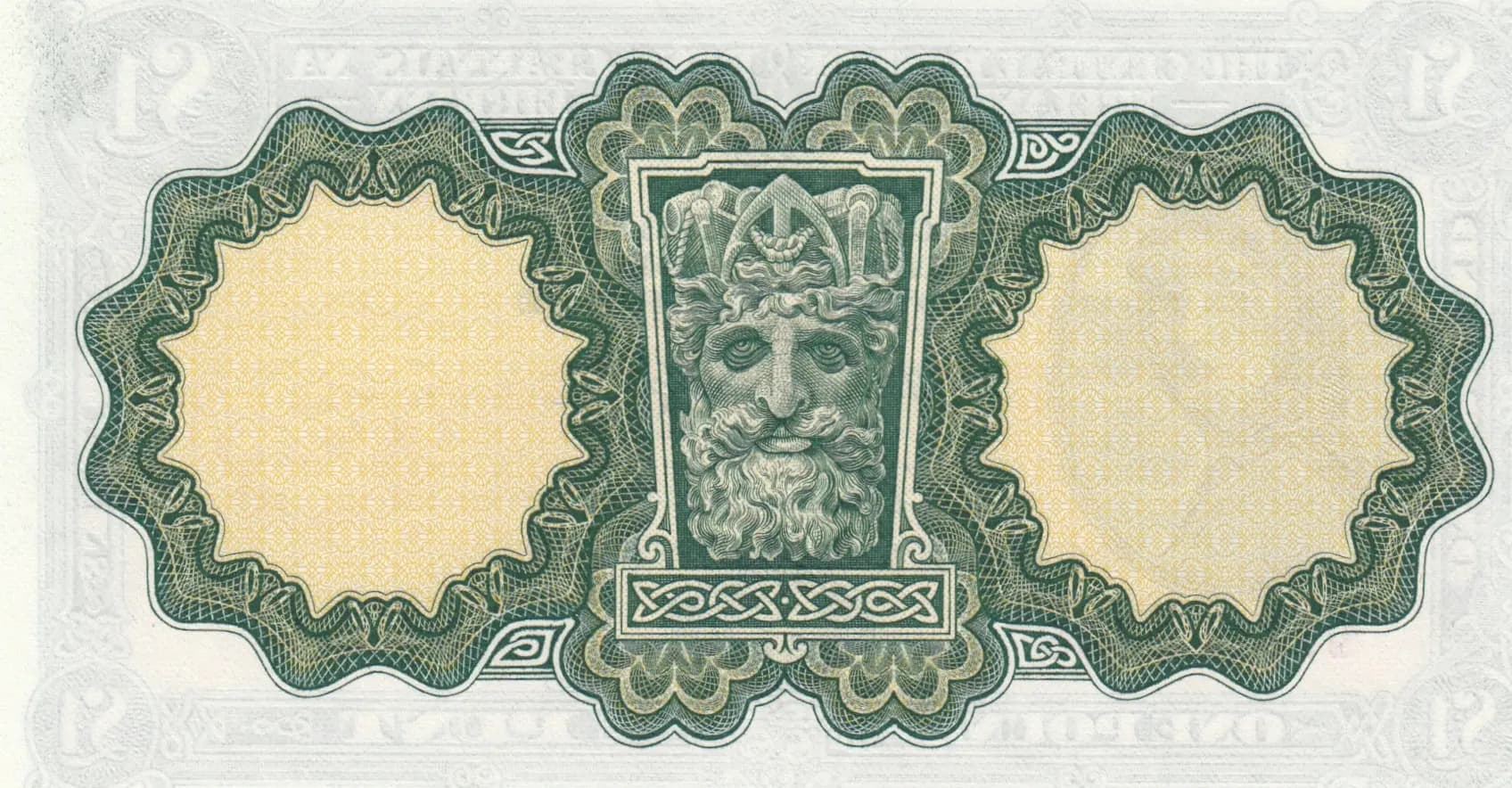
This 1967 Irish pound note features a classical female portrait in left profile on the obverse, rendered in fine engraving style and framed within an oval cartouche—representing Hibernia or the personification of Ireland. The reverse displays a bearded male portrait in classical sculptural style, likely representing a significant historical or cultural Irish figure, centered within an elaborate shield-shaped arrangement of Celtic knot work and geometric patterns. Both sides employ ornate decorative borders with corner ornaments incorporating the £1 denomination symbol, Celtic scrollwork, and symmetrical floral-geometric medallions. The dominant green coloring with cream/off-white and black engraved details creates a visually cohesive design reflective of early Central Bank of Ireland aesthetic standards. Bilingual text appears throughout, emphasizing the note's role in a culturally conscious, post-independence Irish state.
FRONT SIDE: 'THE CENTRAL BANK OF IRELAND' (English) / 'BANC CEANNAIS NA hÉIREANN' (Irish: Central Bank of Ireland) | 'LEGAL TENDER' (English) / 'NÓTA DLÍ-THAIRGTHE' (Irish: Legal Tender Note) | 'ONE POUND' (English) / 'PUNT' (Irish: Pound) | 'GOVERNOR' (English) / 'AN GOBHARNÓIR' (Irish: The Governor) | 'SECRETARY OF THE DEPARTMENT OF FINANCE' (English) / 'RÚNAÍ NA ROINN AIRGEADAIS' (Irish: Secretary of the Department of Finance) | Date: '29·5·67' (29 May 1967) | Serial Number: '95G1228888' | BACK SIDE: No inscriptions visible in analysis (reverse features portraiture and ornamental design only).
Intaglio (recess/engraved) printing, the standard security printing method for banknotes during this period. The fine line work visible in the portraits, Celtic patterns, and ornamental borders, combined with the crisp impression and detail preservation in the uncirculated example, are characteristic of high-quality intaglio production. The note was produced by the Central Bank of Ireland's approved security printer; Irish notes of this era were typically printed by De La Rue or similar Commonwealth security printers, though definitive attribution requires additional research into Central Bank records.
This note is identified as Pick P-64a, characterized by the Head of Erin watermark. The PMG population report indicates four catalogued variants for the base Pick number: P-64a (Head of Erin watermark), P-64b (Head of Erin watermark variant), P-64c (with security thread), and P-64d (Head of Erin watermark). The visual analysis confirms the P-64a identification through the observable Head of Erin watermark. The serial number prefix '95G' and the issue date of 29 May 1967 are consistent with early issuances of this design. No overprints or unusual signatures are evident in the specimen examined.