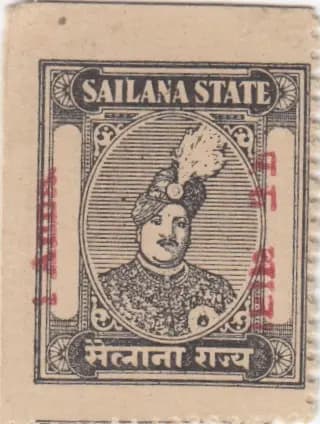
1 anna
About This Note
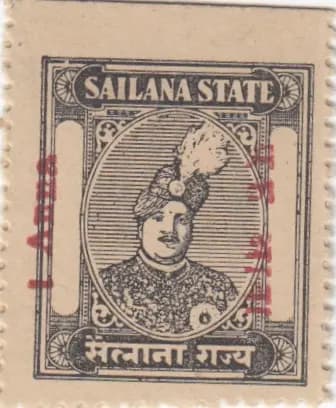
This is an exceptional UNC example of the Sailana State 1 Anna note (Pick S431a), featuring a striking portrait of a bearded nobleman in profile wearing an ornate jeweled garment and distinctive feathered headdress. The note displays the characteristic tan/cream aged patina of early Indian princely state currency with red archival marks, and the reverse contains cataloging notations indicating this piece has museum or collection documentation. The pristine condition combined with dual-language inscriptions (English and Devanagari) makes this an important example of Sailana's currency system.
common. Sailana State notes, while from a minor princely state, were produced in adequate quantities for circulation within the state's territory. The Pick catalog designation S431a indicates this is a cataloged but not exceptionally scarce variety. No evidence of particularly limited print runs, recalls, or extreme scarcity markers is apparent. Notes from small princely states are generally common in proportion to their issuance, and the UNC condition, while desirable, does not independently indicate rarity—only preservation quality.
Sailana was a small princely state in Central India that issued its own currency within the pre-independence Pice/Anna system. The portrait depicted—a nobleman in full regalia with feathered headdress and jeweled clothing—represents the ruling authority of the state and reflects the tradition of Indian princely states issuing currency bearing their ruler's likeness. The bilingual inscriptions (English and Hindi/Devanagari) reflect the colonial-era administrative structure where English was the language of governance alongside regional languages.
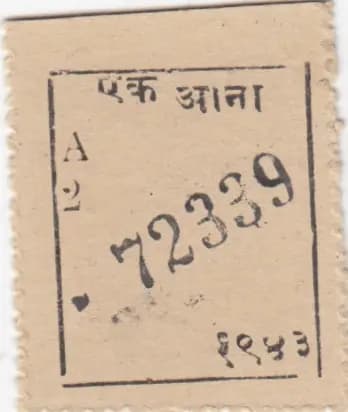
The obverse features a formal portrait in profile of the Sailana ruler or state dignitary, a bearded man facing right, adorned with an ornate jeweled doublet and a distinctive tall plumed or feathered headdress indicating high rank and authority. The portrait is enclosed within an ornate rectangular border with decorative corner ornaments and flourishes at top and bottom. Horizontal line patterns form the background behind the portrait, creating depth. Red rectangular marks flank the central portrait area, likely applied during cataloging or archival processing. The reverse is minimal, containing primarily archival and cataloging information in a simple rectangular frame, with handwritten notations and control numbers. The note exhibits the typical design sensibilities of early 20th-century Indian princely state currency.
FRONT SIDE: 'SAILANA STATE' (English) / 'सैलाना राज्य' (Hindi/Devanagari: Sailana State). REVERSE SIDE: 'एक प्राणा' (Hindi/Devanagari: One Anna) / Additional markings include 'A', '2', '7234D' (alphanumeric catalog reference), and '५८४२' (Devanagari numerals: 5842, likely a reference or control number).
Letterpress or intaglio printing, typical of early Indian currency production. The crisp definition of the portrait, ornamental borders, and text elements suggests professional security printing practices standard for princely state notes of this era. The note was likely produced by a British security printer specializing in Indian state currency.
Pick S431a identifies this as a specific cataloged variety of Sailana's 1 Anna note. The reverse markings ('7234D' and '५८४२') appear to be archival control numbers rather than serial numbers, suggesting this note has been part of a documented collection. Potential varieties within Sailana's 1 Anna denomination may exist based on printer, date, or control number series, though these would require comparative analysis against other cataloged examples. The presence of red archival marks distinguishes this as a handled collection piece.