2 annas 1942
About This Note
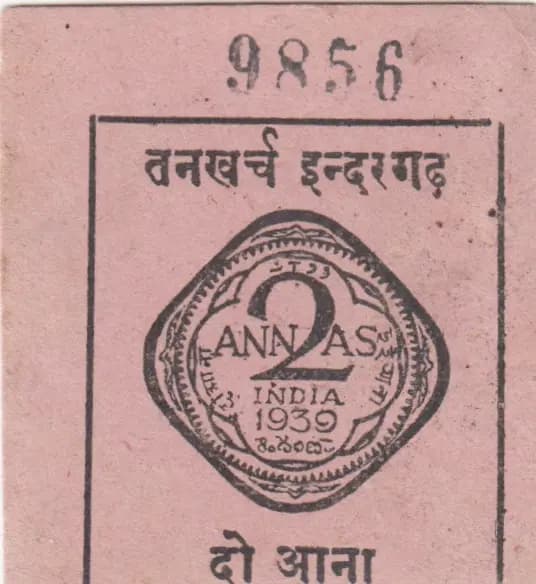
This 2 Annas note from Indergadh, India (1942) features a distinctive circular coin/medallion design with scalloped edges against a pink/mauve background, a striking departure from typical portraiture-based currency designs of the era. The note exhibits an AU condition grade with visible foxing and age-related discoloration consistent with an 80+ year old banknote, while the reverse remains largely blank. The bilingual presentation in English and Devanagari script reflects the linguistic diversity of the Indian subcontinent during the pre-independence period.
Common. The 2 Annas denomination from Indergadh (Pick S283) in AU condition is readily available in the collector market. While Indergadh state currency is not ubiquitous, it was issued in sufficient quantities during its period of use that examples in good condition regularly appear in numismatic collections and dealers' inventories. The 1942 issue date falls within the active circulation period before currency consolidation, suggesting reasonable print runs. No documented scarcity factors (short print runs, major recall, or extreme rarity) are known for this specific Pick number.
The Indergadh state's 2 Annas note from 1942 represents the final years of the fragmented Indian princely state monetary systems before the post-independence currency consolidation. The Anna System denomination and the use of both English and Devanagari inscriptions reflect the transitional period of British colonial influence in India. The circular coin imagery, rather than a portrait of a ruler or national figure, suggests Indergadh's particular approach to numismatic symbolism during this period of political uncertainty.
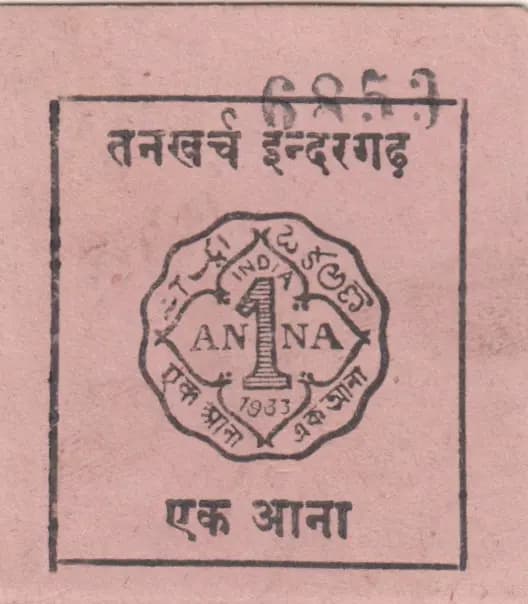
The obverse features a central circular medallion or coin design with scalloped/decorative edges, prominently displaying the denomination and year within its circumference. This numismatic symbolism served as the primary design element, emphasizing the currency's value and legitimacy through the visual language of coinage. A decorative border pattern frames the central medallion against the pink/mauve field. The reverse is blank, a common feature of emergency or local state currency issues from this period. The choice of a coin image rather than a portrait reflects either Indergadh's independent design preferences or practical constraints in note production.
FRONT SIDE: '2 ANNAS' (English denomination), 'INDIA' (English country name), 'दो आना' / 'Do Anna' (Devanagari: Two Annas), 'तनखचर्च इन्द्रागढ़' (Devanagari: Tankharch Indergadh or similar locality designation), '1939' (English: date/year - note discrepancy with catalog year 1942), '98.56' (English: reference/catalog number). BACK SIDE: No inscriptions present.
The note exhibits characteristics consistent with lithographic printing, evidenced by the relatively simple line work, flat color fields (pink/mauve background with black ink), and the decorative border patterns typical of early-to-mid 20th century Indian state currency production. The printing quality and registration suggest local or regional Indian printing facilities rather than the security printers used for central government currency. No sophisticated security features are evident, consistent with state-level currency of this period.
The note displays a date discrepancy between the catalog designation (1942) and the visible inscription showing '1939,' warranting verification against the official Pick catalog and known varieties. This may indicate either a catalog dating convention, a printing date versus issue date distinction, or the use of earlier plates in 1942 production. No significant variety markers (such as signature variations, serial number prefixes, or overprints) are evident from the visual analysis. The bilingual text configuration appears standard for this issue.