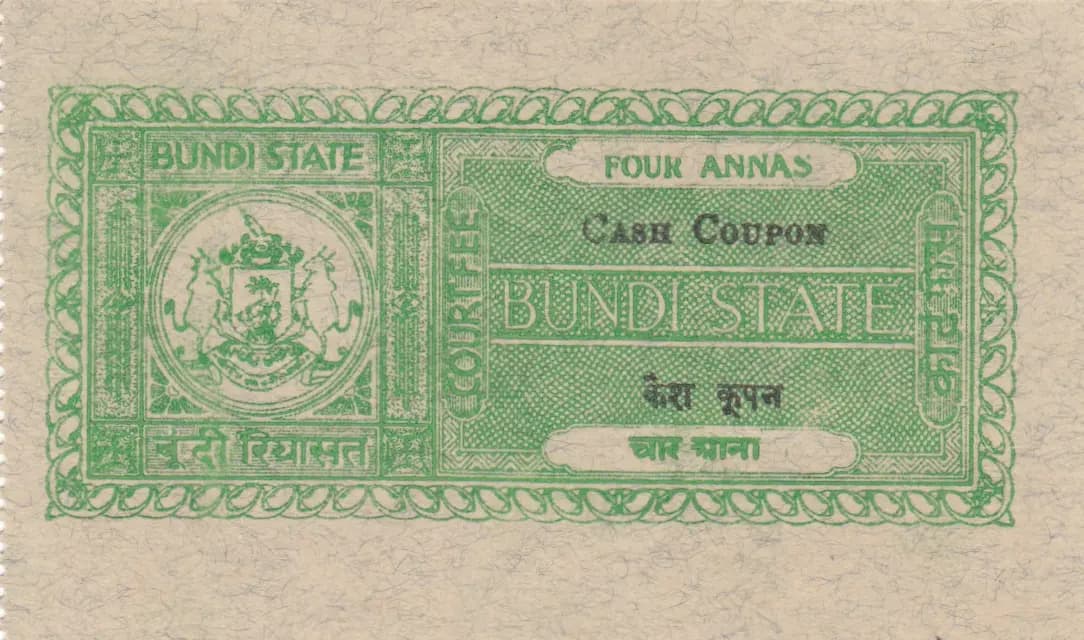
3 pies
About This Note
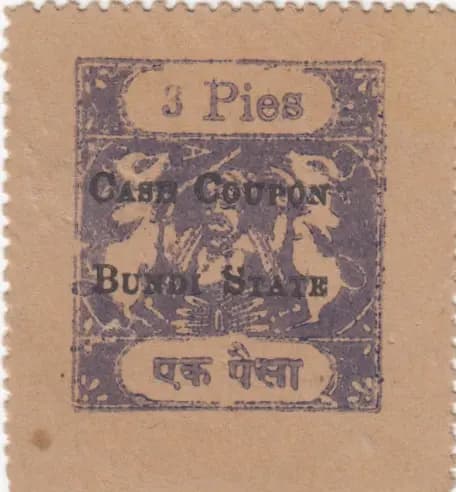
This is a 3 Pice stamp-format postal item from Bundi State, featuring a portrait of a bearded historical figure in purple ink on cream/tan paper. The note displays the characteristic ornamental borders and bilingual inscriptions (English and Devanagari) typical of early Indian state postal currency. Despite significant age-related foxing and discoloration consistent with its vintage origins, the print impression remains clear, and the perforated edges indicate its original stamp-sheet format.
Common. Bundi State postal stamps and currency items were produced in reasonable quantities during their period of issue, and examples have survived in various collections. The catalog listing (Pick P-S221) indicates this is a recognized type in standard references, suggesting adequate surviving specimens. No evidence of extremely limited print runs or recalls is present in the visual analysis or catalog data.
Bundi State was a princely state in Rajasthan that issued its own postal currency during the pre-independence era when local states maintained separate monetary systems. The bilingual English-Devanagari inscriptions reflect the transitional period of Indian administration, while the portrait likely represents a local ruler or dignitary significant to Bundi's governance. This postal denomination (3 Pice) represents the fractional currency system that predated India's modern decimal monetary system.
The obverse features a centrally placed portrait of a bearded man facing forward, likely depicting a Bundi State ruler or official of historical significance. The design employs ornamental border framing with decorative curved corner elements typical of early 20th century stamp currency design. The purple/violet printing on cream background provides high contrast for visibility. The bilingual text placement—English around the border and Devanagari at the bottom—reflects the administrative practice of the Indian princely states during the British Raj period. The perforated top edge confirms this item's original context as part of a printed sheet of stamps.
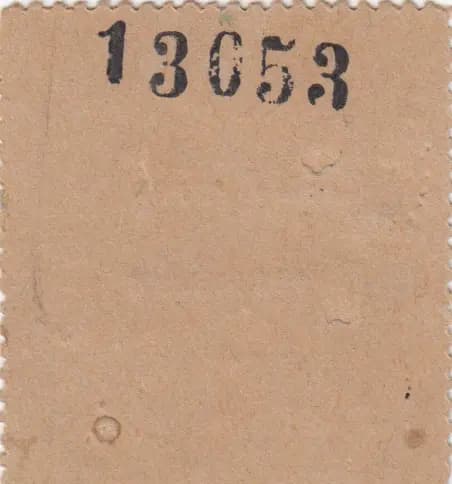
Front side: '3 Pice' (English denomination), 'BUNDI STATE' (English issuer identification), 'CAMP COURIN' (English location reference), 'एक पैसा' (Devanagari: 'One paisa' - though this appears to be a translation variant or alternate denomination marking). Back side: '13053' (reference/catalog number stamped in black).
Letterpress or typography printing, evidenced by the crisp, uniform impression of the portrait and text with clear registration. The single-color purple application and consistent ink saturation suggest traditional platen press printing from moveable type and engraved blocks. The aged appearance and foxing patterns are consistent with early 20th century paper stock and natural aging rather than deliberate distressing.
The inscription 'एक पैसा' (One paisa) appears inconsistent with the '3 Pice' denomination stated in English, suggesting this may be a known variety or overprint/correction. The reference number '13053' stamped on the reverse may indicate a specific collection provenance or cataloging mark. Further research into Bundi State postal currency documentation would be needed to confirm whether this paisa inscription represents a documented variety or intentional denomination marking system.