500 kronur 1961
About This Note
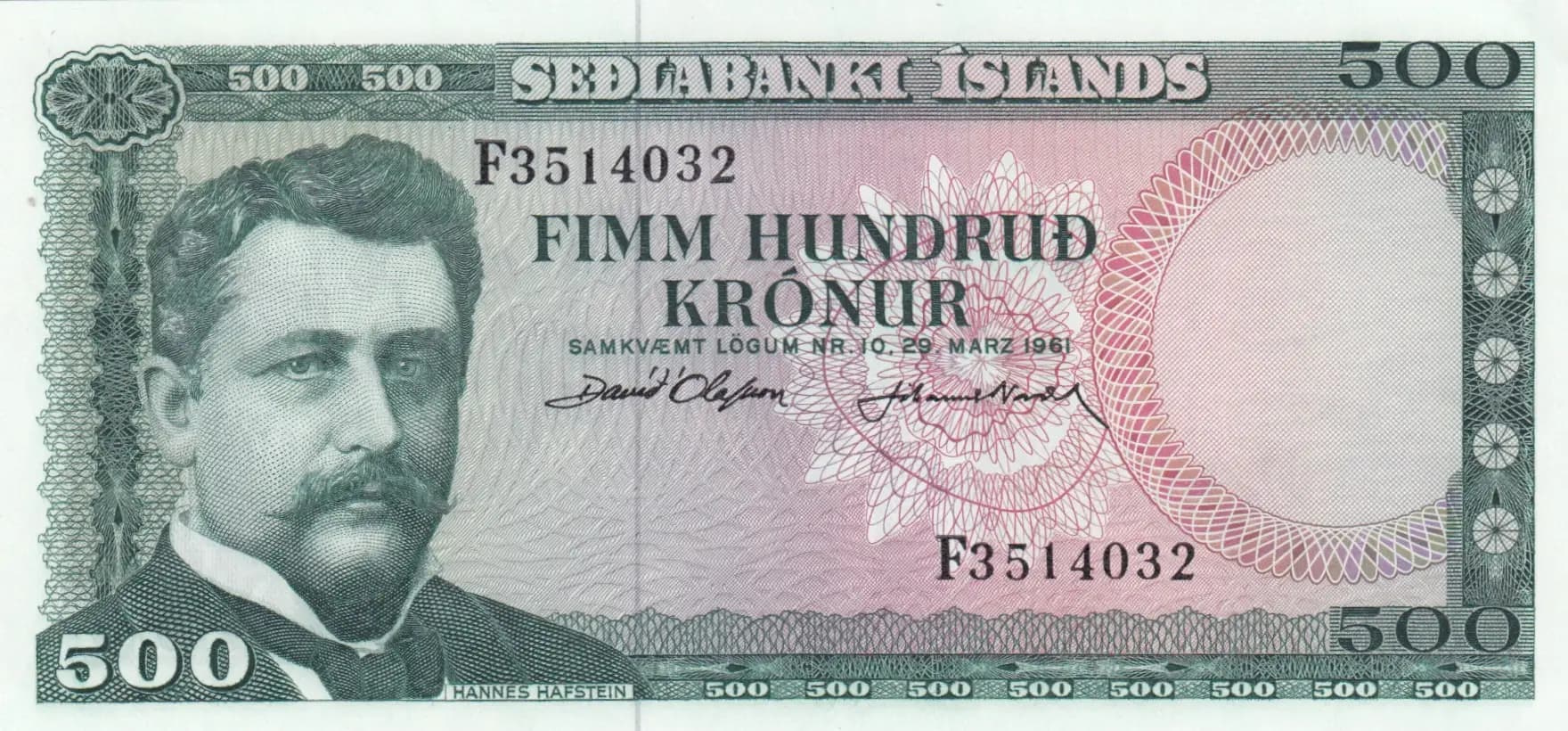
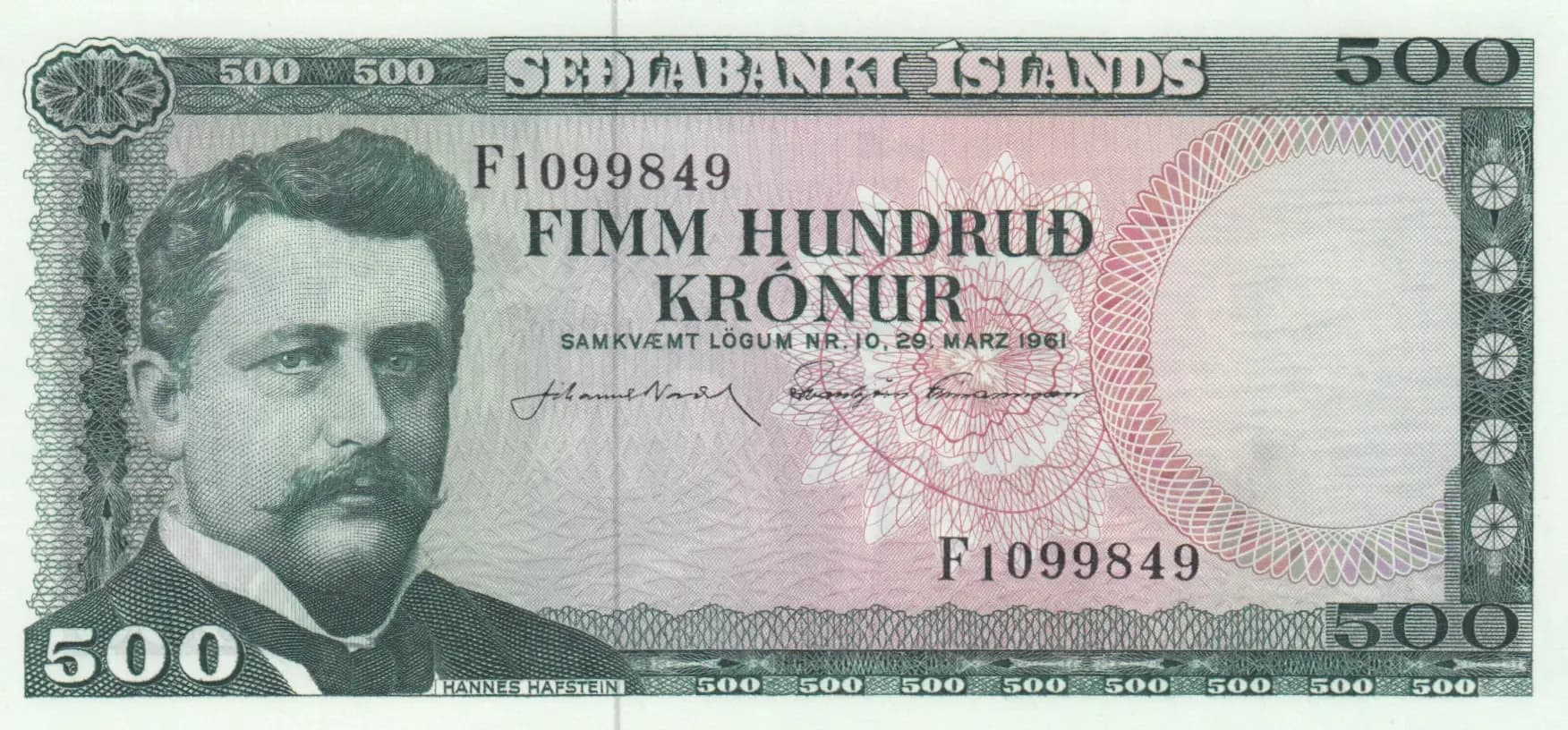
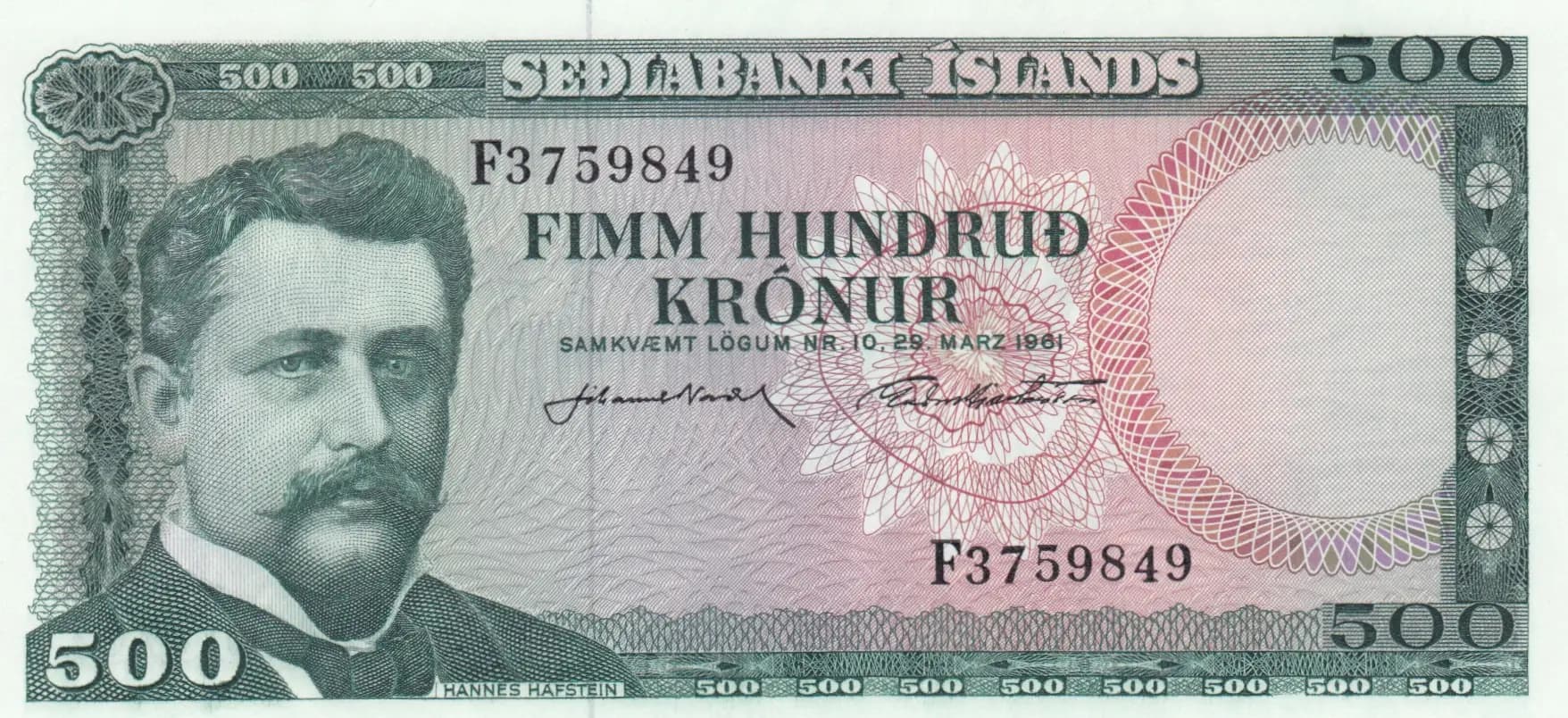
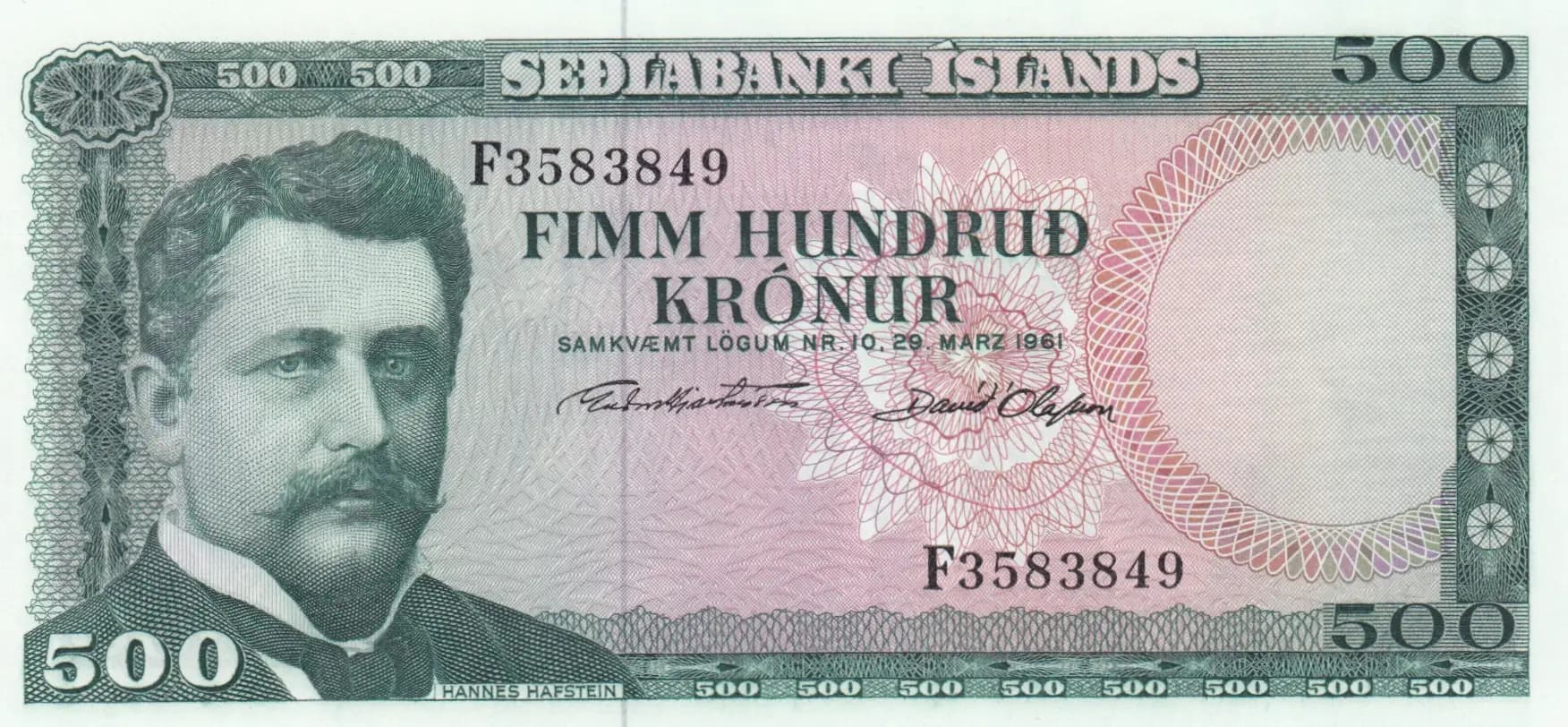
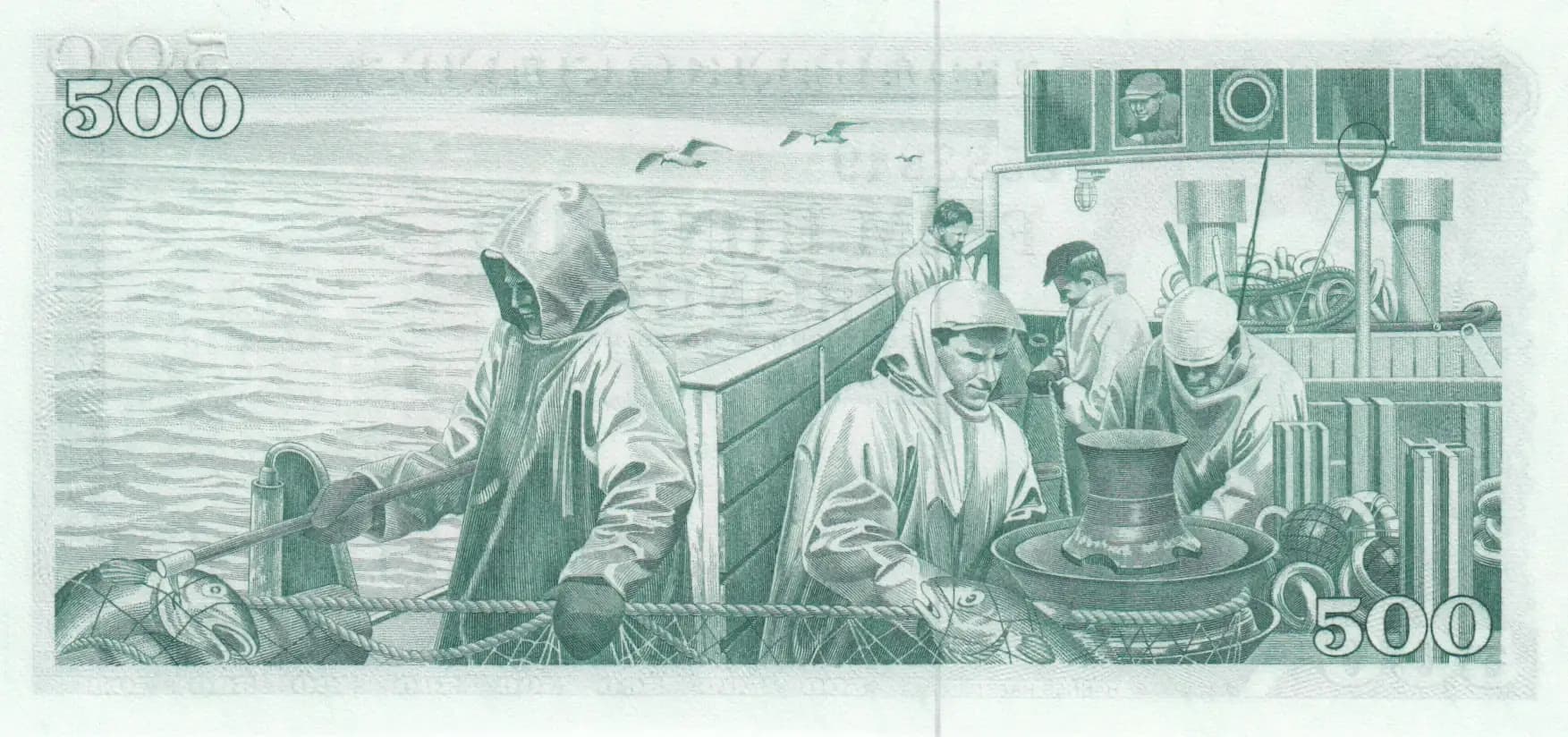
This Iceland 500 Kronur note from 1961 presents a striking two-color design featuring a portrait of Hannes Hafstein on the obverse in green and teal tones complemented by pink/red floral rosette patterns. The reverse depicts a detailed maritime scene of Icelandic fishermen working on a vessel, rendered in fine engraved linework. The note shows UNC condition with only a light horizontal fold visible, preserving the crisp detail of the elaborate guilloche patterns and fine engraving that characterize this early Central Bank of Iceland issue.
Common. The 500 Kronur denomination from the 1961 series represents standard circulation coinage from Iceland's early Central Bank period. No historical evidence of limited print runs, early recalls, or significant scarcity exists for Pick-45(6). Notes from this series and denomination appear regularly in the numismatic market. UNC condition examples, while more desirable than circulated pieces, do not command premium pricing that would indicate rarity, typically trading in the $15-40 range depending on serial number appeal.
Issued under Law No. 10 of March 29, 1961, this note reflects Iceland's post-independence monetary development and the nation's deep cultural connection to fishing and the sea. Hannes Hafstein, depicted on the obverse, was a prominent Icelandic statesman and cultural figure, while the reverse's fishermen scene celebrates Iceland's primary economic activity and maritime heritage during this period. The design choices underscore Iceland's identity as a seafaring nation in the early years of the Sedlabanki Islands' operation.
The obverse features Hannes Hafstein (1861-1922), Icelandic statesman and first Prime Minister, shown as a bearded man in formal contemporary attire positioned on the left side of the note. His portrait is rendered in green/teal intaglio printing with fine detail work. The right side is adorned with ornamental circular seals and pink/red floral rosette medallions, characteristic of early 20th-century Nordic banknote security design. The reverse depicts an authentic maritime labor scene showing multiple fishermen engaged in net-handling and vessel operations on what appears to be a traditional Icelandic fishing boat, with seabirds in flight and ocean waves rendered through precise cross-hatching. The entire design employs elaborate geometric guilloche patterns as anti-counterfeiting measures.
FRONT SIDE: '500' (denomination), 'SEÐLABANKI ISLANDS' (Central Bank of Iceland), 'FIMM HUNDRUÐ KRÓNUR' (Five Hundred Kronur), 'HANNES HAFSTEIN' (portrait subject's name), 'SAMKVÆMT LÖGUM NR. 10. 29. MARZ 1961' (According to Law No. 10, March 29, 1961), 'F3583849' (serial number). BACK SIDE: '500' (denomination markers in lower corners). All inscriptions reflect official Icelandic language and legal references establishing the note's authority.
Intaglio engraving (recess printing), the traditional security printing method for banknotes. The fine line work, detailed cross-hatching in the maritime scene, and complex geometric patterns visible throughout indicate professional security engraving. The color separation between green/teal and pink/red suggests multi-plate intaglio printing. Sedlabanki Islands typically contracted with established European security printers for this series; the technical quality suggests work by a specialized banknote printer such as those based in Sweden, Germany, or Britain, though specific attribution requires production records.
This specific note is identified as Pick-45(6), indicating it is the sixth known variety or signature combination within the 500 Kronur 1961 series. The serial number prefix 'F' and the specific number sequence 'F3583849' may indicate printing position or plate variant. Collectors of Icelandic notes should cross-reference serial number prefixes (A through F or beyond) to establish all known varieties within this Pick number. The March 29, 1961 date is consistent across the series; no date varieties are known for this denomination.