100 kronur 1981
About This Note
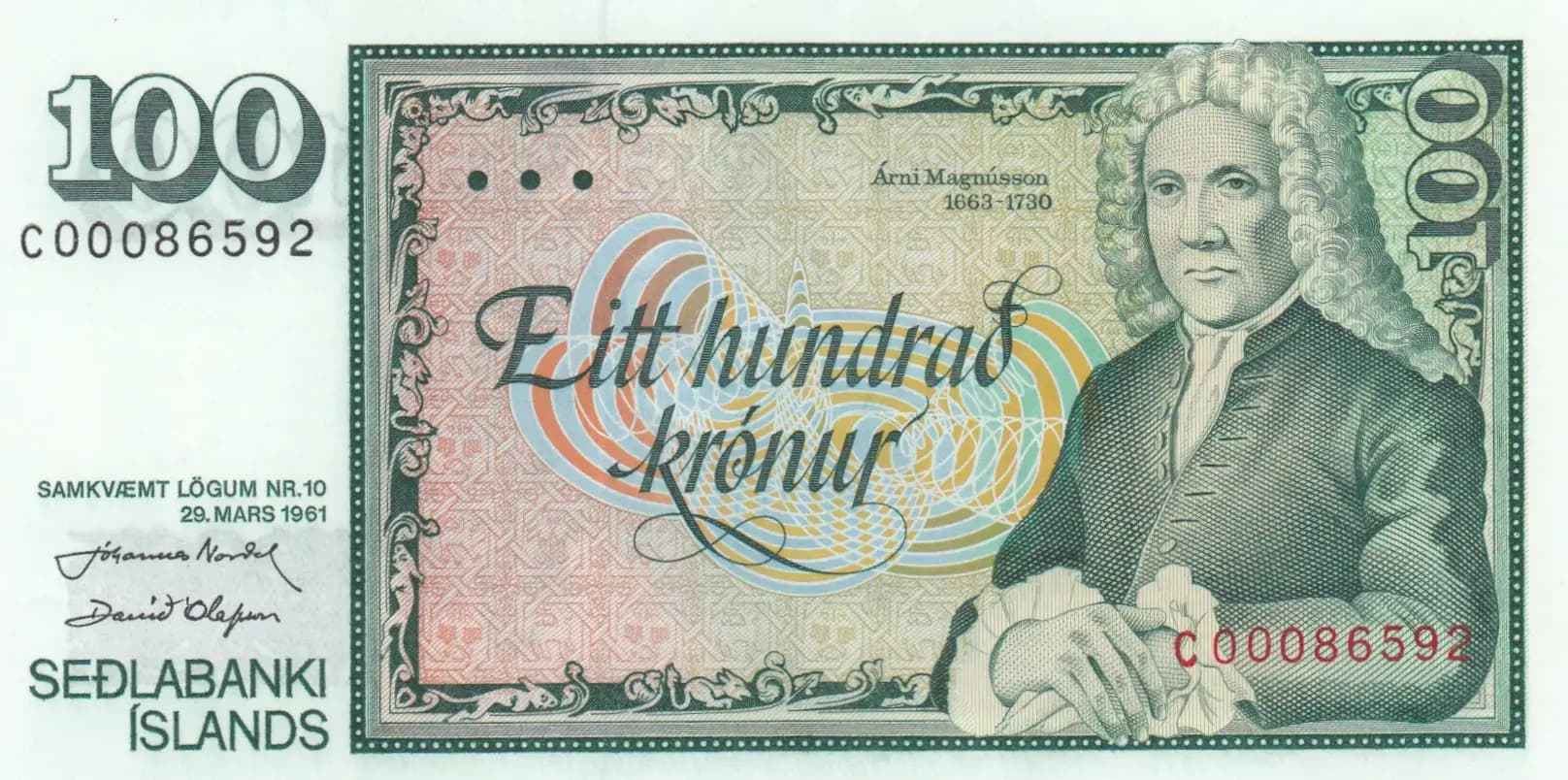
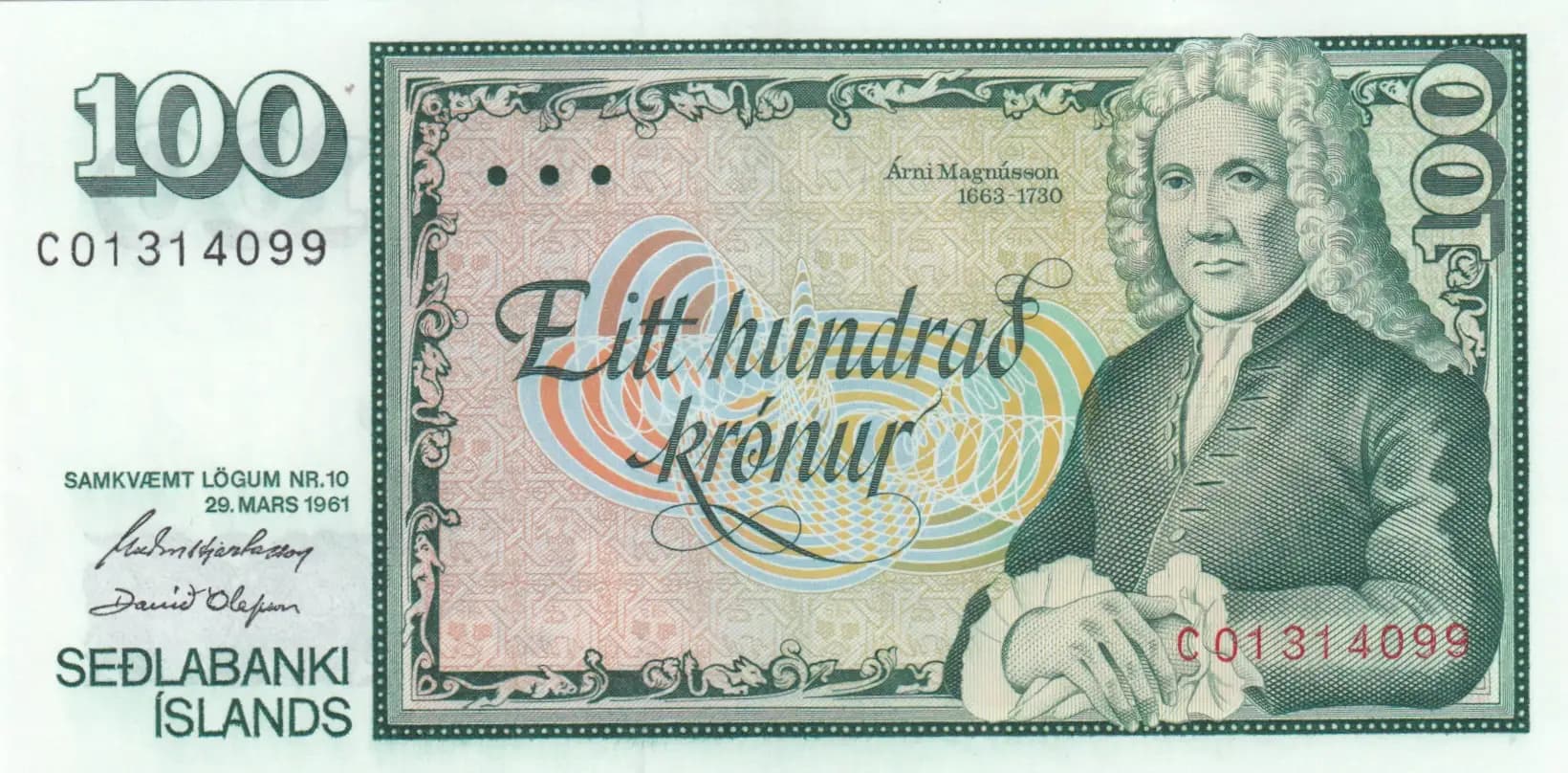
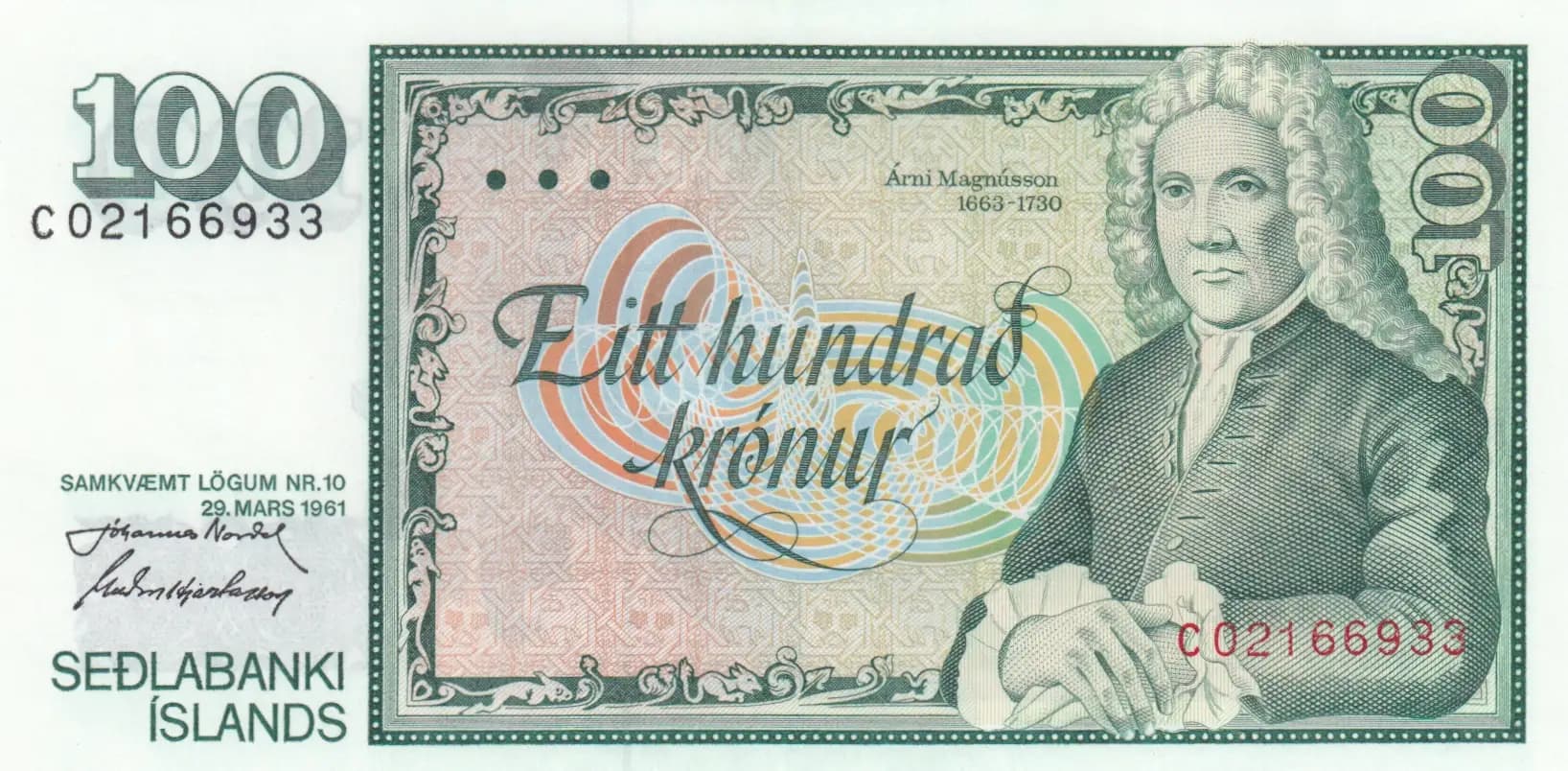
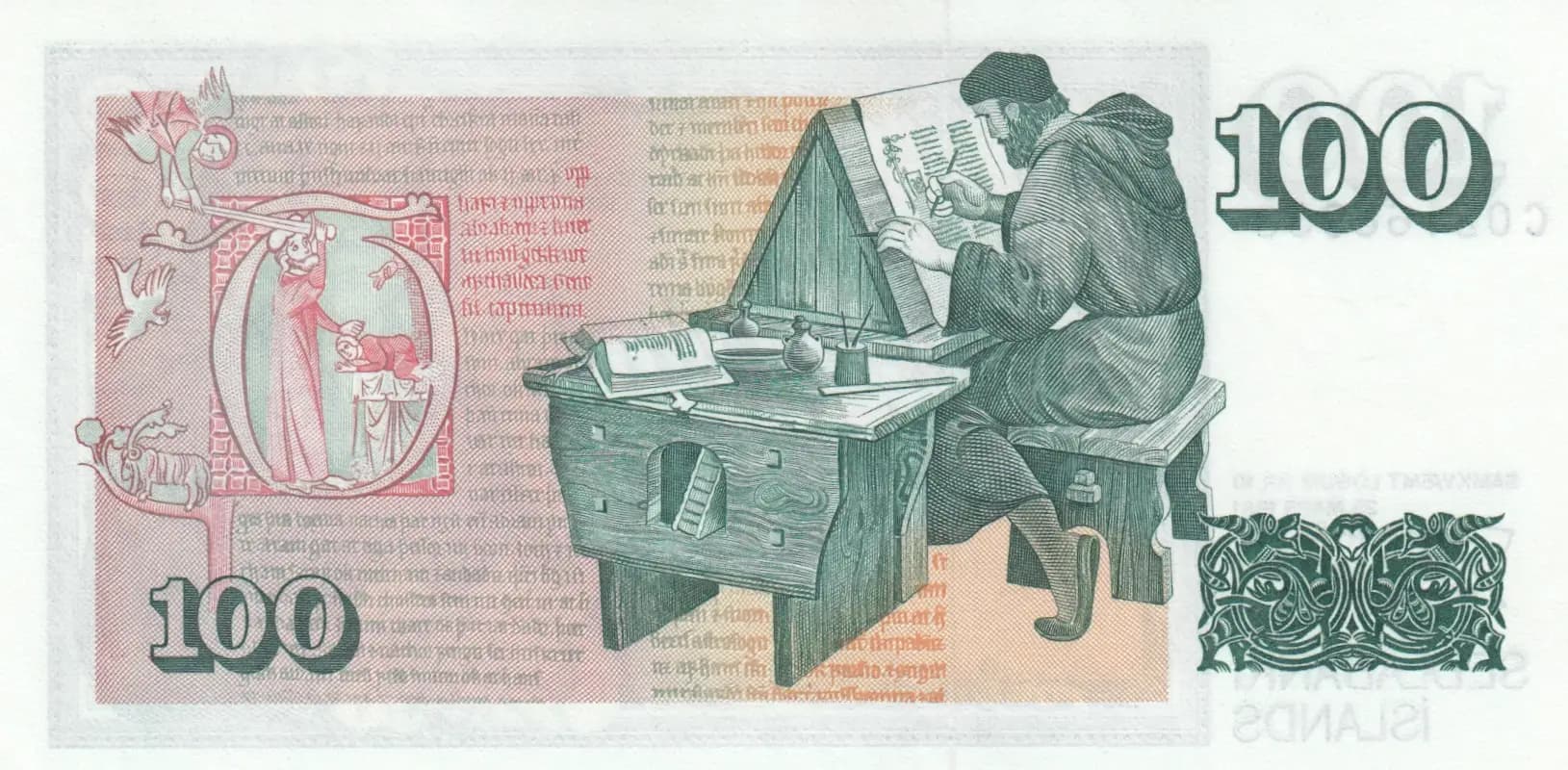
This is an uncirculated 1981 issue of Iceland's 100 kronur banknote (Pick-50(4)), featuring a striking portrait of the 17th-century scholar Árni Magnússon on the obverse and a detailed engraving of monks or scribes working in a scriptorium on the reverse. The note exhibits pristine condition with no visible wear, creases, or damage, displaying vibrant colors (green, pink, blue, and orange) and excellent detail throughout the ornate design elements and fine engraving work. The combination of historical Icelandic cultural imagery and exceptional preservation makes this an attractive example for collectors interested in Nordic numismatics.
Common. The 100 kronur denomination from the 1961-issued series (of which this is a 1981 printing) was regularly produced and widely circulated as a standard denomination note in Iceland's currency system. No evidence of restricted print runs, recalls, or short-term issuance exists for this Pick number. Despite its attractive design and historical significance, examples in all conditions remain readily available in the collector market.
Issued by the Central Bank of Iceland (Sedlabanki Íslands) on March 29, 1961, this banknote commemorates Árni Magnússon (1663-1730), one of Iceland's most important medieval scholars and manuscript collectors whose work preserved crucial Icelandic literary heritage. The reverse design depicting monks in a scriptorium reflects Iceland's historical significance as a center of manuscript production and learning during the medieval period, directly connecting the currency to the nation's cultural and intellectual legacy. The 1981 printing represents a continuation of this design series honoring Iceland's scholarly traditions during the later 20th century.
The obverse features a rightward-facing portrait of Árni Magnússon, the renowned 17th-18th century Icelandic scholar (1663-1730), rendered in classical engraving style showing him with period-appropriate curled hair and formal clothing. The portrait is flanked by large denomination numerals (100) in opposing corners. The center of the note showcases an ornate circular medallion with concentric radiating geometric patterns in blue, orange, and complementary colors, surrounded by decorative scrollwork borders typical of high-quality banknote design. The reverse depicts a detailed scene of medieval monks or scholarly scribes working at a desk with manuscripts and books, reflecting Iceland's historical role in preserving Norse manuscripts. An ornate medieval-style decorated initial or heraldic emblem appears on the left side, with additional decorative elements and denomination markings completing the design.
FRONT: '100' (denomination in corners), 'Árni Magnússon' (subject identification), '1663-1730' (life dates), 'Eitt hundrað króna' (One hundred krona), 'SEDLABANKI ÍSLANDS' (Central Bank of Iceland), 'SAMKVÆMT LÖGUM NR.10' (According to law no. 10), '29.MARS 1961' (March 29, 1961 - authorization date), 'c02166933' (serial number). BACK: '100' (denomination, appearing in top right and bottom right corners).
Intaglio (engraved) printing, the standard security method for banknotes of this era. The fine line work, cross-hatching, detailed shading, and sharp definition of portrait features and ornamental elements throughout both sides are characteristic of intaglio production. The security features including watermark areas and decorative border work indicate production by a specialized banknote printer, likely De La Rue or a similar European security printer contracted by the Central Bank of Iceland for this series.
Pick-50(4) designation indicates this is the fourth identified variety or printing variant of the 100 kronur from the 1961 authorization date. The serial number observed (c02166933) shows the 'c' prefix, which may indicate a specific printing run or series identifier. The 1981 date on the note itself may represent a significant reprint or series variant from the original 1961 authorization, warranting comparison with earlier Pick-50(1), (2), and (3) varieties to determine distinguishing characteristics such as signature blocks, security feature modifications, or serial number prefix variations.