5 pounds 1975
“O00060”
Market Prices
5 salesAbout This Note
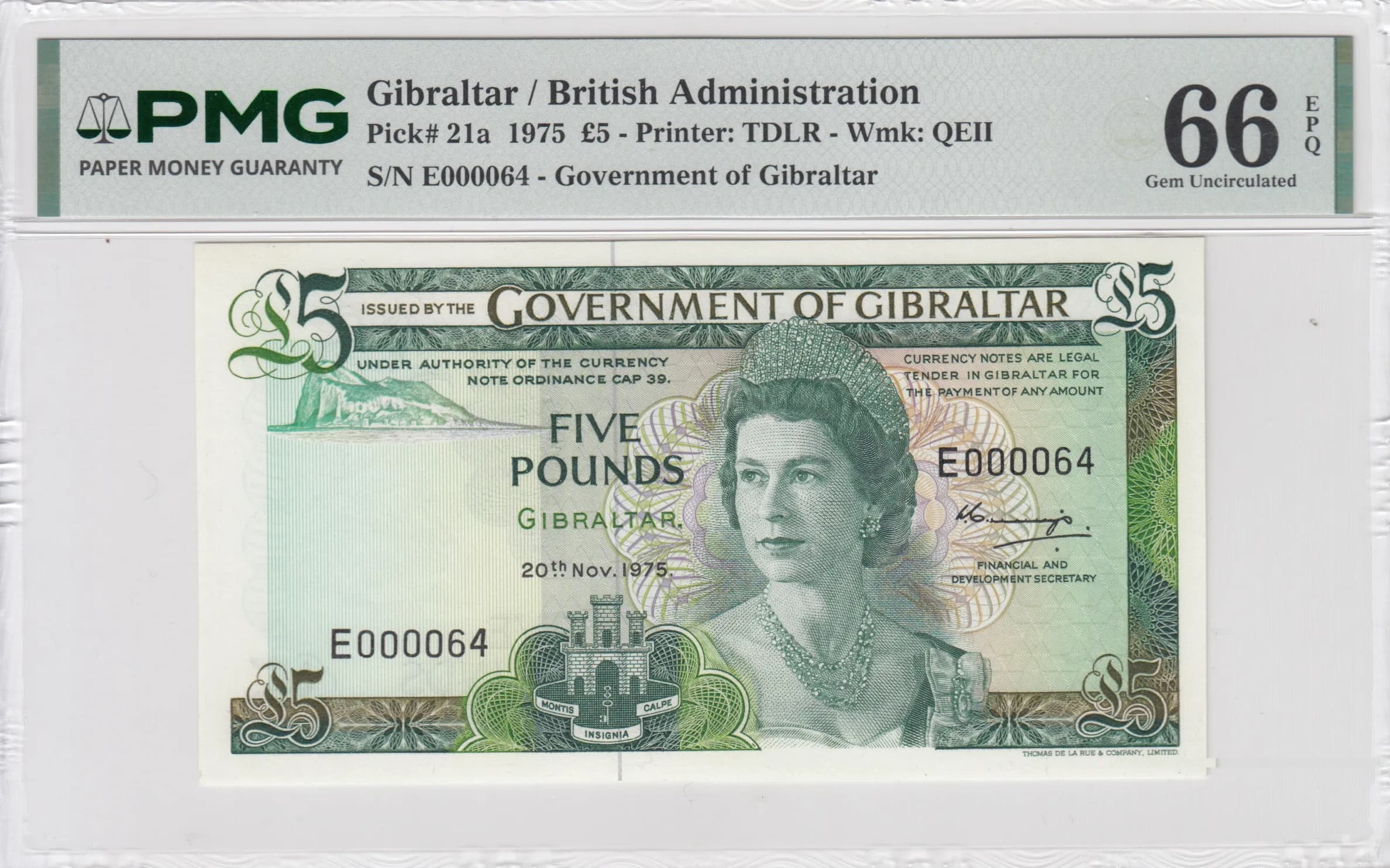
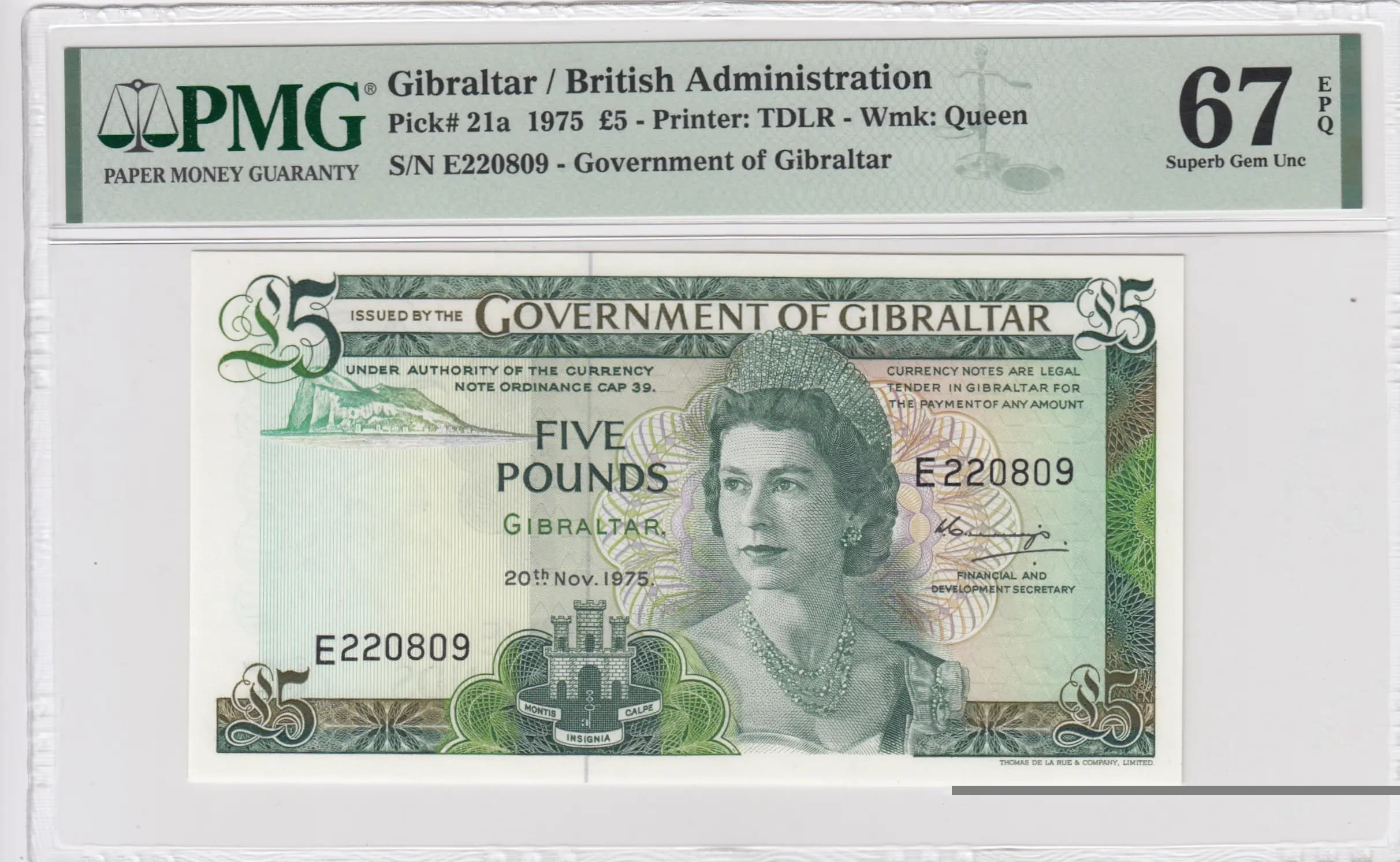
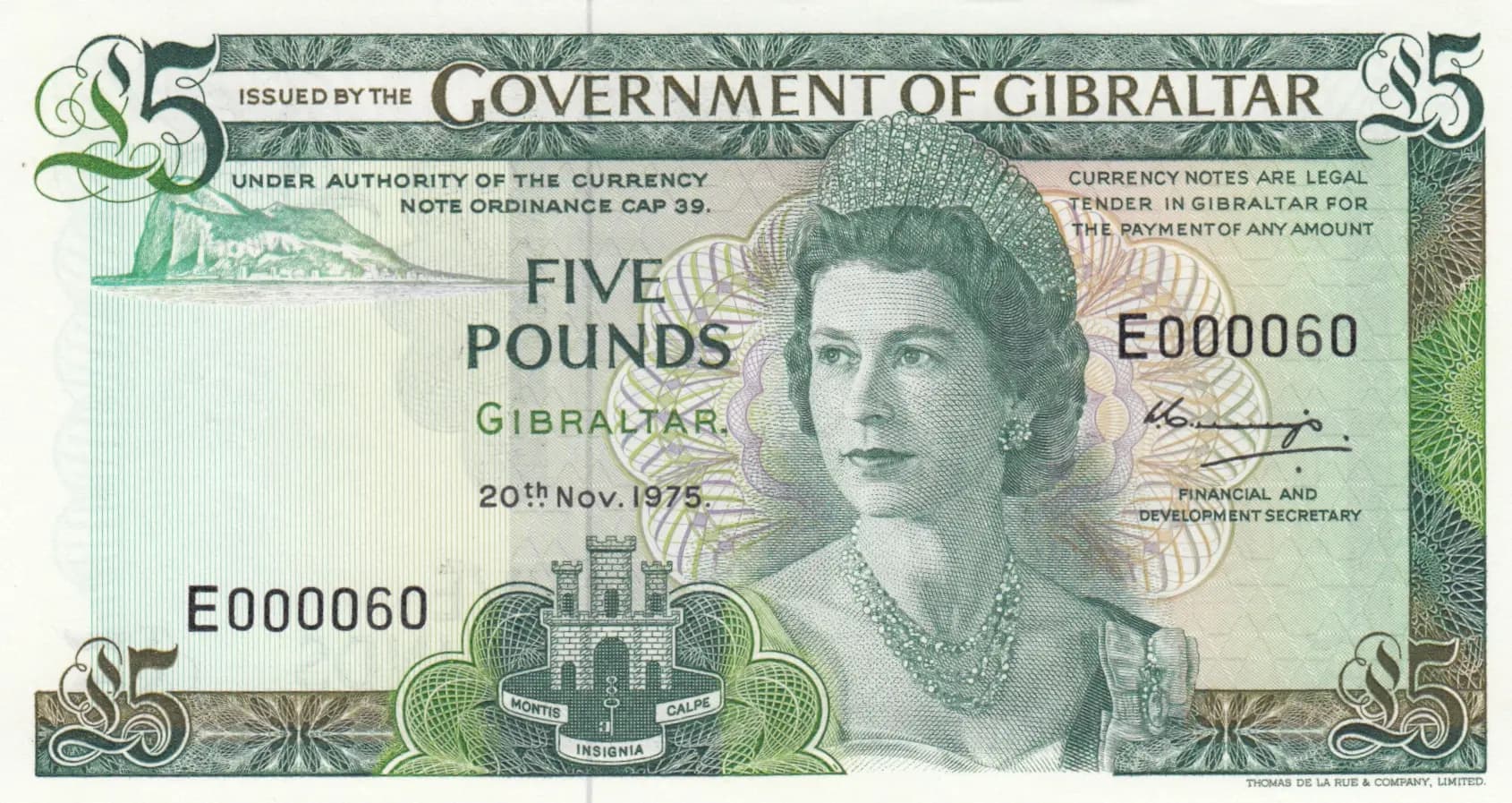
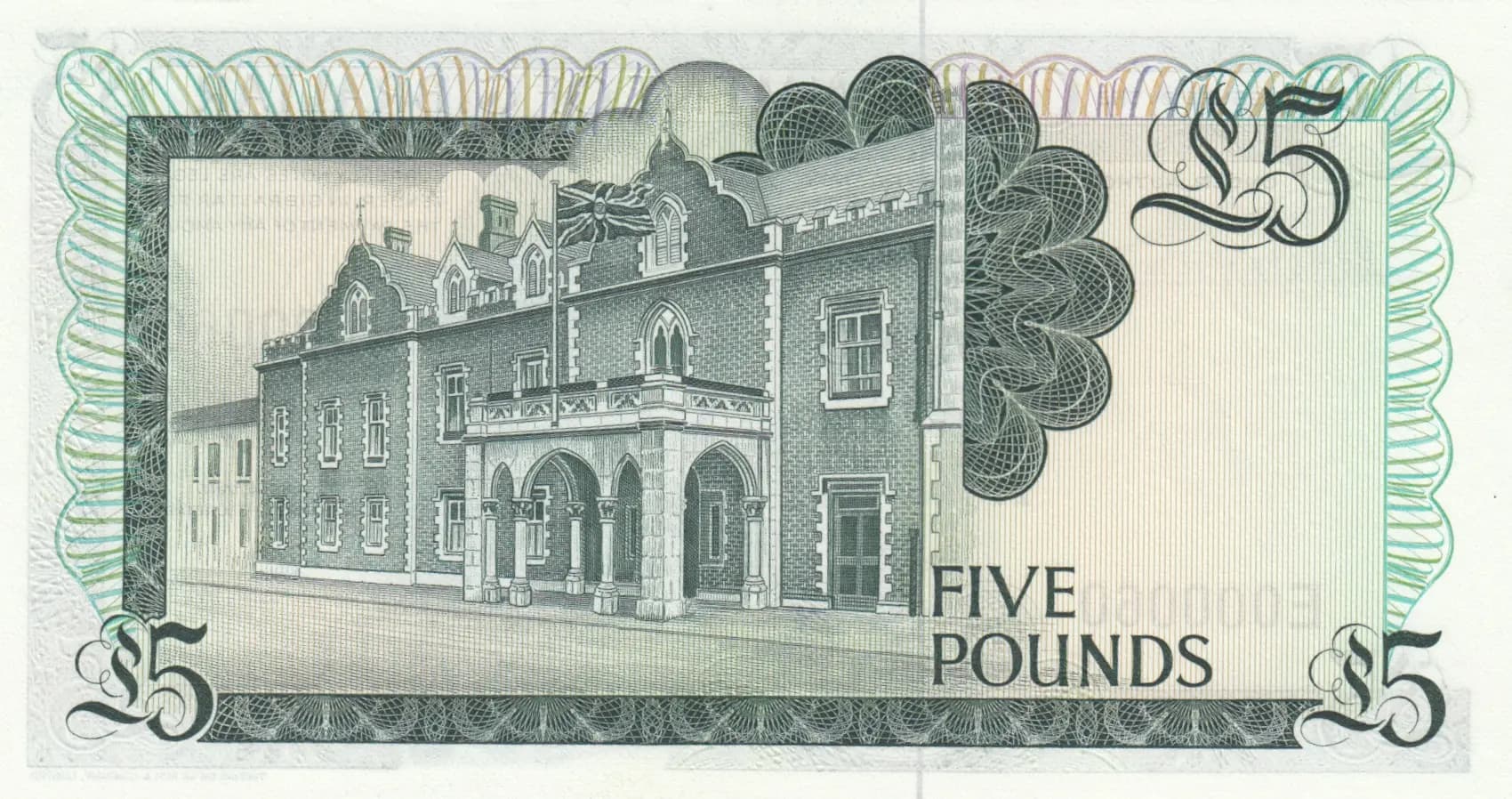
This is a pristine UNC example of the Gibraltar £5 note from 1975, featuring a striking green and multicolor design with Queen Elizabeth II in formal regalia on the obverse and an impressive Victorian-era institutional building on the reverse. The note displays exceptional clarity in its fine-line engraving throughout, with no signs of handling, creases, or wear—a hallmark of uncirculated currency that commands premium collector value. The serial number E000060 is a notable low-number example, which further enhances its appeal to banknote specialists.
Common. This is a regular-issue banknote with a substantial print run typical of Gibraltar's currency needs in 1975. Market evidence supports this assessment: comparable examples in Fine and UNC grades sell on the secondary market for $8–$180 depending on condition and grading service, with 2019 catalog values placing UNC examples at approximately $185. The note is readily available to collectors and does not command the premium prices associated with scarce or rare issues. Low serial numbers such as E000060 may carry a slight collector premium but do not fundamentally alter the common status of the issue.
Issued on 20th November 1975 under the authority of the Currency Note Ordinance Cap 39, this note represents Gibraltar's early independence in currency matters following the lifting of the Spanish blockade. The obverse depicts Queen Elizabeth II as the reigning monarch, while the reverse features the Covenant of Gibraltar—an architectural landmark representing the territory's governmental institutions and British colonial heritage during a period of significant political importance for the Rock.
The obverse features Her Majesty Queen Elizabeth II in formal state portrait dress, wearing a tiara and multiple pearl necklaces, positioned at center-right. The left side displays a detailed landscape engraving of the Rock of Gibraltar itself, emphasizing the territory's most iconic geographical feature. Ornamental corner designs frame the denomination numeral 5, and a heraldic castle or fortification emblem appears at bottom center marked 'MONTIS CALPE INSIGNIA.' The reverse depicts an impressive Victorian or Gothic Revival institutional building—likely a governmental or administrative structure—rendered in meticulous fine-line engraving with arched windows, multiple chimneys with ornamental detailing, balustrade railings, and dressed stone work. Both sides employ intricate parallel-line background patterns as security elements. The color scheme combines green as the dominant hue with black engraving and cream/white paper, accented with pink/salmon tones.
FRONT SIDE: 'ISSUED BY THE GOVERNMENT OF GIBRALTAR' / 'UNDER AUTHORITY OF THE CURRENCY NOTE ORDINANCE CAP 39.' / 'CURRENCY NOTES ARE LEGAL TENDER IN GIBRALTAR FOR THE PAYMENT OF ANY AMOUNT' / 'FIVE POUNDS' / 'GIBRALTAR.' / '20th Nov. 1975' / 'E000060' (serial number) / 'FINANCIAL AND DEVELOPMENT SECRETARY' / BACK SIDE: 'FIVE POUNDS' / '5' (numeral) / Latin inscription: 'MONTIS CALPE INSIGNIA' (Insignia of Calpe's Mountain—Calpe being the classical name for the Rock of Gibraltar).
Intaglio (engraved) printing by Thomas de la Rue, London—one of the world's premier security printers. The fine-line engraving is evident throughout both sides, with intricate cross-hatching, parallel-line background patterns, and detailed portraiture characteristic of high-security currency production. The watermark featuring Queen Elizabeth II is integrated into the paper stock. Multiple color printing layers create the green and multicolor underprint visible in the design.
This note is cataloged as Pick P-21a, identified by the Thomas de la Rue printer mark and Queen Elizabeth II watermark. The PMG population report identifies five cataloged variants of the base Pick number (P-21CS1, P-21a, P-21as, P-21b, P-21s), all produced by TDLR with QEII watermark. The specific variant P-21a is the standard circulation issue for the 1975 series. The serial number prefix 'E' and the low sequential number E000060 place this within the early production run. No overprints, signatures variations, or other distinguishing marks are evident from the visual analysis.