1 pound 1971
Market Prices
21 salesAbout This Note
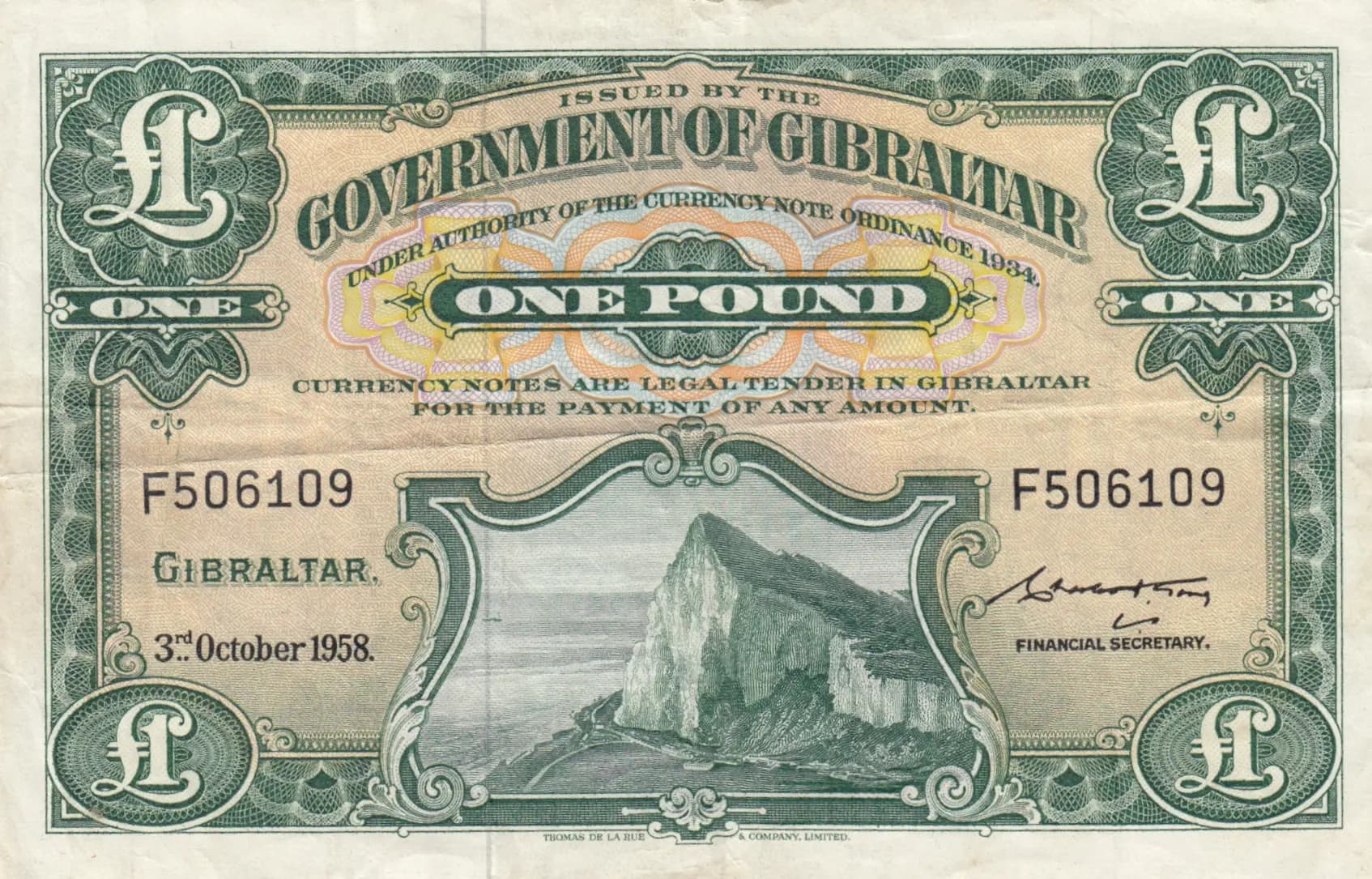
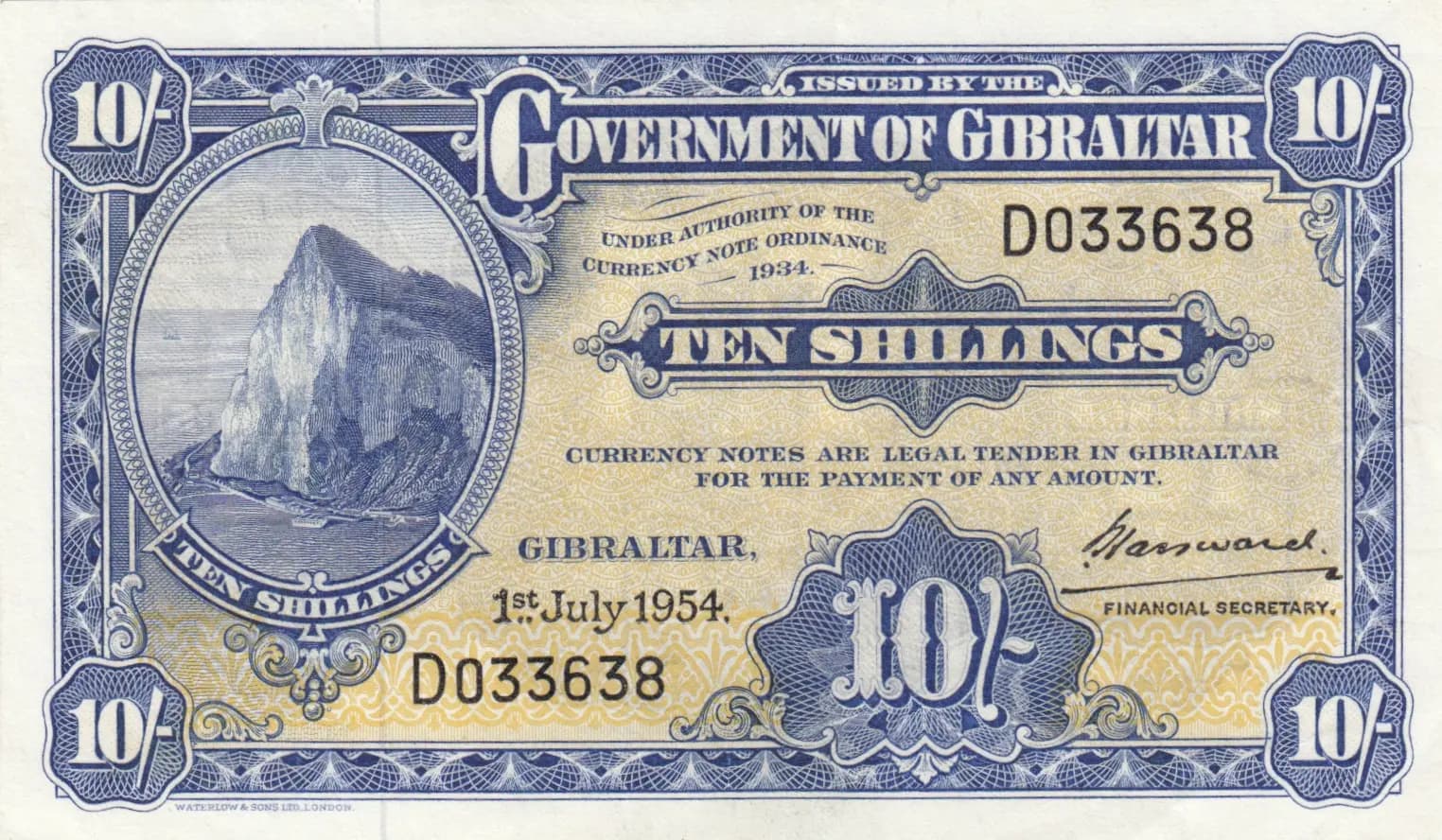
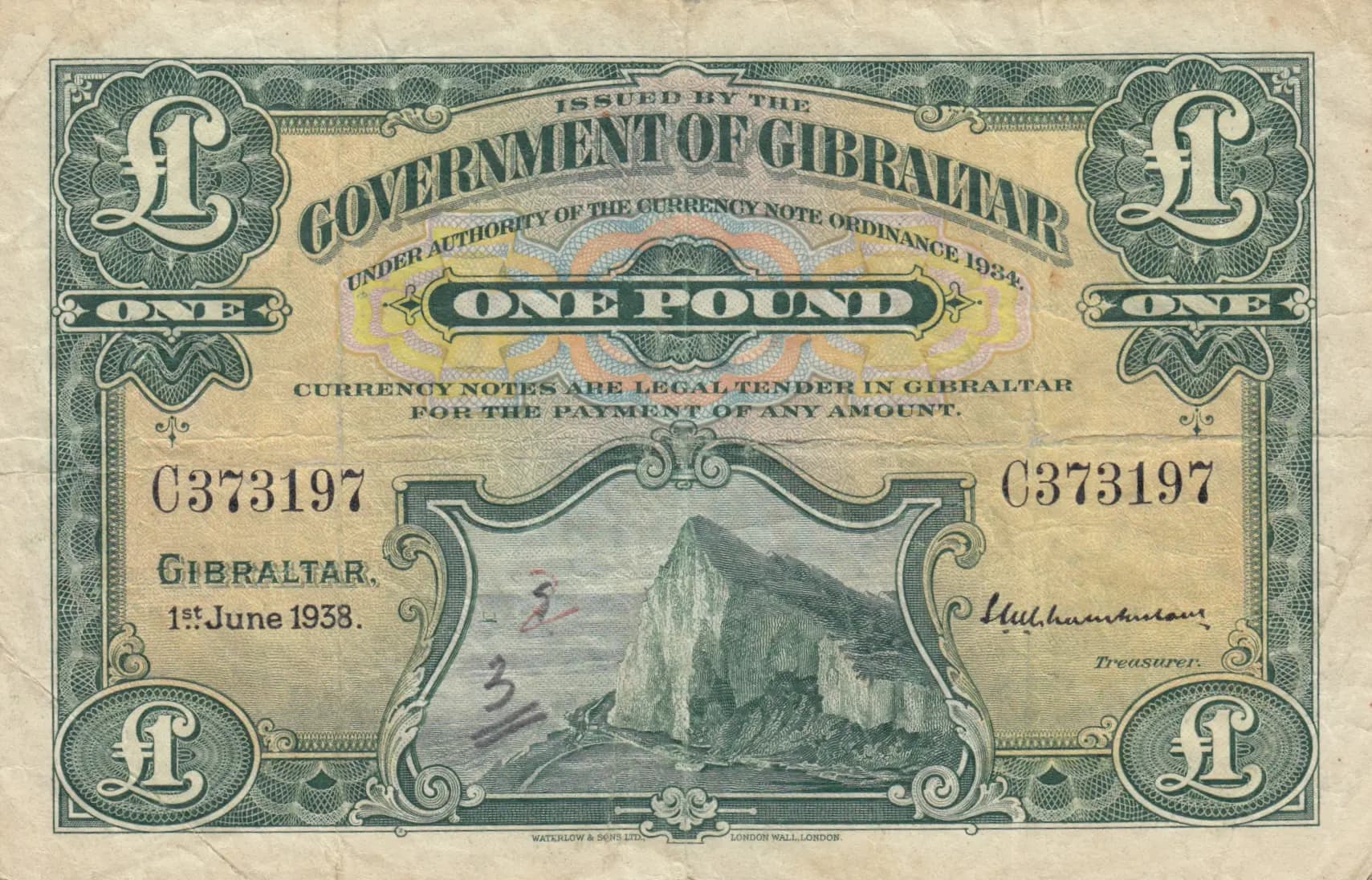
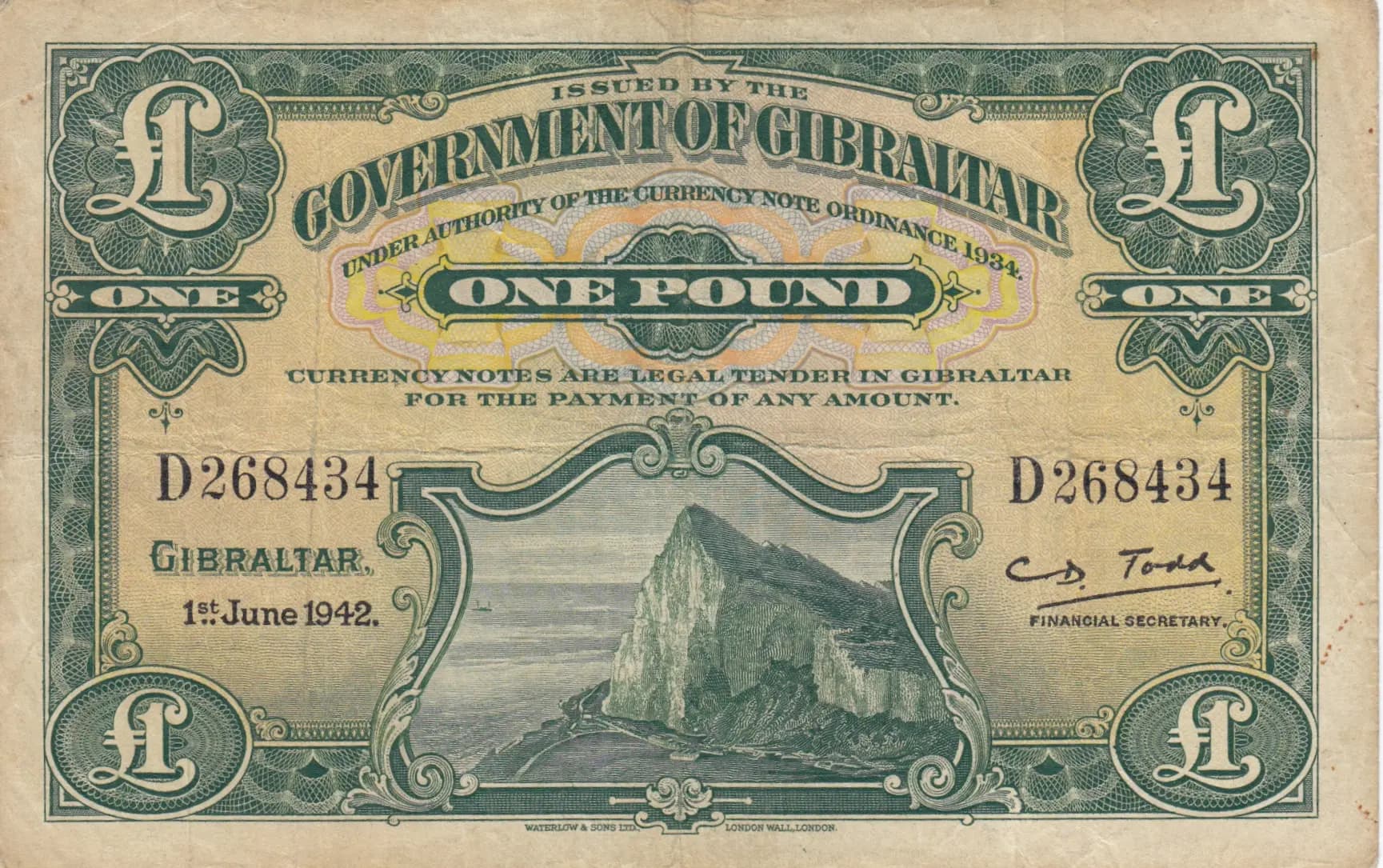
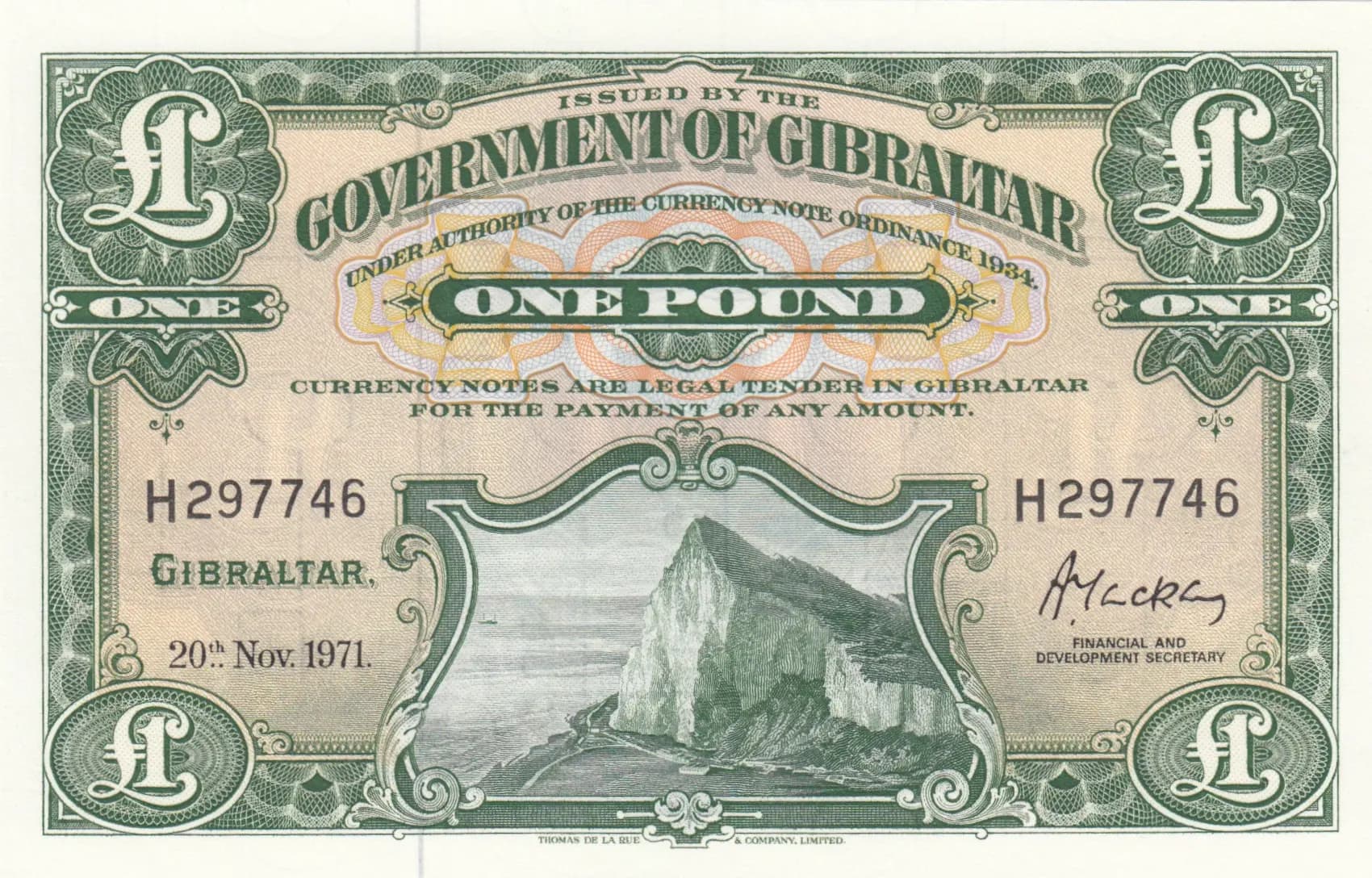
This is a Gibraltar £1 note from the Government of Gibraltar's 1971 issue (Pick P-18b), featuring the iconic Rock of Gibraltar in green and tan colors on the obverse. The note is in UNC condition with a light vertical center fold that is consistent with normal handling of uncirculated notes from this era. This early Gibraltar currency note represents an important piece of the territory's monetary history and remains popular with collectors of Commonwealth and European banknotes.
Common. While this is an early Gibraltar note from 1971, the eBay price history provided indicates consistent market values of $100-170 for PMG-graded UNC examples, with an uncertified UNC selling for $142.50 in 2017 and $107.38 in 2012. The prevalence of multiple sales across various grades (F, VF, UNC) over more than a decade demonstrates adequate supply in the collector market. The note was printed by a major security printer (TDLR) with no indication of limited print runs or recalls. The 1971 date is early for Gibraltar currency but does not appear to command significant premiums for this Pick number.
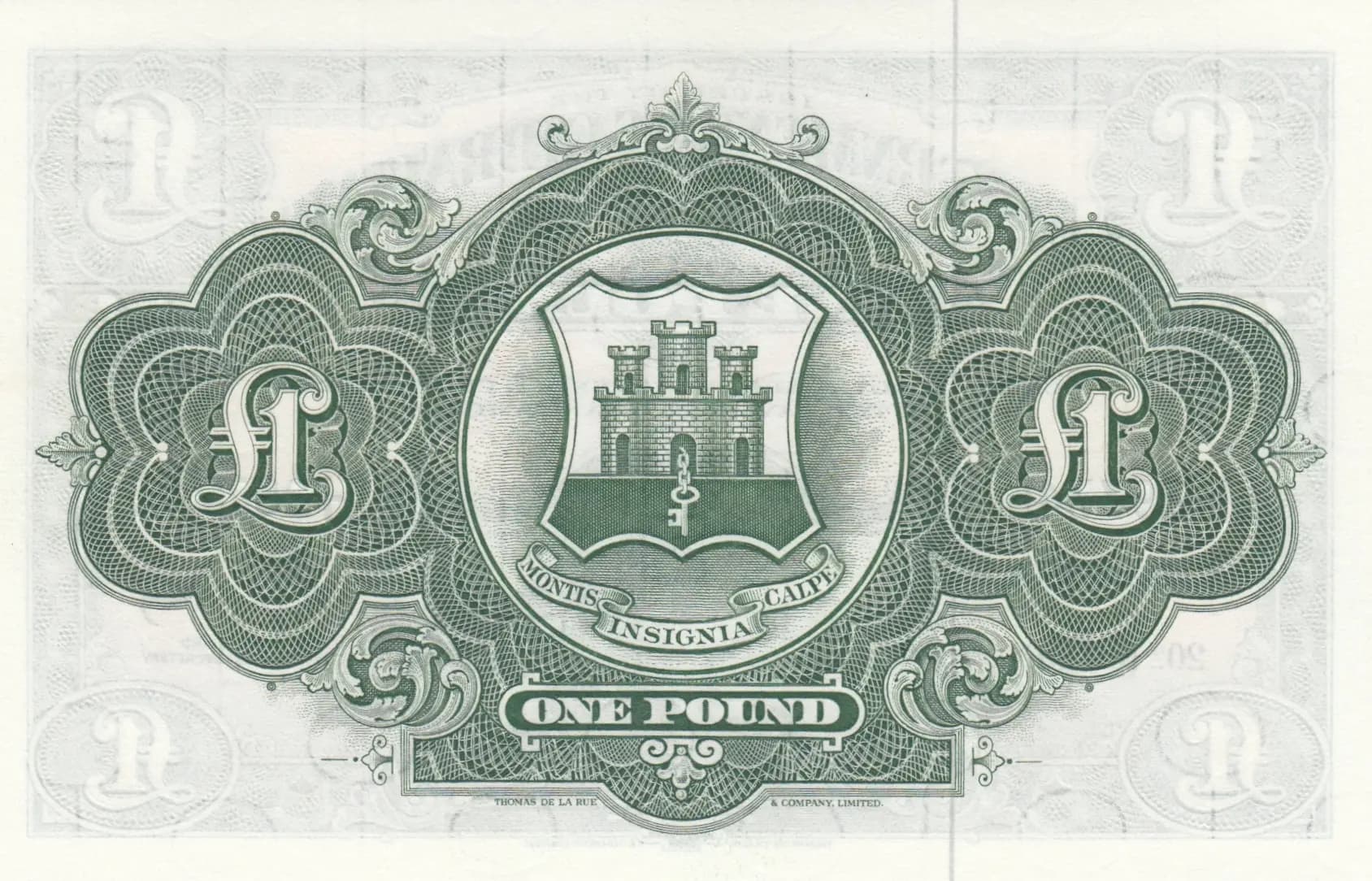
Issued on 20th November 1971, this note was produced during a period when Gibraltar was reasserting its economic independence and establishing its own currency authority under the 1934 Currency Note Ordinance. The Rock of Gibraltar depicted on the obverse is the territory's most recognizable natural landmark and symbol of national identity, while the reverse features Gibraltar's coat of arms with its distinctive castle tower and key motif, representing the strategic importance of the Strait of Gibraltar throughout history.
The obverse features the Rock of Gibraltar as the central vignette, rendered in detailed intaglio engraving and positioned prominently in the lower center of the note. The design incorporates ornate Baroque-style decorative elements with £ symbols positioned in all four corners, reflecting Victorian-era banknote aesthetic conventions. The reverse displays the full heraldic coat of arms of Gibraltar within an ornamental circular wreath, featuring a castle tower (representing the historical fortress of Gibraltar) positioned above a key symbol (emblematic of Gibraltar's strategic position controlling the Strait). The color scheme throughout is restrained—predominantly green with tan/beige underprinting—which was typical of Commonwealth currency notes of this period. Fine line engraving and intricate crosshatch work provide security through complexity of reproduction.
FRONT: 'ISSUED BY THE GOVERNMENT OF GIBRALTAR' - Legal issuing authority; 'UNDER AUTHORITY OF THE CURRENCY NOTE ORDINANCE OF 1934' - Legislative basis for currency issue; 'ONE POUND' - Denomination; 'CURRENCY NOTES ARE LEGAL TENDER IN GIBRALTAR FOR THE PAYMENT OF ANY AMOUNT' - Legal tender declaration; '20th Nov. 1971' - Issue date; 'M. Clery / FINANCIAL AND DEVELOPMENT SECRETARY' - Authorized signatory and title; 'THOMAS DE LA RUE & COMPANY, LIMITED' - Printer; Serial number 'H297746'. BACK: 'ONE POUND' - Denomination; 'NUONTIS CALIDOE' - Motto of Gibraltar (Latin: 'Nuontis' may reference local dialect or archaic spelling); 'THOMAS DE LA RUE & COMPANY, LIMITED' - Printer attribution.
Intaglio (steel plate engraving) on paper with watermark, printed by Thomas de la Rue & Company, Limited, London. The visual analysis shows characteristic fine line engraving patterns, intricate crosshatch design work in background areas, and high-quality intaglio printing typical of TDLR's premium banknote production. The watermark pattern is documented as 'Key Pattern' in the PMG population report, consistent with TDLR's Gibraltar note security standards of this period.
This is cataloged as Pick P-18b, which represents one of seven documented variants for the base £1 Gibraltar note (P-18a through P-18cs, with 's' suffix indicating specimens). The visible signature on this note is 'M. Clery' with the title 'FINANCIAL AND DEVELOPMENT SECRETARY,' which is consistent with the 1971 dating. The watermark is documented as 'Key Pattern' per PMG's population data. Serial number H297746 with the 'H' prefix suggests this is from a standard production run rather than a special issue or replacement note. The presence of a light vertical center fold is typical of UNC notes from this era and does not significantly impact grade or value.