50 reichsmark 1940
Market Prices
39 salesAbout This Note
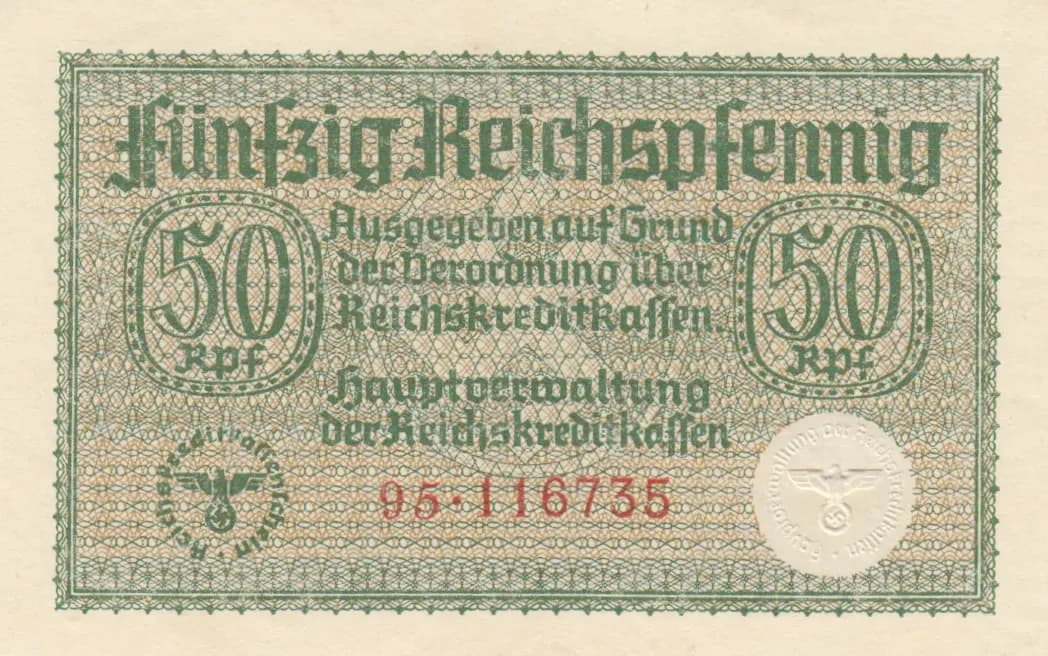
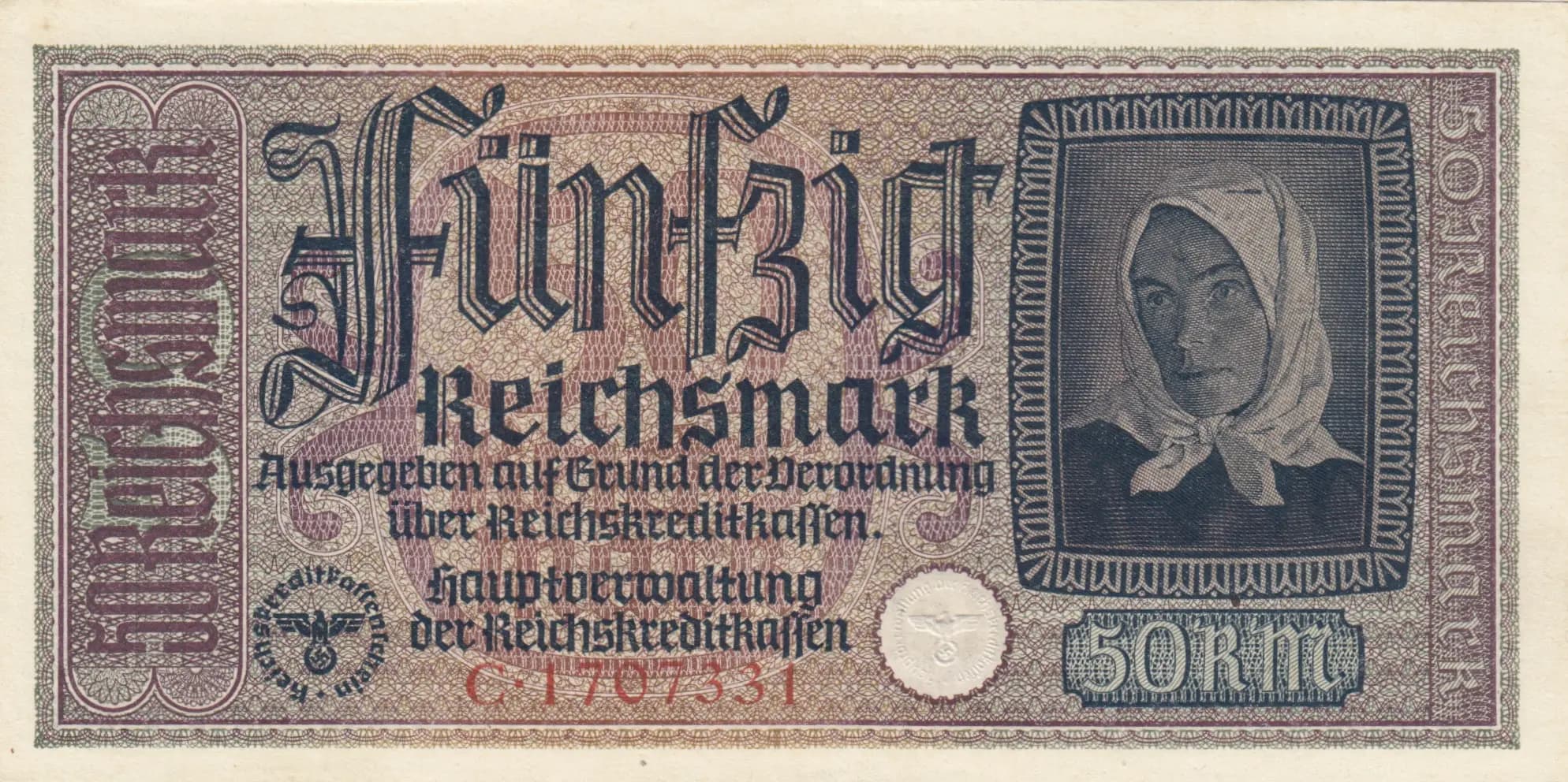
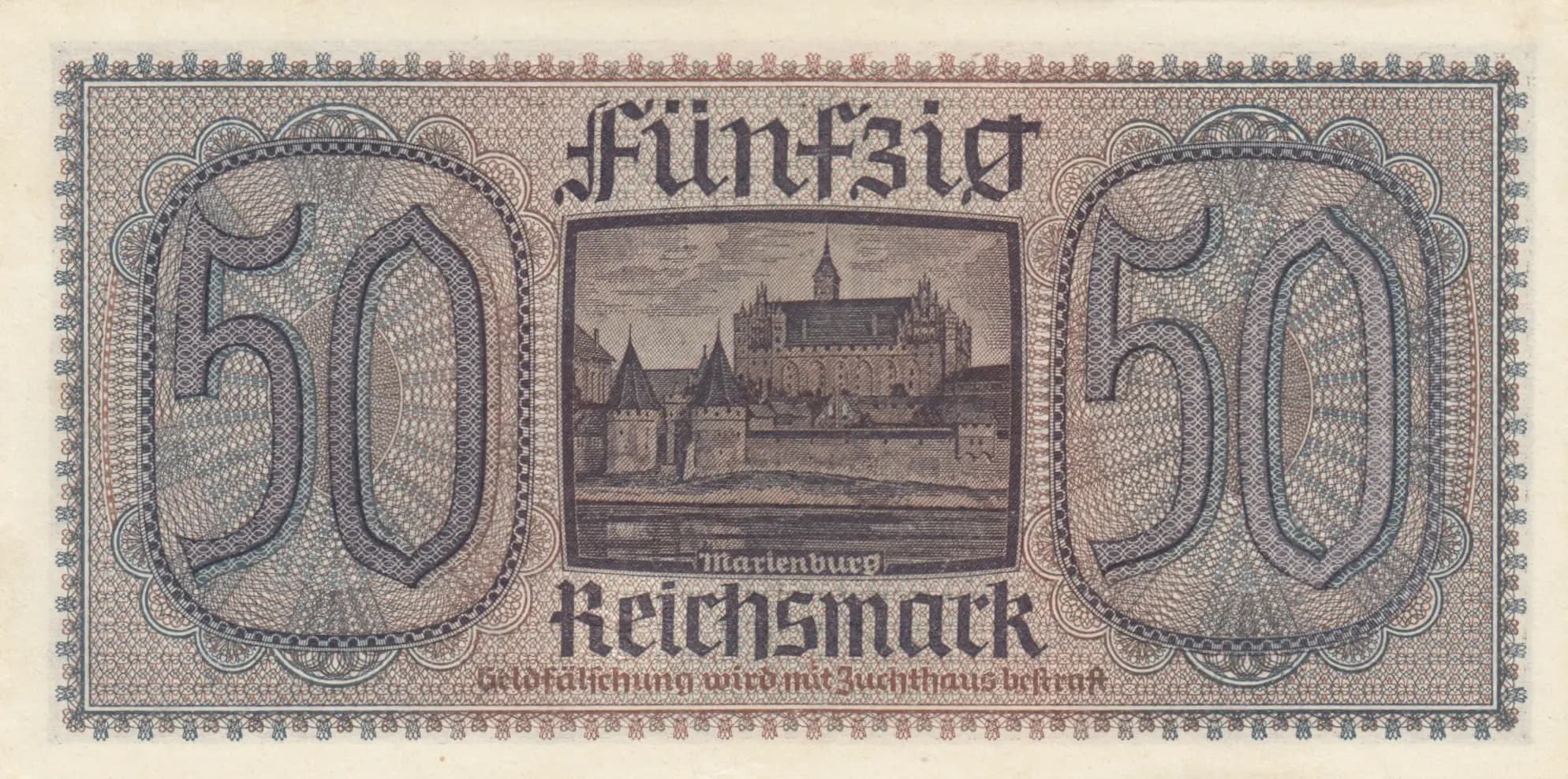
This 50 Reichsmark note from 1940, issued by the Reichskreditkasse, presents in AU (About Uncirculated) condition with sharp engraving detail and clean margins throughout. The obverse features an elegantly rendered portrait of a woman in period dress on the right side, while the reverse displays the iconic Marienburg castle in a detailed landscape composition. The note exemplifies the high-quality intaglio engraving standards of Nazi-era German currency, with complex geometric patterns and fine line work that remain crisp and well-defined.
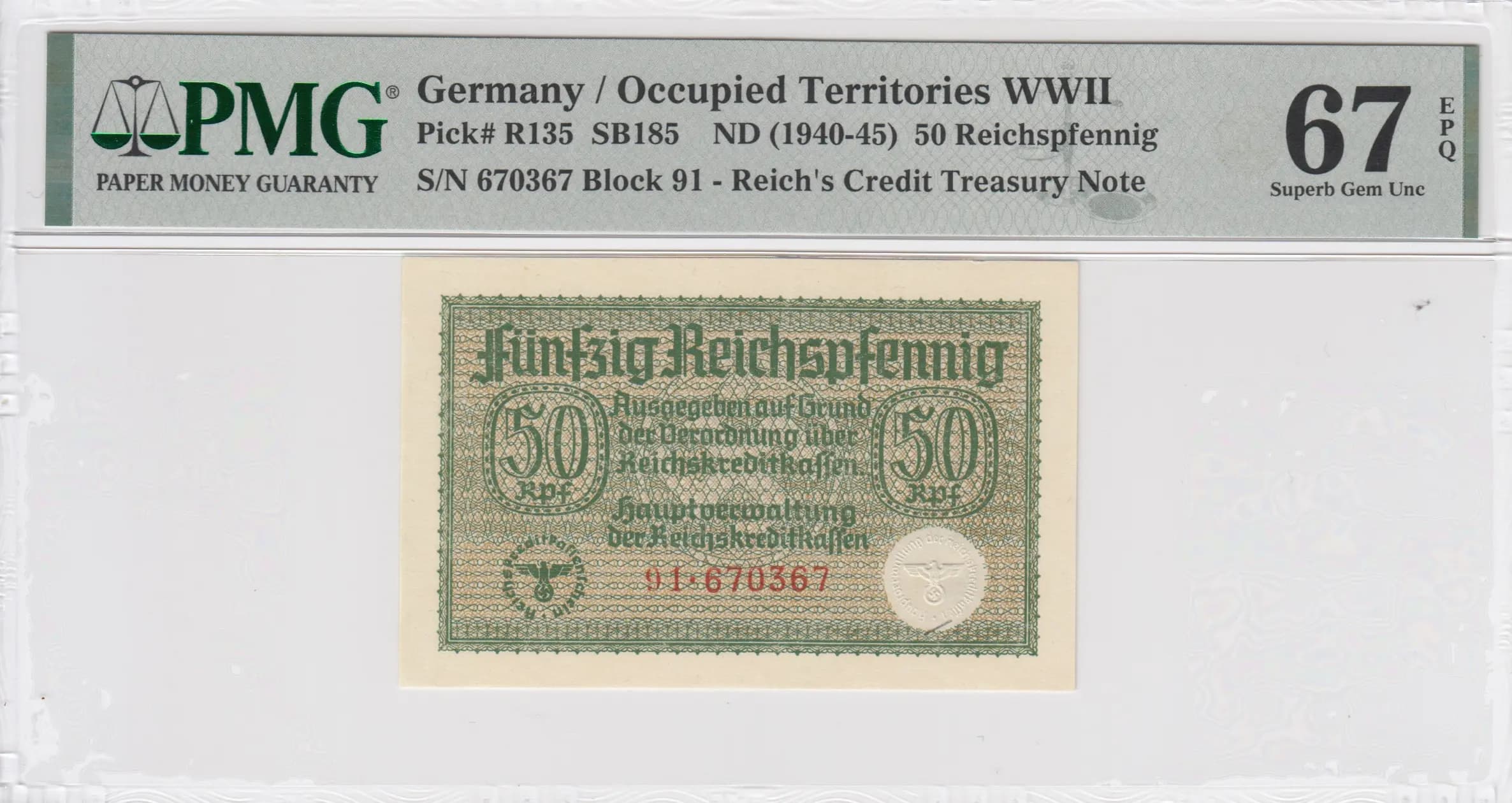
Common. eBay market data shows consistent sales of raw notes in VF-EF condition ranging from $3.50 to $15.77 over the past decade, with graded PMG specimens (66 grade) selling in the $250-$369 range. The current AU-graded example follows typical market patterns for this issue. Print runs for Reichskreditkasse notes were substantial, and this denomination and issue remain readily available in the collector market. Catalog values (2008: VF $18, UNC $35) reflect stable, modest pricing typical of common regional German wartime currency.
Issued during World War II by the Reichskreditkasse (Reich Credit Bank), a special-purpose state institution, this note represents the financial infrastructure of Nazi Germany's wartime economy. The choice of Marienburg castle—the former headquarters of the Teutonic Knights in what is now Malbork, Poland—reflects Nazi ideology's appropriation of Germanic medieval history and territorial symbolism. The formal German inscriptions emphasizing the official authorization of the Reichskreditkassen underscore the state's centralized control over monetary issuance during this period.
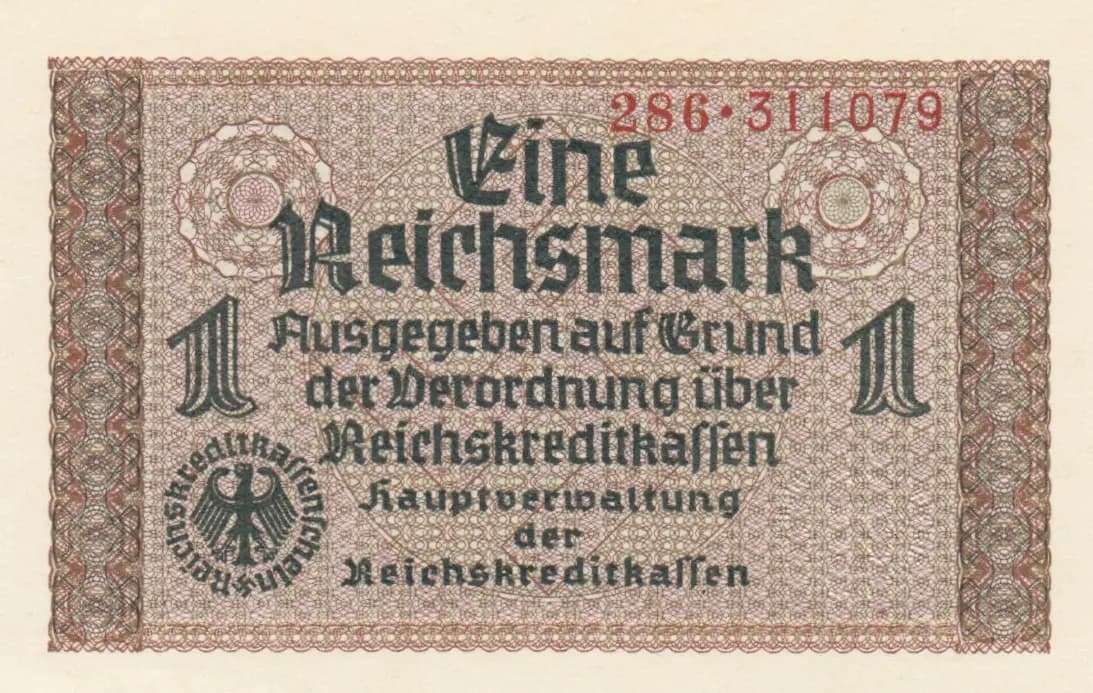
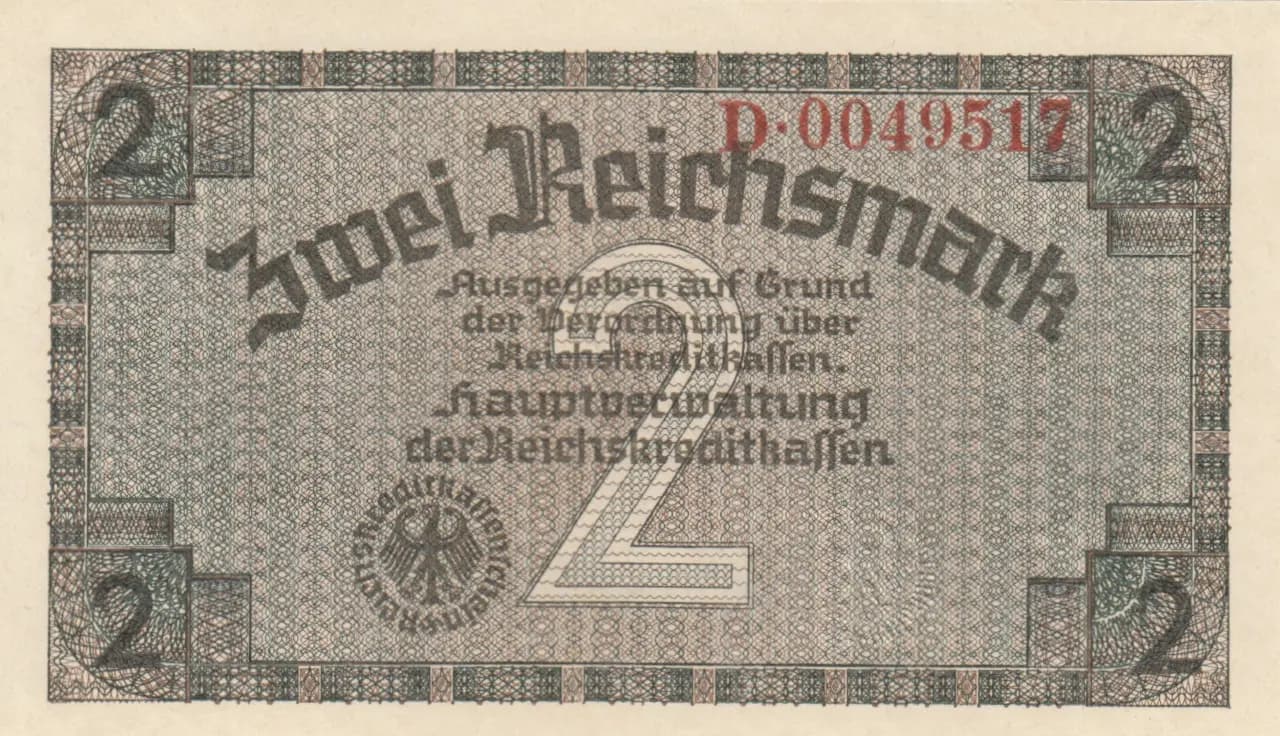
The obverse features a carefully rendered three-quarter portrait of a German woman wearing a traditional light-colored bonnet or head covering, positioned on the right side of the note. A Nazi eagle emblem with shield (Reichsadler) appears on the left, signifying state authority. The reverse showcases the Marienburg castle (Ordensburg Marienburg, now Malbork Castle in Poland), a massive Gothic fortification with multiple towers and spires depicted in an idealized landscape setting with water features in the foreground. Both sides employ ornate decorative borders with scalloped edges and intricate geometric mesh patterns serving as security background elements. Large ornamental '50' numerals frame the castle scene on the reverse. The overall color palette consists of brown, tan, navy blue, and cream, typical of the period's engraving aesthetic.
FRONT: 'Reichsmark' (Reichsmark); 'Ausgebeucht auf Grundlage der Verordnung über Reichskreditkassen' (Issued on the basis of the decree concerning Reich credit offices); 'Hauptverwaltung der Reichskreditkassen' (Main Administration of the Reich Credit Offices); '50 RM' (50 Reichsmark); Serial number 517221. BACK: 'Fünfzig' (Fifty); 'Reichsmark' (Reichsmark); 'Marienburg' (Marienburg/Malbork); 'Geldstattung wird mit Zahlsthaus befugt' (Currency redemption is authorized with payment office).
Intaglio engraving (line engraving/copperplate), the standard security printing method for German banknotes of this era. The notes were produced by Reichsbank and Reichskreditkasse-authorized security printers. The complex geometric patterns, fine line work, and dimensional depth visible in the engraving are characteristic of high-quality intaglio production. No evidence of letterpress or lithographic elements; pure engraved security printing throughout.
Pick catalog number P-R140 is the standard reference for this issue. Serial number 517221 observed on the front is a specific printing variety identifier but does not represent a rare or scarce sub-variety. Reichskreditkasse notes were issued in multiple printing batches with consecutive serial ranges. No overprints, signature varieties, or known major printing varieties are documented for this denomination. The note represents the standard 1940 production type without significant varietals.