20 reichsmark 1940
Market Prices
54 salesAbout This Note
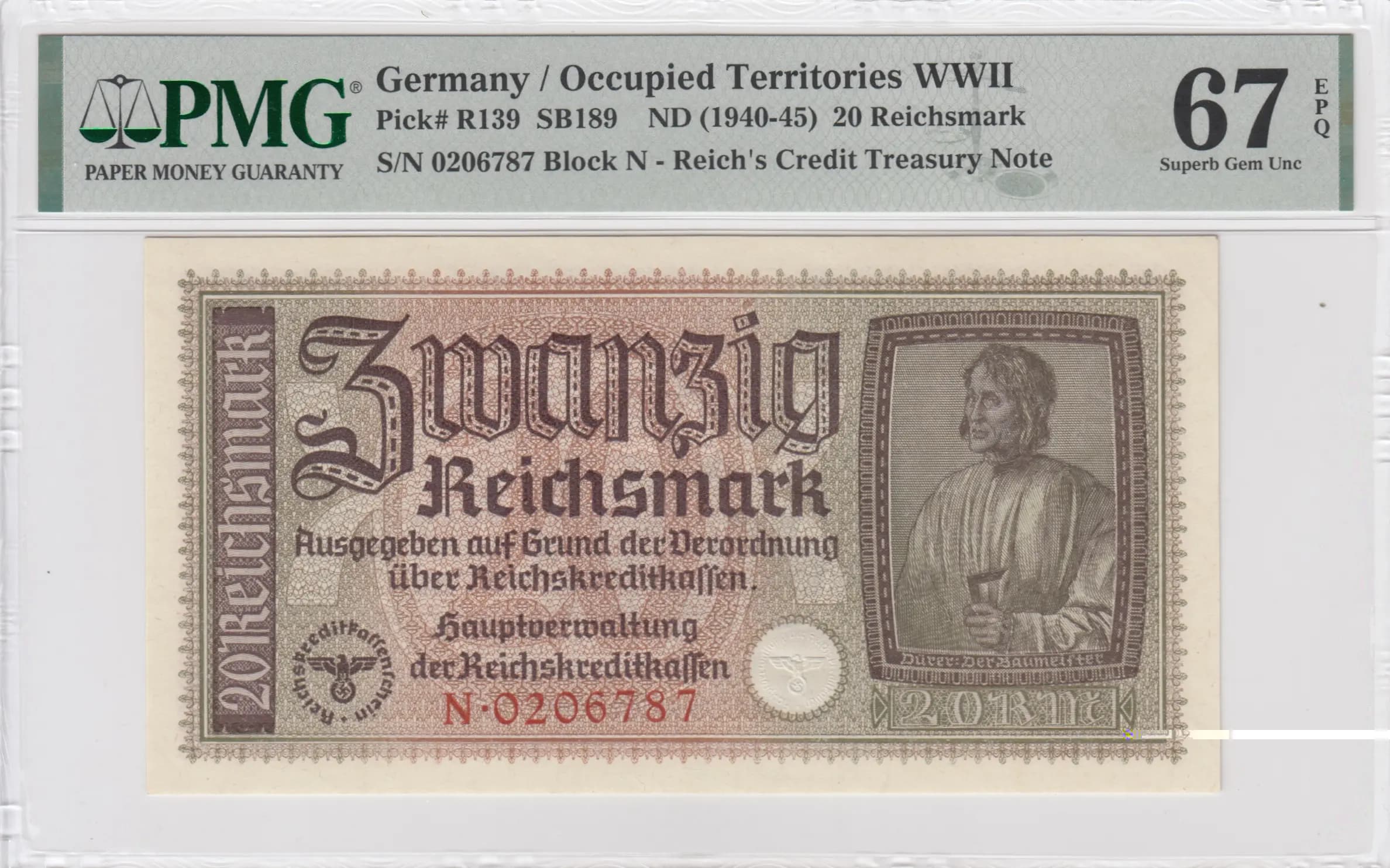
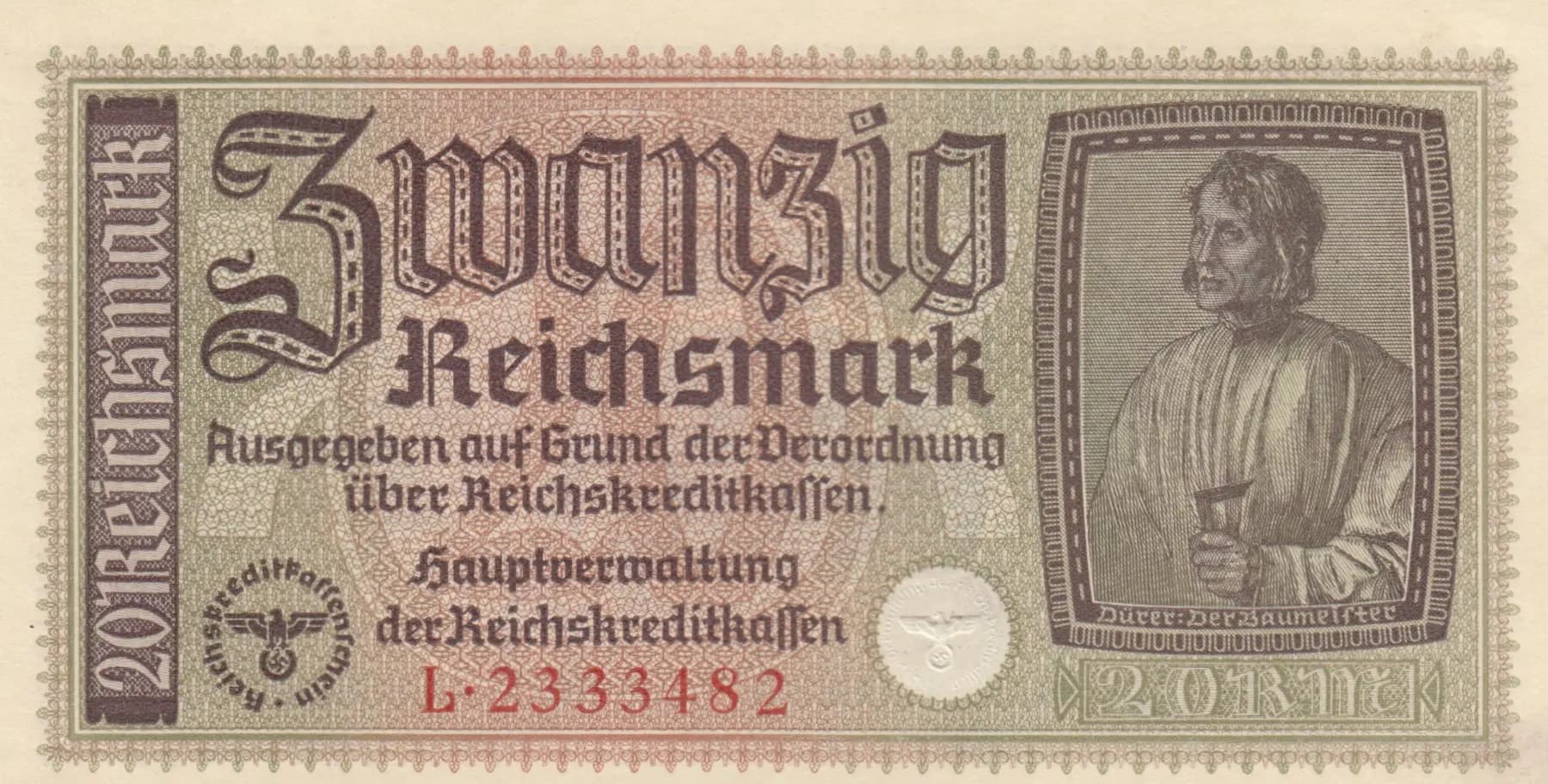
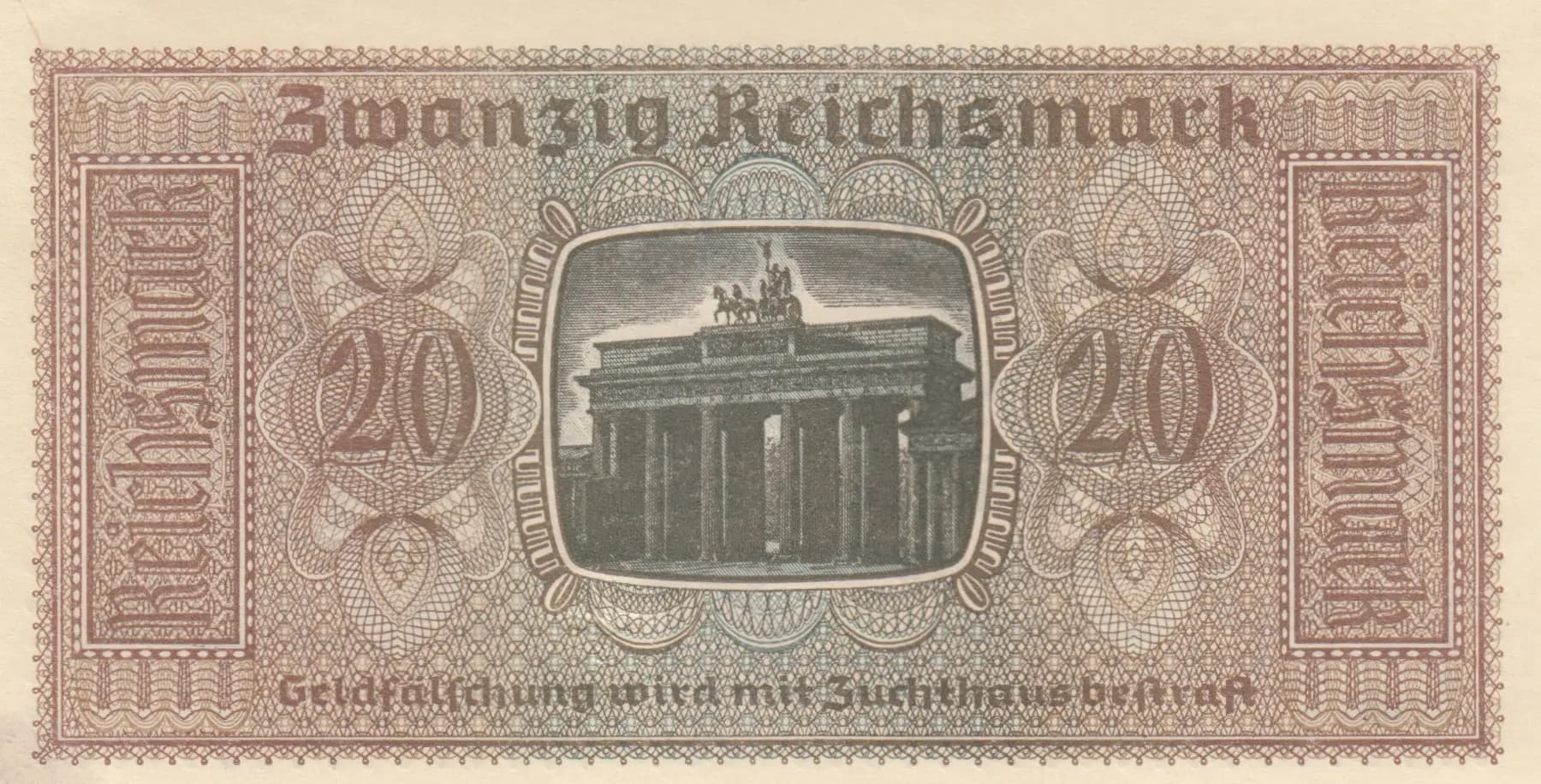
This is an exceptional example of a 1940 German Reichskreditkasse 20 Reichsmark note in AU condition, graded exceptionally high with pristine appearance and vibrant coloring throughout. The obverse features a classical portrait in Renaissance style on the right, while the reverse showcases a detailed engraving of Berlin's iconic Brandenburg Gate. The note displays sharp, clear security engraving and guilloché patterns characteristic of high-quality currency production, with no visible wear, creases, or circulation marks.
Common. While this is a regional banknote from a wartime emergency issuer, the Reichskreditkasse 20 Reichsmark notes were produced in substantial quantities. eBay price tracking data spanning over a decade shows consistent sales in the $2-$10 range for VF examples, with AU/AUNC examples typically realizing $5-$15 (excluding one exceptional PMG 67 graded specimen at $137.50, which represents certified premium pricing). The abundance of sales records and low price levels indicate healthy supply and modest collector demand, consistent with common classification.
Issued by the Reichskreditkasse (Reich Credit Bank) in 1940 during World War II, this banknote represents the Nazi regime's emergency currency system established to finance military operations. The inclusion of the Brandenburg Gate on the reverse symbolized German nationalism and control of Berlin as the capital, while the classical Renaissance portrait referenced German cultural heritage claims. The Reichskreditkasse functioned as a quasi-governmental institution bypassing normal banking channels to rapidly mobilize financial resources for the war effort.
The obverse features a bearded male portrait in classical Renaissance style, facing left in profile, depicted with draped clothing and fine detail work characteristic of Albrecht Dürer's artistic tradition. This portrait is identified as 'The Architect' by Dürer based on catalog references. The portrait is positioned on the right side within a decorative rectangular frame. A circular seal bearing the German Imperial eagle dominates the center-left, serving as both a security feature and official emblem. The reverse showcases Berlin's Brandenburg Gate (Brandenburger Tor), rendered as a neoclassical monument with prominent columns and the quadriga (Victory chariot sculpture) positioned atop, enclosed within an elaborate decorative frame. Both sides feature ornate corner ornaments and repeating decorative border patterns with fine guilloché background designs, reflecting the security printing standards of the era.
Front side: '20' (denomination), 'Reichsmark' (currency type), 'Deutsches Reich' (German Reich), 'Ausgebeben auf Grund der Verordnung über Reichskreditkassen, Hauptverwaltung der Reichskreditkassen' (Issued pursuant to the regulation regarding Reichskreditkassen, Main Administration of the Reichskreditkassen), Serial number 'L 2333482'. Back side: 'Zwanzig Reichsmark' (Twenty Reichsmark), '20' (denomination, repeated), 'Grundgesetz des Deutschen Reichs' (Constitution of the German Reich).
Intaglio engraving (copperplate/steel plate engraving) with fine-line guilloché security patterns in the background. The sharp detail reproduction visible in the portrait, architectural elements, and decorative borders indicates skilled engraving work typical of German security printers of the period. The Reichskreditkasse notes were produced by established German currency printers using traditional high-security intaglio methods.
This example exhibits serial number prefix 'L' (L 2333482), indicating a specific print batch from the Reichskreditkasse production run. Varieties of this Pick R139 note are generally cataloged by serial number prefix and signature variants on the authority line. No overprints or date variations are visible on this example. The consistent design elements and security features match the standard 1940 issuance specifications for this denomination.